A work in progress !
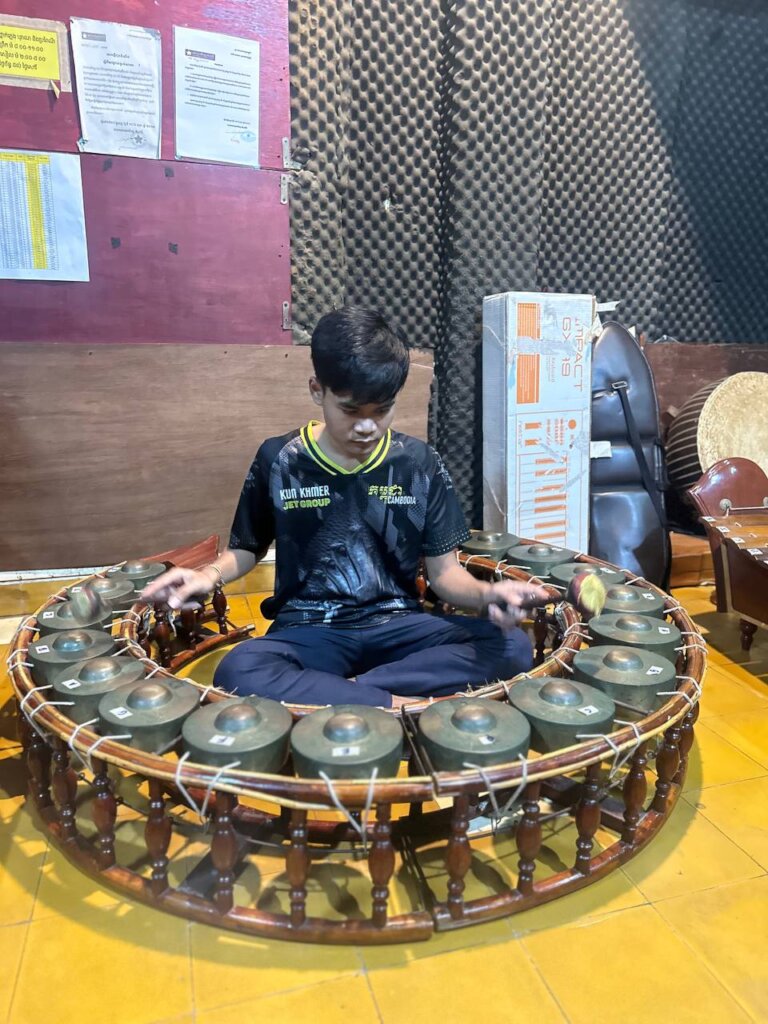
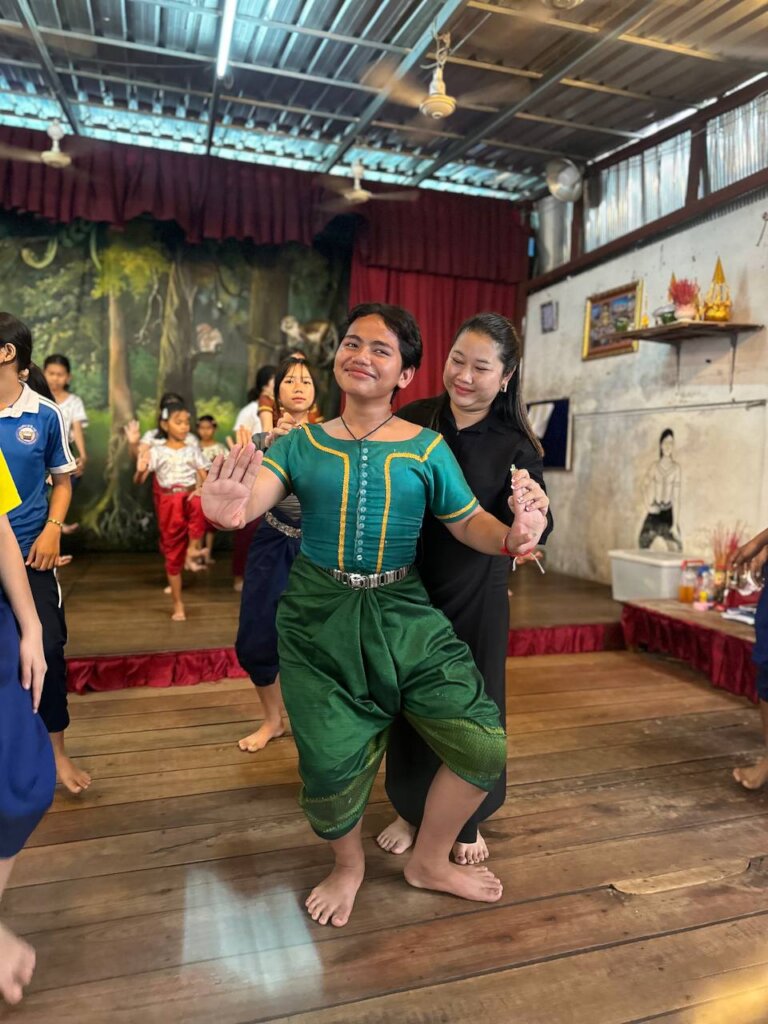
Champey Academy of Arts ( CAA) started dance classes at our new location in Phnom Penh in January. Champey is the Cambodia name for the tropical plumeria flower. Our new location is centrally located and is just a short walk of one block to the Royal Palace, the National Museum and Royal University of Fine Arts.
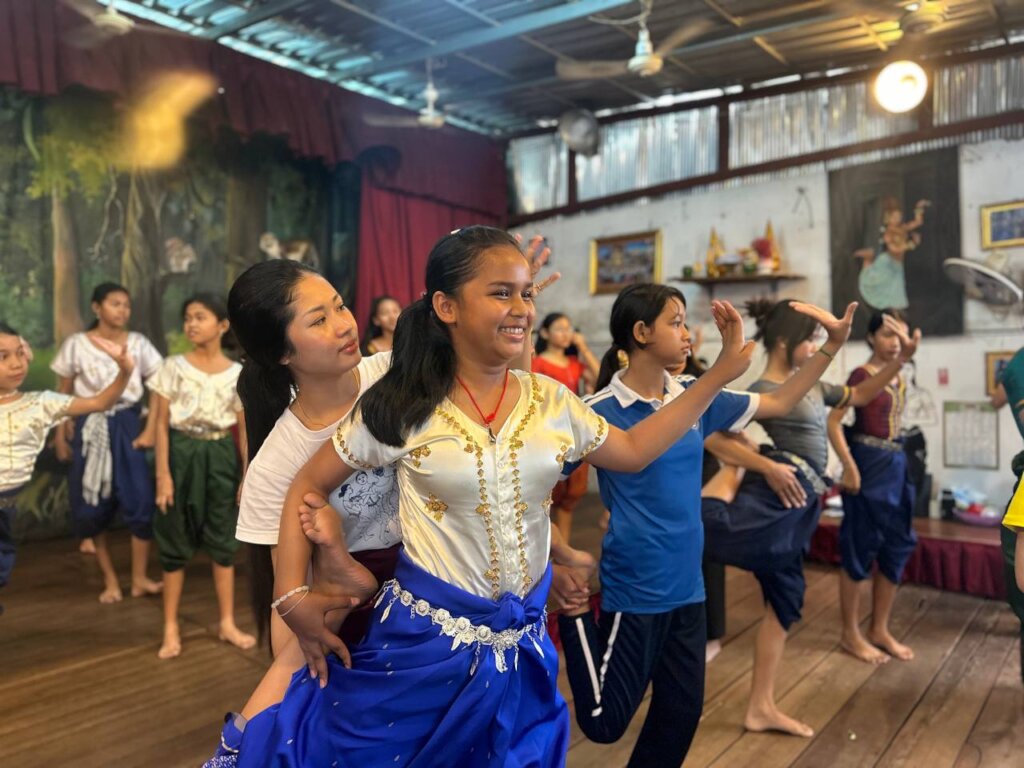
Our inaugural class included a group of approximately 20 young girls age 9 to 16 from a shelter for abused and formerly trafficked children in Phnom Penh. Now just three months later our Champey Academy of Arts ( CAA) l continues to take shape.
From a just a handful of children, our classes have now expanded to include morning and afternoon sessions with attendance of about 20 to 30 students per class. Instruction is presented 6 days per week. Not only does the program of dance and music at Champey teach children about their rich cultural heritage, it keeps children off the streets during their free time. Cambodian children attend school for a morning session or an afternoon session, and this alternates each month, so non-school hours are filled with a rigorous curriculum of classic Cambodian dance. The classes are filled with children from NPOs as well as neighborhood kids whose parents recognize that Champey provides opportunity while helping to assist the challenge of idle children who are often left unattended while parents work.
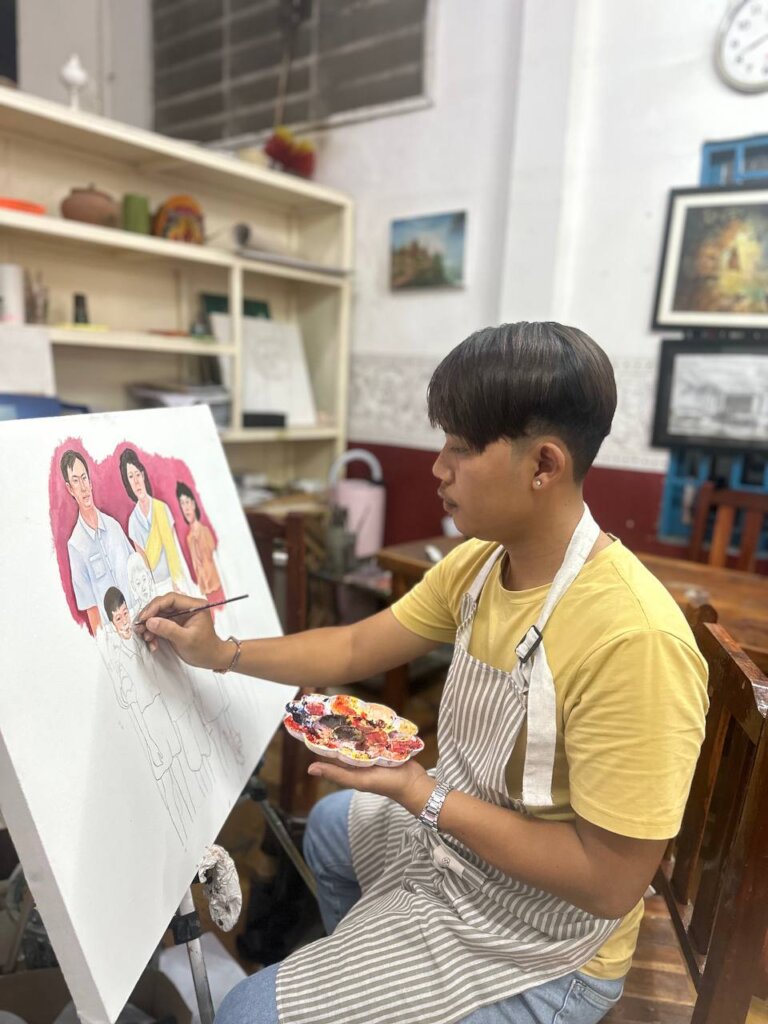
As school holidays in late summer approach, we will be working to develop additional activities, including drawing, to enrich and occupy these children.
Classes are offered free of charge.
Mark is in Cambodia this week to evaluate progress to date and plan for the coming months.
Again, all of this is possible because of your generous support.
Stay tuned for more news!
Barbara Rosasco
Inside the FSP: The Important Role of Reviews and Assessments
Mark arrived home from his recent quarterly trip to Cambodia on March 13, where he had spent a week reviewing our programs, including the AIDS Patient Family Support Program ( FSP) , which helps indigent families impacted by extreme poverty and HIV/AIDS.
From the beginning of our FSP in 2000, we have taken a long term approach to keep families together , to prevent trafficking and to keep kids in school to help to break the cycle of inherited poverty. Over the past 18 months, we have conducted an extensive and careful review of each family’s current status, stability and potential for financial independence outside our program. During that time we identified 8 families who over the past 6 to 12 months are gradually being phased out of our care.
Several families are headed by single mothers with AIDS who are now be in a position to resume independent living. These are mothers who have benefited from our support for as long 10 years and who now have raised, educated and proudly launched their children into a stable lower middle class life. Their children, now grown, are in a position to care for and support their mothers. For a few others, we felt that they should be gently moved out of our programs assistance arena over time for specific reasons. For example, one family was asked to leave due to a serious violation of our rules, by seeking support from two organizations at the same time without permission from either , or put differently, “ double dipping” . Another is a mother who was removed from our program because she ran away after stealing money from her neighbors.
We view these periodic long term assessments as a vital and natural part of the FSP. They free up scarce resources and it honors our commitment to our donors that we will carefully monitor all expenditures to be certain that funds are used, to the best of our abilities, optimally and ethically.
One of our mothers recently passed away quite unexpectedly, leaving a 12 year old daughter who was temporarily cared for by other members of the FSP while our home care coordinator worked extremely hard to find a placement in a reliable institution. We will continue to monitor her situation . One of our great successes is that our Home Care Team has worked hard from the very beginning to foster a community attitude among our families sharing scarce resources, emotional support as well as help and friendship.
Mark reviews the status of each family every quarter and any decisions that are made are implemented carefully so as not to undo what may be years of slow progress. Structure and discipline are applied with large amounts of understanding, accommodation and compassion.
We hope that this progress report has given you some insights into the operation and challenges that we face. We are grateful for your support and it is our honor to have our efforts supported by you. We could not do this without you!
Barbara & Mark Rosasco
Building Dreams- One student at a time
Mark will arrive in Cambodia next week and meet with this project group of 4 prospective college students. A part of his discussion will focus on their own abilities to identify any possible source of tuition funding and also what possible resources they have identified to reduce housing costs , assuming that we can raise the funds for tuition.
When we first posted this project we had high hopes of raising funds to help send these and other students like them on to local college. In Cambodia, costs of education in Western terms are very low, with tuition running only in the hundreds of dollars per year per student. Nursing tends to the be highest tuition, running at about $ 800 per year. Although low by western standards, these are astronomical sums for students to raise, and there are few lending sources available.
Let’s look at some of the figures: a day laborer earns about $ 3.00 per day in Phnom Penh, Cambodia’s capital city. Assuming annual tuition costs of $400 per year, this means that a “ typical” college student would need to work more than 130 man days over 21 weeks to earn the tuition amount. However, this $ 3.00 per day, assuming a 6 day work week, creates a monthly income of $ 120 which must also pay for food and rent. Even in poor countries, slum living can easily cost about $ 100 per month for food, rent, utilities and transportation to a job. Consequently, even if a student worked full time and could manage to save $ 20 per month, it would take nearly 2 years to save basic tuition. The economics of the situation prevent even the most ambitious student from working to earn enough money to pay tuition and room and board.
To date, we have received 2 donations for our 4 students. Regretably, we can't commit to helping these students unless we are able to identify and/or raise sources of tuition funding. We are not giving up, but we are delayed in being able to report actual " student" progress.
Receiving a college degree can help to propel these students from a life of unstable day labor to a middle class stability.
We currently have 4 students from our Family Support program , 2011 high school graduates, in college. Fortunately, we have found sponsors for them. We have another 6 students on track to graduate from High School in 2013 as well as these 4 students from our Rural Assistance Program . Our great hope is that having managed to graduate from High School, we can help facilitate these students achieve their dream of a college education.

