As we start this year, 2013, on behalf of Rozaria Memorial Trust Board, staff, volunteers as well as the children and parents in our programme, we want to extend our greatest appreciation to you for the support in 2012. Many of you gave us one-off gifts and others are able to provide recurrent gifts, and again some of you have reached out to your friends, families and networks to support our work. We value deeply this generosity, and we invite you to continue with this support in 2013 and beyond.
In the last 2 years, we have had amazing experiences with some of the children through your support. For instance, A. Chitate was born with HIV in 2010, and immediately her mother passed away. Mbuya Chitate, A.'s grandmother approached us for support, and ever since we have worked with Murewa District hospital to ensure that Anesu had access to Anti-Retroviral Therapy. We enabled granny Chitate to join a support group and learnt abour ART Literacy and compliance. We provided some food supplements and ongoing pyschosocial support to the family. In a few months we will be celebrating A.'s 3rd birthday and everyone is looking forward to A.'s education and bright future. You all made it possible with your gifts.
Belinda Musendo is another young woman living with HIV who has been in our programme. When she finished her A Levels, where we were providing school fees subsidy, Belinda was able to join us for a year as an intern providing peer education to other young people living with HIV. She encouraged other young boys and girls to go get tests; to be in compliance with their ART medication and be active act school. Today Belinda has moved from Murewa, and is pursuing further studies and opportunities in Harare. This again is an example of how as a Trust we help young people living with HIV to access both health and education and thereby have a stronger foundation for their lives.
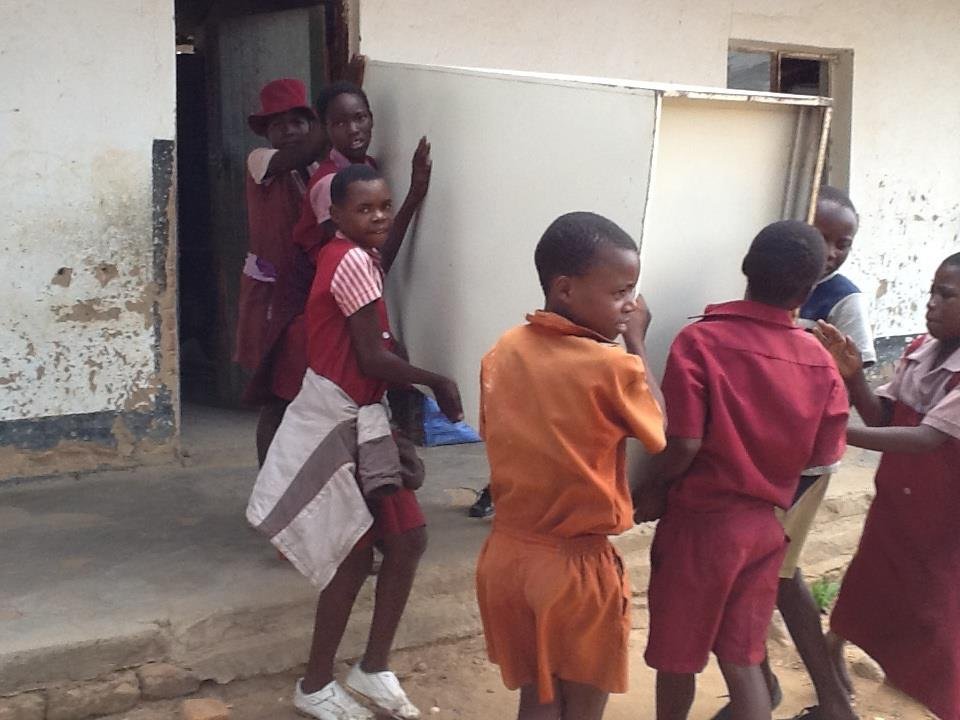
We have reached our target of having 100 children living with HIV in school. The majority of these children are in primary school and the rest in secondary school. Our aim is to ensure that this children do remain in school, remain on treatment and are able to transition with hope and skills into the future. As we work with these children collaborating with the 9 schools and 4 health centres, we continue to enrol more children living with HIV in our programmes. We continue to grow the collaboration with government and other stakeholders in this efforts.
It is with this reality that we embrace 2013. We have the courage and the commitment to continue to offer support to our children living with HIV. We invite you to share this journey with us, a gift of any amount, a word to your friend, is in itself signficant and lasting in its impact.
I do wish you the best in 2013, and we commit to continue to share information and updates with all of you.
Links:

One of the very few female village heads in Zimbabwe, Daisy Chidziva of Chidziva Village under Chief Zihute in Murehwa, has spoken out against cultural practises that promote gender based violence.
In an interview with The Zimbabwean on the side-lines of a workshop organized by Rozaria Memorial Trust on the implications of HIV on domestic violence, Sabhuku Chidziva said some traditional cultural practices encourage gender based violence.
“We have had various traditions that have encouraged gender based violence instead of building us as a community. This includes the dominance of men over women. In this way men end up procrastinating which then hurts their partners emotionally and physically by contracting HIV, that’s when we have cases of a wife pouring hot water on their husband,” she said.
The village head, who was crowned after all adult males in her family had died, said communication was vital and our tradition blocks that as it only gave the voice to males.
“Our tradition gives much more power and voice to males over female. This blocks the two-way communication set up which we have just learnt is so vital. If a woman is forbidden to speak then she will suffer in silence to the point that women cannot even speak to their husbands about sex. So in the end they look for it outside the marriage, risking contraction of HIV,” said Chidziva.
She urged traditional leaders to appoint female village heads not only in the event of death but according to performance.
“I am happy to be one of the few female village heads but it I would be much happier if our traditional leaders made it possible for women to be appointed into this position not only in the event of death but according to merit,” she said.
The event was graced by different village heads, members of the communities surround Chitate primary and various stakeholders including delegates from the Ministry of Women Affairs Gender and Community Development and the Murehwa District Health Counsellor Edwin Muchairi.
Popular poet Allen Chitsanzara performed two poems - Bhutsu kuRoots, which encourages people to remember where they came from, and Katswe, which was fused with a traditional play song.
Rozaria Memorial Trust is a registered NGO which has been operating in Murehwa for the past five years. It was formed to honour a heroine and local leader - the late Ambuya Rozaria Chijaka.
It supports innovative initiatives that support prevention, treatment and advocacy in the area of HIV and AIDS and GBV in marginalized communities.
source: The Zimbabwean, December, 18, 2012
Links:
Rozaria Memorial Trust (RMT) is directly supporting about 150 children living with HIV in Murewa, Zimbabwe to access treatment and education. The project is now covering three wards; Ward 8, 17 and 18 with a total of 60 villages in Murewa District.This is now full coverage of Ward 17, and entry into Ward 18 in the district doubling the area of coverage, thus reaching more children.
Nine (9) Primary Schools and 3 secondary schools are being reached out through information sharing and capacity building on Anti-Retroviral Therapy and school fess subsidies for Children Living with HIV (CLHIV).We now have two more primary schools in our programme.
Apart from collaborating with schools and health institutions, RMT empowers family and community members to effectively participate in the initiatives that are promoting the children to access treatment, education and life skills support that enhances their lives.
Murewa District has an estimated population of 165 00 people, and the HIV prevalence is 23% against the national average of 13.
Effective Support System: Creating a Caring Environment
With the recognition that needs of Children Living with HIV are not just clinical, Rozaria Memorial Trust is building the capacity of the family members, the community and school teachers in providing supportive environment for treatment and access to unhindered education for the children. The following activities were done
Next Step: Building the life skills of YPLHIV
The project next step is to actively engage and support young people living with HIV in the communities HIV responses through life skills training. The life skills programme is targeting mainly adolescents and young people living with HIV. Life skills programme for YPLHIV is going to be done to help young people living with HIV to cope with their HIV positive status and to manage stress; treatment adherence, make healthy choices on safe sex, and gain understanding of their sexual and reproductive rights.
This is key in ensuring that whilst we promote access to treatment and education for the children; we reverse the spread of the virus, realise human rights and contribute towards UNAIDS 2015 goal of achieving Zero new infections and Zero AIDS-related Deaths by 2015.
We thank all friends and people of goodwill who continue to support our cause, as we provide the much needed access to opportunities to the most vulnerable children and their families.

Below is a presentation by RMT Board Member, Mrs Hilda Chitsanzara, at the NGO Consultation Day during the 56th Session of the UN Commission on the Status of Women. She was one of the rural women leaders selected to address the gathering of over 1,000 people representing over 200 NGOs, globally, in New York, on 26th of February 2012.
---------------------------------------------------------------
HILDA CHITSANZARA, BOARD MEMBER; ROZARIA MEMORIAL TRUST
It’s a pleasure for Rozaria Memorial Trust to be present here at the 56th Session of the UN Commission on the Status of Women, in New York. Its an honour to be one of the rural women to speak out during this NGO Consultation Day, which is attended by over a thousand people including Nobel Laureate Lemma Gbowee and UN Women Director, Michelle Bachelet.
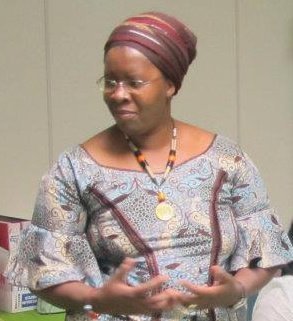
My name is Hilda Chitsanzara. I am 46 years old, married with 3 children and 2 grand children. I am a business woman who is into crafts, cross-border trading and run a small gold mine. I have only primary education. I am a founder member of Rozaria Memorial Trust, a community organisation that support children living with HIV. Currently Rozaria Memorial Trust is reaching 5 000 people in Zimbabwe, with HIV programmes in Murewa district. The Trust was formed in 2006 in honour of our late mother and rural woman leader, Rozaria Marumisa Dizha.
Zimbabwe got its independence in 1980 and by then I was 16 years old. I experienced war related hardships, since the war was fought mostly in rural areas. War and poverty, affected my education. I was unable to go to secondary education, despite being an intelligent student in primary school. This forced me to get married at a very tender age. I was married at 15.
We faced many problems during the war as women. Many women and girls experienced sexual abuse. Some were treated as mistresses and others were tortured or arrested. We had poor access to reproductive health and education services. Life was hard and dangerous. With Zimbabwe’s independence, the situation improved, but still women and girls remain second-class citizens.
Despite the above problems, I managed to support my family and send my children to school with the money from cross border trade. One of my sons has a degree in law!
As rural women, we are the centre of our families and our communities. My fellow women, my friends, lets raise our voices for economic empowerment for rural women - young and old. To be empowered we demand education, both primary and secondary education. Vocational training is important. We need skills that can help us get jobs, and help us work with our own hands. Rural women need access to health services, especially for women and children living with HIV. Create laws that protect the rights of rural women. Give women right to land, access to land and control over that land. Increase funding support directly to grassroots organisations. Lastly, we are leaders, and demand to be in decision making in our own right.
Do you know the word WOMAN is an abbreviation?
W – women are Workers
O – women are Organisers
M – women are Managers
A – women are Accountants
N – women are Narrators
Now we must narrate to the world, so that our voices will be heard. Yes, I want to thank you for inviting us rural women to share our experiences. Listen to us, be with us and share with us. We are here and we are also leaders!
Links:

Indtroduction
Rozaria Memorial Trust project “ Supporting Children Living with HIV in Murewa with Access to Education and Treatment” has made great impact for children living with HIV in Murewa Zimbabwe, a rural communities face extreme challenges to access treatment, education, and nutrition. Many such children live in extreme poverty, enduring social stigma and discrimination. The project directly supported almost 200 children living with HIV and AIDS, and over 2000 young people of school going age in 30 villages within the district.
HIV remains one of the most defining issues in Zimbabwe at the moment, with the country having an estimated HIV prevalence of 13, 3 % as of 2010 and the children have not been spared. It is estimated that 150 000 children aged between 0-14 years are living with HIV in Zimbabwe. Tremendous progress has been made over the past few years in diagnosing and treatment of children living with HIV and AIDS in Zimbabwe; and such could be enhanced if the country has greater political and economic stability
Key Activities
Through the community outreach and awareness initiatives, RMT has come in contact with increasing number of positive children ranging from infants to 17 years. Currently, the organisation is now working with more almost 200 children living with or directly affected by HIV and their number continue to grow. Most of these children are in schools with the majority of them being taken care of by grandmothers who in most cases are old and live in extreme poverty
As a Trust, our targeted focus on CLHIV enables to support provision of adequate care and support both at household, school and community level. We are one of the very few organisations with integrated programmes for CLHIV in Murewa District. Murewa District Hospital is the nerve centre for medical oriented interventions, and the approach is more on treatment, yet these children do face many social barriers that include failure to adhere to medication, stigma and discrimination. Building capacity of Community Support Groups has been an essential intervention.
RMT also has been integrating good practise on Children Anti Retroviral Therapy Literacy into the care and support programme in schools and in the communities. To provide a comprehensive care and support for the HIV positive children, Rozaria Memorial Trust has been working closely with the schools where the children spend most of their time. The project is targeting eighty (8) primary schools and four (4) secondary schools that fall under the catchments area of Rozaria Memorial Trust operations.
Engagement of schools has been done to promote a supportive environment for Children Living with HIV. Poetry and quiz forums in schools have been used as strategies to advance positive living in schools. The educational awareness on HIV has been vital in reducing stigma and discrimination; and to facilitate for adherence to medication during school time.
To bring out the voices of the Children Living with HIV, a collaborative action was done with Southern Africa HIV and AIDS Information Dissemination Services (SafAIDS) on Digital Story Telling of children infected and affected by HIV. The initiative is strengthening the organisational advocacy work on issues of paediatric care in the context of HIV in the rural communities. As a result of the alliance, 20 children from the Support Groups participated in Digital Story Telling project. Their stories are being developed into booklets and a DVDs for sharing with other key stakeholders that include schools, Health Institutions, and other No-Governmental Organisations that work with children.
RMT in continued view of the marginalisation and vulnerability of Children Living with HIV has been deepening its already existing activities recognising that sustainable change can not be made within short period of time. Rights based approaches have been adopted to ensure that interdependence of right to education, health; nutrition and prevention are integrated in the initiatives that target CLHIV in the rural communities.
Stella story below is just one example of our many success stories:
Stella (not her real name) is a seven year old cheerful girl; her father is late and lives with her aunt. Her mother works in Botswana and occasionally comes home. One Monday morning she comes to our office with her mother and the mother narrates her story. Stella’s mother has of late been trying to make ends meet by working as a maid in Gaborone.
She leaves her daughter with her elder sister who takes care of her during her absence. This time when she comes back home for Christmas holiday, all is not well at all. Stella has a rush all over her body which resembles Chicken Pox.
Her aunt has heard about how RMT works with Children Living with HIV. The mother is just too worried and asks how we can assist and we explained to her the services that are offered and the target groups.
One of the officers accompanies Stella and her mother to the local hospital for HIV testing. Both mother and daughter tested positive and the organization is now supporting the young girl with school fees.
Stella tested HIV positive with a CD 4 count of 90 which indicated that the child has suffered a severe Immuno-suppression as result of HIV. RMT catered for the medical fees for the child and continued providing psycho-social support for the mother to enable her to fully comprehend issues of paedriatic care and treatment before the child was administered on Anti-Retroviral Therapy. Through RMT school fees support system, Stella has been enrolled for grade zero (pre-school) at Hurungwe Early Childhood Development Centre
Lessons Learnt
Although there is a growing recognition that stepping up efforts to prevent mother-to-child transmission would decrease the need for paedriatic treatment, it is likely that HIV will continue to infect many thousand of children in Zimbabwe for years to come. During the operational period, experience has afforded many lessons to be learnt regarding the lives and interventions for Children Living with HIV. The project has identified a number of key issues and calls for the following
Future Plans
In 2012, Rozaria Memorial Trust will work towards meeting its goal of reaching out to at least 200 CLHIV in the rural communities of Murewa District. Close working collaboration is going to be done with the local health institutions, educational institutions, guardians of Children Living with HIV and other community members whom are essentially important in providing a complete circle of care for positive children.
The project will focus on some of the following aspects:
We are grateful to all individuals and friends who continue to support us such as AJW and SAFAID, and those sending us gifts through Global Giving. We have over 2500 friends on facebook and many followers on twitter who also continue to volunteers advice and services. We always remain grateful to the many volunteers and community leaders and members and partner organisations who support the work of the Trust through out the year.
RMT was founded in 2007 in memory of the late Mbuya Rozaria Marumisa Dizha (1923 – 2006). She lived 27 years as a widow and her life was an embodiment of hard work, caring, sharing, innovation, self-reliance and creativity. RMT advocates for the empowerment and rights of women, children and young people. It supports innovative actions in health, education and entrepreneurship for women and young people in rural communities.
Physical Address:
Chigumadze Complex, Murewa Centre, Zimbabwe
Rozaria Memorial Trust, PO Box 114, Murewa
Email: rozaria@africaonline.co.zw or
Links:
Project Reports on GlobalGiving are posted directly to globalgiving.org by Project Leaders as they are completed, generally every 3-4 months. To protect the integrity of these documents, GlobalGiving does not alter them; therefore you may find some language or formatting issues.
If you donate to this project or have donated to this project, you will get an e-mail when this project posts a report. You can also subscribe for reports via e-mail without donating or by subscribing to this project's RSS feed.