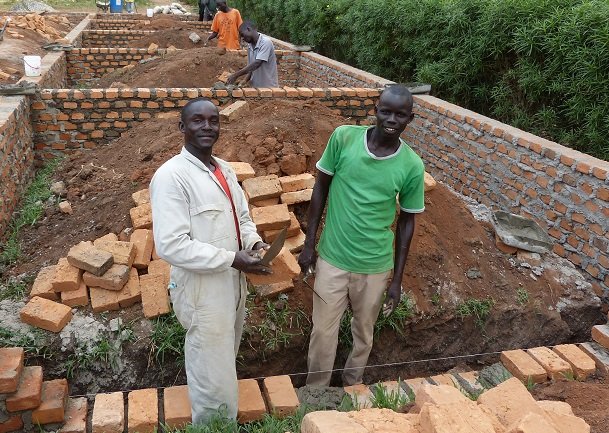
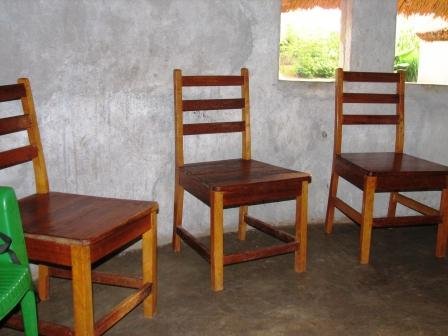
Reports from Siriba indicate that the new academic year which started in January has begun well. An encouraging number of students have been enrolled in four practical disciplines: Carpentry, Tailoring, Building and Bricklaying, and Motor vehicle repair and driving. The latter two courses seem to be the most popular with the more traditional carpentry course being undersubscribed.
During 2012 we encouraged the project’s Board of Governors to have a proper financial audit done. This has now been completed by a firm from Kampala. It is encouraging to see in their report that the overall financial management of the project is sound and that progress has been made in getting the courses properly registered with the Ugandan authorities.
The audit also refers to some points for improvement. The first is that there is a problem with student retention. It seems that a number of young people begin courses but fail to complete them. The other main problem is financial.
Although some progress has been made in collecting student fees the project is almost entirely dependent on grants from Hands Around The World. We have written to the Board of Governors to say that a substantial effort now needs to be made towards self-funding. If the project is to have a long term future this will be essential. We are hoping that with the project being registered with the Ugandan authorities some government money for tutors’ pay will be forthcoming which, in addition to student fees, would meet running expenses.
For the rest of this year we will still give grants to the project in order that they will have time to move towards this more sustainable future. The project will always need financial help with capital expenditure in the form of grants for such things as new buildings and equipment, but running costs need to be raised locally.
Your help and support is, as ever, much appreciated. Thank you!
The work of the Siriba Vocational Training Project is continuing to provide training for young people in a variety of practical disciplines. But it has so far proved difficult to get the project fully recognised with the local education authority which means that no funding has been forthcoming from the government. It is not fully clear why this is so. Our indications are that for the project to be recognised certain standards have to be achieved by the unit and this is proving difficult because of problems with funding both for ongoing costs and for building costs. For example, whenever instructors cannot attend the unit because of family difficulties or illness there is no one to keep the students constructively occupied. There was a hope that back-up instructors could be employed but there is simply not enough funding to support such a scheme. It may be that the project will have to downsize in order to be properly viable.
We are now in negotiation with the Board of Governors to see what funds we will be required for the next financial year. Fundraising is proving difficult although we are pledging that we can offer them £5000 GBP. We will have to work hard to raise this amount. We have asked the Board of Governors to come up with a sustainable plan for the next financial year because, in the past, their plans have not been financially realistic. (More news from them is expected soon) This may mean a reduction in staffing levels and in the number of courses being offered but this seems to be the only way forward since income from student fees and from product sales has not yet begun to match expectations. Of course, since most of the students are orphans that is not surprising.
The work at Siriba Vocational Training Centre continues. The new term, after the summer break, began in early September. At first students seemed slow to come back after the holidays but now teaching and learning at the VTC are up and running.
As the principal of the VTC, I am spending some time in primary schools explaining to students just how important vocational training is, so that when the new academic year begins in January there should be a good number of new students.
The Siriba VTC is now the only vocational centre in the wider Siriba area. Others, it appears, began, but have not been sustained. This means that it is vital that the work at the Siriba VTC flourishes.
The centre now has official recognition from the Ugandan Directorate of Industrial Training. This gives validation to the courses on offer and also means that the students can enter for fully recognised qualifications.
Money does remain a problem because a number of students and prospective students are orphans so that the fees that they can afford are quite low. This means that for some time to come the VTC will have to rely on external unding. We are hoping that the Ugandan government, having officially recognised the scheme, may wish to put some funding in but, at present the likelihood is that this is a long way off.
Thank you for your interest in our work. Please help us if you can!
A recent report from Siriba VTC tells us that young people are continuing in training on four programmes: Carpentry and Joinery, Brick Laying and Concrete Practice, Tailoring, and Motor Vehicle Mechanics and Driving. Altogether about 25 students are attending these courses and gaining significant skills which will enable them to find employment or to go on to more advanced courses in higher Technical Institutes. It is not proving easy to maintain these four courses because the hoped-for extra funds from student fees are proving hard to maintain. A number of the students are orphans with no one to pay their fees. However the income from fees is gradually rising and this is a hopeful sign for the longer term.
There are a number of challenges which face the work of the Centre which are proving difficult to overcome, the most important of which are management issues. Some time ago the local bishop constituted a new Board of Governors with a new Chair. The hope was that the new board would give the project a lift and set it on a longer term path. But this Board has not been able to hold regular meetings and, so far, too much responsibility for overall planning and monitoring has fallen on the shoulders of the Principal. The local bishop has now been elected as the new archbishop of Uganda and it is doubtful whether he will be available to sort out these issues. We are pursuing other avenues to get the Principal more support. Our overall feeling is that the vision that the project began with was too high and that a more realistic vision needs to be worked out.
A second borehole was sunk, the first one having failed, so that the Centre, as well as the Primary School which is on the same site, could have its own water supply. This second borehole has now failed and so we have had to commission another geological survey to see whether any further drilling is worthwhile.
Unless the results are strong and positive we will have to try to raise money for a water harvesting system.
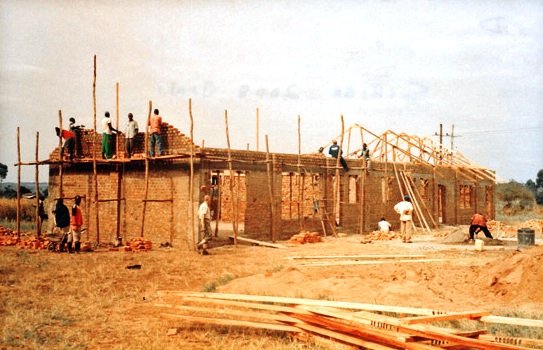
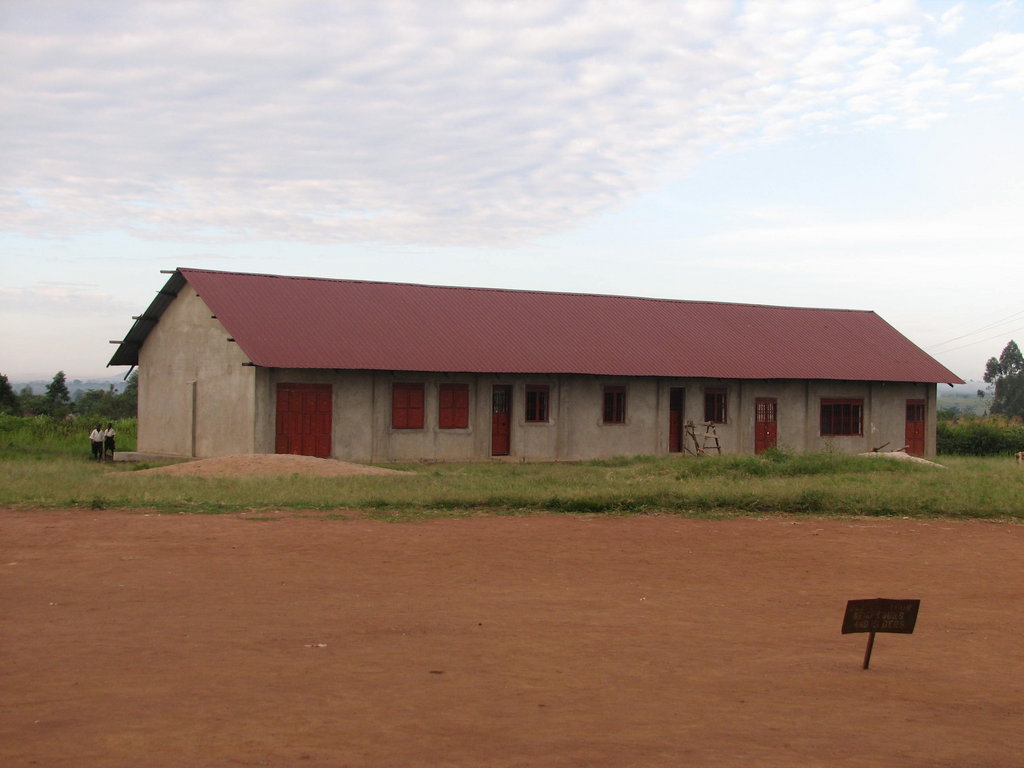
Another difficulty has also arisen in that the building which was provided for the Centre is now in need of repair and maintenance. In particular some of the roof trusses need strengthening. We are currently trying to get proper estimates for the work that needs doing so that it can be put in hand.
Our hope is that with a new management structure and with more modest aims the VTC will continue to serve the young people of Siriba and the surrounding area for years to come.
General conditions in Uganda are proving difficult. Instead of the very predictable rainy seasons the weather is now erratic. This affects the Siriba region in two ways. Firstly, most people in the area, including teachers at the school and tutors at the VTC, rely on growing a proportion of their own food. The changes in weather are making this very problematic. A knock on effect is that food prices in the local markets are rising and this, together with more general
inflation, is making life difficult for the majority of people.
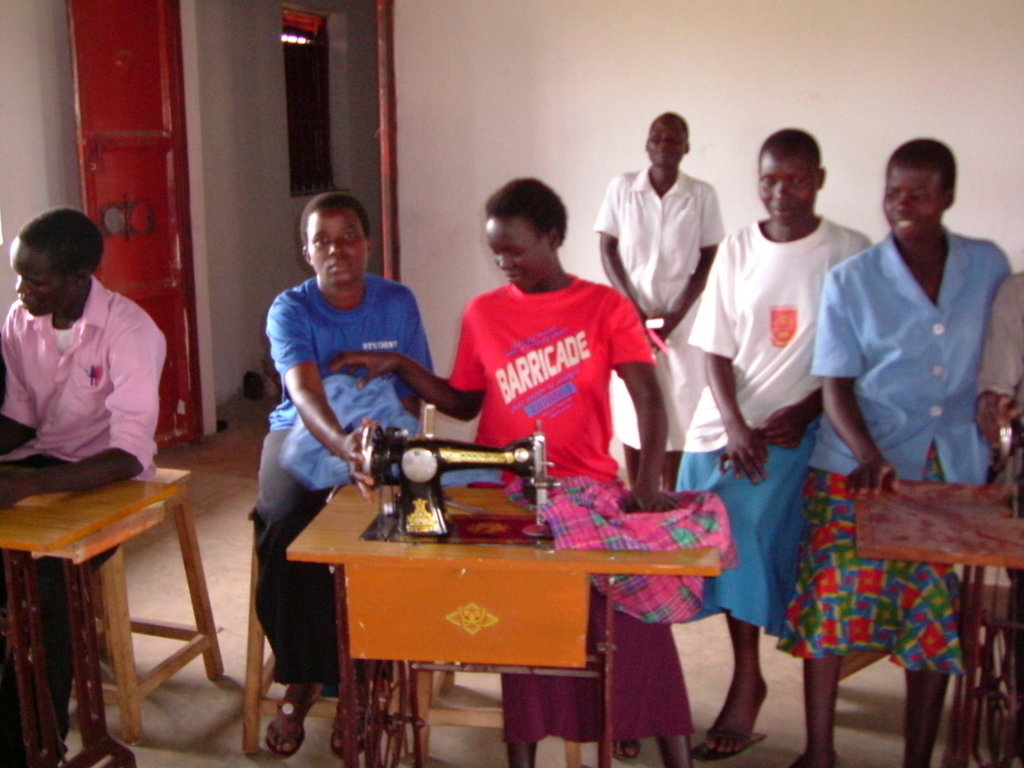
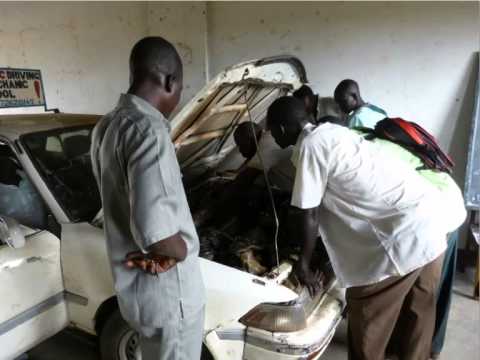
The work at the Siriba Vocational Training Centre (VTC) is progressing well. Currently there are 54 registered students with four courses running. There are courses in carpentry and tailoring which were the first two courses to be offered when the project started. There are now two new courses on motor vehicle maintenance and in building skills. There are nine tutors some of whom are paid and some offering their services in a voluntary capacity. It was agreed with the local managers of the project that apart from carpentry and tailoring all new courses should be fully self funding and this has seemed to work. The two original courses and the general running of the VTC continue to need grant aid in order to flourish.
Investigations are underway with the appropriate ministries with the Ugandan Government for proper recognition of the VTC and the qualifications that it awards. If full recognition is to be given then it is clear that the government will need high standards and it is also clear that demands will be made on the resources of the VTC. For example the government will require the proper provision of sufficient latrines. We have been able to send out some extra grants for latrines and also some money for electricity provision. This has only been possible because of the generosity of donors. Further grants will be required to bring the VTC up to government standards and hope that some funding may follow that will help the project towards self sustainability.
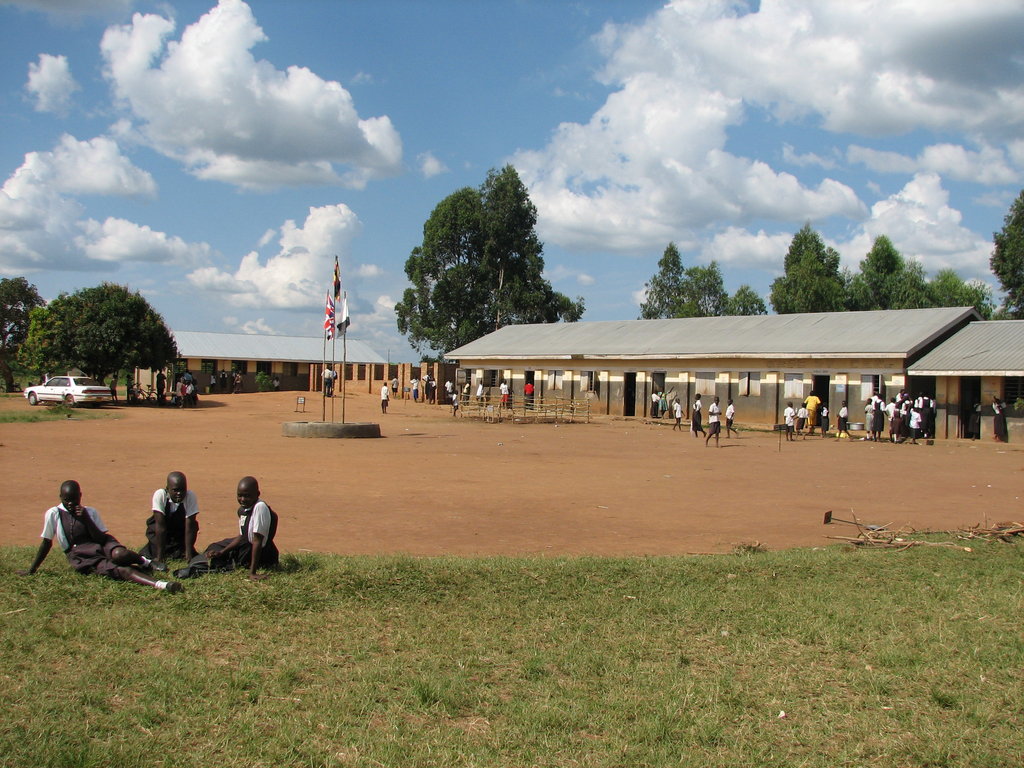
The Siriba VTC is in the grounds of a Church of Uganda Primary School. The Headteacher of the School and the two Deputy Heads were leading players in the founding of the VTC. One of the Deputy Heads moved a little while ago to be the Headteacher of a nearby school in a Refugee Camp. Earlier this year the Headteacher and the remaining Deputy Head were also moved to other schools. These moves made local governance of the project a bit shaky and the response has been to create a completely new Board of Governors. This has now met and the hope is that it will give the project a new impetus.
I visited the project on 2010 and in 2011. Another volunteer, who helped with the building of the VTC, is about to go out to visit the unit and to monitor progress. Over the last year we have been receiving better reports by Email, but there is nothing better than the personal touch. He is also going to see how the new Board of Governors is shaping up, as well as to encourage staff and students.
In my previous reports I have mentioned the situation concerning the borehole. There was no water on site and so it was agreed to make a donation to sink a borehole. This was done first in 2008 but the borehole turned out to be dry. In 2011 a new borehole was drilled (after two attempts) and initially worked well. However we have heard from the Busoga Trust who organised the installation that this new borehole is only supplying water for part of the day. The Trust has advised us to have a new geological survey done and then consider sinking yet another borehole.
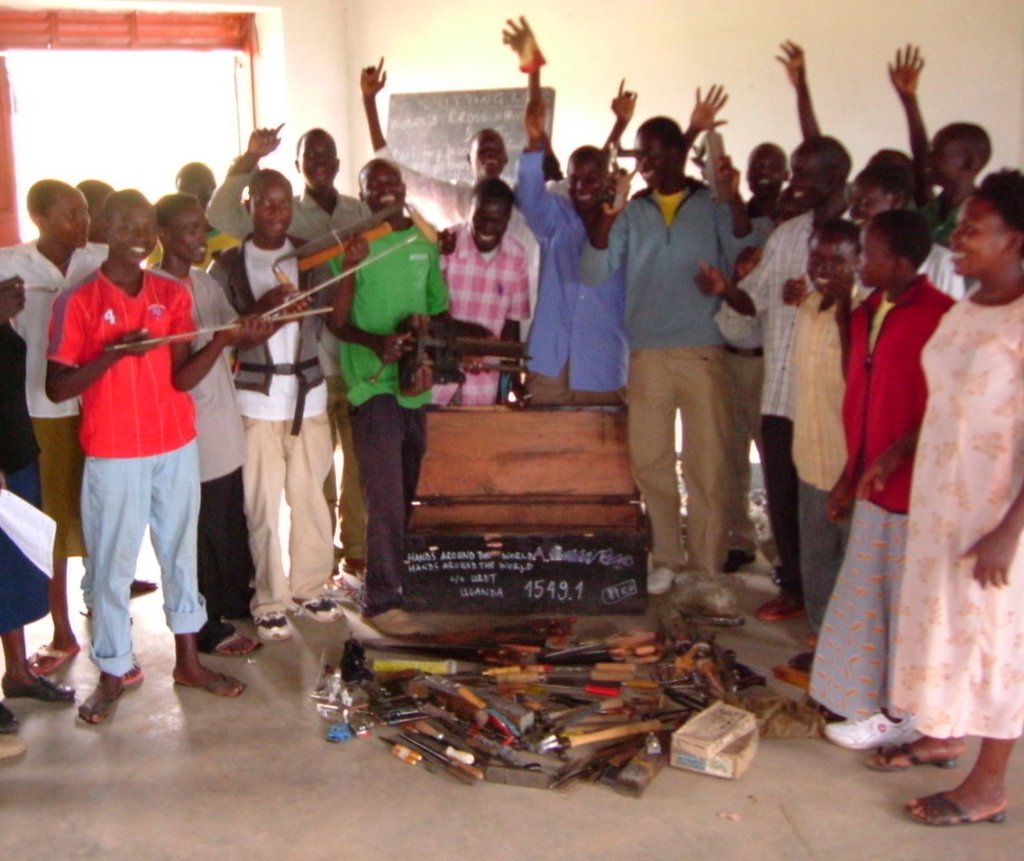
Another problem is that the Ugandan Government has imposed heavy duties on imported items including tools which are being sent out from abroad. We had organised another substantial shipment of tools for carpentry and tailoring but the charity that organises this has had to delay the shipment until talks with the government can, hopefully, resolve the problem. If this cannot be done then it may be cheaper in the long run to send out cash grants rather than pay for expensive shipping and duty.
Project Reports on GlobalGiving are posted directly to globalgiving.org by Project Leaders as they are completed, generally every 3-4 months. To protect the integrity of these documents, GlobalGiving does not alter them; therefore you may find some language or formatting issues.
If you donate to this project or have donated to this project, you will get an e-mail when this project posts a report. You can also subscribe for reports via e-mail without donating or by subscribing to this project's RSS feed.