Philippines Disaster Relief

Philippines Disaster Response

Summary

Support the collection and distribution of relief goods and the physical and personal recovery in Manila by the Disaster Management Response Program of De La Salle University. progress reportread updates from the field

How You Can Help  Help

Make a donation

Received $15,115 from 68 donations from people like:

ronnvinn simmatticdesign patrickfigueroa rachel_halls@dell.com
rachel_halls@dell.com

+

You
YOU!
Give now to become donor #69!

More Information About this Project

Project Needs and Beneficiaries

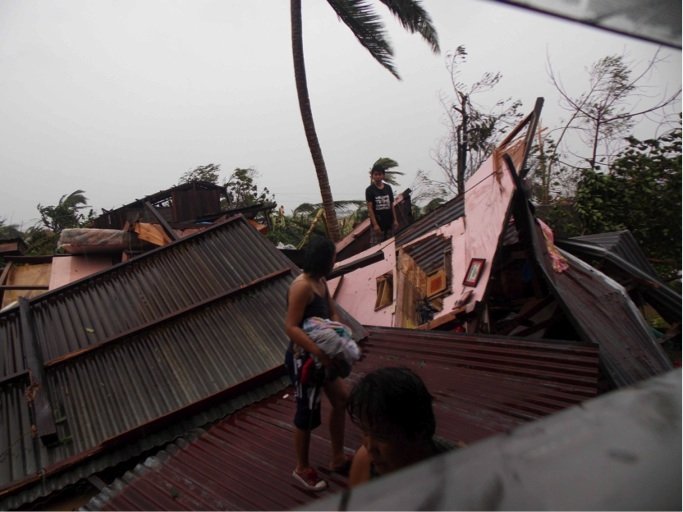
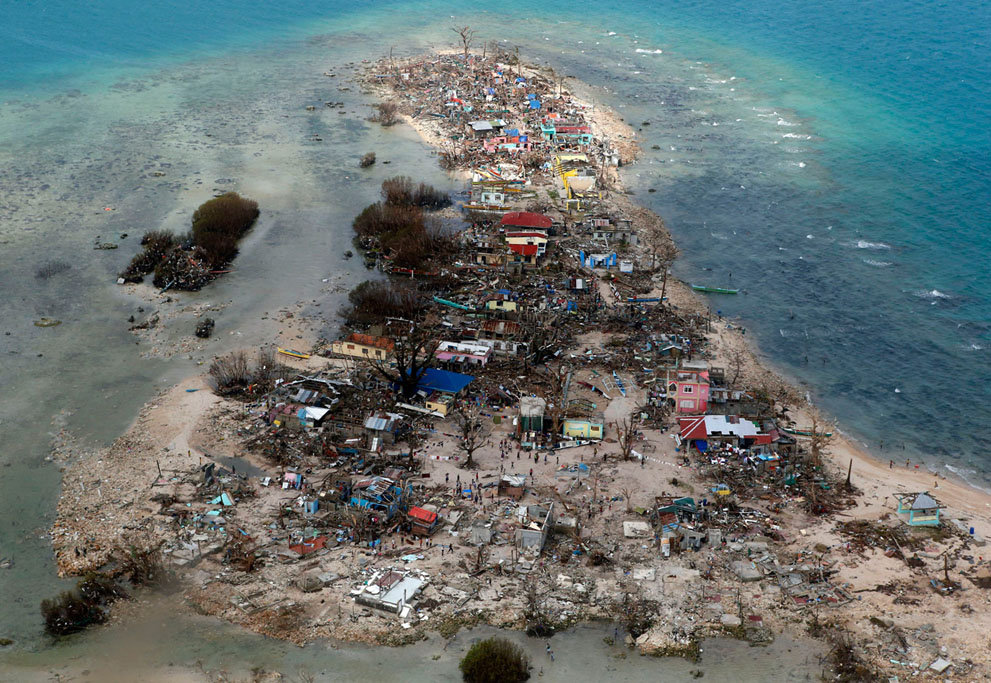
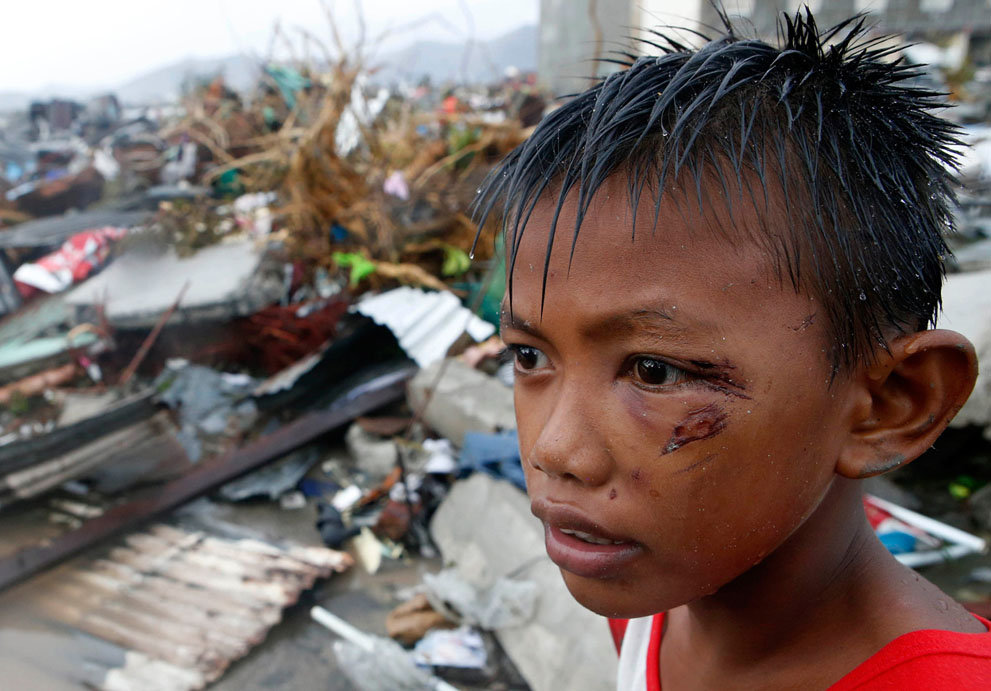
The rainfall brought by typhoon Ondoy to Metro Manila and nearby areas, in a span of six hours on September 26th, 2009 was the most in recorded history, surpassing the previous record for the metropolis in 1967. This calamity has caused tremendous loss for the people of Manila. Families have lost their homes and are currently in evacation centers. The most urgent needs include potable water, medicine, food, and clothes.

Activities

The organization has four main programs, the community development, curriculum integration, institutional advocacy, and social awareness, formation and action.

Funding Information

Total Funding Received to Date: $15,115
Remaining Goal to be Funded: $84,885
Total Funding Goal: $100,000

Additional Documentation

This project has provided additional documentation in a Microsoft Word file (projdoc.doc).

Why this Project is Important

Potential Long Term Impact

While the project is currently engaged in the collection and deployment of relief goods, Sagip Metro aims to eventually rebuild affected communities and enable them to adopt a more pro-active, integrated approach to disaster management.

Project Message

"Truly the Filipino rises to his finest self during trying times, the more trying the times, the finer the rising"
- -Conrado de Quiros, Columnist, Philippine Daily Inquirer

Who is Running This Project

Contact

Lourdes Melegrito
Director, Center for Social Concern and Action
4th Floor, Br. Connon Hall
2401 Taft Avenue
Manila, National Capital Region 1004
Philippines
6325234143
Email:

Organization

De La Salle University
2401 Taft Avenue
Manila, NCR 1004
Philippines

Where this Project is Located

Country

This project is located in PhilippinesPhilippines and can also be found under Disaster RecoveryDisaster Recovery.

For more information about Philippines, read the Human Development Report on Philippines or the Wikipedia entry for Philippines.

When this Project was Updated

Last Updated

This project was last updated on February 2, 2010.

Date Added to GlobalGiving

This project was added to the GlobalGiving project catalog on October 1, 2009

Latest Update from the Field

sagip metro: ondoy

By reden recio - coordinator for institutional advocacy, February 02, 2010 01:58 PM

The harsh aftermath of typhoon Ondoy continues to challenge the country’s disaster management response. Ondoy brought so much rain inundating some areas in the Metropolitan Manila and nearby provinces (Rizal, Laguna & Bulacan). The disaster also surprised other places experiencing flood for the first time. It also made other places inaccessible because of the high water level.

As of October 8, 2009, the National Disaster Coordinating Council (NDCC) has pegged the total damage caused by Ondoy to have reached PhP 9.7 billion. Lives were also lost. According to NDCC, a total of 298 people were killed, 5 injured and 39 missing. The NDCC also claimed that about 829,498 families or 4 million people have been affected by the disaster. Of this, more than 100,000 families are still requesting for assistance.

On September 28, two days after the devastating typhoon wrought havoc to the lives of many Filipinos, the De La Salle University Manila (DLSU-M) started its relief operation for the victims of Ondoy. Dubbed as SAGIP METRO: DLSU-Manila’s Relief Drive, it primarily aims to collect and distribute relief goods to communities that were hardly-hit by the calamity. The project was spearheaded by the university’s Center for Social Concern & Action (COSCA), the Student Council (SC) and the Office of the President/Chancellor.

The project is not only an effort to assist the victims of Ondoy, it has also been an opportunity for Lasallians to rekindle the spirit of damayan in time of disaster. Students, faculty members, staff, parents, alumni have shown their support for the relief drive by serving as volunteers, donating goods and money, offering vehicles for the relief distribution, asking network and partner organizations for donations and reporting situations of other Lasallians who need special assistance/intervention.

First Phase Operation

During the first day of the relief drive, more than 400 volunteers showed up and assisted in soliciting donations, packing and distributing goods to identified communities. Some students and faculty volunteers even went to malls near the university to solicit goods for the relief operation. In the succeeding days of the operation, the project team had to organize at least two shifts to accommodate the increasing number of volunteers. Donations also poured in as other members of the academic community helped in disseminating the information about the university-led relief drive.

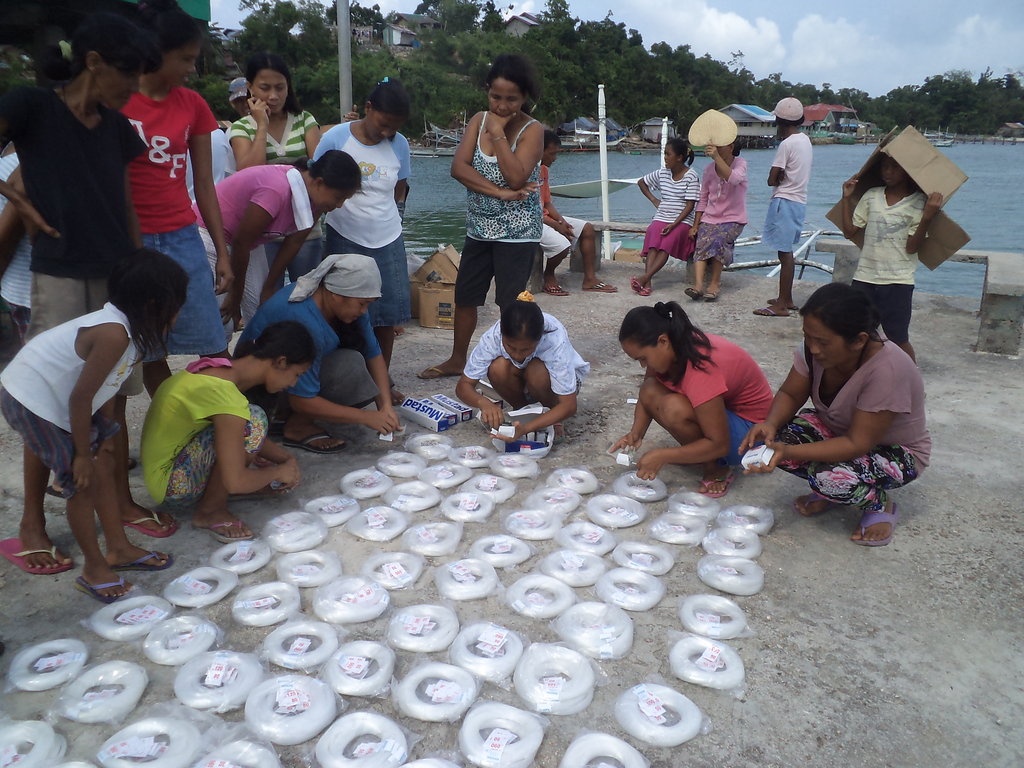
By the end of the first wave of relief operation, 11,616 bags of food, toiletries, clothing, water, and medicine were given away to 29 communities across 14 cities and provinces. The distribution of relief goods was in coordination with 22 partner community-based organizations, church institutions, local government units, civil society formations and other organized groups.

Project Structure & Committees

To make the relief drive organized and systematic, the project team put up a structure and mechanisms for operation. Sagip Metro has assigned an over-all coordinator to harmonize the activities of the identified committees. The five major committees include: a) Donations; b) Deployment & Distribution; c) Mobilization of Volunteers; d) Documentation, and e) Dissemination of Information.

The Donations Committee receives the donations (both in kind and in cash), makes the necessary inventory of the received donations and donors, sorts out and packs the received items for distribution.

The second committee, Deployment & Distribution, identifies and prioritizes the target beneficiaries and facilitates the deployment and actual distribution of the relief goods. This committee also makes sure that there is at least one organized group in the identified communities. The organization should have a system of distributing the donated items.

As the name already implies, the third committee deals with concerns related to effective and efficient way of mobilizing volunteers. It assigns volunteers to a particular task. The committee also gives pre and post-activity orientation/de-briefing for volunteers (e.g. deployment, packing etc.). Meanwhile, the Dissemination of Information Committee is responsible for sending out official announcement and correspondence to DLSU institutional partners and to the public in general.

Lastly, the Documentation Committee is in-charge of consolidating all the reports of other committees (e.g. list of members of DLSU community - students, faculty, staff etc. - and partner communities that have been badly hit by Ondoy). It is also tasked to organize the information on the situation of the affected Lasallians and partner communities as well as their immediate needs. It gives update to the Information Dissemination committee so the latter can come up with regular announcements/updates.

Aside from the structure and ad hoc committees, the team also came up with a set of criteria for selecting and prioritizing target beneficiaries of the relief goods. The criteria are as follows: a) partner communities/members of DLSU community as priorities; b) urgency of needed intervention; c) extent of damage to community; d) extent of assistance needed; e) extent of assistance already received (from NGOs, GOs, Church groups etc.); f) existence of organized & credible group to lead identification & distribution (based on information from coordination efforts, news etc.).

Second Phase of Relief Drive & Future Plans

After four days of relief operation (September 28 to October 01), the project team decided to temporarily cease relief goods packing and deployment activities due to impending danger posed by tropical storm Pepeng. The second phase of relief project resumed last October 05 (Monday) and will end on Saturday (October 10). Acceptance of in kind donations is until October 09 only. However, cash donation will continue since the money can be used for the next level of institutional intervention – rehabilitation of affected communities.

Rehabilitation intervention includes physical assistance (house build, environmental clean up, putting up/installation of water and lighting systems, solid waste management etc.), psychological & post-disaster trauma counselling, community re-building & development (livelihood, disaster prevention etc.) interventions. Plans for reconstruction and rehabilitation of affected families are already being discussed with partner communities. The university will also conduct series of workshops on disaster preparedness and management as part of the long-term institutional intervention on disaster.

Pictures:

Want to support this project's continued work? give now

Subscribe to Email Update Subscribe to "Updates from the Field" by E-Mail Subscribe to RSS Subscribe to RSS Feed

Was this report valuable...
vote divider
Loading...
Tell us why (your comments may be shared publicly).
Rules for Comments 
Comments

How Else You Can Help

Spread the Word on your Profile, Blog, or Website

Put a widget for this project on your profile, blog or website to turn your friends into givers. Using our widget, it's quick and easy to add this widget to your profile or blog!

get this widget