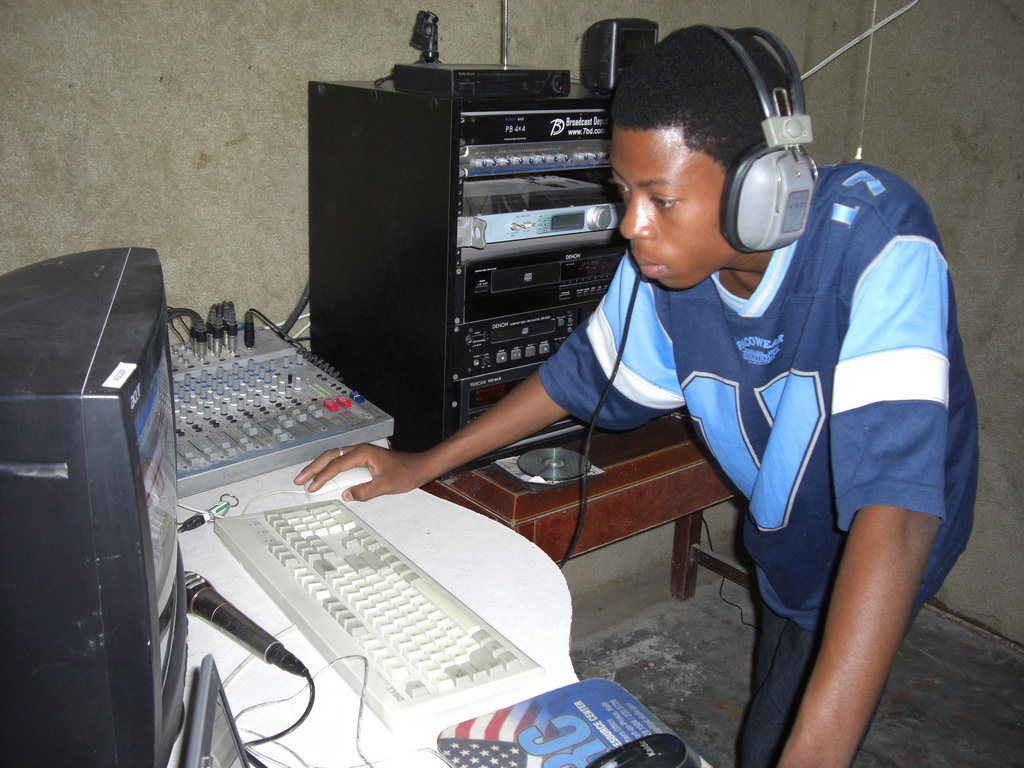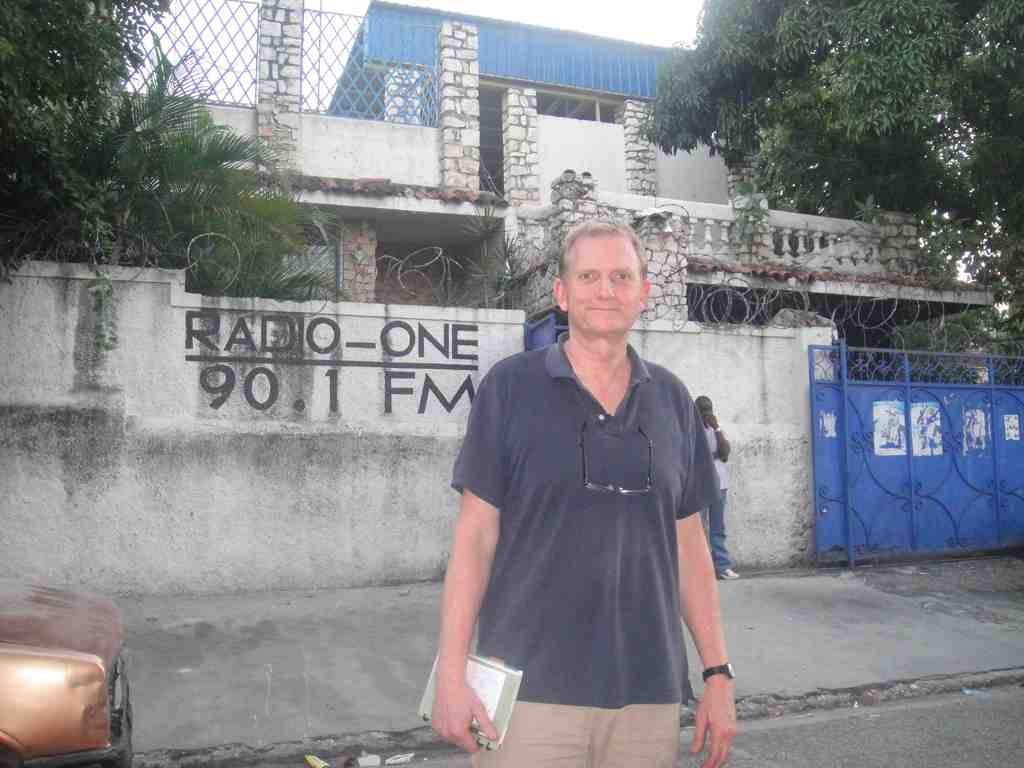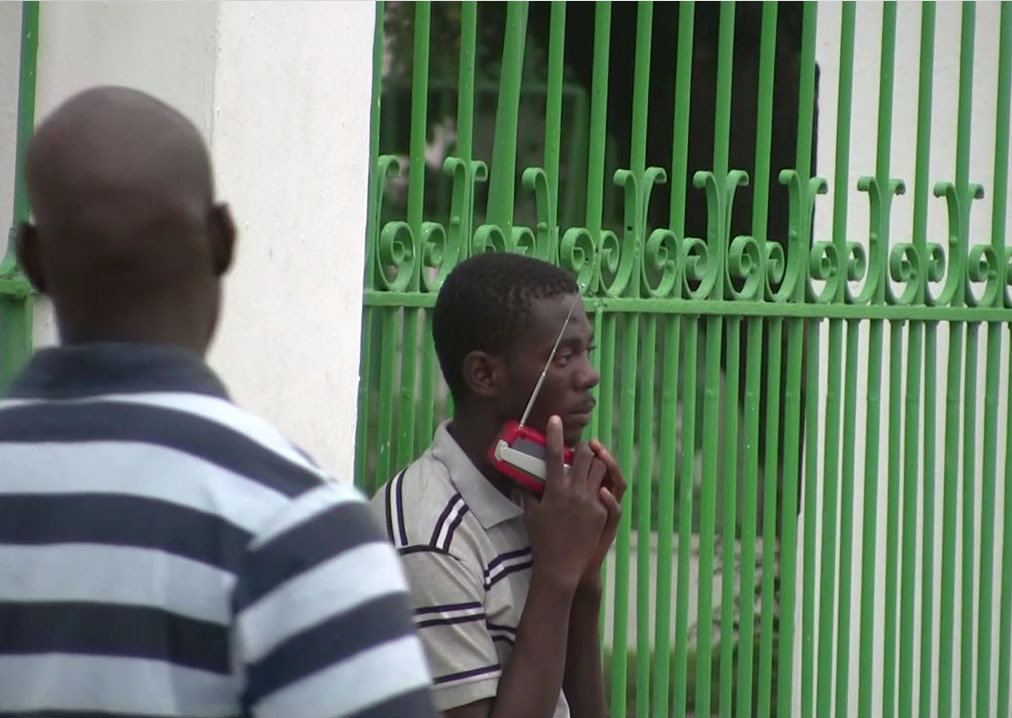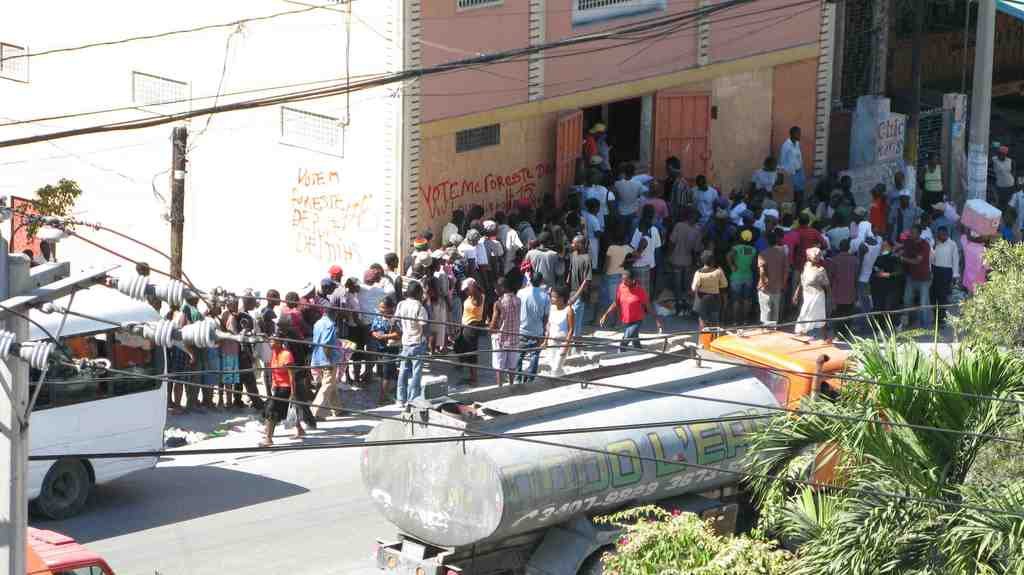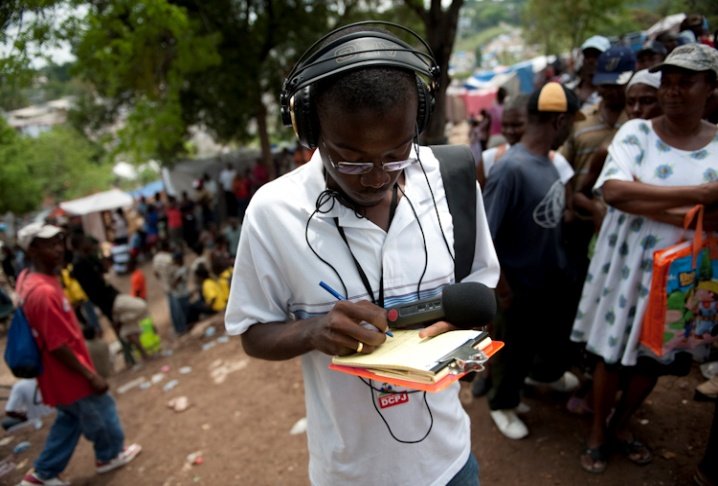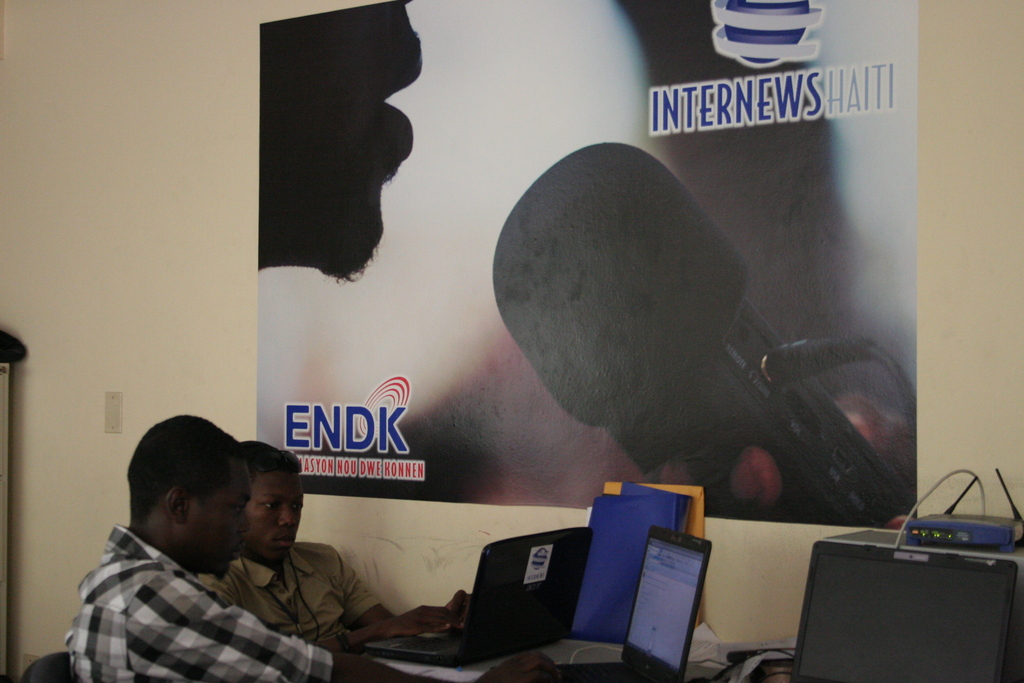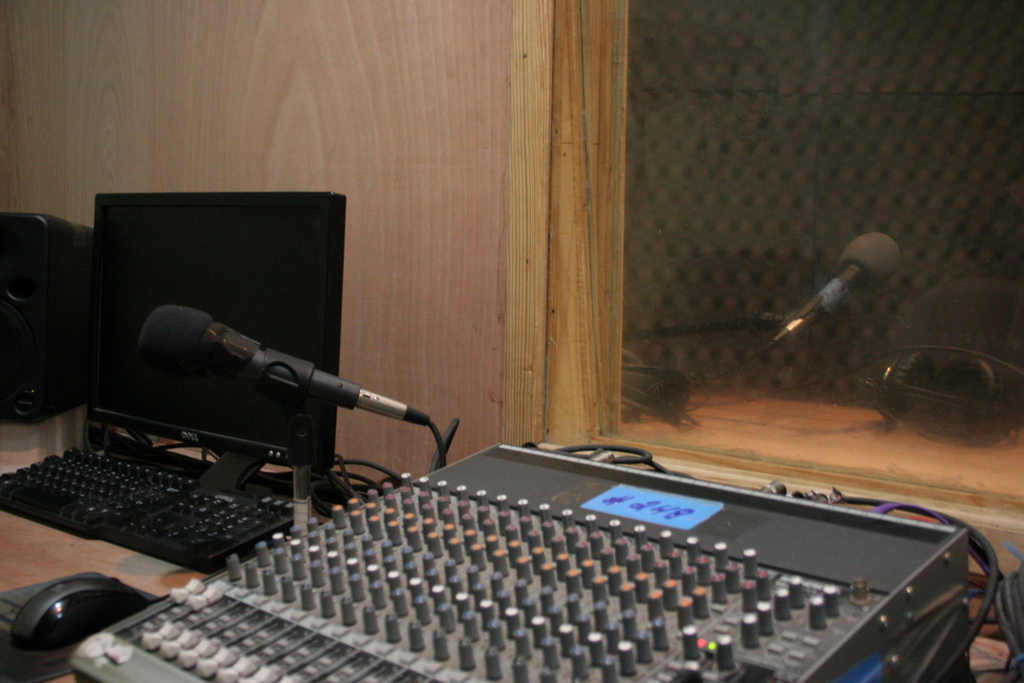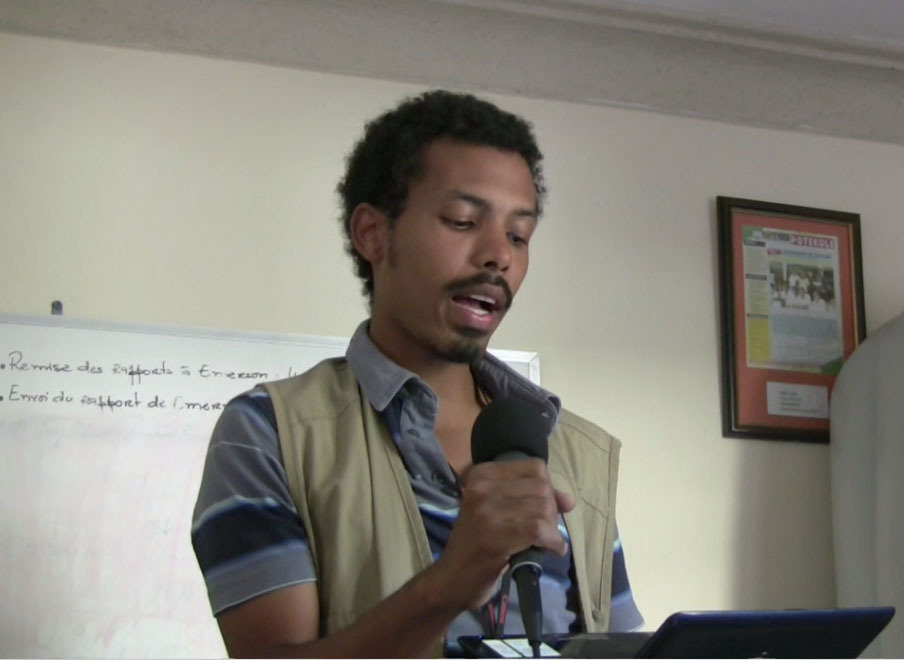
On September 30, 2011, the popular radio program Enfomasyon Nou Dwe Konnen (ENDK), or “News You Can Use,” produced its 450th program. Due to its widespread success and popularity, the program is still being broadcast for free on more than 30 radio stations in Port au Prince and the provinces. Described by the Office for the Coordination of Humanitarian Affairs (OCHA) as the “backbone of the humanitarian information operation of Haiti,” ENDK has been instrumental in providing critical information for the Haitian population that is based on their information wants and needs. While the program continues to have a strong public health and disaster alert component, it is steadily working towards a broader focus on recovery, reconstruction, development and civic education topics. With the support of funding from the Office of Transitional Initiatives (OTI), Internews and ENDK are contributing to media capacity building by intensive training and coaching exchanges with 15 partner media who will continue to produce such content in an ENDK type format beyond the current OTI grant. Internews is committed to ensuring that programs like ENDK become self-sustainable and continue to provide vital and life-saving information.
In addition to supporting the radio program and training local journalists, Internews is also supporting a team of 19 Haitian researchers to develop the first independent Haitian research firm BRESI. Internews originally formed a team of Haitian researchers to conduct research on the access to and use of the media by Haiti’s earthquake affected population and most importantly its information needs. The idea was that this information would feed into ENDK programming to ensure that it was responsive to the affected populations’ information needs. In recognition of the important work conducted by this outstanding team of researchers, OTI supported Internews-Haiti’s goal of helping the team develop into an independent research firm capable of operating to international standards. The bi-monthly reports put out by the team are widely circulated among other NGOs, the Haitian government and other key actors, showcasing the tremendous capacity of the team to execute high quality research.
Thank you for your continued support of humanitarian news and information in Haiti.
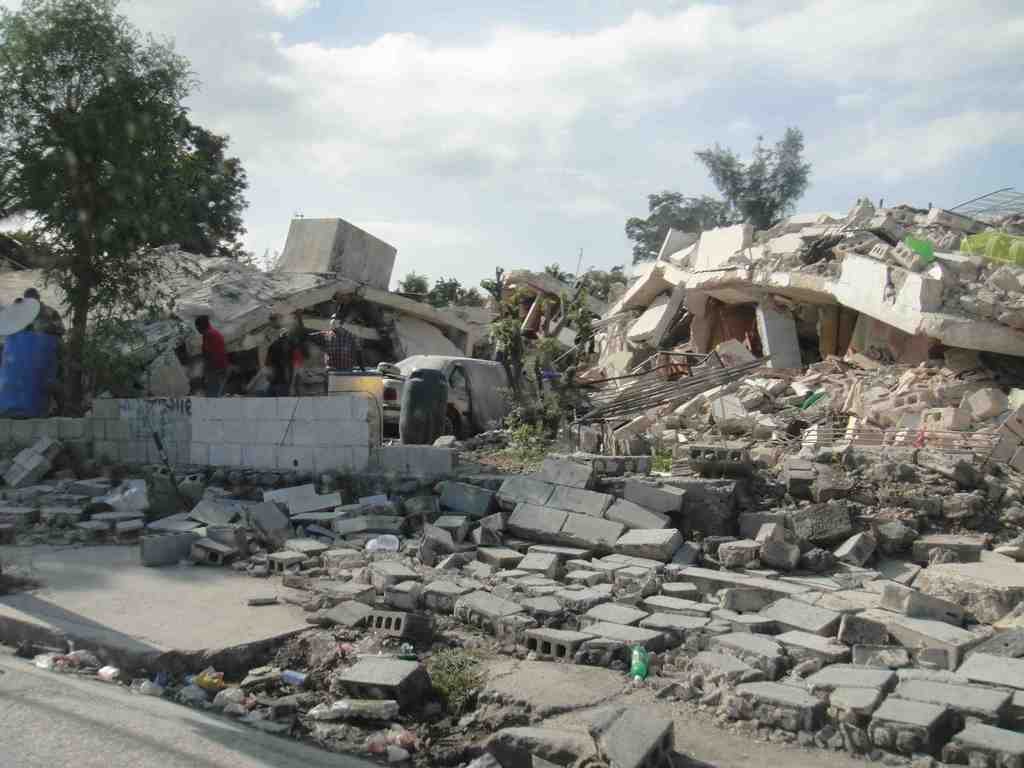
The day after the one year anniversary of the earthquake my colleague, Marisa , and I rode up the hill to the Hotel Montana to meet Internews’ staff. The Hotel Montana, previously one of the nicest hotels in Port-au-Prince had collapsed during the earthquake, killing and injuring several people inside. When we arrived the main part of the hotel had been completely destroyed, although most of the rubble cleared in the past year.
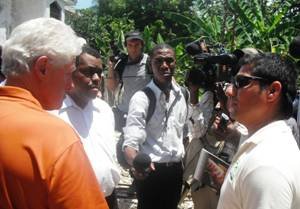
A downstairs portion, including a conference room, remained in tact. For the week of the one-year anniversary of the earthquake, Internews set up a temporary journalist station in this conference room where both local and international journalists could come to learn, write, and post their stories. “Half of the time journalists spend in this country is just working out logistics – finding power, internet, etc,” said Phillip Allouard, Internews’ Haiti Country Director. Each day, they brought in experts from the country about different topics to present to the journalist present. They covered topics like the cholera outbreak and the reconstruction efforts in the country.
Internews’ mission is to empower local media worldwide to give people the news and information they need, the ability to connect, and the means to make their voices heard.. Their first program, ENDK, produces a 15-20 minute informational radio program six days a week to provide Haitians with information they need on topics like where they can access health care, employment opportunities, and disease prevention and treatment. This program is currently run on about 40 community radio stations throughout the country. As evidence of their reach, a recent study of the program’s target areas found that 100% of people surveyed had not only heard the program, but could cite specific examples of useful information they had gained from listening.
Internews works hard to make sure that the information they’re providing is what Haitians actually want to hear. They’ve created a research unit that has grown to almost 20 employees in the past several months. The research unit originated to identify and track the information needs of the communities they serve. They have found that across the board – from the time of the earthquake to now – people want health-related information. Internews has responded with information about where people can access clinics, what symptoms indicate illnesses like cholera, malaria, and typhoid, and what people can do to prevent illness. Their research has become so respected that other organizations, including government officials and other non-profit organizations, have begun paying for access to the information. One long-term possibility is to turn this research unit into an information consulting business run by Haitians even after Internews is no longer involved.
Jennifer Mandel, Deputy Country Director, believes that one of the biggest impacts Internews will have on the country is the lasting training and capacity building they have been carrying out throughout the past year. As funding for the radio program winds down, the journalists and researchers they’ve trained throughout the last year will remain in the country, continuing to provide high-quality research and reporting to rebuild Haiti in the future.

Public information and effective community outreach identified by World Health Organization (WHO) as the single most effective way of tackling cholera
In close coordination with the Government of Haiti, local media partners, the United Nations, international and local relief organizations, and health and civilian protection officials, Internews is helping to coordinate and disseminate a large-scale emergency public information campaign vital to the containment, prevention and early treatment of cholera as the World Health Organization (WHO) states "that a public information campaign can make the difference between life and death" in Haiti.
The government and the humanitarian community are responding to a cholera outbreak that is blamed for more than 250 deaths and over 3,000 confirmed cases to date, putting in place measures to prevent the disease spreading further from outlying St Marc, Artibonite, the epicenter of the outbreak, to the Port au Prince region and other affected areas by the January 12th earthquake.
Under the leadership of the Ministry of Health and the Department of Civil Protection (DPC), Internews is assisting Communicating with Disaster Affected Communities (CDAC) Haiti, a communications coordination platform, to rapidly roll out a comprehensive public information campaign using radio, television, megaphones, sound trucks and community-based mobilization, to communicate messages about cholera and cholera diagnosis, prevention and treatment. In addition, Internews is helping to broadcast an SMS message campaign from the Ministry of Health encouraging Haitians to text "Maladi" to 4636 to receive health information via SMS message on cholera, free of charge.
Internews is producing special radio shows of its own ENDK, News you Can Use program that reaches up to 70% of the Haitian population in partnership with over 35 local radio stations. These radio shows carry information on cholera, symptoms, prevention messages, the evolving situation, and responses by the Haitian Government and its humanitarian partners. These two ENKD programs have already been broadcast across Port au Prince and have been rushed to St-Marc to air in Artibonite on local radio stations.
From Port au Prince and St Marc, CDAC is focusing on facilitating information sharing with local media, community outreach, and ensuring collaboration and support from all responders involved to the national communication strategy through the Ministry of Communication. CDAC Haiti is mapping the existing communications initiatives and capacity, identifying gaps and needs such as megaphones, speakers, radios and community mobilizers, as well as gathering approved messages on cholera treatment and prevention from the government.
CDAC, led by Internews in Haiti, is sharing all this information with the government, humanitarian organizations and local media in the affected areas and Port au Prince to ensure that messages transmitted are consistent, easy to understand, widely disseminated and approved by the relevant authorities.
“We know from past experience that unless someone is there to facilitate and coordinate communication, we will see inconsistent, confusing and possibly contradictory information going out,” says Imogen Wall, UN Humanitarian Spokesperson for Haiti. “All this is particularly important in this context as Haitians are not familiar with cholera and in environments like this misinformation and rumors take root very fast. In cholera epidemics, 80% of cholera patients’ lives can be saved through information: people need to know how to prevent transmission and identify and treat early symptoms especially if they are in remote areas where they cannot receive medical help.”
Links:
Project Reports on GlobalGiving are posted directly to globalgiving.org by Project Leaders as they are completed, generally every 3-4 months. To protect the integrity of these documents, GlobalGiving does not alter them; therefore you may find some language or formatting issues.
If you donate to this project or have donated to this project, you will get an e-mail when this project posts a report. You can also subscribe for reports via e-mail without donating or by subscribing to this project's RSS feed.
Washington, DC, United States
Projects on globalgiving.org undergo compliance checks to ensure they have a bona fide charitable purpose and meet applicable laws relating to international philanthropy. Organizations listed as partners do not necessarily endorse or support any particular project listed on globalgiving.org. The GlobalGiving Foundation is a 501(c)3 organization (EIN: 30-0108263).
GlobalGiving
1023 15th Street, NW, 12th Floor, Washington, DC 20005
Phone: (202) 232-5784 Fax: (202) 315-2558
Contact us