Updates from the Field - CHF - Haiti Emergency Response

Updates from the Field

Updates from the Field (or Project Reports) on GlobalGiving are posted directly to globalgiving.org by Project Leaders as they are completed, generally every 3-4 months. To protect the integrity of these documents, GlobalGiving does not alter them; therefore you may find some language or formatting issues.

Subscribe to "Updates from the Field" by E-Mail
Subscribe to "Updates from the Field" by RSS Feed

President Bill Clinton Visits CHF Projects in Haiti

By Natalie Taggart - Communications, June 10, 2010 05:18 PM

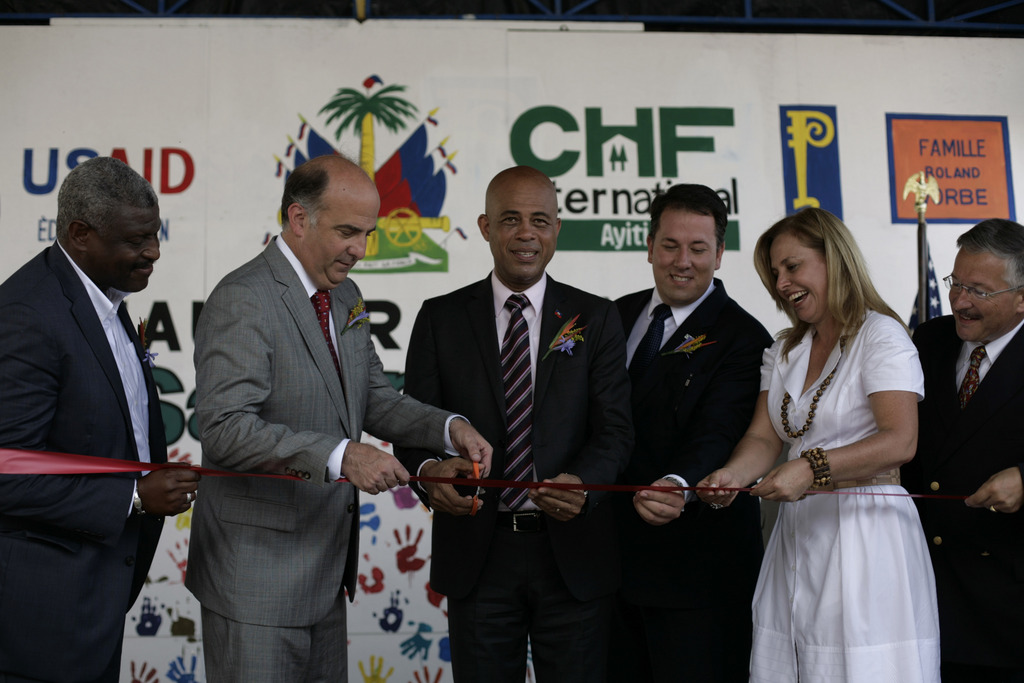
President Clinton and Haitian Prime Minister Jean-Max Bellerive met with CHF International in Leogane, Haiti yesterday afternoon for a brief visit to a cluster of four steel-framed, transitional shelters constructed by CHF in response to the January 2010 earthquake. Accompanied by Paul Farmer (anthropologist, physician and founder of the NGO, Partners in Health), and with various stakeholders and philanthropists, President Clinton spent 40 minutes meeting with family members living in the shelters and speaking to Eddie Argenal - CHF Emergency Shelter and Infrastructure Officer - and with local members of the shelter construction team.

During his visit, Clinton announced an additional pledge of $2 million towards disaster preparedness in Haiti and for funding of the Interim Haiti Reconstruction Committee.

To date, CHF has registered more than 2,200 shelter beneficiaries in Port-au-Prince and throughout the Petit-Goave-Leogane corridor. CHF is one of the leading organizations in construction of transitional shelters, and is currently in the process of completing 600 shelters in Port-au-Prince and Leogane. Over 60 shelters have been constructed in Leogane as part of a pilot project using steel materials that are pre-fabricated by trained workers at the local CHF warehouse. As part of the USAID/CLEARS program, CHF shelter construction, rubble removal using both heavy machinery and cash-for-work teams and assistance to host families and IDPs in Cap Haitien, will be ongoing through October 2010.

Links:

Pictures:

Want to support this project's continued work? give now

Was this report valuable...
vote divider
Loading...
Tell us why (your comments may be shared publicly).
Rules for Comments 
Comments

Working with Displaced Communities

By Natalie Taggart - Communications, March 10, 2010 01:41 PM

The camp at Parc Seminaire, Solino.

One of the important things about working with the community closely is that you both learn to respect each other. CHF focuses on community-based development. The workers we employ to clean up are from the community, and our community mobilizers are key to all these efforts.

From David Humphries, CHF Communications Manager on the ground in Port au Prince:

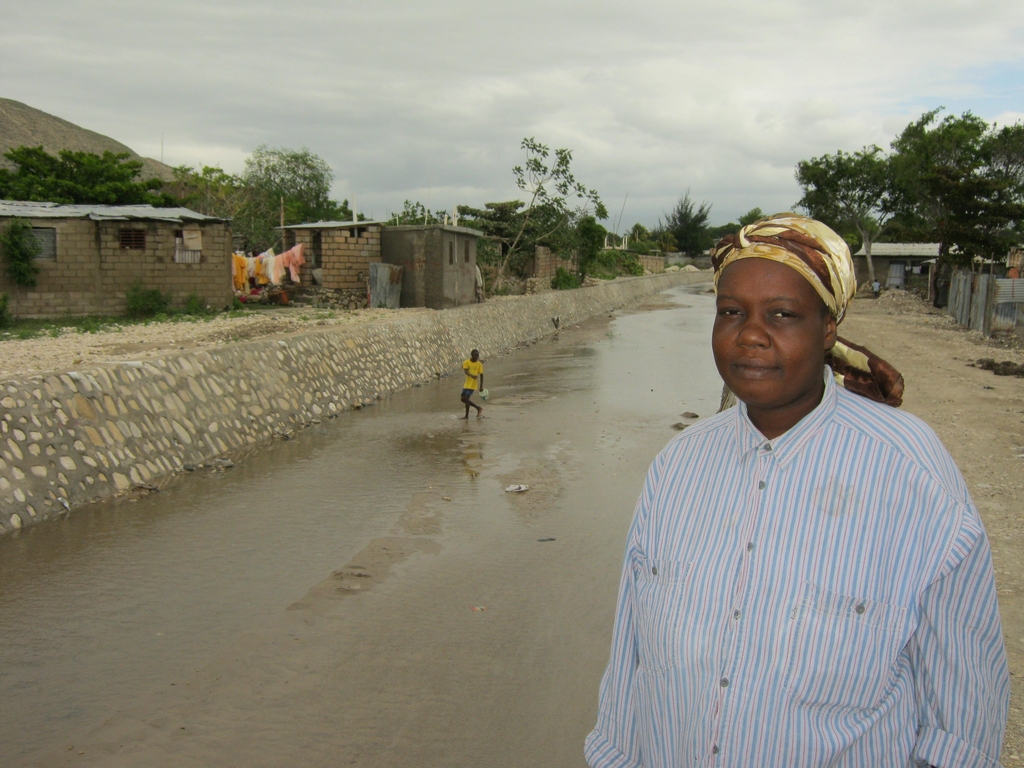
One of the community mobilizers, Civille, took me to his home in the improvised camp at Parc Seminaire in Solino, one of the areas we are surveying for building transitional shelters. 1500 families live in the camp so maybe 7,000 - 10,000 people. But the camp is downhill from the major settlements that they have abandoned, and with the rains, it had become a swamp. As Dede, my Haitian guide, said to me: “Welcome to the Third World.”

They had tents that had been distributed by a relief agency, but the tents were soaked in mud, and the canal, which passed by the camp was blocked and had the stench of raw sewage. The children ran up to me shouting ‘Yo!’ and ‘Hey, you!’ and asking for their picture to be taken – not a common experience in Haiti, where people prefer to avoid the camera. In fact, despite their living conditions and this being a ‘red zone’ we were welcomed by everyone. Perhaps that is the benefit of working with the community.

I hope that we can provide this area with suitable shelter as soon as possible.

Pictures:

Want to support this project's continued work? give now

Was this report valuable...
vote divider
Loading...
Tell us why (your comments may be shared publicly).
Rules for Comments 
Comments

Capacity Building Even in Emergencies

By Natalie Taggart - Communications, March 09, 2010 08:42 AM

From David Humphries, CHF Communications Manager--

One of the key concepts that CHF works by is what we call ‘capacity building’. What this means is training the local people in a country so that by the time CHF leaves, they are able to continue the same level and quality of work – without us.

Even in an emergency situation we practice this, and I had the good fortune this morning of visiting our heavy machinery technical specialist, Dale Lawson, training 12 Haitians in how to operate Caterpillar vehicles.

One of the problems Haiti has faced before is a dearth of skilled labor so CHF has already undertaken a joint training program with Caterpillar to train Haitian operators (see [link to the public private partnerships piece]). But now, after the earthquake, demand for skilled operators has increased even more.

I met Dale and his team on their first lesson. They were focusing on safety. The next stage will be basic maintenance – oiling, checking all the parts to make sure the vehicle is in good condition. Then they will start to get behind the controls. Our aim is for the trainees to reach international standards.

Dale said: “In the west, they’d do all these basics at first in a parking lot. Here, they’ll be learning in a real environment.”

Although my French is extremely rusty I was able to chat with the group of trainees, who were aged between 18 and 42. It was their first time working with CHF and despite most of them being very young, some had up to four children. After a while they asked for a basic English lesson. One of the most popular statements was “I want to go to Miami!” but at the end one of them grinned and told me: “We want to always work for CHF!”

I hope they always work operating heavy machinery. Not for CHF, but for the private sector in Haiti, as it recovers from this earthquake and directs its own development for the future.

Links:

Pictures:

Want to support this project's continued work? give now

Was this report valuable...
vote divider
Loading...
Tell us why (your comments may be shared publicly).
Rules for Comments 
Comments

Port au Prince: A Race Against Time

By Natalie Taggart - Communications, February 26, 2010 02:15 PM

Six weeks after the earthquake struck, David Humphries, Communications Manager for CHF International, is in Haiti. He will be producing daily blogs of the situation on the ground.

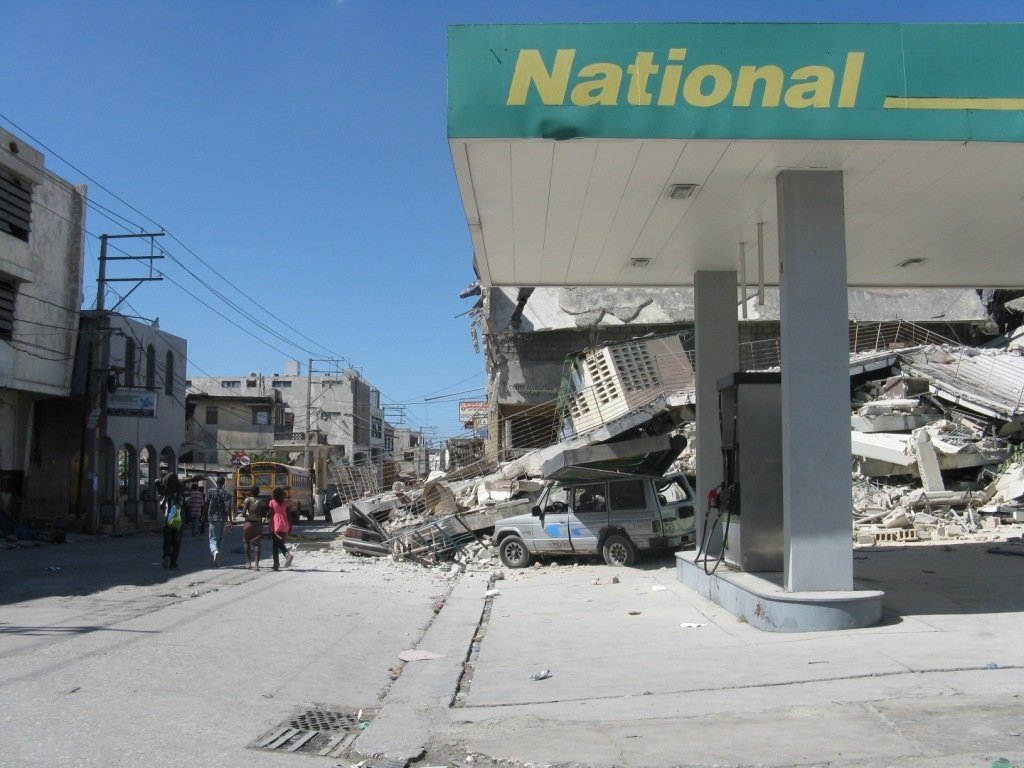
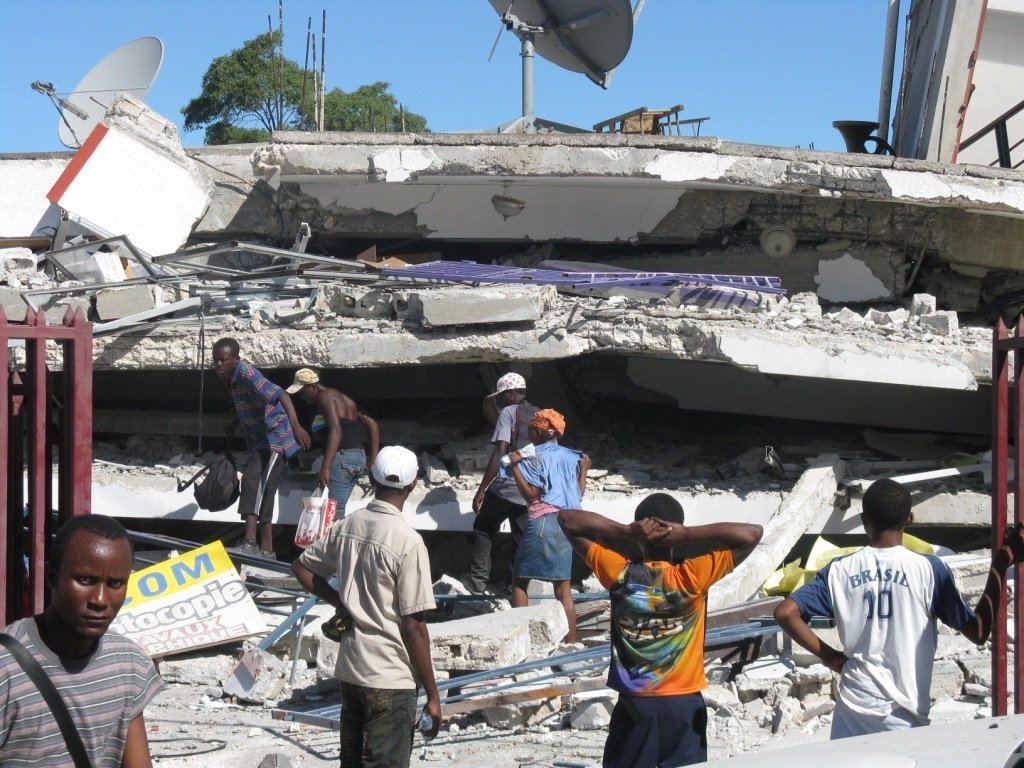
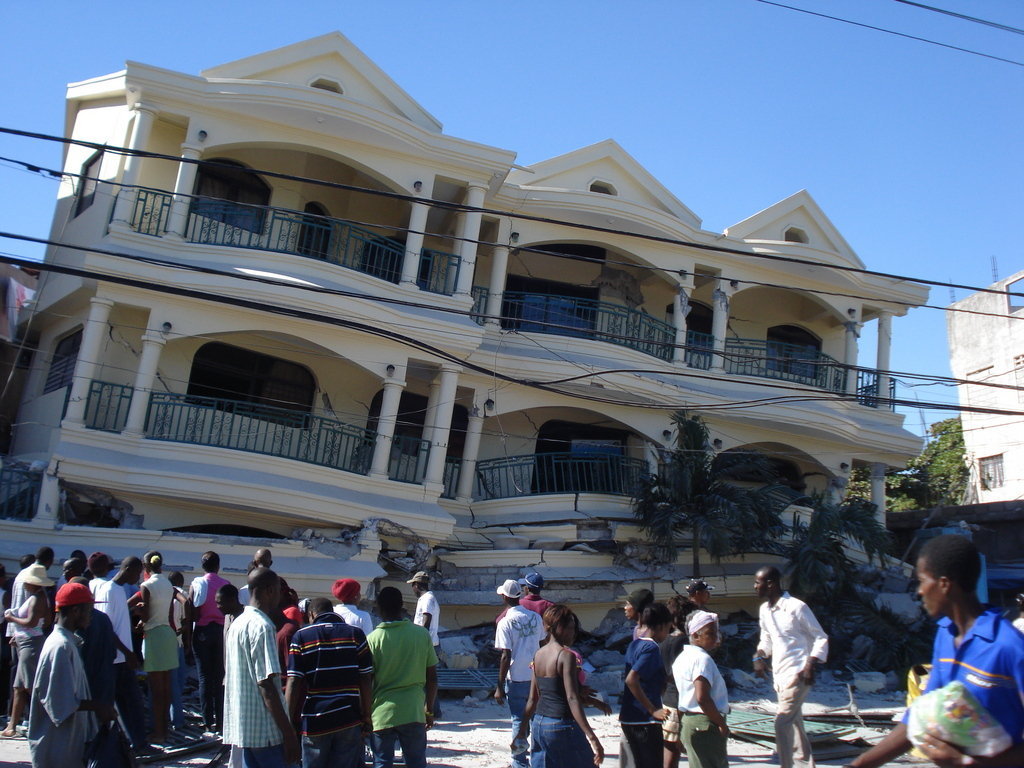
Port au Prince has changed since I visited last November. The hotel where I stayed has been obliterated. The shop where I bought food and water is now a pile of concrete. Colleagues’ houses where I enjoyed dinner are now pancaked.

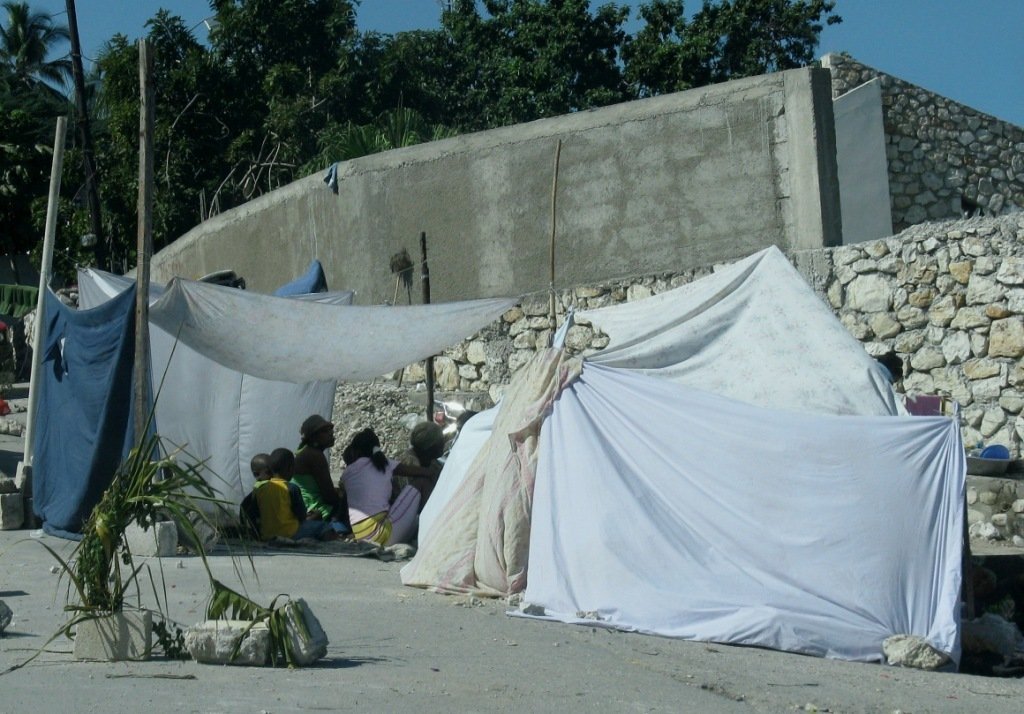
Driving from the chaotic and crowded airport, internally displaced person camps are immediately evident. Large numbers of white tents — from relief efforts — are visible, but something else was visible — dark clouds.

In November the sun shone every day, but today the clouds are a sign of something to come.

Within a few hours, as darkness fell, torrential rain struck, like nothing I have seen in Europe or the US. In just twenty minutes the tropical rain had swamped roads. Of course, this was the moment when our car developed a flat tire and we had to rush for shelter while we found another vehicle. But this small inconvenience was just the briefest taste of what people living in tents were experiencing and will experience. ‘Tent cities’, whether made up of donated tents or makeshift can be seen everywhere. They are on roads, football fields, any open ground. Many families are camping in tents outside thier houses or on the side of a road; where one would expect to see a car parked, that’s where a family is living.

The rain storm was over soon and most of the rain evaporated from the roads. But this was a harbinger of what is to come. The rainy season will come soon — it begins as early as March — and is followed by the contiguous tropical storm season which lasts until November. Flooding will cause sanitation hazards and disease.

CHF is embarking on a project to produce over 5000 transitional shelters for families; building or improving temporary homes to allow Haitians to live in safe, sanitary conditions for up to several years as the major reconstruction takes place.

Looking at the rain, we all know it’s a race against time.

Pictures:

Want to support this project's continued work? give now

Was this report valuable...
vote divider
Loading...
Tell us why (your comments may be shared publicly).
Rules for Comments 
Comments

US Deputy Chief of Mission Visits CHF Projects in Petit Goave

By Natalie Taggart - Communications, February 23, 2010 03:55 PM

Ambassador Lindwall with Marines and CHF StaffDiscussing strategy

US Deputy Chief of Mission David E. Lindwall visited Petit-Goave on Sunday, February 21. Accompanied by representatives from CHF and the U.S. Marines, the Deputy Chief of Mission visited a variety of sites in the area, including the hard-hit areas of downtown Petit-Goave and the devastated coastal neighborhood of Petite Guinee where CHF has been performing cash-for-work activities.

Pictures:

Want to support this project's continued work? give now

Was this report valuable...
vote divider
Loading...
Tell us why (your comments may be shared publicly).
Rules for Comments 
Comments

CHF's Cash for Work Program in Haiti Focusing on Women

By Natalie Taggart - Communications, February 22, 2010 12:11 PM

Rosita St. Jean

CHF's cash for work programs are well underway in the cities of Port au Prince and the Petit Goave. Of the 586 workers currently employed in Petit Goave, 40% are women.

Marie Bonese Point Du Jour is a 35 year-old mother with a 9-year-old son and former businesswoman who lived in Port-au-Prince. after the earthquake she moved to Petit Goave and is now employed with a CHF cash for work team there.

Marie Bonese Point Du Jour

“I am content, I do not regret coming to Petit-Goâve after this catastrophe. This program enabled me to earn 2400 gourds (US$69) over the past two weeks. I would like to spend several weeks working like this, with an aim of saving a small sum which would enable me to get back on my feet and take care of my only son.” She added: “I will remain in Petit-Goâve for as long as possible because I feel safe here.”

Rosita Saint-Jean is a 56 year-old mother with 4 sons and a widow (prior to quake). She is a resident of Chabanne, next to the area of Petite Guinee, which was destroyed by the quake.

"The money that I earned from this program is a deliverance for me and my family. I will pay a small debt, then buy food to keep my sons healthy. I thank the person who gave this job to me," she says.

Pictures:

Want to support this project's continued work? give now

Was this report valuable...
vote divider
Loading...
Tell us why (your comments may be shared publicly).
Rules for Comments 
Comments

Updates from CHF Haiti- Feb 16th

By Natalie Taggart - Communications, February 17, 2010 04:02 PM

On February 16th, CHF completed the first payroll for its ongoing cash-for-work earthquake recovery project. In less than two hours, CHF paid 429 workers for their two-week participation removing rubble from streets, public buildings, and private homes in Petit Goave. This was the fastest and most orderly payroll CHF has ever seen in Petit-Goave. During the first two weeks of clean up activities in Petit Goave, workers removed nearly 1600 cubic meters of rubble and CHF has paid more than US$30,000 directly to workers.

Thank you for your continuing support of CHF as we work to put the people of Haiti back on their feet.

Pictures:

Want to support this project's continued work? give now

Was this report valuable...
vote divider
Loading...
Tell us why (your comments may be shared publicly).
Rules for Comments 
Comments

Stories of Hope from CHF's Cash-for-Work Program

By Natalie Taggart - Communications, February 21, 2010 10:23 AM

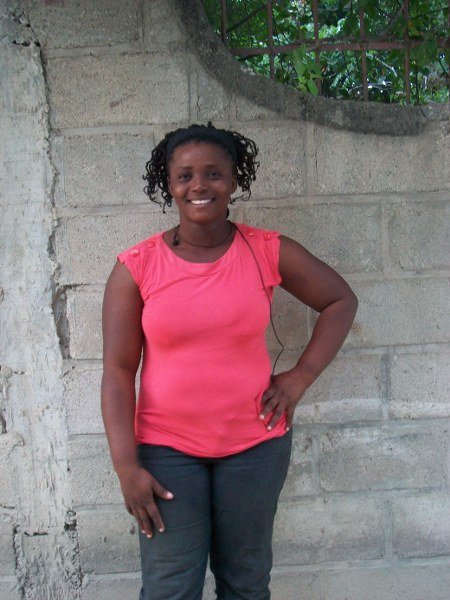
Dorzely Octave is a 42 year old mother of eight children, aged between 10 and 24 years old. She is the head of household and supports her family alone. Before the earthquake, Dorzely had a small business selling coffee and bread and kept her supplies in a storage place in Delmas. But when the quake struck, the building was destroyed. All of her stock and materials inside were unsalvageable.

Dorzely is now part of CHF’s rubble removal team working Delmas. On February 8, she was working on Delmas 17 with the rest of her team. The ‘HIMO’ rubble removal teams are an essential element of recovery from earthquakes and other natural disasters. Not only do they undertake essential clean up work, they restore people’s livelihoods by employing them in cash for work activities that enable them to support their families. These teams are also empowering, as they employ Haitian men and women in the recovery efforts, making them active participants rather than passive ‘beneficiairies’. With purpose and a sense of solidarity, it becomes their recovery process.

CHF’s HIMO teams consist of 12 people, and we aim to have a balance of men and women – our experience is that women are capable of doing the same work as men in rubble removal. Dorzely says:

“I am proud to be part of this team. We are helping to clean the streets. I am able to help with the clean-up efforts. My job is to take the stones and debris and put it into the wheelbarrows. It is great to be a woman on this team because I am working with all of these men and I can prove that I am just as strong as they are.”

Dorzely was in a small town just on the outskirts of Port au Prince when the quake hit. She immediately tried to get back into the city to get to her house:

“My kids were in the house when the earthquake hit. I was so afraid because I was not with them. But when I came back to the city, I found them all alive with only some small injures. My house did not fall, but it is pretty damaged. One of my daughters is sick. With my first pay check I will take her to the doctor and buy her the medicine that she needs. With the second pay check I will try to purchase some of the items I lost and re-start my business.”

Pictures:

Want to support this project's continued work? give now

Was this report valuable...
vote divider
Loading...
Tell us why (your comments may be shared publicly).
Rules for Comments 
Comments

Blog Update Jan 20, 2010: Haiti, One Week Later

By Kristie van de Wetering - CHF Haiti Communications Manager, January 21, 2010 05:41 PM

CHF continues to work at emergency response, lending our facilities, equipment and logistics to assist in the relief operations. In Petit Goave we are working closely with Swiss organization Medecins du Monde Suisse. Kits arrived for 1000 families that include shelters, kitchen sets, mosquito nets, jerry cans, and four large tents for emergency hospital rooms, which are set to be distributed.

We are continuing to prepare for the forthcoming weeks – and months - as we focus on transitional shelter and employing Haitian communities in the clean up of their neighborhoods. Part of this has involved surveying our existing infrastructure projects – over 100 across Haiti – that we have completed since 2006. We are glad to say that minimal damage has been sustained to our existing projects, which gives us the confidence to go ahead using construction techniques that have been truly tried and tested.

Pictures:

Want to support this project's continued work? give now

Was this report valuable...
vote divider
Loading...
Tell us why (your comments may be shared publicly).
Rules for Comments 
Comments

Tuesday, January 19, 2010: Immediate and longer term relief underway

By Kristie van de Wetering - Communications Manager, CHF Haiti, January 20, 2010 04:35 PM

CHF International is continuing to undertake relief work both immediately and plan for the longer term. We have been able to survey many of our previous infratructure projects and we are glad to be able to report that most have survived the earthquake well, which means we can launch into new works with the knowledge that our construction techniques have been truly tried and tested. In the Petit Goave area, for example, all five schools built by CHF survived the earthquake intact. These schools are currently being used as shelters for displaced people.

In the meantime, CHF is providing logistical support to the Haitian Red Cross. Yesterday and today we transported 750 hygiene-kitchen kits from St. Marc (about 2 hours north of Port-au-Prince) as well as portable water treatment plants. As of today we also made available to the Red Cross two of our vehicles and drivers to help with the transportation of personnel and materials in Port-au- Prince.

Want to support this project's continued work? give now

Was this report valuable...
vote divider
Loading...
Tell us why (your comments may be shared publicly).
Rules for Comments 
Comments

Tuesday January 19, 2010: Haitian Churches in Ruin, but Faith Standing Tall

By Kristie van de Wetering - Communications Manager, CHF Haiti, January 20, 2010 04:36 PM

A typical Haitian night is filled with a plethora of sounds – confused roosters, unsettled dogs, nightclub rhythms, to name a few. As I lay out on the damp grass (my new bedroom on the CHF Haiti office lawn), looking up at Orion and the other stars, there is one sound that I would not have expected to hear – at least not after what happened on Tuesday, 12 January 2010.

Singing. Above the hum of generators, sporadic gun fire and chirping cicadas, I hear a multitude of voices. Haitians are singing. In the wake of the worst disaster in the history of the UN, they are singing praises to God. I cannot quite make out the song or a specific tune, but it clearly a hymn.

Amid all the negative press about insecurity and violence, there are a multitude of stories of hope and unbelievable resilience. To be sure, security is a very valid concern today, as there are reports of isolated violent incidents. And as desperate mothers’ and fathers’ survival instincts kick in and they try to secure food and water for their families, more reports of violence can be expected. However, to portray the city as a warzone and its people as ruthless savages is neither accurate nor appropriate.

In all I have witnessed during my 9 years in Haiti, I am always astonished by the resilience of the Haitian people, their determination to survive, and their devotion and unwavering faith in God.

Not once have I heard anyone question why God would allow something like this to happen. Actually, it has been the exact opposite. I have heard people who have lost loved ones thanking God for saving those He did. Conversations are peppered with phrases like “thanks to God”, “by the grace of God” and “God is protecting us”.

Whether you are a believer or not, I believe it is impossible to question the strength of the Haitian people to overcome this tragedy. However, they cannot and should not have to do it alone. And as the CHF International team in Haiti, we are making sure that they don’t.

Pictures:

Want to support this project's continued work? give now

Was this report valuable...
vote divider
Loading...
Tell us why (your comments may be shared publicly).
Rules for Comments 
Comments

CHF-Haiti Blog Update - Monday January 18, 2010: A Survivor’s Story

By Kristie Van de Wetering - CHF Haiti Communications Manager, January 19, 2010 03:28 PM

For every person lost in the Haiti earthquake there is a personal tragedy that we can hardly begin to understand, even when we hear the bald and terrible numbers of casualties repeated every day in the media.

Our staff in Haiti were surveying the damage in Port-au-Prince when they passed a house that had been completely flattened. Despite the destruction they realized it was the house of one of CHF’s community mobilizers, Cedanor St. Vil.

Cedanor told our people that he had come home early from work on Tuesday. Normally he would be home later, but had got a ride home early and got home just before 5pm – when the earthquake struck. His little four-year-old girl was napping, as was his middle child, a boy. He, his wife and his oldest son were in the bedroom together. Then the earthquake struck.

The walls caved in. Cedanor, his wife and son were trapped for 1 ½ hours in the rubble, but managed to dig themselves out. Cedanor went back in to the house to get his other two children. He managed to get his middle son, but, although he could hear his little daughter crying out for help, crying to her parents and to God, he couldn’t get through to her. Four hours after the earthquake struck, he finally managed to get her out from amongst the rubble – but she had already died.

Cedanor’s house has been completely destroyed. The surviving children are traumatized by the experience, especially the older boy.

Since the earthquake Cedanor has been staying with friends in another neighborhood, but when he returned to his house to collect his belongings, he found and it had been looted by thieves.

There are countless stories like those of Cedanor’s, of lives struck tragically. Please give generously to help in the reconstruction of Haiti.

Want to support this project's continued work? give now

Was this report valuable...
vote divider
Loading...
Tell us why (your comments may be shared publicly).
Rules for Comments 
Comments

CHF-Haiti Blog Update, Sunday January 17, 2010 – Areas beyond Port-au-Prince

By Kristie Van de Wetering - CHF Haiti Communications Manager, January 19, 2010 12:30 PM

CHF received a huge amount of information on areas beyond Port-au-Prince from our Field Director Bob Fagen. Bob and his entirely Haitian team based in Petit Goave have been supporting the Boy Scouts and Red Cross with a donation of tools such as wheelbarrows and shovels, plus loads of facemasks, shirts, hats, and gloves. The Boy Scouts have been key to rescue efforts in the city and showed an impressively organized response to the earthquake in Petit Goave. CHF is proud to be partnering with them.

Bob was able to travel beyond Petit Goave to Grand Goave and Legoane. Some of his observations are below.

Grand Goave

* The main Catholic Church on the Place Publique in the center of town and its rectory were both destroyed. We were able to speak to the priest who had survived and he is in good spirits, in spite of the destruction

* A tent city has been erected on the Place Publique. At night it swells to 5,000 people. There are 5-6 similar tent cities throughout Grand Goave, each with 3,000-5,000 people at night.

* Grand Goave, while battered by the earthquake, is not as visibly devastated as either Petit-Goave or Leogane. However, Grand Goave depended on Petit Goave for much of its potable water, and the shortages in Petit Goave have significantly affected Grand Goave. Considering the tent city phenomenon and the lack of water, it is only a matter of time before disease becomes an issue in Grand Goave.

Leogane

* MINUSTAH (UN mission in Haiti) were undertakni g a protein cookie distribution in front of Leogane City Hall to mostly women and children.

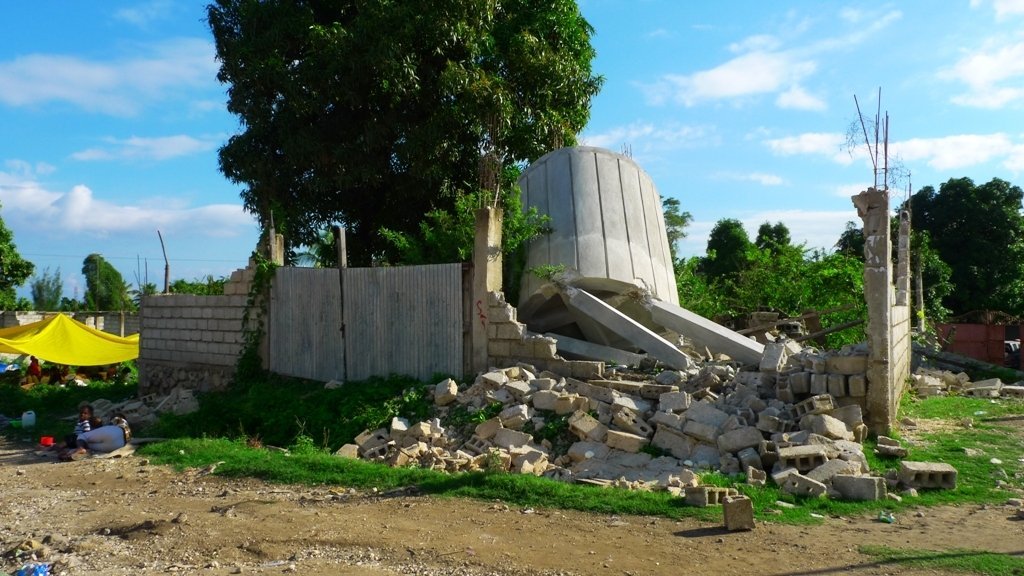
* Much of Leogane, both downtown and the surrounding area, was flattened by the quake and unconfirmed estimates put the death toll as high as 100,000. We sincerely hope this is far higher than the reality.

* Between Leogane and L'Acul we passed a destroyed water pump that is indicative of the below-the-surface damage that has crippled many wells and reservoirs in the region. Potable water is and will continue to be a major issue for the region until water supplies can be repaired or replaced.

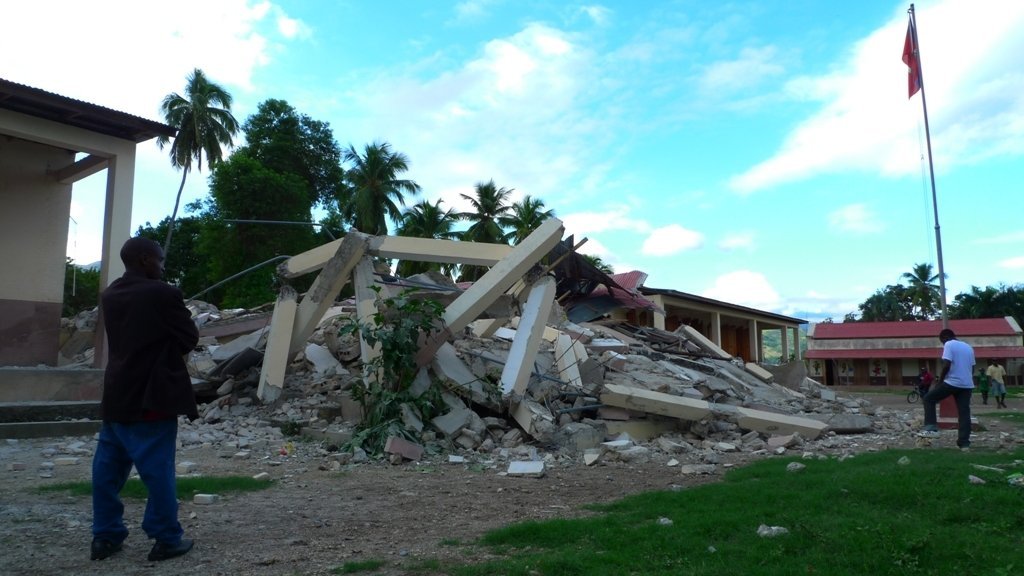
* The Ecole National Anna Karina, a high school in the city center of Leogane, was flattened completely. Tragically class was in session at the time.

* Churches appear to have suffered extraordinary damage from the quake, with most crumbling, especially the larger structures.

* The financial system in affected cities has been paralyzed by the earthquake. While some supplies are available, prices have skyrocketed and people simply do not have access to what little money they have in the bank.

* We saw collapsed wooden houses on stilts, common in historic Leogane, a city of approximately 134,000. Many of the multi-level Leogane homes fell to the ground after the stilts and supporting beams collapsed underneath them. The UN Office for the Coordination of Humanitarian Affairs (OCHA) estimates that 80-90% of Leogane was destroyed by the earthquake.

CHF plans to work with relief agencies in these hard hit areas and wants to draw attention to the plight of the Haitian people outside of Port-au-Prince, who are suffering the same privations and tragedies. T

Want to support this project's continued work? give now

Was this report valuable...
vote divider
Loading...
Tell us why (your comments may be shared publicly).
Rules for Comments 
Comments

CHF-Haiti Blog Update, Sunday January 17, 2010 – Relief efforts underway in Port-au-Prince

By Kristie Van de Wetering - CHF Haiti Communications Manager, January 19, 2010 09:44 AM

CHF International is working closely with other local and international relief agencies and helping with the immediate relief effort. As well as giving supplies to rescue workers such as gloves, face masks, pick axes, shovels and sledge hammers, tomorrow we will be transporting 750 hygiene/kitchen kits from St. Marcs to Port-au-Prince to be distributed to homeless families, needing shelter in the capital.

Current updates:

* The water trucks are delivering water – many companies open for private delivery (to homes and such); smaller trucks along the road giving free water to Internally Displaced People (IDP)

* There is a lot of “agua gratis” – Dominican company – stopping at random places giving free water

* Small water distribution centers are open for business

* Transportation to the Dominican Republic (DR) is running

* Not a lot of traffic on the road – public transport is running as usual

* Market ladies on the street on the street cooking and selling

* Haitian National Police out in larger numbers today than before

* People on the street – people still in shock; blank stares; – going about daily business

* Rescue efforts by private citizens still ongoing

* Many people at US and Canadian embassy gates

* Another observation: one of our staff hear said that he observed a distribution of essential items by UN soldiers on Place Boyer – one of the public squares in Petion Ville turned into an IDP camp. He said he has never seen such an orderly distribution in Haiti. Everyone in lines. No hostility. No violence. No fighting.

We are all encouraged to hear that there is food and water reaching an increasing number of people, and that the private sector is still functioning on both the formal and informal level to some degree – a key to getting Haiti back up and running. Also incredibly encouraging, in spite of media reports of violence, are reports of quiet and orderly aid distributions.

Please continue to help both the immediate relief efforts and also the longer term by donating what you can.

Want to support this project's continued work? give now

Was this report valuable...
vote divider
Loading...
Tell us why (your comments may be shared publicly).
Rules for Comments 
Comments

CHF Haiti Update, Saturday January 16 2010 – News from affected areas outside Port au Prince

By Kristie Van de Wetering - CHF Haiti Communications Manager, January 18, 2010 11:33 PM

Yesterday CHF International received the good news that CHF Haiti had been able to account for all 170 staff members. No one was hurt in the earthquake. But please keep our staff’s family members and friends in your thoughts and prayers as we find out about them. We are establishing a supply line from Santo Domingo in the Dominican Republic and our emergency response experts have been able to meet with our existing staff so we can begin responding.

CHF has been assisting immediate relief efforts throughout earthquake afflicted regions by giving supplies to rescue workers such as gloves, face masks, pick axes, shovels and sledge hammers; and we will soon be providing logistical support in the form of vehicles and drivers.

CHF’s main focus in an emergency is on transitional shelter and cash-for-work livelihoods work. This means creating sanitary, safe temporary homes for those whose houses have been destroyed that they can live in while reconstruction occurs, and also employing earthquake affected communities in the clean-up of their area, removing debris, taking down unsafe constructions and repairing those that are still able to function. This way the people can earn money, keep busy, learn some useful skills for future work, and be a part of their own development – they become empowered in their own relief and play the key role in securing their future. So please don’t forget about Haiti when it leaves the headlines, because the Haitian people will face challenges from this for years to come.

Most of the media focuses on Port-au-Prince the stricken capital, but we have received images and news from Petit-Goave, a coastal town of 12,000 people 40 miles from Port-au-Prince, where CHF has been undertaking school rehabilitations and rural work. Our Field Office Director, Robert Fagen, reported the following:

Petit Goave was hit hard, and so was the whole region including Grand Goave and Leogane. The road to Port-au-Prince is back open as of Wednesday. Some preliminary statistics and information includes:

* About 1,000 dead so far (cadavers still being discovered)

* 1,813 confirmed injuries

* Petite Guinee completely destroyed (built on rubbery land not rock)

* Downtown roughly 5-10% destroyed instantly, especially old brick buildings and churches without iron reinforcements

* Public buildings and hospital damaged or destroyed.

* Virtually everyone is living in the streets

* Most water pumps were electrical rather than manual pumps, so much water is inaccessible

* Very limited gas/diesel supplies

* Very limited potable water options

* No outside aid has reached Petit Goave yet

CHF is assisting the following organizations:

* Red Cross/Boy Scouts – we have given tools like wheelbarrows and shovels, plus loads of facemasks, shirts, hats, and gloves

* The local Mayor – we gave some gloves and facemasks

* And we are partnering with more local Haitian organizations during their relief efforts

We plan to try to clear a path from the Route National to the Port, with a few backups to the biggest tent cities (at the Football Field in particular).

All five of the schools CHF built are intact and are being used as emergency shelters, complete with latrines and basic water supplies.

Want to support this project's continued work? give now

Was this report valuable...
vote divider
Loading...
Tell us why (your comments may be shared publicly).
Rules for Comments 
Comments