Partners In Health Haiti Earthquake Recovery

 
$134,693
$65,306
Raised
Remaining
Jan 12, 2012

Haiti Earthquake Recovery - January 2012 update

On January 10, 2012, the Chicago Tribune published the following article, written by Dawn Turner Trice:

Though world stood still, things moving forward in Haiti

This was the email Dr. Evan Lyon sent Jan. 17, 2010, five days after Haiti's devastating earthquake:

drove past the main central park in (Port-au-Prince) where at least 50K people must be sleeping and it was almost silent.

people cooking, talking, some singing and crying.

people are kind, calm, generous to us and others. even with hundreds lying on the ground, open fractures, massive injuries of all kinds.

there are few dead bodies on the street.

stench is everywhere.

the city is changed forever

Thursday is the second anniversary of the earthquake, and Lyon returned to Haiti last week to check on patients he hopes to bring back to this country for care, to help launch a new residency program for Haitian doctors, and to mark the anniversary.

Lyon, 40, is a Harvard-trained physician and assistant professor of medicine at the University of Chicago. He's also the medical director of the Right to Health Care Program for the international medical and social services organization Partners in Health.

When he arrived in Port-au-Prince last Friday, he headed to a hospital in Carrefour, the neighborhood that was near the epicenter of the earthquake. He was on his way to meet a 20-year-old woman whose bone cancer had metastasized.

Lyon had been working with the woman's doctors from his office in Chicago since last fall and they had asked him to explain to her why she was no longer a candidate for treatment in the United States, as her condition was terminal.

Although the woman's cancer had nothing to do with the earthquake, she and her mother had been living in a tent since the disaster.

"I'll be checking in with other patients who will be able to come to the States for care," said Lyon. "But unfortunately, this young woman isn't one of them."

On the way to the hospital, he said, the first thing that struck him was how quiet the streets of Port-au-Prince were. And that's a big difference even since September, the last time he was in the capital.

"We drove through the downtown in the middle of the city near the presidential palace and there's a massive refugee camp" around the site, said Lyon. "There are about 15,000 people in that part of town. But things are eerily quiet and it almost felt better when more was happening in the streets and there was more activity."

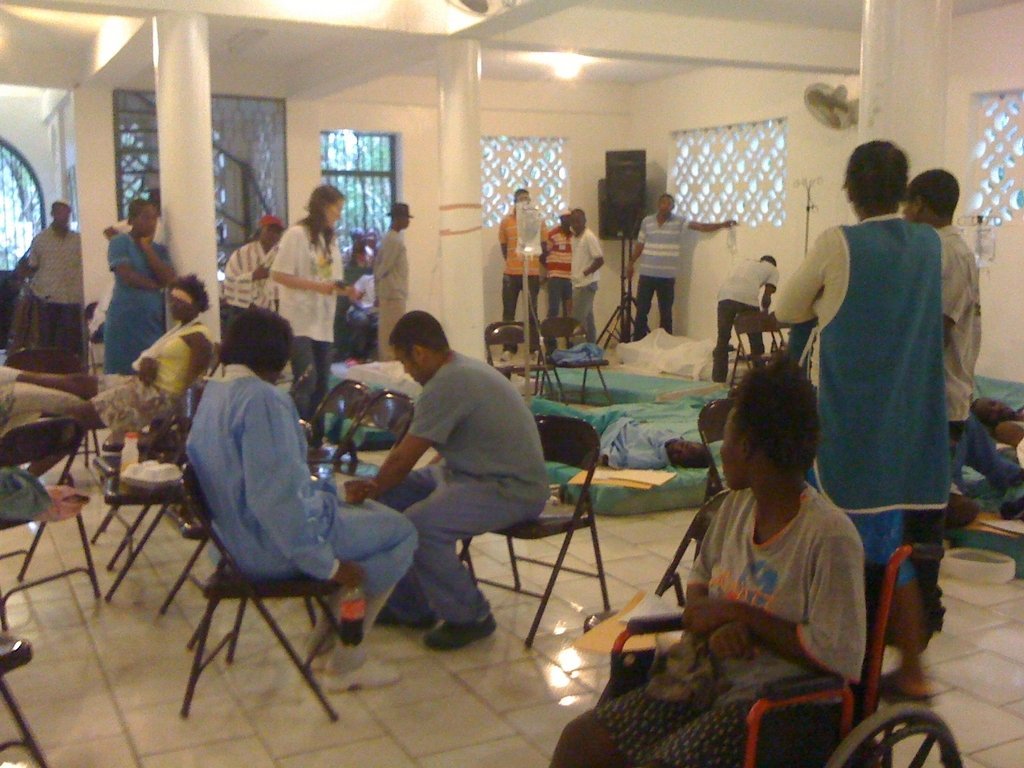
Tens of thousands of people lost their lives in the earthquake, and about 1.5 million were displaced. About 500,000 still live in temporary housing, according to Partners In Health.

Lyon said that though most of the residents have moved out of the capital and into long-term settlement camps, he fears that some people may not have immediate access to health care or other services.

"There's been more engagement, more work and, in some ways, more progress over the last two years than in years before," he told me. "But it still doesn't come close to meeting the size of the need."

As he rode through the city, he said that though the main roads have been cleared of debris and makeshift tents, none of the buildings housing the ministries of health and interior or the Supreme Court have been rebuilt. The landscape has gaping holes and, for miles, bears little resemblance to the Haiti he remembers back when he first arrived in 1996 as a music teacher.

Much work remains in Haiti, including stemming a cholera epidemic that began in October 2010, and continues with about 600 new cases a day. Lyon has been working with a human rights organization that's investigating the cause of the epidemic, which, as of Dec. 25, had killed at least 7,001 Haitians, according to the Haitian Ministry of Health.

Despite all of this, there are signs of hope.

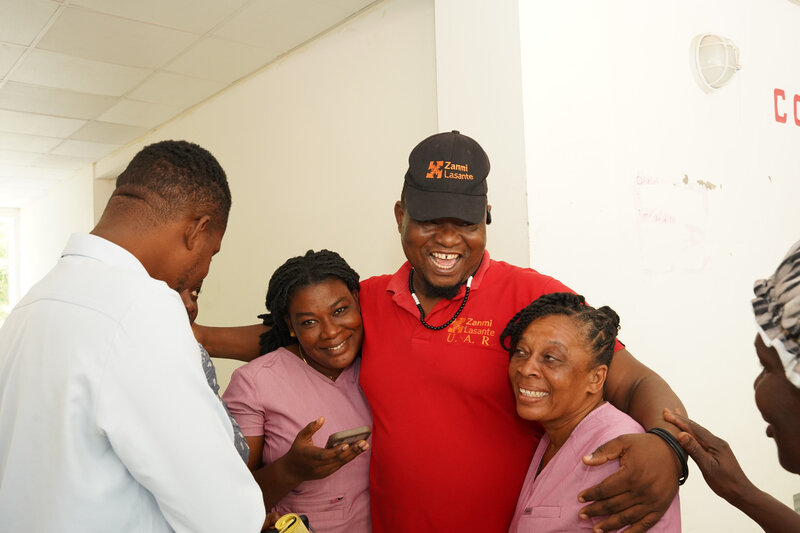
Lyon said one example is a new residency program that was launched this week at a hospital Partners In Health runs with its Haitian sister organization Zanmi Lasante in St. Marc, about 50 miles north of Port-au-Prince.

"Of all the work that needs to be done here, this is entirely optimistic," Lyon said.

He said the program will teach Haitian doctors how to be family practice physicians.

As part of the program, Lyon and other physicians will conduct classes over the Internet and travel to Haiti to teach. The University of Chicago also will start a one- to two-year fellowship in which trained doctors will work and teach in Haiti for about six months a year.

"Two years after the complete destruction of the main hospital and medical school, we're making progress, although it never feels fast enough," he said. "Within a year, a new national teaching hospital (built by Partners in Health and Haiti's Ministry of Health) will open. It's a nice way to think about the anniversary. Despite the many challenges ahead, we're moving forward."

Oct 12, 2011

Mirebalais Hospital - September 2011 Update

The construction of this new hospital in Mirebalais, Haiti, will bring to bear all that Partners In Health and Zanmi Lasante have learned over the past 25 years about hospital design that serves health care delivery, provides a dignified setting for patients in very poor settings, and allows health professionals to train and develop new skills. Workers broke ground on the facility on July 3, 2010. When completed it will house 320 beds, serve an estimated 450 - 500 patients a day, and help to train Haiti's next generation of doctors, nurses and medical workers.

*******

September 2011 Update:

Wiring moving along quickly, hospital to have power in late September

Work is moving along quickly at the Mirebalais National Teaching Hospital. Hurricane Irene passed by with little more disturbance than rain luckily. The electrical crew has arrived and is making impressive progress.

Wiring in major parts of the new facility is now in place.

Wiring in major parts of the new facility is now in place.

This week the crew completed running conduit and pulling wire in the Outpatient, Women’s Clinic, Community Health, Endoscopy and Pharmacy buildings. Furthermore, they have finished the Main Electrical Room switchgear in building 4.1 (mechanical, kitchen and laundry) and have begun running conduit and installing panel boxes in building 2.1 (labor and delivery).

All this was done in less than three weeks. Also, thanks to the National Rural Electric Cooperative Association (NRECA) we will have permanent power to the site within 10 days!

The wall tile in the kitchen is complete and the crew can now start on the floor tile. Once the tile is complete, they will be able to start installing cabinetry and equipment. The tile work is almost complete in multiple bathrooms, including those of Outpatient, Women’s Clinic and Community Health.

In late August, Paul Farmer made a visit to the site. This was a very exciting day for everyone as they were happy to be able to show him the progress that has been made. 


With tiles up, the walls begin to look more like a hospital.

With tiles up, the walls begin to look more like a hospital.

Links:

Mar 14, 2011

Earthquake Recovery - Community Rehab Programs

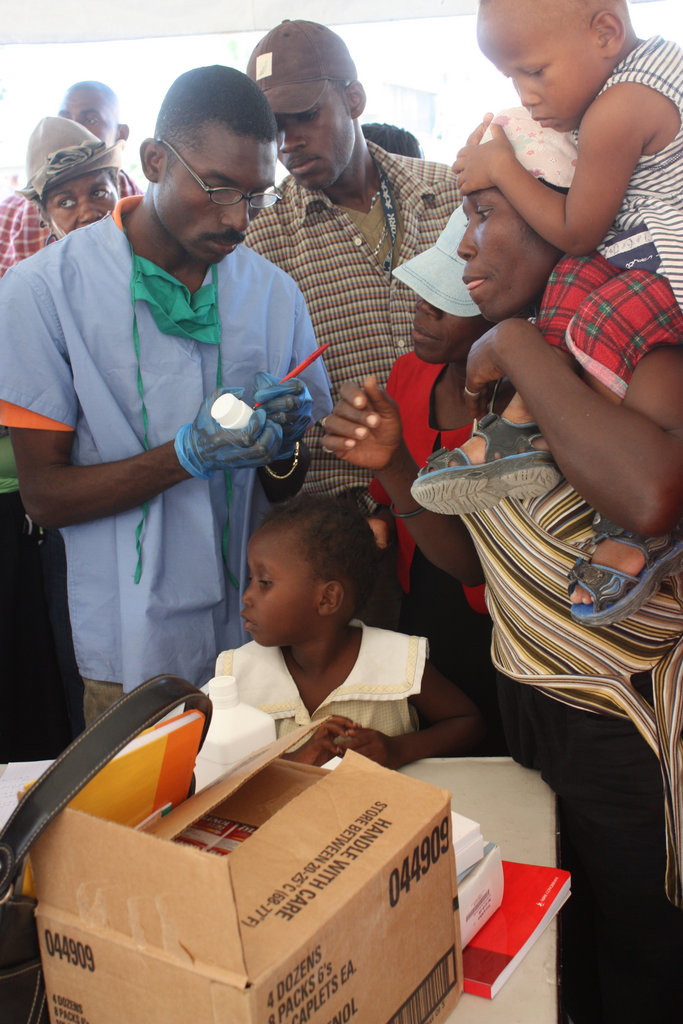
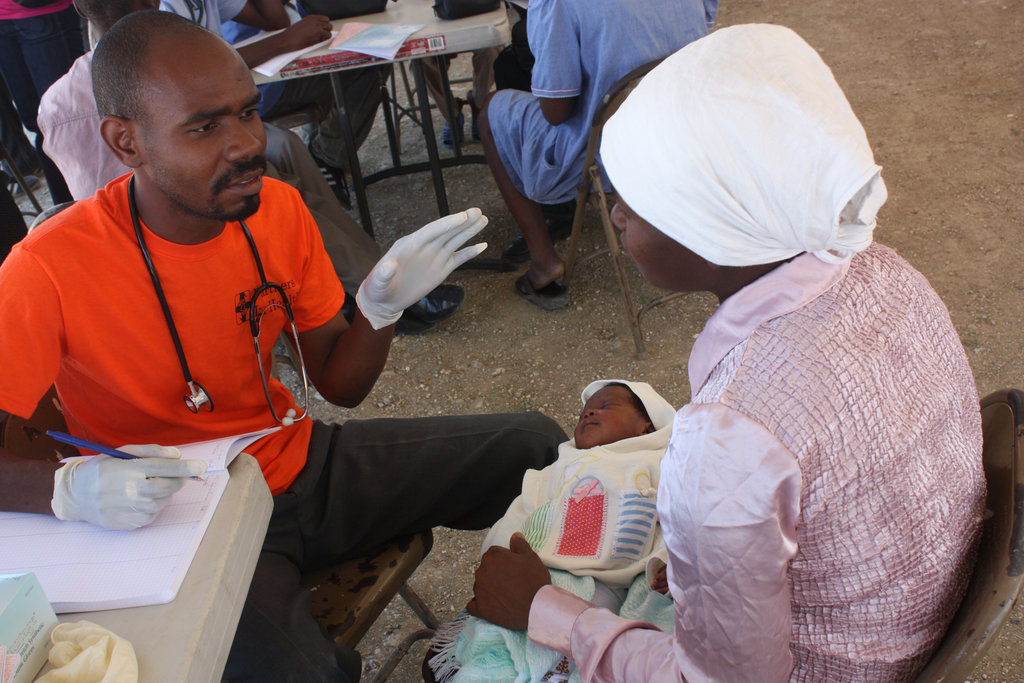
Following the January 12, 2010 earthquake in Haiti, Partners In Health (PIH) and our Haitian sister organization Zanmi Lasante (ZL) immediately began to both respond to immediate medical needs and plan for the long-term recovery and rebuilding of Haiti's public health system. Now, nearly 15 months after the earthquake, PIH/ZL's focus is on these long-term programs, including our community-based rehabilitative medicine program.

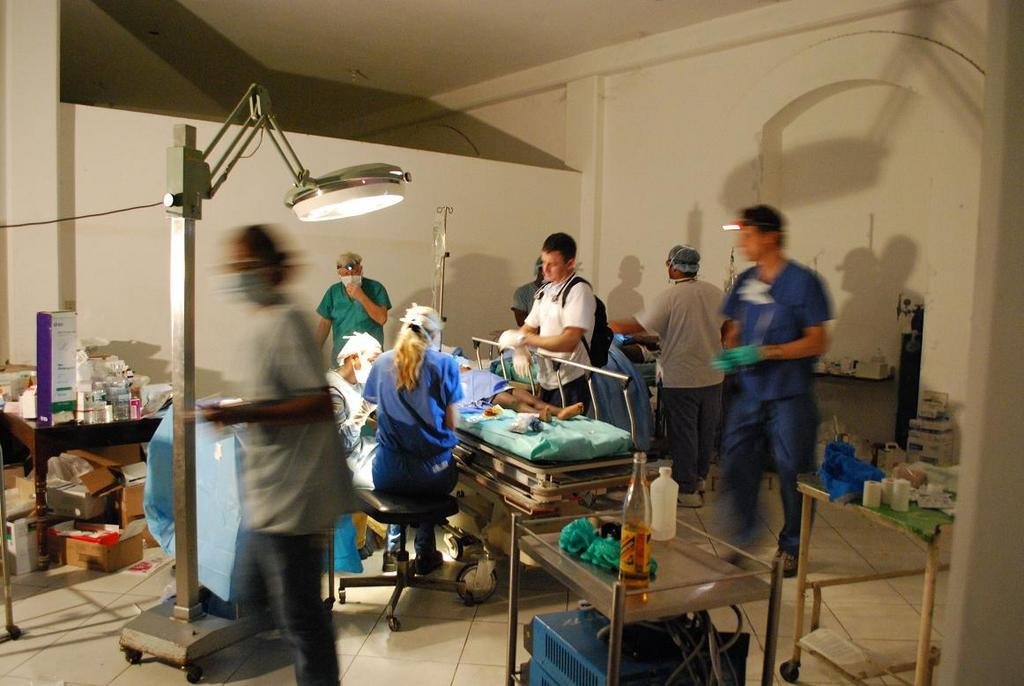
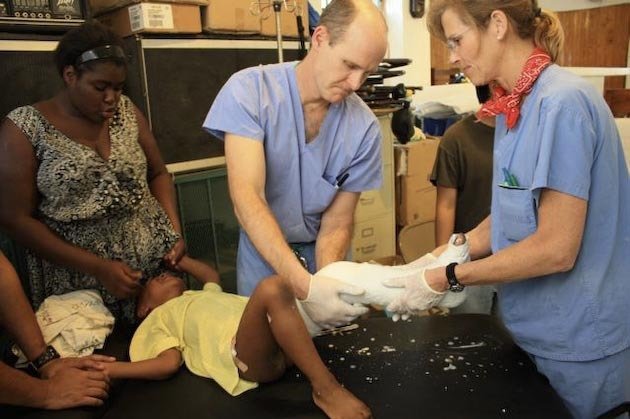
In general, patients have sustained one of four types of injuries: a closed fracture which will need follow-up x-rays and cast changes; an open fracture, which requires wound care in addition to typical fracture care; an amputated limb, which often requires additional surgical procedures for prosthesis fittings; or permanent neurological disabilities, which include spine fractures, spinal cord injuries or paralysis. No matter what the injury, these patients require specialized rehabilitation. Recovering from a fracture means not only learning how to walk with a crutch, but also retraining muscles, ligaments and tendons to walk again. Patients who have had limbs amputated or who have been permanently disabled will need occupational therapy to learn how to live with their disability, in addition to ongoing physical therapy to strengthen their muscles. Patients who underwent life-saving surgeries in the aftermath of the earthquake will require months, and in some cases years, of follow-up and aftercare.

PIH/ZL’s Community-Based Rehabilitative Medicine Program has two main components: Clinical Care and Community-Based Care. When an injured patient first comes to one of PIH/ZL's hospitals or clinics, they are seen by a clinician, who then refers appropriate patients to the rehabilitative team. A doctor of rehabilitative medicine handles all medical issues related to this disability. After a complete evaluation, the rehab doctor develops a care plan, 90% of which takes places outside of the hospital with PIH/ZL's team of community health workers. In cases of extreme injury, patients are reffered as inpatients to PIH/ZL's rehabilitation clinic (currently in Cange, while a state-of-the-art rehab center is being planned and constructed in St. Marc).

Back in the community, each patient is visited regularly by a home visit team, a three-member unit: a rehab doctor and/or nurse (for clinical support), a rehab technician (for physical and other rehab therapies), and a rehabilitation educator, who is a community health worker (CHW) who has been specially trained to tend to the needs of people with disabilities. Throughout this time, the patient's CHW visits him or her daily to monitor the patient’s state, providing in-home support and accompaniment throughout the healing process.

Thank you so much for your support of Partners In Health's earthquake relief and recovery programs. If you wish to continue supporting these types of programs, be sure to take advantage of the GlobalGiving Bonus Day on March 16! All donations made on 3/16 will be matched at 30% (up to $1,000 per donor)!

For video on our rehab program, click below:

Links:

About Project Reports

Project Reports on GlobalGiving are posted directly to globalgiving.org by Project Leaders as they are completed, generally every 3-4 months. To protect the integrity of these documents, GlobalGiving does not alter them; therefore you may find some language or formatting issues.

If you donate to this project or have donated to this project, you will get an e-mail when this project posts a report. You can also subscribe for reports via e-mail without donating or by subscribing to this project's RSS feed.

Make a monthly recurring donation on your credit card. You can cancel at any time.
Make a donation in honor or memory of:
What kind of card would you like to send?
How much would you like to donate?
gift Make this donation a gift, in honor of, or in memory of someone?

Organization

Partners In Health (PIH)

Boston, MA, United States
http://www.pih.org

Project Leader

Laura Soucy

Annual Giving Coordinator
Boston, MA United States

Where is this project located?

Map of Partners In Health Haiti Earthquake Recovery