Classmate PCs for better education in India

 
$12,493
$87,507
Raised
Remaining
Feb 8, 2013

Learning is Enhanced by Access to Technology

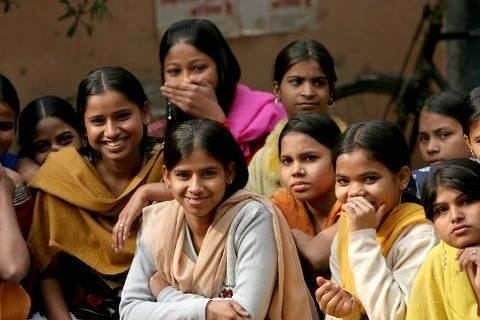
The use of the PCs in the comfort of a classroom provides a safe space for girls to develop social networks amongst themselves. Outside of the home, schools are one of the only places girls may meet with other girls in a social setting.  The secure environment provided by the school helps girls in developing their confidence without fear of outside intrusion. Thus, schools provide the only safe space, outside the home, for girls to meet with each other, learn together and share ideas. The ease of access to the internet and computer training should help girls link with their counterparts globally, enabling them to expand their worldviews. Through these connections, girls can develop methods for engagement in civic action projects, further increasing their social networks and development of leadership skills.  

The CARE-Intel collaboration has helped in fostering positive change via the following outcomes:

  1. Increased computer literacy among students, which provides them with better skills for future studies and employment.
  2. Strengthened teacher and staff capacity to help integrate technology in instructional design and the curriculum.
  3. Active social networks, especially for girls, as the laptop computers will help turn a classroom into a safe space in which to guide their own learning and enhance communication skills.

CARE has provided computer training to teachers and students. The computers have been used for classroom instruction and after school for extra-curricular activities such as computer clubs.  CARE helped in enhancing learning opportunities and leadership skills particularly of girls, proving great opportunity for girls to network and practice extra-curricular activities.

CARE has helped enhance learning opportunities and leadership skills in India through expanded computer use. The acquisition of the computers significantly increased resources and learning opportunities for students as it helped in bringing the computer-to-student ration close to 1-1. The extra resources helped in solidifying students’ reasoning and analytical skills and the computers also provided the students with opportunities for extracurricular activities such as developing social networks online.

Teacher training workshops aimed at providing school-based academic support to instructors.  While most of the teachers in the schools have a basic knowledge of computers, the trainings intended to ensure they are using the technology to its full potential in the day-to-day teaching-learning process in the classroom using the teacher-laptop and classmates.

Acquiring leadership skills through computers further empowers girls by building their confidence, enabling them to make informed decisions about their lives.  Girls were also given the opportunity to develop social networks using the computers in their classrooms. Within this framework; Computer friends groups have been formed under the supervision of the IT teachers in the schools.

Ultimately, the CARE-Intel partnership is leading to increased instructional capacity of teachers, computer literacy skills for students and the creation of girls’ active social networks.

Nov 9, 2012

Technology supports girls' education

The use of the PCs in the comfort of a classroom provides a safe space for girls to develop social networks amongst themselves. Outside of the home, schools are one of the only places girls may meet with other girls in a social setting.  The secure environment provided by the school helps girls in developing their confidence without fear of outside intrusion. Thus, schools provide the only safe space, outside the home, for girls to meet with each other, learn together and share ideas. The ease of access to the internet and computer training should help girls link with their counterparts globally, enabling them to expand their worldviews. Through these connections, girls can develop methods for engagement in civic action projects, further increasing their social networks and development of leadership skills.  

The CARE-Intel collaboration has helped in fostering positive change via the following outcomes:

  1. Increased computer literacy among students, which provides them with better skills for future studies and employment.
  2. Strengthened teacher and staff capacity to help integrate technology in instructional design and the curriculum.
  3. Active social networks, especially for girls, as the laptop computers will help turn a classroom into a safe space in which to guide their own learning and enhance communication skills.

CARE has provided computer training to teachers and students. The computers have been used for classroom instruction and after school for extra-curricular activities such as computer clubs.  CARE helped in enhancing learning opportunities and leadership skills particularly of girls, proving great opportunity for girls to network and practice extra-curricular activities.

CARE has helped enhance learning opportunities and leadership skills in India through expanded computer use. The acquisition of the computers significantly increased resources and learning opportunities for students as it helped in bringing the computer-to-student ration close to 1-1. The extra resources helped in solidifying students’ reasoning and analytical skills and the computers also provided the students with opportunities for extracurricular activities such as developing social networks online.

Teacher training workshops aimed at providing school-based academic support to instructors.  While most of the teachers in the schools have a basic knowledge of computers, the trainings intended to ensure they are using the technology to its full potential in the day-to-day teaching-learning process in the classroom using the teacher-laptop and classmates.

Acquiring leadership skills through computers further empowers girls by building their confidence, enabling them to make informed decisions about their lives.  Girls were also given the opportunity to develop social networks using the computers in their classrooms. Within this framework; Computer friends groups have been formed under the supervision of the IT teachers in the schools.

Ultimately, the CARE-Intel partnership is leading to increased instructional capacity of teachers, computer literacy skills for students and the creation of girls’ active social networks.

Aug 14, 2012

Help Intel support girls' education in India

The use of the PCs in the comfort of a classroom provides a safe space for girls to develop social networks amongst themselves. Outside of the home, schools are one of the only places girls may meet with other girls in a social setting.  The secure environment provided by the school helps girls in developing their confidence without fear of outside intrusion. Thus, schools provide the only safe space, outside the home, for girls to meet with each other, learn together and share ideas. The ease of access to the internet and computer training should help girls link with their counterparts globally, enabling them to expand their worldviews. Through these connections, girls can develop methods for engagement in civic action projects, further increasing their social networks and development of leadership skills.  

The CARE-Intel collaboration has helped in fostering positive change via the following outcomes:

  1. Increased computer literacy among students, which provides them with better skills for future studies and employment.
  2. Strengthened teacher and staff capacity to help integrate technology in instructional design and the curriculum.
  3. Active social networks, especially for girls, as the laptop computers will help turn a classroom into a safe space in which to guide their own learning and enhance communication skills.

CARE has provided computer training to teachers and students. The computers have been used for classroom instruction and after school for extra-curricular activities such as computer clubs.  CARE helped in enhancing learning opportunities and leadership skills particularly of girls, proving great opportunity for girls to network and practice extra-curricular activities.

CARE has helped enhance learning opportunities and leadership skills in India through expanded computer use. The acquisition of the computers significantly increased resources and learning opportunities for students as it helped in bringing the computer-to-student ration close to 1-1. The extra resources helped in solidifying students’ reasoning and analytical skills and the computers also provided the students with opportunities for extracurricular activities such as developing social networks online.

Teacher training workshops aimed at providing school-based academic support to instructors.  While most of the teachers in the schools have a basic knowledge of computers, the trainings intended to ensure they are using the technology to its full potential in the day-to-day teaching-learning process in the classroom using the teacher-laptop and classmates.

Acquiring leadership skills through computers further empowers girls by building their confidence, enabling them to make informed decisions about their lives.  Girls were also given the opportunity to develop social networks using the computers in their classrooms. Within this framework; Computer friends groups have been formed under the supervision of the IT teachers in the schools.

Ultimately, the CARE-Intel partnership is leading to increased instructional capacity of teachers, computer literacy skills for students and the creation of girls’ active social networks.

Feb 3, 2012

Intel Volunteers in India: October-November 2011

The Intel Education Service Corps (IESC) is a short-term service and career development opportunity for Intel employees to support the deployment of Intel classmate PCs in developing countries. In this blog, Heather Levin, an applications engineer at Intel, recaps her team's first week of experiences in India working with CARE in Hardoi.


As we walked through the gates of the Sarvodaya Ashram on Tuesday morning, it was clear that we had entered a sanctuary. Four groups of 25 girls were seated on the floor, engaged with each other, their teacher, and their studies. Perhaps these girls have known suffering but you would never have known it from their faces. It was clear that the Udaan school – supported by CARE India and designed to help girls catch up from a gap in their schooling – has created a nurturing family where the girls feel safe and are able to focus on their development.


The girl’s faces were shy and curious as they began their first computer class. Within minutes, they were engaged and actively exploring what we had shown them. We had prepared more advanced lesson plans, but we had to adapt and adjust as so many of the fundamental skills that are ingrained in us are new to them. In addition, we had created an Excel wedding budget lesson plan, but the girls informed us that weddings come only after their studies.  


So we focused on practical skills like navigating the desktop, using a mouse, opening, saving, and formatting but always ended class with an activity that thrilled them. The girls were mesmerized by the use of the classmate PC’s camera, snapping pictures of themselves, their teachers, and us. The typing and math games we introduced not only reinforced the children’s ability but inspired a teacher, who had previously stated that she only wanted one hour of computer usage per week, to say that she would start using the software as part of her math curriculum. The girls quickly grew more confident and began navigating the computer and practicing addition, subtraction, and multiplication. We tried to plant at least one seed in their imagination, and each day they left class sparkling with delight, waving, and shouting Namaste to us.


On our last day we taught the girls basic robotics by having them build crocodiles, monkeys, and planes from a LEGO Education product called WeDo, which contains not only LEGO pieces but a USB-powered motor with various sensors and a visual programming interface that runs on the classmate PC. Yesterday, none of the girls knew what robots were, but today they built and programmed their own. The click of their minds as new neural networks were manifested, on some level, seemed to shift our future. Set in motion, inspired by the congregation of forces – locals, CARE, Intel, and us – there is no bound to what these girls can do. Each girl that we help helps another, and thus, not only the girls themselves, but our dreams of a better world, take flight.

Oct 3, 2011

Project Update

By providing Classmate PCs and training, CARE and Intel are helping students at residential girls’ schools benefit from the technological revolution that is sweeping India.  Thanks to the generosity of the Intel-powered Classmate PCs (CMPCs), and volunteer support from Intel staff, hundreds of these girls are accessing to the world of technology and the learning opportunities it brings.

CARE India’s Girls’ Education Program (GEP) works to help students master subjects including language, math and science, and cultivates questioning minds and leadership skills.  GEP’s goal is to reach 2 million Indian girls through 2012, as part of CARE’s worldwide Power Within initiative, which seeks to enable 10 million girls in 20 countries to complete their primary education and develop leadership skills by 2015.

CARE’s support for special residential schools in India ensures that older girls and adolescents who have dropped out of school or never enrolled have an opportunity to catch up.  A crucial part of this work is the provision of equipment and training in the use of technology as an educational tool.  Through Classmate PCs for Better Education in India, we are equipping four such schools in the states of Orissa and Uttar Pradesh (U.P.), and a regional resource center, with CMPCs.

Distribution of CMPCs

The Intel-powered Classmate PC, designed for students in emerging markets, is a small, mobile education-oriented PC to be used in classrooms. The fully-functional PC is designed to provide affordable, collaborative learning environments for students and their teachers.

Intel has arranged with the manufacturer to provide 60 CMPCs in support of CARE’s education work in India.  The project also supports the use of content appropriate for the class level of the students using the CMPCs, and integrates the Intel Teach curriculum wherever possible for capacity building of teachers.

The placement of CMPCs will allow students to collaborate, exchange information and review e-learning material, while teachers can monitor classroom activity, supplement and extend their lectures with interactive material. 

CARE identified the schools and resource center that would benefit from the gift of 60 CMPCs, as follows:

SCHOOL 1:

  • Type of School: Udaan residential school
  • Location: Hardoi, U.P.                
  • Target group: Older girls (10-14 yrs) from vulnerable families             
  • Number of CMPCs: 16

SCHOOL 2:

  • Type of School:  Udaan residential school
  • Location: Mayurbhanj, Orissa
  • Target group: Older girls (10-14 yrs) from vulnerable tribal families
  • Number of CMPCs: 10

SCHOOL 3:

  • Type of School: KGBV residential school
  • Location:  Select 2 schools in U.P.
  • Target group: Older girls from educationally backward blocks
  • Number of CMPCs: 24

SCHOOL 4:

  • Type of School:  Resource Center
  • Location: Across program locations
  • Target group: To be used by resource persons in training and capacity-building activities with teachers and children
  • Number of CMPCs: 10

Volunteer support from Intel Education Service Corps

Intel USA provided 12 volunteers from the Intel Education Service Corps (IESC), who visited India in two batches, first in April 2010 and then in October and November 2010.  The IESC team deployed all 60 systems in two government residential schools supported by CARE, two non-government residential schools completely funded by CARE, and an education resource center used for training, capacity building and development of educational materials.

The Intel teams set up wireless routers and established classroom networks, installed learning software and applications such as anti-virus software and Open Office, and developed training content in Hindi. They trained 26 teachers, two teacher trainers and 73 students, familiarized CARE field staff with the technology and provided a point person with an administrator username and password for trouble-shooting purposes.  The team also cleaned virus infections from existing school desktop computers.

The visits included extensive meaningful interactions with students, teachers, administrators and CARE field staff, who will remember the Intel volunteers’ generosity as they learn and grow through the technology.

There was a follow-up visit by Intel during March-April 2011 to all the residential schools where the CMPCs have been deployed. The team conducted refresher trainings on the use of CMPCs, using different educational softwares, using Open Office, etc. There was encouraging feedback from the teachers and students regarding the visit from which they hugely benefitted.  The IT staff of CARE in the state location is now actively supporting trouble-shooting and other solutions.

Next steps:

CARE and Intel continue to stress the importance of long-term sustainability and the feasibility of scaling up in the provision of educational technology to extend to more schools in Uttar Pradesh and other states.  Intel volunteers will be visiting schools again in October-November 2011 providing continued training for teachers and students. 

About Project Reports

Project Reports on GlobalGiving are posted directly to globalgiving.org by Project Leaders as they are completed, generally every 3-4 months. To protect the integrity of these documents, GlobalGiving does not alter them; therefore you may find some language or formatting issues.

If you donate to this project or have donated to this project, you will get an e-mail when this project posts a report. You can also subscribe for reports via e-mail without donating or by subscribing to this project's RSS feed.

An anonymous donor will match all new monthly recurring donations, but only if 75% of donors upgrade to a recurring donation today.
Terms and conditions apply.
Make a monthly recurring donation on your credit card. You can cancel at any time.
Make a donation in honor or memory of:
What kind of card would you like to send?
How much would you like to donate?
gift Make this donation a gift, in honor of, or in memory of someone?

Organization

CARE
CARE

Atlanta, GA, United States
http://www.care.org

Project Leader

Paul Towne

Senior Director for Strategic Partnerships and Alliances
Seattle, WA United States

Where is this project located?

Map of Classmate PCs for better education in India