Updates from the Field - Fast-Tracking Education for Afghan Women and Girls

Updates from the Field

Updates from the Field (or Project Reports) on GlobalGiving are posted directly to globalgiving.org by Project Leaders as they are completed, generally every 3-4 months. To protect the integrity of these documents, GlobalGiving does not alter them; therefore you may find some language or formatting issues.

Subscribe to "Updates from the Field" by E-Mail
Subscribe to "Updates from the Field" by RSS Feed

Spring Update

By Sondra Johnson - Project Administrator, March 12, 2010 10:23 AM

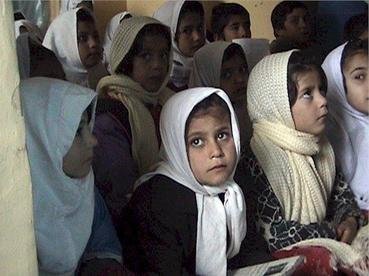
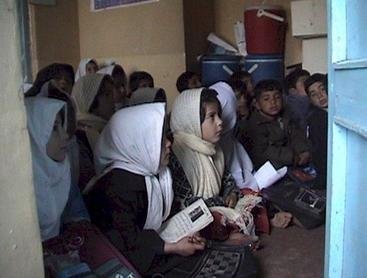
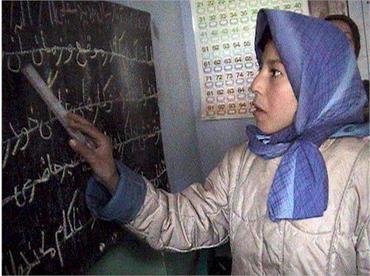
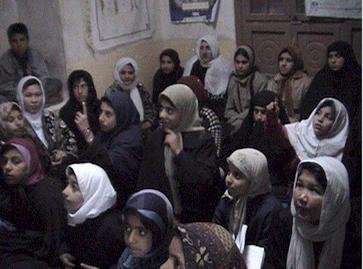
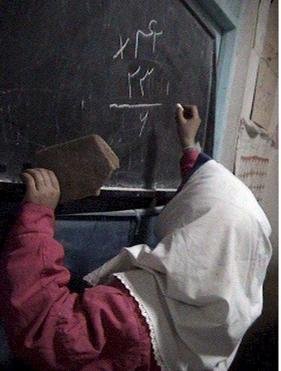
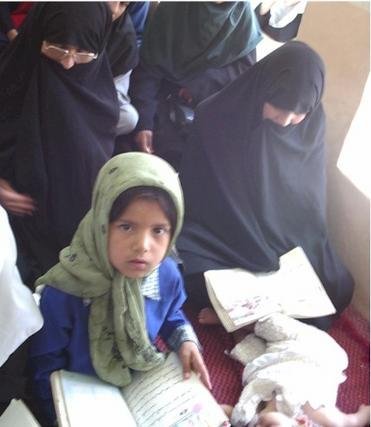
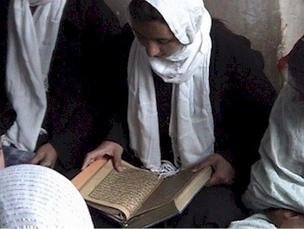
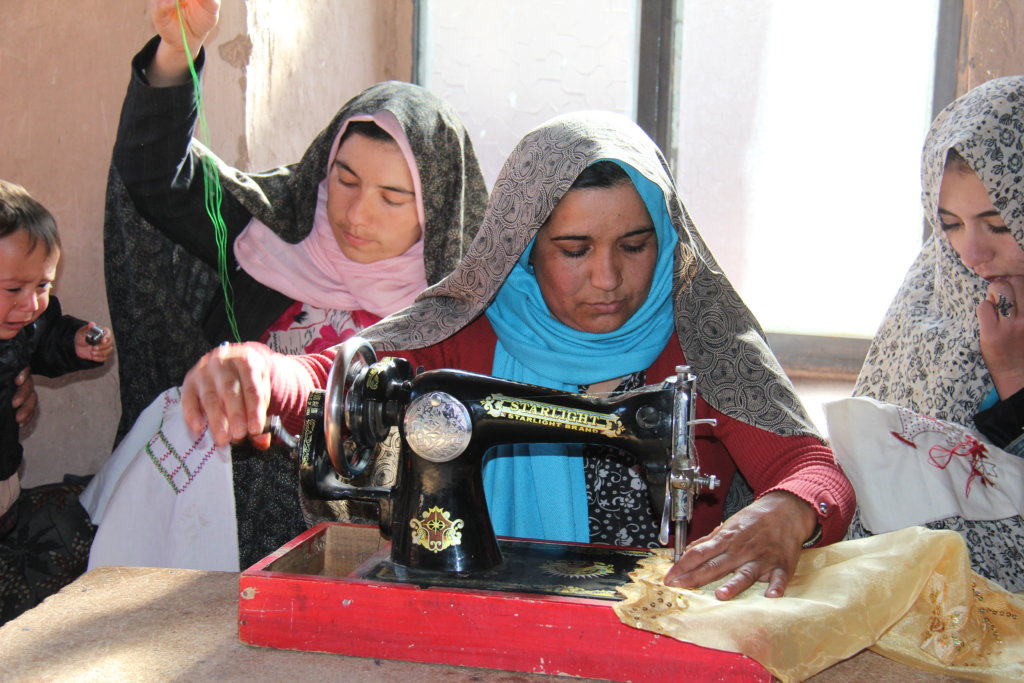
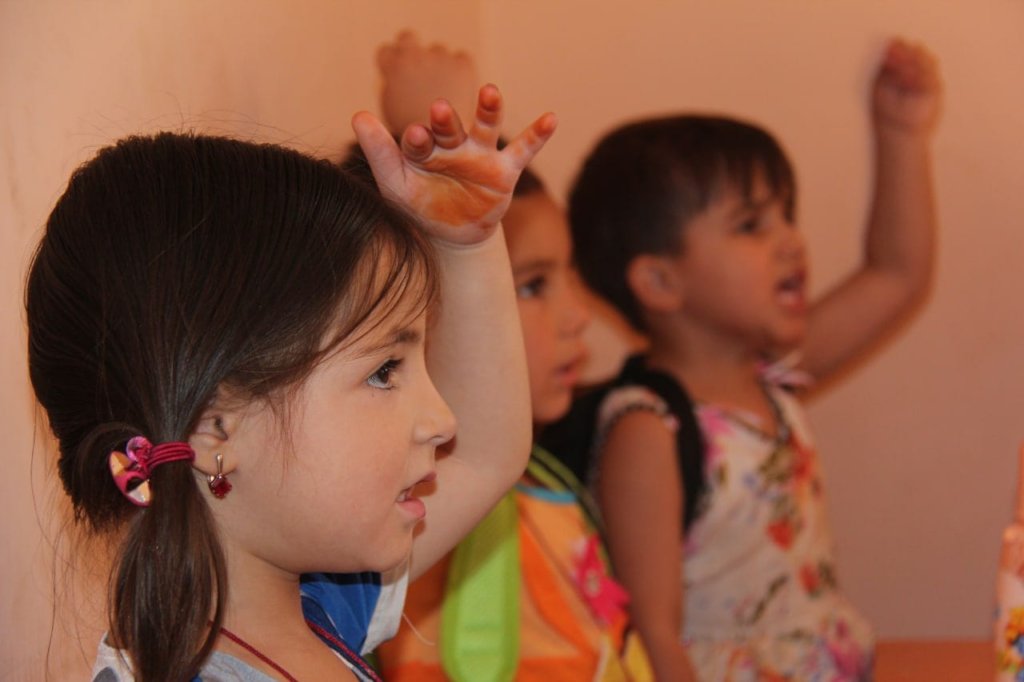
The women and girls in Fast-Track classes in the Afghan Institute of Learning’s Women’s Learning Centers (WLC) and schools range from school age girls, looking for extra help and to quickly further their education, to older women attending literacy courses. Many of the older women also come to the center to learn sewing, and become interested in learning to read. Having all-female classes allows a woman to get an education in an area with conservative cultural values. A student writes: “I am a girl who could not go to school due to my family’s strictness. I love to be educated. When I heard about Literacy class in this center, I came here and learned how to read and write. Besides, reading and writing I also learned how to sew the clothes and recite Holy Quran and now by the grace of Allah, I can read and sew too. I want to thank my teachers!”
Other AIL Accomplishments in 2009 included:
• AIL trained over 1,800 Afghan teachers in pedagogy subjects, leadership, human rights, and school health. These teachers went to their classes and directly impacted over 500,000 students teaching these important subjects.
• Nearly 23,000 students (primarily women and children) attended classes at AIL educational learning centers.
• Over 362,000 Afghans received medical treatment and health education from AIL’s 6 health clinics and community health worker program.
• In January 2010, AIL expanded humanitarian aid efforts with the harsh winter and reached out to 22 families in need. AIL staff delivered to each family quantities of rice, cooking oil and tea. Most heads of the family were widows with children from Herat, and were recommended by community members.
• In February 2010, flooding in the Enjil district of Herat destroyed many family homes, and AIL responded with a concerted effort of initial food aid.
Reminder: On March 16, 2010, GlobalGiving will be matching all donations made to any project on www.globalgiving.org by 30% (up to $1,000 per person)! If you could like to donate again to our project, your donation will go further on March 16th!!!

Want to support this project's continued work? give now

Was this report valuable...
vote divider
Loading...
Tell us why (your comments may be shared publicly).
Rules for Comments 
Comments

An invitation to read our newsletter

By Sondra Johnson - Working Together..., December 02, 2009 02:03 PM

Afghanistan is in the news a lot these days. As a donor to a project in Afghanistan, you may be wondering if change is happening, and if your donation really makes any difference.
Following is a message from Dr. Sakena Yacoobi that answers your questions. It’s part of our annual newsletter, where we also share progress reports from several areas, and the impact AIL’s work is having in Afghan lives. This newsletter is below in a PDF format; we invite you to click on it and read ALL the details……

From Sakena Yacoobi:

First, I want to thank all of you for supporting the work of the Afghan Institute of Learning (AIL). Your support is so important. Yes, the funds you send help us to bring education and health to so many Afghan women and children. But, more importantly, in this time of increasing violence and insecurity in Afghanistan, your support helps Afghans to know that they are not forgotten. It gives ordinary Afghan women, men and children the courage to keep studying, to keep going to clinics and to keep working for peace.

Today you probably hear that Afghanistan is a place of war, terrorist bombings, burning of schools, kidnapping, drugs and all kinds of other horrible things. And it is true that in every province of Afghanistan, including the capitol, every single day, these kinds of things are happening. But what you might not hear in your news is that everyday many women, men and children of Afghanistan get up in the morning….. say goodbye to their family…..and go to work….. go to schools and centers ….. go to trainings……because they know that they must be educated. They know that the only way they can stop these problems is to be educated. So they are learning, they are teaching and they are not afraid.

And when there is no electricity or no clean water or no school or no road or no job and there is no help from the national government or the international agencies, Afghans, particularly women, are joining together in community or with their local officials to find ways to solve their own
problems. And, with your help, AIL is helping them to do this.

I want to let you know that as dark as it seems to be in Afghanistan now, much is happening. Afghans, themselves, are changing. They are educating themselves; they are making sure that their children are educated; they are finding new ways to solve their problems. I would ask you to walk with us a little further on our journey towards peace.


TO READ the rest of our annual newsletter, please click on the PDF link below and it will open for your inspection-

Attachments:

Want to support this project's continued work? give now

Was this report valuable...
vote divider
Loading...
Tell us why (your comments may be shared publicly).
Rules for Comments 
Comments

A Special Giving Opportunity.....

By Sondra Johnson - Afghan Women and Girls Thank You, November 10, 2009 03:46 PM

Thank you for your support. Your desire to make a difference in this world has made a difference, and we are so thankful that Afghan people have had their lives changed with your help.

We wanted to share with you a very special opportunity to give more than 100% from November 10 through December 1st. Please share this with those you know who care. During this time, we are privileged to receive additional matching funds from your donation through Global Giving of at least 30%. The need is still great. Afghanistan struggles to become a country of strength and stability.

This Fast-Track Education project allows older girls and women to ‘ramp up’ their education. For smaller girls, they can quickly advance to the grade level they would have been at and then attend school with children their own age. For adolescents and women, they can learn a lot in a short period of time and can go on to higher education if they choose.

Azita started learning in the Sar Asia educational center in 2003. She has been encouraged by her uncle, who works as the supervisor of this center. She started learning literacy and tailoring skills in this center. She was talented, and was one of the top students in her class. She progressed so fast that she completed the 4rth grade of literacy and the tailoring course.
She says, “During that time, the regular school in the village was facing a lack of teachers, so I passed the test for hiring me as a teacher in the school. I have taught there for two years and at the same time I started to attend the grade five course in the AIL educational center. Very soon I took an exam in the regular school, and they accepted me in grade 9th in that school.
“Fortunately, when my parents saw my unbelievable progress they sent me to Herat city to live with my uncle so I could have a better opportunity to continue my education there. “Right now I am in the Mahjoobai Hirawi high school in Herat city and I am the top student in my class. I need to help my uncle’s family with their housework because I live with them. Once a month I go to my village to visit my parents.
“What I am now is because of AIL’s educational center in my village. It changed the direction of my life in the right way and now I have a positive vision to my life.”

Want to support this project's continued work? give now

Was this report valuable...
vote divider
Loading...
Tell us why (your comments may be shared publicly).
Rules for Comments 
Comments

Sakena Wishes to Thank Her Supporters

By Sondra Johnson - Dr. Yacoobi Featured in Best-Selling Book, September 11, 2009 10:44 AM

There's a new focus on women worldwide. The New York Times magazine dedicated their entire issue one week in August on women in the developing world. Of particular focus was a newly launched book written by the well-known Pulitzer winning couple Nicholas Kristof and Sheryl DuWunn titled: "Half The Sky: Turning Oppression Into Opportunity for Women Worldwide". The press focus on this timely book is significant- from reviews in Harvard and People magazine, to upcoming segments on shows like "The Today Show", the time has come for women and their issues worldwide to be in the spotlight.

Sakena Yacoobi and her organization the Afghan Institute of Learning is one of the topics in Chapter Nine of the book. Dr. Yacoobi grew up in Herat, Afghanistan and then came to the United States to study at the University of the Pacific and Loma Linda University. Concerned about the condition of her people back in Afghanistan, Sakena returned to Pakistan to work in Afghan refugee camps and later went to Afghanistan. Although the Taliban forbade girls from getting an education in Afghanistan, Sakena was instrumental in establishing a string of secret girls schools with community support.

Today, the Afghan Institute of Learning has multiple education programs in Pakistan and in seven provinces of Afghanistan. There are educational learning centers for women and children, preschool programs, post-secondary institutes, a university, and teacher training programs. In addition, AIL has an in-depth program of health education and treatment for women and small children. Since its start in 1995, AIL has trained nearly 16,000 teachers and over 3.5 million women and children have received a quality education. With the health programs included, AIL has directly impacted over 6.7 million Afghans.

Sakena has been and continues to be recognized for her work. Her philosophy is to develop a program from the grass-roots level so the community members are an integral part of the process. State Kristof and DuWunn in their book Half The Sky- "American organizations would have accomplished much more if they had financed and supported Sakena, rather than dispatching their own representatives to Kabul...The best role for Americans who want to help Muslim women isn't holding the microphone at the front of the rally, but writing the checks and carrying the bags in the back."

Dr. Yacoobi and the work of the Afghan Institute of Learning have been supported by multiple grantors and organizations over the years. "I wish to thank everyone who has helped in this important work," states Sakena. "I want to share with each and every contributor the joy of seeing a young woman, who has a renewed interest in life because she can now read, or the happiness of a widow who has learned a skill that will allow her to support her children.

"We now have children who are healthy because of inoculations, and women who did not die during childbirth who have happy, healthy babies. My wish is that these small steps that allow awareness and growth in families will lead to the growth of our country."


Recently, we spoke with Sakena, and she has this message to all the supporters of AIL:


"It is an honor to be included in Nicholas' and Sheryl's book Half The Sky. So many foundations and individuals have contributed to the work that the Afghan Institute of Learning has been able to do in Afghanistan.

"From the bottom of my heart I want to thank all who have understood the plight of Afghan women and children, and have reached out with compassionate, caring support.

"May God reward your generosity......."

Sakena

Want to support this project's continued work? give now

Was this report valuable...
vote divider
Loading...
Tell us why (your comments may be shared publicly).
Rules for Comments 
Comments

August 2009 Update

By Alison Hendry - Administrative Assistant, August 28, 2009 03:03 PM

Recently, AIL was asked by the Afghan Ministry of Women’s Affairs to report on the impact AIL’s programs have had. We were amazed by our findings. Since beginning in 1996 through May 2009, 220,970 Afghans have been educated in AIL schools, centers and post-secondary programs and overall 6,778,026 Afghan lives have been directly impacted by AIL programs.

AIL was the first to begin fast track classes for females. They have proved to be very successful and the concept has been replicated throughout Afghanistan by other communities and organizations. During the first 6 months of 2009 your donations helped 7,864 Afghan women and girls attend fast-track classes at AIL centers across Afghanistan and in Peshawar, Pakistan. These classes give the students only the skills they need to make a better life for themselves and their families; they also open the students eyes to a world of possibility and give them a sense of self-worth.

We’d like to share two success stories from AIL students:

“My name is Shokreia. I live in a large family of thirteen people. Three of us are less literate, and my sister is can read the best since she is in 9th grade. I decided that I wanted to learn to read too, so I came to this center to take classes to become literate as well as learn about other issues from my teachers. Literacy is like a light that rescues us from unawareness and darkness. I hope to learn well until I can become a good teacher and do service to my compatriots. I want to be a teachers because our prophet was a teacher for all people, so it is a valuable job. I am in the literacy class, and now I can read book sand magazines. Also, I would like to take other classes such as English, computers, beautician and painting. I would like to say thank you to all of the AIL staff for their hard work to raise the capacity of women.”

“I was illiterate and my husband had graduated from high school. My husband’s mother told me that I should learn to read by participating in a literacy course, but that I must take the class at a center where there would not be any men in my class. I found the AIL center and decided to take classes here with my sisters. My husband’s mother has never come here with me, until today. She stood outside the class and watched as our Life Skills class was taught by a man, and I worried about what I should say to her. I began to relax as I realized that my teachers were good and moral people, and decided that I must be patient and after class I would talk to my husband’s mother. When I came out of class, I saw her standing there and I shared with her all of the things I had learned. She told me that she could hear that I was being taught well, and that she would like to join our class.”

Want to support this project's continued work? give now

Was this report valuable...
vote divider
Loading...
Tell us why (your comments may be shared publicly).
Rules for Comments 
Comments

May 2009 Update

By Alison Hendry - Administrative Assistant, May 15, 2009 01:52 PM

AIL recently received an update from Hafisa, a young woman that had taken classes at a Women’s Learning Center in rural Herat, Afghanistan. As a teenage girl, Hafisa began going to the WLC in her village where she became literate and learned to sew. In all of her classes, the teachers talked about human rights, peace, health and leadership, emphasizing that anyone can be a leader, even if in a small way.
   After graduating from the center, Hafisa was married and moved away. Hafisa’s sewing skills quickly made her popular in her new village with many people bringing her dresses for sewing. Soon, people in the village began asking her to open a center and teach other women to sew. Hafisa remembered the leadership lessons she learned at the AIL WLC in her village and knew that she could start a class.
Starting a center to teach women to sew is a fairly novel concept. At first, her family ignored the requests, but due to community persistence, Hafisa’s family eventually allowed her to open a center in her home. Now she uses one room of her house to teach a sewing class and has 40 students. She collects a fee from the students, and this income has helped to change her family’s economic situation. She is respected in her community and her family is proud of her. Whenever she goes to her own village to see her parents, she visits the AIL center and thanks AIL for giving her the opportunity to be a useful person in her community. Not only did Hafisa learn to sew, she learned to be a leader and found that she could run a self-sufficient center.

Want to support this project's continued work? give now

Was this report valuable...
vote divider
Loading...
Tell us why (your comments may be shared publicly).
Rules for Comments 
Comments

Update on Fast-Track Program

By Alison Hendry - Administrative Assistant, February 26, 2009 04:39 PM

During 2008 AIL educated 14,408 women and girls in Fast-Track classes in its Women’s Learning Centers (WLC) and schools. The girls that attend AIL classes range from school age girls looking for extra help and to gain new skills to older women attending literacy courses. Many of the older women begin coming to the center to learn a new skill, such as sewing, and end up also participating in AIL’s literacy courses.

We would like to share with you comments from three of the female beneficiaries of AIL’s programs. The three women range in age from 14 to 45 and lead very different lives, but all have found AIL programs to be invaluable to improving their quality of live.

The first story is that of a 45 year old widow who has 6 children. She says “My oldest son is 23 and he works during the day. It’s been very difficult for all 7 of us to live on the money my son earns. I heard from a neighbor that there is a center near our village, and I decided to join this center to help my family. I would like to thank AIL for establishing such a center for the poor people of my village.”

The second story is that of a 14 year old girl that was struggling with her classes in a regular school. She says, “I am 14 years old and studying chemistry at this center. I am very interested to learn English and science, but I have a great deal of problems in chemistry, so I decided to first solve my problems in chemistry, then I will join other classes. I would like to thank the AIL office.”

That last story is that of a married woman who has come to an AIL center to continue her education. She says, “I am studying in a literacy class. I went to a regular school until 5th grade, but because of my situation I did not finish school. After a long time, I got married and now I have 3 children and could not go back to school, so I have started coming to the center to receive an education and solve my problems.”

Want to support this project's continued work? give now

Was this report valuable...
vote divider
Loading...
Tell us why (your comments may be shared publicly).
Rules for Comments 
Comments

Thank you!

By Alison Hendry - Administrative Assistant, December 19, 2008 04:17 PM

Dear Global Giving Donors,

We would like to send a huge thank you to those that donated to AIL’s Fast Tracking Education project during the challenge grant period! We were successful in meeting and exceeding our goal of raising at least $5000 and receiving donations from at least 50 donors; in fact, we raised a total of $6,020 from 55 donors. Thank you for helping us to secure our $2,500 bonus from Global Giving.

Also, we have some great news to share: the Safer World Fund has decided to match dollar for dollar every donation made to our Fast Tracking Education project, which means that the grand total raised during the challenge period is $14,540! With this money, AIL will be able to provide literacy classes to 224 women and girls

Thank you once again for your generous support of our project. We appreciate you taking the time to make a difference in the lives of Afghan women and girls.

Want to support this project's continued work? give now

Was this report valuable...
vote divider
Loading...
Tell us why (your comments may be shared publicly).
Rules for Comments 
Comments

Latest update from Afghanistan

By Alison Hendry - Administrative Assistant, November 20, 2008 11:21 AM

The educational opportunities available to older women in Afghanistan are almost non-existent. The Afghan Institute of Learning (AIL) is where Afghan women older than the customary school age turn to gain the skills and education necessary to help improve their lives.
We’d like to share a recent success story from a Women’s Learning Center (WLC) near Herat, Afghanistan with you. The following is what a 50 year old student, with two school age sons shared with our AIL Herat staff during one of their visits to the WLC she attends.

“I am very happy to sit in this class and learn how to read and write.” As she showed her work to the supervisors, she was very happy and laughing. She continued, “My son, a university student encouraged me to come to this center. During the three months since I have began here, I have learned more than my younger son who is in the 6th grade in a regular school. My young son came to me one day and asked for my help with his school work. I began to laugh, and joked with him ‘Shame on you. I have learned more in three months than you have learned in school!’ He replied, ‘Mom! You know there are no good teachers in the regular schools and we just waste our time there. It is not my fault, but a problem with the system.’
The women then smiled and said, “I have promised my son attending the university that I will compete with him. I am sure I can reach a higher class.”
AIL is making a difference in the lives of Afghan women and children by giving them access to education, and ultimately, hope for a better future.

Want to support this project's continued work? give now

Was this report valuable...
vote divider
Loading...
Tell us why (your comments may be shared publicly).
Rules for Comments 
Comments

Stories to Share

By Alison Hendry - Administrative Assistant, August 22, 2008 12:45 PM

Since the establishment of the Afghan Institute of Learning (AIL) the goal has been to help women improve their situation in life. Following are a few stories from AIL’s Women’s Learning Centers (WLC) that exemplify the changes that AIL can make in Afghan women’s lives.

When AIL student Rizagul was a young girl, her father was put in prison by the Taliban regime where he was tortured and eventually died leaving behind Rizagul as well as her young brother and her unwell, elderly mother.

Four years ago, Rizagul came to one of AIL’s rural WLC’s in Herat province and began taking various classes, including literacy and sewing. After two years at the center, she was able to gain admission to a regular school at grade level 4, a feat which might have taken 4 years in a regular school, if it happened at all. Even after gaining admission to the regular school, Rizagul continued to take extra courses after school at the center. Unfortunately, the center was closed due to the poor security situation in the region and Rizagul could no longer take the extra courses she had come to enjoy.

A short time ago, an AIL teacher saw Rizagul at a wedding ceremony in their village. Rizagul could not control her emotions and tears rolled down her cheeks as she told her teacher, “You and AIL were the best thing for me, and I will never, never forget your encouragement and all of the hard work that you did for me.” She added, “I can now read in Arabic, I know how to sew and I am a student in grade 6. What I am is because of the AIL center.”

She also said that she is sewing dresses to make money for her family and that she has so much business that she has to turn some people away. She is making a good living, and is able to improve her family’s economic situation with her sewing skills.

Rizagul also told the teacher, “With the advice that the center supervisor wrote in my ‘memory notebook’ (try to learn, work hard for a better future and pray for your future) I am sure that I will go toward a better future.”

Following is the story of Jamila, a literacy student in the 7th grade. Jamila attends one of AIL’s centers in northern Pakistan that services many refugees from rural areas in eastern Afghanistan where women are generally not educated. This center grew out of a girl’s school that was established in 1996 – 1997. In 2002, it was clear that the students from the girls’ school needed a place to continue their education and a Women’s Learning Center was established there. One should also take note of the fact that Jamila is currently in the 7th grade, but has not been in school 7 years. Her story is one of hard work and a determination to become educated.

“I am very happy, I can’t believe that I am in the 7th class and all because of AIL. My family and I are very thankful for Prof. Sakena Yacoobi, the Executive Director of AIL for providing this opportunity for us. My father is a wrathful person and he didn’t want me to go to school and learn things. I was very sad, and day by day I grew older and could not go to school. Last year we changed our home. Some of our neighbors near our home told us about a women’s learning center provided by AIL for women and girls. Once again, I requested that my father give me permission to join this center. After many requests, when my father heard that this center was for women, he accepted and I joined this center. Now I am in the 7th class and every night I help my father with his shop finances. I am very happy that I can help solve my family problems, and now my father is also very happy. I always pray for Prof. Sakena Yacoobi and the AIL staff.”

Want to support this project's continued work? give now

Was this report valuable...
vote divider
Loading...
Tell us why (your comments may be shared publicly).
Rules for Comments 
Comments

Snapshot (2008) of the Fast Track Education Project

By Alison Hendry - Administrative Assistant, August 07, 2008 04:39 PM

Between January and June of 2008, the Afghan Institute of Learning (AIL) has educated 9,143 women at centers 5 provinces of Afghanistan (Balkh, Herat, Kabul, Bamyan, and Parwan) as well as Afghan refugees in Pakistan. Subjects currently being taught to the women include:

•   Literacy
•   Dari
•   Science (Including Physics and Chemistry)
•   Math (Including Trigonometry)
•   English
•   Sewing and Tailoring
•   Computer Literacy
•   Calligraphy
•   Art
•   Weaving (Including traditional carpet weaving)
•   Beauty Parlor Management

The AIL classes are fast track, allowing students to learn at their own pace. Many women and girls have missed out on years of the traditional schooling experience and AIL allows them to make up for lost time, and if possible, rejoin classes in a regular school. Also, AIL centers allow married women to continue their education, a practice not always allowed in regular schools.

Afghan women are often told that after a certain age, they will not be able to learn to read or write. Believing this, they begin coming to the centers to learn vocational skills. As they attend the center, they see other women attending the center’s literacy classes and are able to witness the other women learning to read and write. Soon they begin to believe that they too might be able to learn to read and write. The families of the women have come to trust AIL, and allow their daughters and wives to take the AIL literacy classes.

A young girl named Parmila says, “I am really happy with the Women’s Learning Center that I attend. It is a good and safe educational environment for females. Before the establishment of this center here, the society of this area was against the girl's education. But fortunately the center has done a great deal to change their minds. My parents have not allowed me to go to school and it was very hard for me that my rights have not given to me. So when my parent saw that many women and girls go to the Women’s Learning Center without any problem and all the teachers there are female, they allowed me to go to this center. After some time they took another positive step and told me to get admission in the regular school too. Now I am in grade 7th and I understand if the Women’s Learning Center had not been established here, I and many other girls would remain illiterate people in the society. If that were to happen, this society would never change their mind regarding their girls’ education.”

A 45 year-old women who received her certificate of completion of the 2nd literacy class says, “I am so happy that in this age with so many problems at home I could be able to attend the literacy class here. I and my small daughter are in the same class. I really enjoyed the time that we spend gathered here to learn. The teachers are very nice and hard working people. I appreciate their hard work and I appreciate the executive director of this foundation for providing this opportunity for us. If we did not have this foundation here, God knows what would happen to us.”

Fatima, a student at one of AIL’s centers says, “I born in Iran because my family had to migrate there. As I have grown I have always felt that I am from Afghanistan and would really like to see my country. I was admitted to an Iranian school, and was promoted to grade 3, but had to stop going to school. My father’s economic situation was not good, and he could no longer support me. It was very hard for me to have to stop my education. As time was passing and I was getting older, I saw boys and girls going to school with happy faces and it really bothered me. The only thing I could do was just pray to go back to my country and be able to go to school.
Finally, we returned to Afghanistan and I was so happy to breathe the oxygen of my own country. A few months later, I tried to go to school but it was so late and I was told that I was too old to attend the regular schools. Once again I lost hope.
I got the information from my neighbors that there is an educational center for women established by A.I.L and I went there and started learning literacy and sewing. Now I am in grade 5 and I hope I can continue my education and on day go to the university. I am so happy that I am learning to read and write, and also to sew, and I hope that I will be able to support myself with these skills. I have also learned a little English because it is a subject that we must learn. I appreciate that my teachers work hard. Every day she speaks to the students about peace, health, manners and more, for ten minutes before beginning our lessons. I must thank AIL for providing this opportunity to Afghan women.”

Want to support this project's continued work? give now

Was this report valuable...
vote divider
Loading...
Tell us why (your comments may be shared publicly).
Rules for Comments 
Comments

Information about AIL Fast Track classes

By Toc Dunlap - Executive Director, October 19, 2007 05:06 PM

In response to a question from a donor about any religious teachings in the Fast Track classes, we wanted to share the following details about the program in Afghanistan:

All of AIL's Fast Track classes include information on health, peace, gender and human rights issues. The subject matter of the Fast Track classes varies depending on what is requested by the students. The most common Fast Track classes are literacy, sewing or other crafts such as carpet weaving, embroidery, etc., Arabic, beauty parlor management. In some centers, there are classes in English, computer, calligraphy, math, science, drawing, art and other subjects--it depends on what the students need. In addition, if students progress beyond the first literacy class, they then begin studying the same books as they would study in the school system. We still call it literacy because our centers are not schools. However, the subjects are equivalent to those in the schools which is why students can either mainstream into the regular schools after attending our classes or receive grade certificates by taking an exam in the schools for particular grade levels. If a student is studying in the fourth grade level or beyond, then there may be religion in some of the history classes --it is like history of the religion--not theology. This would be the same as in social studies classes here in the U.S.

If the question pertains to indoctrination, then the answer is "no" there is no religious or political indoctrination in AIL classes.

Just to make sure that it is clear, AIL calls its classes Fast Track classes because in general the length of time of the classes is shorter than it would be in the regular school system. Also, AIL students can study at their own pace so if a student covers the material quicker in a literacy class, then the student can go on to the next level. Likewise, if a student is slower, they can study for a longer period of time. AIL's emphasis is on the students learning. When they have learned and passed the tests, they get a certificate. It is based on what is learned, not on the amount of time spent sitting in a class. For this reason, AIL's certificates are valued.Because of the lack of education under the Taliban for both girls and boys, after the fall of the Taliban, everybody wanted to catch up and study as fast as they could. That is why AIL instituted the "Fast Track" system. What it has evolved into is really a flexible way of studying which allows students to study at their own pace. Most students do finish faster than they would in a regular school but a few do not. Again the emphasis is on learning.

Want to support this project's continued work? give now

Was this report valuable...
vote divider
Loading...
Tell us why (your comments may be shared publicly).
Rules for Comments 
Comments

Update on Fast Track classes—August 2007

By Toc Dunlap - Executive Director, August 17, 2007 03:11 PM

Fast Track literacy class in Herat
The Afghan Institute of Learning (AIL) is supporting Fast Track classes for 11, 125 students every six months in various subjects in five provinces of Afghanistan and in the NWFP of Pakistan. The Fast Track classes are held in AIL’s Women’s Learning Centers and Educational Learning Centers.

Pictures:

Want to support this project's continued work? give now

Was this report valuable...
vote divider
Loading...
Tell us why (your comments may be shared publicly).
Rules for Comments 
Comments

Annual Report

By Afghan Institute of Learning - AIL, October 17, 2006 04:19 PM

Want to support this project's continued work? give now

Was this report valuable...
vote divider
Loading...
Tell us why (your comments may be shared publicly).
Rules for Comments 
Comments

Update

By Afghan Institute of Learning - AIL, October 12, 2006 01:24 PM

Attachments:

Want to support this project's continued work? give now

Was this report valuable...
vote divider
Loading...
Tell us why (your comments may be shared publicly).
Rules for Comments 
Comments

Mid-Year Report

By Afghan Institute of Learning - AIL, November 04, 2005 01:58 PM

Creating Hope International shares this mid-year report from the Afghan Institute of Learning, highlighting some of AIL's recent successes!

Attachments:

Want to support this project's continued work? give now

Was this report valuable...
vote divider
Loading...
Tell us why (your comments may be shared publicly).
Rules for Comments 
Comments