Safe Water & Latrines for Bangladesh Slum

Summary

Enable the community in Pallabi Slum to improve their health and use their time for economic development by building and maintaining a sustainable safe water & sanitation system. progress reportread updates from the field

How Donors Like You Helped

Thanks to donors like you, a total of $2,550 was raised for this project.

More Information About this Project

Project Needs and Beneficiaries

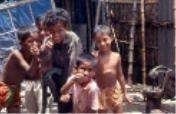
The 4500 residents in the urban slum of Pallabi struggle to meet their daily water needs. Some retrieve water from illegal connections to the city’s water supply, or from construction sites, mosques, or contaminated drainage ditches. People of Pallabi Slum can pay some of the capital costs of and all maintenance costs for a new water system. Our Bangladeshi partner organization will work with them to develop and implement a sustainable community water supply and sanitation system.

Activities

Construct underground water reservoir with connections to Dhaka Water and Sewerage Authority water mains; hand pumps and drainage facilities; sanitation block with pit latrines; and septic tank.

Funding Information

Total Funding Received to Date: $2,550

Funding Policy: subsidized/guaranteed

Funding Information

This project is now in implementation and no longer available for funding. Received funds will be used to accomplish concrete objectives as indicated in the project's "Activities" section. Updates will be posted under the "Progress Report" tab as they become available.

Donors' contributions and pledges to this project totaled $2,550as of May 12 2004.  The original project funding goal was $24,750.

Additional Documentation

This project has provided additional documentation in a PDF file (projdoc.pdf).

Resources

Why this Project is Important

Potential Long Term Impact

Provide 4500 residents of a urban slum in Bangladesh with safe and adequate water supply.

Project Message

I have witnessed the daily struggle for survival by people without access to safe water. I am inspired by the way they are able to face their problems with dignity and hope.
- Marla Smith-Nilson, Director of International Programs

Who is Running This Project

Contact

Marla Smith-Nilson,
Director of International Programs
PO Box 654
Columbia, Missouri 65205-0654
United States
573-447-2222
Email:

Project Sponsor

WaterPartners International

Organization

WaterPartners International Logo WaterPartners International
PO Box 22680
Kansas City, Missouri 64113-0680
United States
913.312.8600
http://www.water.org

Learn more about WaterPartners International and the project team.

WaterPartners International's Funded Projects on GlobalGiving

Safe Water & Latrines for Honduran Village
The Melakarthigaipatti Safe Water Project
Safe Water & Latrines for Honduran Village
Safe Water & Latrines for Village in India
Bring Safe, Clean Water to Ethiopian Children
The Ayinapatti Water Project
Safe Water and Latrines for Bangladeshi Slum
The Ambelalie Water Project
See all 13 projects

Where this Project is Located

Country

This project is located in Bangladesh and can also be found under Health.

For more information about Bangladesh, read the Human Development Report on Bangladesh or the Wikipedia entry for Bangladesh.

When this Project was Updated

Last Updated

This project was last updated on July 14, 2006.

Date Added to GlobalGiving

This project was added to the GlobalGiving project catalog on July 30, 2003.

Latest Update from the Field

Project Completed - Pallabi Slum Phase I and II

By Laurel Groh - Sr. Communications Manager, July 14, 2006 04:59 PM

Our project in Pallabi has been divided into three phases. The first two phases are complete and have been tremendously successful.

History
Dhaka’s water and sewage systems are run by the Dhaka Water and Sewerage Authority (DWASA). However, DWASA will not provide
water to the people living in these slums because they live outside its service area. Instead, community members accessed the water they need for survival through a patchwork of sources, none of which are guaranteed or safe. There were some hand pumps on wells, but these largely went out of service in the dry season when the water table drops. When these sources were unavailable, community members were reduced to scavenging for water, relying on mosques or schools and many had to resort to ditches and rivers to meet their water needs. Not only were the sources unreliable throughout the year, they also carried the risk of illness from pathogens and, for the ground water sources, arsenic poisoning.

New Water Source
Our local partner organization bridged the gap between these squatter communities and DWASA, allowing the communities to purchase water in bulk from DWASA at wholesale prices. Water is piped to underground reservoirs via the DWASA water mains. From these reservoirs it is pumped to elevated storage tanks and then distributed to water points throughout the slums. People are able to walk shorter distances (less than 500 meters) to collect their water. Some areas that were not easily reached by the piped system are served by deep wells with hand pumps. The groundwater was tested to make sure it is free of arsenic. Caretakers will monitor the water points to serve those who collect water and ensure proper maintenance.

Impact on the Community
Providing water security has allowed the Phase I and II populations to pursue wider economic development. Because of reduced illness and time spent scavenging for water, adults are pursuing additional work and children are spending more time in school.


Links:


Attachments:

Comment on this update | Subscribe to "Updates from the Field" by E-Mail