US Association for UNHCR (UN Refugee Agency)

The United States Association for UNHCR (USA for UNHCR) supports the UN Refugee Agency's humanitarian work to protect and assist refugees around the world. We strive to meet the needs of the world's most vulnerable people, building support and awareness in the United States for UNHCR's life-saving relief programs. Established by concerned American citizens, USA for UNHCR is a 501(c)(3) non-profit organization.
May 14, 2013

Fears rise for displaced in a Myanmar's state

Shelter is vital for displaced people in Rakhine

The UN refugee agency is calling for urgent action and increased financial support to improve conditions for displaced people in Myanmar's Rakhine state and to avert a humanitarian catastrophe as seasonal rains start.

"UNHCR is seriously concerned about the risks facing over 60,000 displaced people in flood-prone areas and in makeshift shelters," a spokesperson said. From May to September, the monsoon season is expected to unleash heavy rains and possible cyclones in Rakhine state, where more than 115,000 people remain uprooted after last year's inter-communal violence.

The most critical sites are in Sittwe, Pauktaw and Myebon, where the displaced are living near the coast and are vulnerable to tidal surges. Some have camped in paddy fields or low-lying areas that will flood once the rains start. "

Flooding will exacerbate the already fragile conditions of shelter and sanitation, and increase the risk of water-borne diseases. In addition, several thousand people are still living in tents and flimsy makeshift shelters made of tarpaulin, rice bags and grass that cannot withstand even moderate rains.

The UN refugee agency and its partners have urged the Myanmar government to address shelter needs as a matter of priority. Adequate land should be identified promptly and challenges related to water and sanitation facilities suitably addressed.

"UNHCR welcomes the progress made so far in identifying suitable land to temporarily relocate groups of displaced people," the spokesperson said. At the request of the government, UNHCR has committed to build temporary shelters for some 24,000 displaced people in Myebon and Pauktaw, while the authorities will provide accommodation to those displaced in Sittwe's rural areas.

Since the displacement started in Rakhine state last June, UNHCR has constructed temporary shelters in the form of bamboo-framed longhouses for 14,400 displaced people. It has also built permanent homes for nearly 500 people who have returned to their areas of origin, and distributed tents to house 28,000 people. "Additional funding is urgently needed to allow UNHCR to meet its commitments within the very short time period left before the rains," the spokesperson stressed.

A recent high-level UNHCR delegation to Myanmar stressed the need for reconciliation between communities and other tangible actions to improve security in Rakhine state so that the displaced can enjoy their rights, including freedom of movement and access to services and means of livelihood. UNHCR raised concerns about the risks of protracted displacement, separation of communities and onward secondary movements.

Since June last year, an estimated 27,800 people  the majority of them believed to be from Rakhine state  have left on boats from points on the Bay of Bengal. Hundreds are believed to have drowned en route and many more have landed in countries like Thailand, Malaysia and Indonesia.

The authorities in Myanmar have reaffirmed their commitment to work towards long-term solutions for the displaced. UNHCR has called on countries in the region to keep their borders open to people in need of international protection and to offer them temporary assistance and protection until durable solutions can be found.

In parallel, the agency continues to press for root causes of the outflow to be addressed by promoting peaceful co-existence and economic development in Rakhine state, pursuing practical measures to ensure basic rights for everyone there, and eventually granting access to citizenship to those individuals who are currently stateless.

Photo by © UNHCR/P.Behan

May 1, 2013

New Photos: Life in Kochi Abad

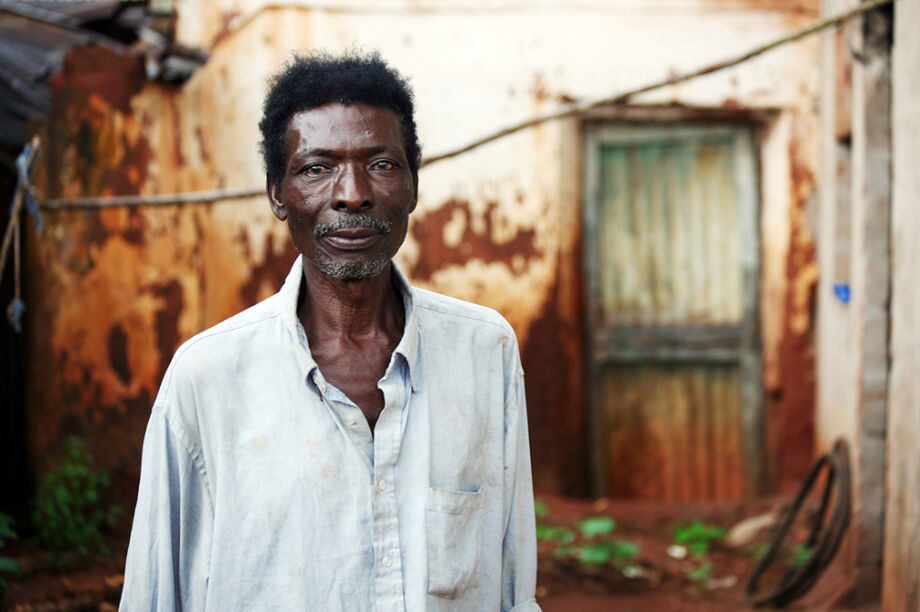
Meet Sher Agha, who accompanied the UNHCR team.

Kochi Abad is a tiny village nestled on the side of a hill, about 12.5 miles outside of Kabul, Afghanistan. It's home to about 300 Kochi families (nomads), who were once refugees in Pakistan.

Thanks to the support from your donations, along with contributions from individuals and foundations around the world, UNHCR has been working to make life a little easier for those who return -- building a road, a well, some homes.

On a recent visit, Sher Agha, the village elder, took UNHCR around the village. Come along for the tour in the attached photos.

All photos © UNHCR / N.Bose.

  1. Kochi Abad can get awfully cold during the winter! UNHCR has funded some of the shelters you see in the background. The organization also built a road which helps connect this village to other cities, where many have found work.
  2. What everyday life is like in Kochi Abad, which has a school and a community center:
  3. These women are collecting water from a well funded by UNHCR. Water is life!
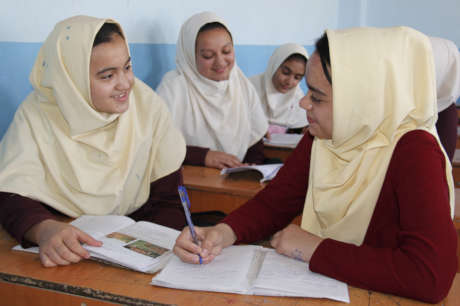
  4. Girls return home after a long day at school. Education for all is a top priority!
Apr 24, 2013

UNHCR teams reach out to Syrian refugees in Jordan

UNHCR
UNHCR's field worker holds a newborn UNHCR/Purvis

Most of the global media's coverage of Syrian refugees in Jordan has focused on Za'atri, a camp carved out of the harsh desert landscape in northern Jordan.

The many images of Za'atri show row upon row of tents in what is now a small city. But some three-quarters of the hundreds of thousands of Syrian refugees in Jordan live outside the camps, in villages, towns and cities across the country. Many are housed in one bedroom apartments, basement studios or rooftop dwellings, often with two or three families sharing. In comparison to a camp situation, where services and assistance are provided, refugees in cities and towns can be almost invisible, many of them struggling to survive. UNHCR has deployed field teams to reach out to these refugees in the capital, Amman, and across the country. Many of these vulnerable people are at risk of eviction. The members of the UNHCR mobile teams, such as Field Associate Huda Al-Shabsogh, assess the needs of the urban refugees, give advice and counseling, arrange for them to register as refugees, and more. Al-Shabsogh, a native of Amman and mother of three, started working for UNHCR in 2007. The qualified lawyer talked recently with Regional Public Information Officer Reem Alsalem. Excerpts from the interview:

Describe a typical day in your life as an emergency worker

My day normally starts very early. At 5:30a.m. I help my children get ready and then I go to the office. We visit refugee communities on Sundays and Wednesdays and usually head out at 7:00 am so that we can make the most of the day. From the moment we arrive at the destination for the day, around 8:00 or 8:30 in the morning, we start meeting with refugees. Normally we work in groups of two. As a team, we see a minimum of 200 families a day, sometimes 300.

What do you do when you meet the refugees?

I am part of what we call the help desk. We counsel refugees on all sorts of issues: how to register; how to enroll their children in school; what to do if their children get sick or are sick. And we give them appointments to register with UNHCR in Amman or to renew their registration. We also provide these services in Ramtha, Zarqa and Mafraq.

We have similar activities for urban refugees in Amman, Irbid and, more recently, Maan in the south of Jordan. We will go there twice a month  more regularly if the need increases. This is great news because Maan is very far from Amman and it would be difficult for refugees to come to us.

Even though we have many families to attend to during an average day, there is never enough time. During the interviews, the refugees take the opportunity to ask us many questions, and not just about basic services. Even though UNHCR has telephone hotlines, the refugees prefer to have the face-to-face interaction. They feel more at ease. Also, our lines are often busy. We answer up to 700 calls a day most of them from Syrians.

Why is registration so important in Jordan?

It's important because it allows those registering to get assistance from UNHCR, WFP [World Food Programme] and other humanitarian partners and also to access public services. With the certificate, they can get medical treatment in state-run hospitals and clinics in Jordan and also enroll their children in schools. Most police respect the document and are aware of it. Many officers even encourage the refugees to register as a form of protection. Then there are people who have registered and have the necessary documentation but need to renew it. This is because the registration certificate is only valid for six months. We also help these people by arranging a date for them to renew their registration, which can only be at our offices in Amman and Irbid.

Tell us about the challenges you face

Allocating interview times for people is one of them, but it gets easier the more time we spend in a given city and get to know the environment and the refugees. We normally give more than 200 appointments a day. If more come, we take down their names and prioritize them for the following week. If an urgent case comes along during the day, we would of course also give that person immediate priority.

We are often asked to fast-track applications, especially by Jordanians who are friends or relatives of the Syrian refugee applicants. We have to explain to them why this cannot be done and why they have to wait their turn. It puts a lot of pressure on us. Not everyone takes it well and we are used to aggression and emotions running high. Sometimes they insist, but when they see that we also stick to our position, they accept it.

Also, it's difficult having to deal with so many families, each with their own tough story. That affects you a lot. On the way back from work, we talk about the difficult cases we have seen. It is a way for us to let off steam and to share, because sometimes emotionally it is too much to keep it inside.

What else is different about being in emergency mode?

Every week we have an action plan, but so many new issues come up that we don't necessarily follow that plan. For example, if we hear about a group of urgent medical cases in Ramtha, we would go there instead of the town we were planning to visit. We know they need to be registered if they are to receive medical assistance. The unpredictability of our days has become so normal that even when I am scheduled to stay in the office for some days, I come in casual clothes because I almost always have to go out and visit refugees and host families.

Is there any refugee family that has particularly moved you?

Yes. One day, I was approached by a Syrian family who said that their 21-year-old son was very sick and that I had to go and visit him because he was unable to come to the registration room. When I reached their home, I was expecting to see a tall and fit young man. What I saw took my breath away and shocked me. He was lying on a mattress under a lot of blankets. He had become so emaciated that it was difficult to spot him under all the covering  he was just skin and bones.

The boy had been on the back of a motorbike, trying to escape the gunfire, when he was shot by a sniper. He fell off the bike and was badly concussed when his head hit the ground. His parents were too scared to take him to hospital and decided to treat him at home. They told me that in the first few weeks after the incident, he was drifting in and out of consciousness and they had to feed him through a tube. In the end they decided to take him to Jordan and he was carried to the border on the back of a Syrian man who was also fleeing.

UNHCR helped get the boy admitted to hospital, but it was too late. Four months later, he died. It was heartbreaking to see his suffering and that of his family. This is just one tragic tale, but we come across so many every day in our work.

Despite all the suffering you see, are you glad you joined UNHCR?

Yes, absolutely. I feel we have an important mandate. It is not just a job. I feel that through the work I do, I can help people. Before I joined, I used to read about UNHCR in the local newspapers  that it worked with refugees. That was back in the days of the Iraqi refugee crisis. Then one day I saw an ad in the newspaper saying they needed a staff member. I consulted a friend who was working there and she advised me to join. I have a law degree. I felt that it was what I was looking for.

Special note: Gifts for Good on GlobalGiving

All donations over $25 through this GlobalGiving project will be eligible to receive a Blue Key -- a great Mother's Day gift! A symbol of your support for refugees, the Blue Key represents the power to unlock a better future for refugees around the world.

Give $25 or more & receive a Blue Key pin/pendant!

Links:

An anonymous donor will match all new monthly recurring donations, but only if 75% of donors upgrade to a recurring donation today.
Terms and conditions apply.
Make a monthly recurring donation on your credit card. You can cancel at any time.
Make a donation in honor or memory of:
What kind of card would you like to send?
How much would you like to donate?
gift Make this donation a gift, in honor of, or in memory of someone?

Reviews of US Association for UNHCR (UN Refugee Agency)

Great Nonprofits
Read and write reviews about US Association for UNHCR (UN Refugee Agency) on GreatNonProfits.org.