
It was not a typical Saturday for the children in Sichuan, China. Instead of enjoying a weekend morning, a 7.0 magnitude temblor rocked the province, causing buildings to collapse and roads to be blocked due to debris and landslides.
At least 180 people have been killed in the most affected areas of Ya’an and Lushan, children among them. Over 160,000 children are seriously affected. According to the UN, 99% of homes in Longmen Township have collapsed, and it is estimated that 245,000 people have evacuated their homes.
Rescue workers dove straight into action, trying to pull as many people out of the rubble within the first 72 hours, also known as the golden hours for rescuing quake affected people. In Chengdu, where Save the Children’s closest field office is located, tremors were felt but little damage was sustained. Despite having families to care for as well, staff immediately arranged to go into the field to assess the damage and impact on the most vulnerable children and their families in the worst-affected areas of Ya’an and Lushan.
Roads have been blocked due to debris and landslides. Electrical lines are down and mobile communications signal poor in some areas. Wet weather has also been predicted by weather forecasters in the coming days. Mudslides and flash floods are also possible with heavy rain in the mountainous areas. Temperatures are expected to fall to as low as 13 degrees Celsius at night.
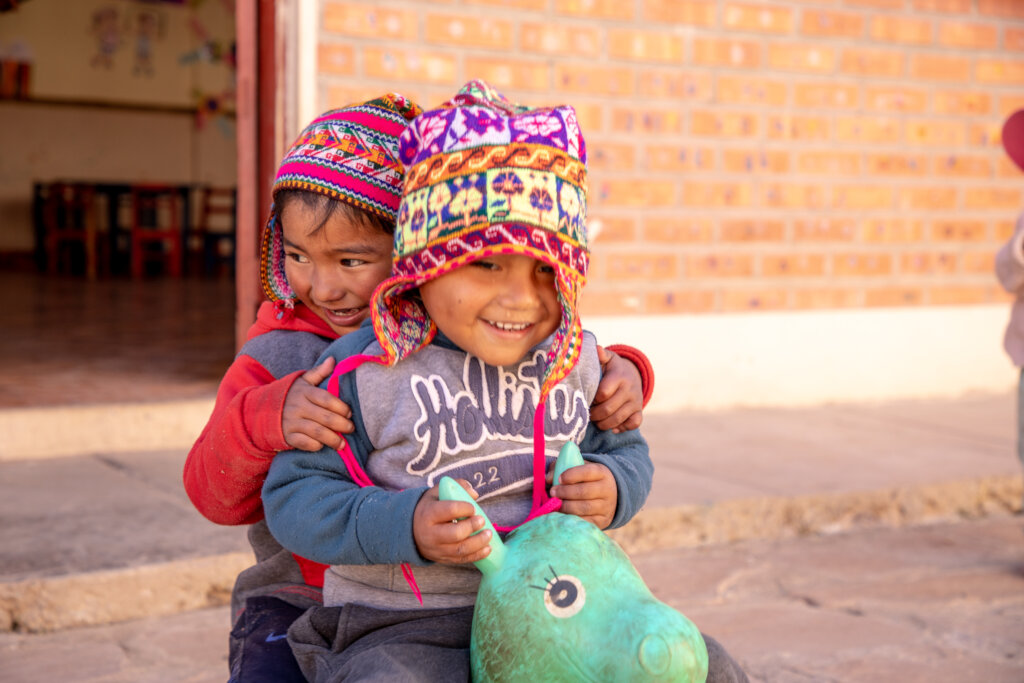
It is going to be a very distressing period for young children, especially those who have been separated from their parents in the chaos, or who have lost their homes and playgrounds and had school interrupted. They will almost certainly require a safe place to play, learn and talk through their experience in order to regain a sense of normalcy again.
Save the Children is working around the clock to reach vulnerable children and their families. Staff, alongside government relief personnel, is on the ground providing immediate relief assistance. To date, we have reached nearly 900 people. We are working in remote and hard to reach villages in Longmen and Baosheng Townships, sometimes arriving on foot, providing household and hygienic items to displaced families in desperate need of basic supplies.
Beyond this immediate relief, we will be continuing to assess the needs to rehabilitate schools and families’ abilities to regain their livelihoods. Ensuring that children receive psychosocial support is also critical. Your support can help Save the Children set up a signature Child Friendly Space, where more than 500 young girls and boys can play, socialize with each other, and participate in other supervised activities to help them recover and regain a sense of normalcy.
This is our final report for the "Support Children Affected by Hurricane Sandy” project. Your generous support allowed Save the Children to immediately deploy teams to some of the hardest hit areas following Hurricane Sandy’s destructive hit to the east coast.
Save the Children’s Post-disaster Immediate Response Programs Reached More Than 43,000 Survivors and Included:
Months after Sandy devastated the East Coast, Save the Children’s response and recovery teams are still in New York and New Jersey, working with families, communities, and partner organizations to provide long-term assistance to help families return to normalcy, send their children to school, and have access to child care.
Save the Children’s Long-Term Hurricane Sandy Response Includes:
Thank you again for your support. Please consider supporting one of Save the Children's other projects. You can find a complete list here: https://www.globalgiving.org/donate/832/save-the-children-federation/.
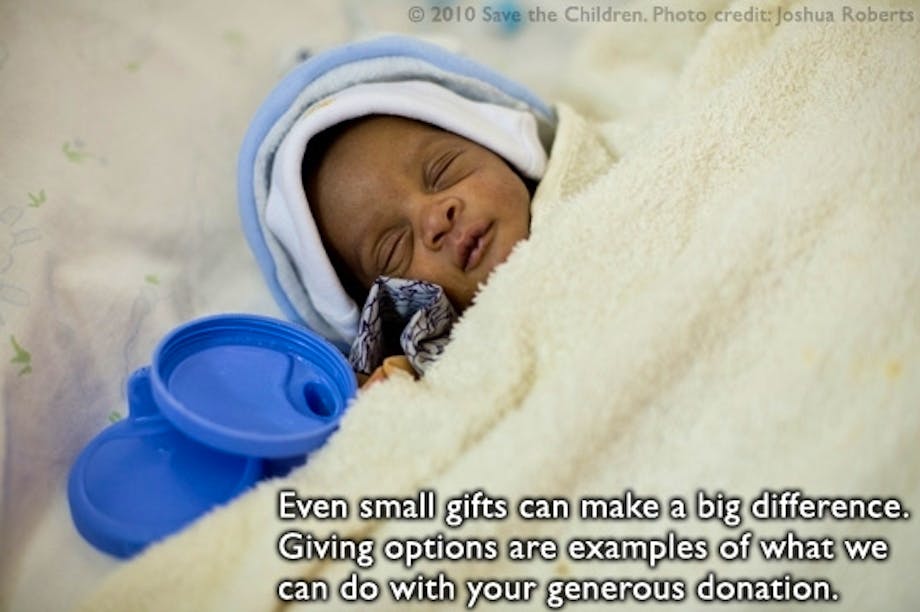
All women deserve the support they need to breastfeed, if they choose to. Breastfeeding has important benefits for moms and babies everywhere, and can literally save lives in the developing world. Save the Children’s new report, Superfood for Babies, estimates that 830,000 babies could be saved if all women breastfed in the first hour of life. Exclusive breastfeeding for six months could save even more lives.
Yet, the report explains, moms face four significant barriers to successful breastfeeding. They are cultural and community pressures, the health worker shortage, lack of maternity legislation, and inappropriate marketing of breast-milk substitutes.
In the last two decades there has been huge global progress in reducing child mortality. Five million fewer children died in 2011 than in 1990. The world is nearing a tipping point, the time at which the eradication of preventable child deaths becomes a real possibility. There is still a long way to go to achieve that goal.
One-third of child deaths are still attributable to malnutrition; the reduction in malnutrition rates has been proceeding at a stubbornly slow pace. Unless malnutrition is tackled it threatens to become the ‘Achilles’ heel’ of development, holding back progress in other areas. We must also tackle the unacceptably high number of newborn deaths: while overall child mortality rates are falling, a larger proportion of deaths now occur within the first month of life. Breastfeeding saves lives. It’s the closest thing there is to a ‘silver bullet’ in the fight against malnutrition and newborn deaths.
Breast milk is a superfood. In the first hours and days of her baby’s life the mother produces milk called colostrum, the most potent natural immune system booster known to science. Research for this report estimates that 830,000 newborn deaths could be prevented every year if all infants were given breast milk in the first hour of life. It is not only through the ‘power of the first hour’ that breastfeeding is beneficial. If an infant is fed only breast milk for the first six months they are protected against major childhood diseases.