
As with many grassroots programs in developing regions, the Corcovado Foundation Sea Turtle Conservation Program is only made possible by the hard work and determination of local people, the contribution of time, money and effort by volunteers, and the extraordinary generosity of individuals like yourselves who selflessly donate money to the cause. The turtles and the local community of Drake Bay, Costa Rica, would like to express their sincere gratitude for all of your help in 2011!
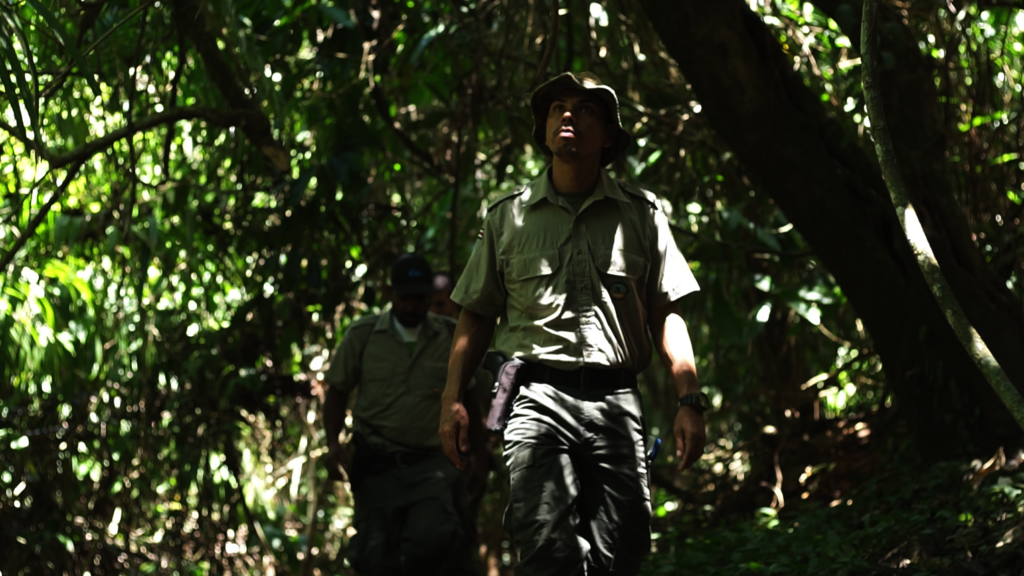
Thanks to your donation the program was able to create more contracted shifts for local people this year, and five more members of the local conservationist association (ACOTPRO) were trained as Patrol Leaders, bringing the total number employed to an all-time high of 20. The program was also able to allocate more resources to promote the ‘Turtle Tour’, a special eco-tour for tourists staying in Drake Bay that includes a visit to the hatchery and a chance to find a nesting turtle or witness the liberation of hatchlings. This tour provides regular income for local Patrol Leaders acting as guides, and thanks to the extra promotion 2011 witnessed a big increase in the number of tourists coming on the tour. As the most promising ecotourism initiative associated with the program, the income from the tour is intimately linked to the survival of the turtles, and as such it helps to incentivize the conservation effort and provides a reliable source of income for ACOTPRO. Another by-product of the tour has been a massive improvement in the quality of English spoken by local leaders this year, at least five of whom now speak sufficient English to lead the tour unaided.
Your donation also helped to support the team of biologists at the program, and permitted the recruitment of an extra research assistant in 2011. The expansion of the team had many positive outcomes, including the appointment of a dedicated environmental educator to assist with the incorporation of environmental education into the curriculum of local schools. The program was able to maintain two new out-of-school groups throughout the season, the ‘Pumas of El Progreso’ and the ‘Eagles (Águilas) of Los Ángeles, both of which put together fantastic performances at the 2011 Turtle Festival, which took place in November in Drake Bay.
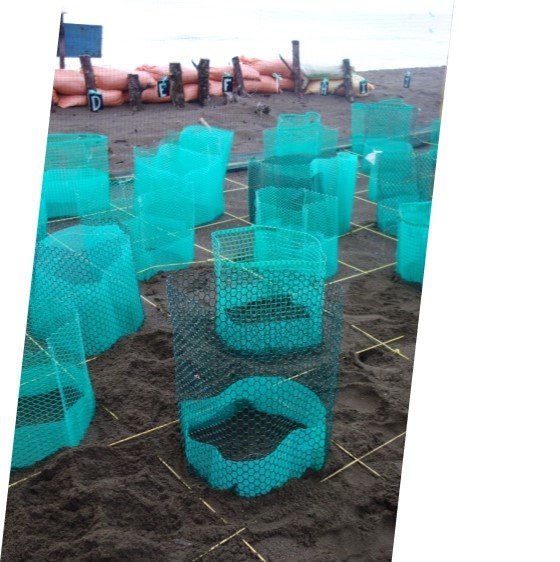
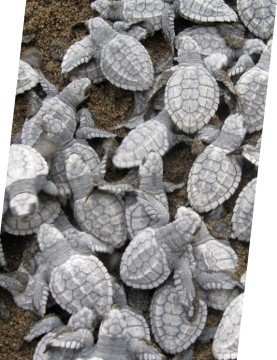
The extra manpower also produced great results for the turtle conservation program, with a record 106 nests relocated to the hatchery – the largest ever built at the program – and an all-time low 5.0% incidence of poaching. Moreover, for the first time ever the team sighted over 50% of the 187 turtles that crawled from the sea to lay nests on Drake Beach, and by the end of the season the team had liberated over 7000 hatchlings, with many more still due to emerge from nests relocated to the beach.
As we enter 2012, however, the program faces its most uncertain year yet financially, and so private donations will prove to be more crucial than ever this season. A major emphasis is being placed upon the need for the program to become more self-sufficient, and as such the Turtle Tour and Turtle Adoption initiatives will be further developed and heavily promoted. Next month’s article will explain how the latter will work, and direct you to a link where you can adopt and provide lasting protection for your very own endangered Olive Ridley sea turtle. In the meantime though, the program urgently needs money to replace essential field equipment and to build a budget to be able to commence the season, without which the fate of the turtles of Drake Bay hangs in the balance. Please dig deep this year and support grassroots initiatives such as the Corcovado Foundation Sea Turtle Conservation Program, and help the community in Drake Bay to build an ethically-sound economy that generates sustainable income through the non-consumptive use of sea turtles.
Thank you, and may we wish you a happy and properous new year!
Links:
'Mummy, what were sea turtles?' It might seem a little far-fetched to pose this question right now, but it is one that parents may find themselves answering to their children sooner than one might expect. After all, there are places in the world where sea turtles appear to be abundant and one could be forgiven for assuming, whilst snorkeling amongst the apparently plentiful Hawksbill turtles of Indonesia, or the Green turtles of the Caribbean, that these graceful reptiles are doing ok. It might come as a surprise then that, in fact, there are only seven species of sea turtle left, all of which are in danger of extinction, three of them critically. Moreover, global populations of all seven species have reduced by around 80% in the last 20 years! Clearly something is going terribly wrong for sea turtles, but what is it? Well of course there is a combination of factors at work here, all of which are in some way brought about by humans and the rapid development of our built environment over the last few hundred years.
At first glance, sea turtles appear to be built to last. Indeed turtles have survived in more or less their present form for some 200 million years, evolving around the same time as the dinosaurs but outliving them by 65 million years so far. The almost impenetrable protective carapace of the sea turtle, formed from the fusion of ribs in a robust exoskeleton, means that adults have very few natural predators, and it is the secret of their survival. The story is very different for young sea turtles though and, in a perfect illustration of evolution's survival of the fittest, only 1 in every 1000 eggs is thought to survive to become a sexually mature adult - that's about one turtle in every 10 nests. In the wild, where nests are at the mercy of the changing tides and shifting sands, many hatchlings die simply trying to climb out, and many eggs are consumed by natural predators such as raccoons, crabs, and ants. Once out of the nest the hatchlings face the most dangerous moments of their life as they make their journey down the beach to the beckoning surf, during which birds and crabs are able to pick off scores of baby turtles, especially if a nest hatches during the day. It is during these first phases of the life cycle, however, where the use of a hatchery at conservation programs, like that of the Corcovado Foundation's Sea Turtle Conservation Program in Drake Bay, can function to tip the balance a little in favor of the turtles. Hatcheries provide a safe and controlled environment in which to incubate nests, protected from many natural predators and the high tides, and the hatchlings are treated to a team of volunteer bodyguards ready to marshal their first journey into the sea and dissuade any would-be predators on the beach. Once in the open ocean, however, turtles face a new spectrum of predators, and some species are known to quickly find refuge in floating kelp beds, where they are thought to hide and feed for perhaps the first five years of their lives. For other species, like the Olive Ridleys of Drake Bay, we simply don't know for sure where they go.
But what of the human factors that have brought about the demise of sea turtles? The story of the interaction between people and turtles is long and convoluted, and sea turtles have been used for eggs, meat, carapace, oil, leather or other products since at least 5000 BC. But whilst such consumptive use by ancient and indigenous peoples, such as the Mesoamerican Mayas and other Amerindians, was relatively sustainable, sea turtle utilization became unsustainable with the onset of the colonial era during which millions of turtles were caught and kept alive as a long-term fresh food source for ships' crews, and for export to European markets. Today, intentional capture of sea turtles continues using nets, harpoons and traps in feeding grounds, along with incidental capture by indiscriminate fishing practices, such as 'long-lining', causing drastic declines in global populations. The majority of sea turtle nesting sites are located in tropical regions, often in countries with developing economies where the turtle trade, whilst illegal, is still considered an income source. At nesting beaches in Central America, such as those of Drake Bay, decades of systematic egg poaching by locals has resulted in the near eradication of certain nesting species, such as the East Pacific Leatherback and Hawksbill turtles, and has caused the population of Olive Ridley turtles, the most abundant species in the region, to become endangered.
Irresponsible tourism, including the riding of horses or quad bikes on beaches, where they can destroy nests, and the construction of beachfront hotels and businesses, has led to the large-scale destruction of sea turtle nesting habitat worldwide. Light pollution from such development has an especially negative impact, as light dissuades females from emerging from the sea to nest and causes newly-born hatchlings, who inherit an instinct to head to the brightest part of the beach, to crawl towards hotels and street lighting instead of the white surf of the ocean. But perhaps the most lethal man-made geo-biological disaster of the last 60 years has been the disposal of non-biodegradable plastics in rivers all over the world, ultimately destined for the oceans where they will take hundreds or maybe even thousands of years to break down. Fine suspensions of plastic particulates on the surface of the oceans choke and smother marine reptiles and, enticed by their shiny colorful and organic appearance, turtles increasingly eat or become tangled in plastic waste and discarded fishing gear, usually with deadly consequences.
What would a world without turtles be like? Well, one further stripped of its once vibrant biodiversity`- a world less beautiful, and with fewer species for our children to enjoy and appreciate. But the ecological consequences could be even more severe. Sea turtles are keystone species in coastal and oceanic marine ecosystems, and the natural predation of their eggs transfers vital nutrients from marine to terrestrial ecosystems. Each species also fulfills a specific ecological role, such as the Green turtle for example, which consumes vast quantities of sea grass and keeps it cut short, permitting the continued growth of the grass and the survival of the myriad species of fish, shellfish and crustaceans which call it home. The extinction of sea turtles would also bring about the collapse of the very eco-tourism industry intended to facilitate their conservation, resulting in the loss of revenue and jobs within developing communities where they are desperately needed.
So what can people who live in developed countries far away from nesting turtles do to help? Well, recycling and the responsible use and disposal of plastic waste, especially plastic bags, should obviously be a priority for every conscientious modern household, and information is increasingly available at local supermarkets and restaurants that allows one to be confident of consuming only seafood that is sustainably sourced, and not caught using indiscriminate fishing practices. Whilst on vacation in tropical regions be sure to ask the owners of your beachfront hotel what measures are being taking to dispose of waste responsibly and limit light pollution. Always turn your lights off at night. Don't stray onto nesting beaches on horse-riding or quad-biking tours, and stay off nesting beaches at night unless participating in a bona-fide turtle watching eco-tour. Denounce the sale of turtle products wherever you find them, and most importantly of all, lend your financial support to conservation efforts such as that of the not-for-profit Corcovado Foundation's Sea Turtle Conservation Program in Drake Bay. Every cent donated is dedicated to the fight against illegal egg poaching and the development of long-term socio-economic alternatives for local people in the region - sustainable income generated from the non-consumptive use of sea turtles. Thank you for your generous support!


Links:
Links:
