
I have just returned from a rewarding yet very challenging trip to Zambia. After three weeks enjoying temperatures reaching over thirty degrees, it was a shock to come back to the UK to snow and below zero temperatures. As always there are many projects I to check on and new ones to initiate.
Education is foremost in making progress, but more importantly health concerns have to be dealt with. A number of children had to be referred to hospital suffering with various conditions ranging from Cerebral Palsy to stomach ulcers; some had waited for many weeks due to not having transport money to reach Livingstone. In addition there were several babies who needed support.
During my first week in Mukuni a woman had walked for three hours from Ndele to ask for my help. Last year a fifteen year old school girl had fallen pregnant in her village. During the girl’s pregnancy her mother, who she lived with, sadly passed away. Some months later the girl herself tragically died in childbirth. For the past two months the guardian had to beg for contributions from the community, so that she could buy the costly formula and care for this helpless infant. It was heartbreaking to see this beautiful baby orphaned at such a delicate age and it was agreed that the charity would support her.
The rainy season in Zambia ends in March. Unfortunately the rains, which started in October, have been intermittent – either too heavy or insufficient. This means that the crops will yield only around 30 – 40% of what is normally expected. This will result in a great deal of hunger, if not famine, amongst the rural communities that depend on maize as their staple food. I came across many hungry children living on just one meal a day, some of them walking for three hours to get to school.
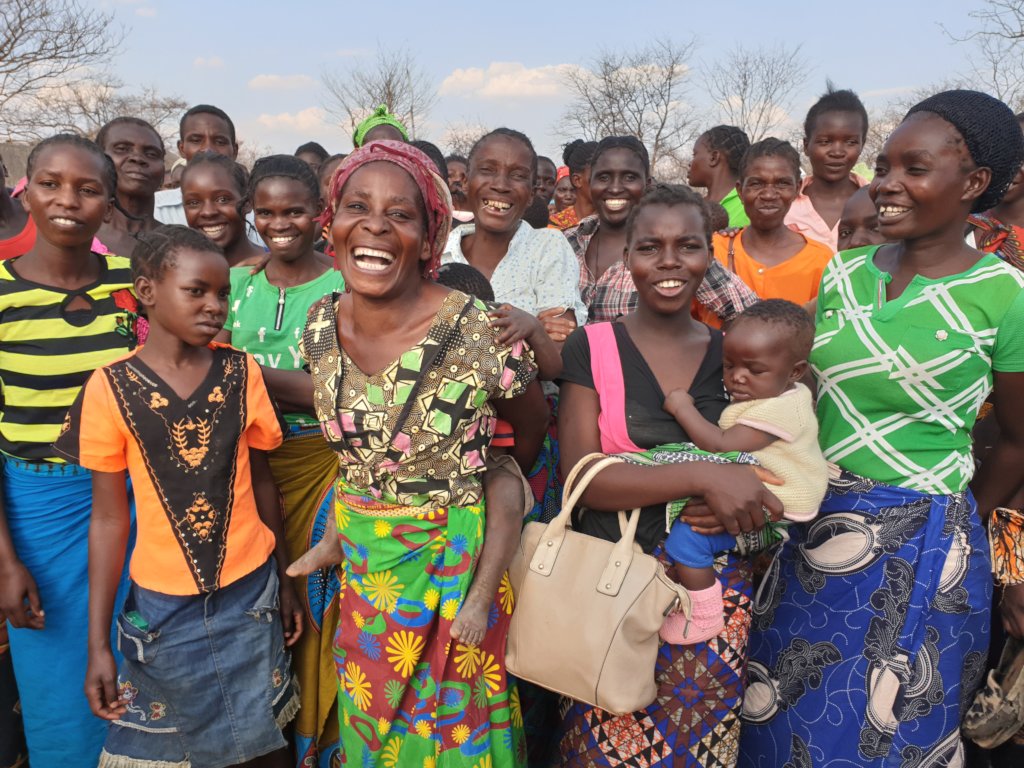
Thanks to donations from an existing supporter and some generous tourists I met during my stay, we were able to distribute bags of ‘mealie meal’ (ground maize) to vulnerable families in both Mukuni and Kamwi Villages.
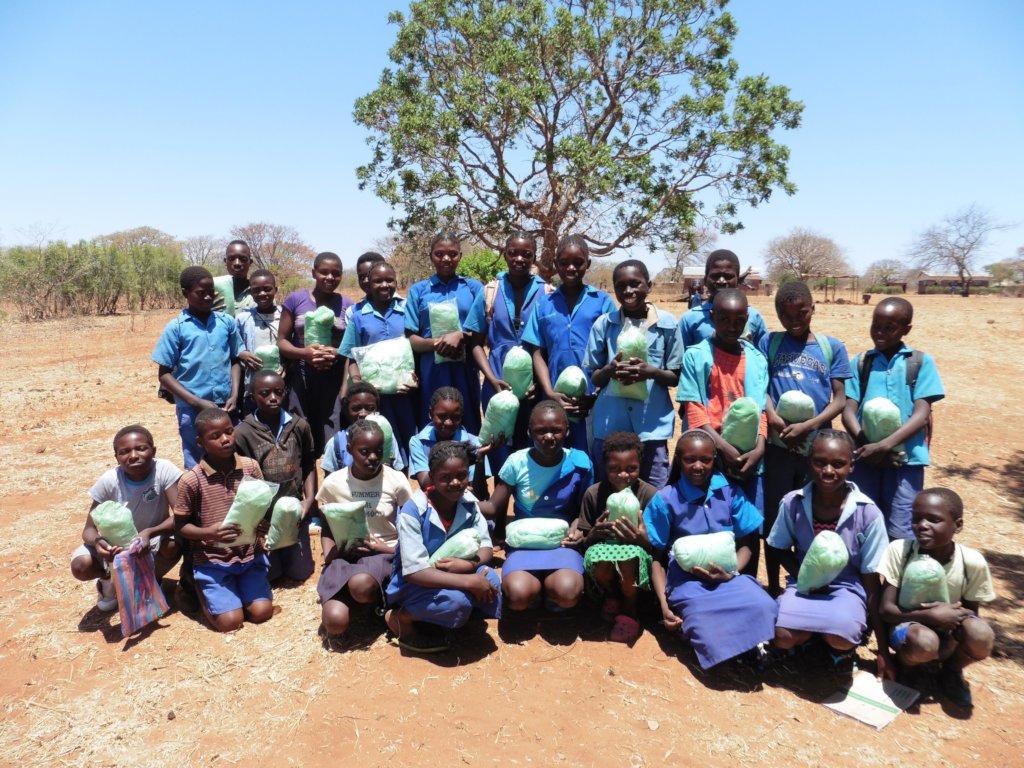
Despite all the hardships it was great to see all the progress. A boarder’s shelter and five new community houses have been completed, two of them to house young widows each with several children. Sibbulo Village has an entire new school and bore hole. Over 2000 mosquito nets have been distributed in the Mukuni and Sekute Chiefdoms.
A clinic, which comprises of a maternity unit, women’s shelter, three staff houses, latrines and a bore hole will be opening in May. This will help people who are currently walking over thirty kilometres to seek healthcare and treatment.
As always there are many more orphans seeking sponsorship. Some children are returned to the villages from townships when their parents pass away. It is really tough for these children and also for their grandparents who become their sole guardians. I met one elderly man whose daughter and son-in-law had died as a result of AIDS related illnesses. His grandchildren had been brought to him from Sesheke, some two hundred kilometres from Mukuni. A neighbour had kindly offered him his mud hut as the old man did not have suitable accommodation. We will soon provide a house for this family along with support for the children.
These are the really vulnerable people who desperately need funding. Working at grass root level, we can identify the real need and ensure that all donations go directly to the cause, without deducting costly administration and personal fees.
We have had tremendous support from our donors, fundraisers and volunteers. Please continue to help us to reach out to more vulnerable children in these remote villages of Zambia.
Links:

The rainy season in Zambia ends in March. Unfortunately the rains, which started in October, have been intermittent – either too heavy or insufficient. This means that the crops will yield only around 30 – 40% of what is normally expected. The maize had dried too quickly, much of it scorched by the saering heat, when temperatures reached 35 degrees, above average for the time of year. This will result in a great deal of hunger, if not famine, amongst the rural communities that depend on maize as their staple food. There are many hungry children living on just one meal a day, some of them walking for three hours to get to school.
As always the ones most affected there are the orphans. Some children are returned to the villages from townships when their parents pass away. It is really tough for these children and also for their grandparents who become their sole guardians. Recently one elderly man lost his daughter and son-in-law as a result of AIDS related illnesses. His grandchildren had been brought to him from Sesheke, some two hundred kilometres from Mukuni. A neighbour had kindly offered him his mud hut as the old man did not have suitable accommodation. He had no income to provide food for these vulnerable children. We will soon donate a house for this family along with support for the children, but it will greatly help the family if they have seeds to grow their own food.
Thanks to donations from an existing supporter and some generous tourists, we were able to distribute bags of ‘mealie meal’ (ground maize) to vulnerable families in both Mukuni and Kamwi Villages.
We have had tremendous support from our donors, but we need to buy more seeds for vegetable and beans now that the maize growing season is over. Please continue to help us to provide them to more vulnerable children, especially girls and women who tend the small gardens to provide food for their families, in these remote villages of Zambia.
Links:

New Year Brings Hope for Orphans. It is almost seven years since I first stepped foot in Mukuni Village and visited their basic school. It was there that I learnt about the plight of the orphans – almost 50% of the children had lost one or both parents. Since 2006 The Butterfly Tree has assisted thousands of orphaned and vulnerable children in the Mukuni Chiefdom and beyond and sponsored over 500 individual ones in education. With the start of the new school year in Zambia many children will have dropped out of rural schools due to the lack of funds. Education up to grade seven is free, though books and uniform still need to be purchased. After grade seven school fees have to be found – a hard task for families who are living below the poverty line.
With so much poverty in rural villages education is crucial for these needy children. We have provided bore holes, improved health facilities and feeding programs but far too many orphans are struggling to meet the school fees. It cost just £110 ($180) per annum to sponsor an orphan or £10 per month for UK donors. Last year twenty orphans who had completed high school were able to go onto further education thanks to a grant from the BFSS. The majority of them took hotel management or food and beverage courses. Zambia is an up and coming tourist destination and new hotels are being built in the area. More jobs will become available for these students who are now trained in this industry. Two of the first orphans we sponsored have employment as security guards at Stanley Safari Lodge.
For 2013 one challenge is for the schools we support to become more sustainable, another will be to initiate income-generating enterprises for orphans who are unable to seek employment. Our aim is to provide a mentoring scheme, which will involve local employers and businesses. If we can teach these educated orphans how to run a business not only to provide food for their families, but also to produce food for the tourist industry, they can overcome the poverty cycle. At the end of 2012 many of Zambia’s crops were destroyed be army worms. Mukuni and Kamwi villages lost most of their crops and will suffer a food shortage later this year. The Butterfly Tree has donated funds for 100 bags of seeds to help the worse effected families to replant during this peak growing season. All of these families will be supporting orphans; besides giving them an education we have to ensure that the orphans do not to suffer from hunger.
