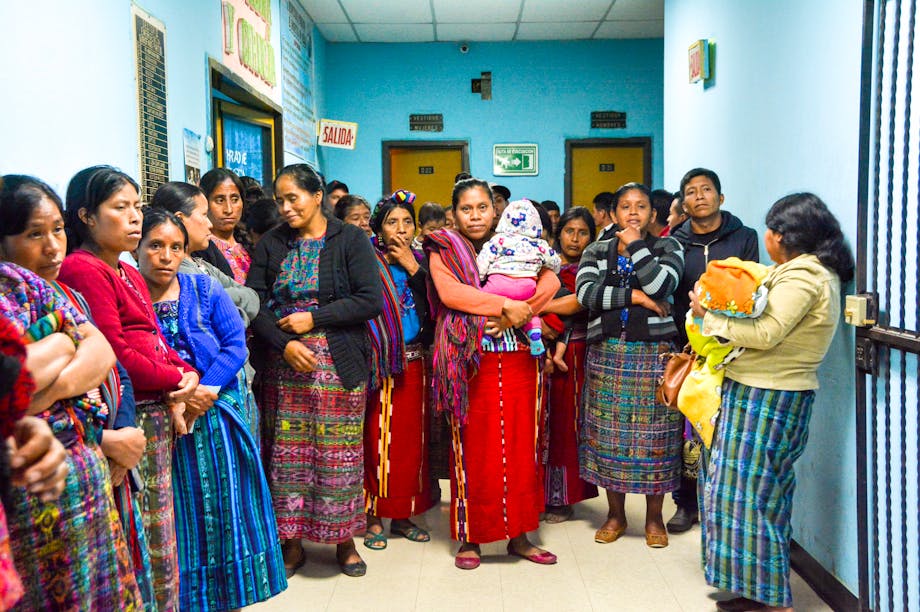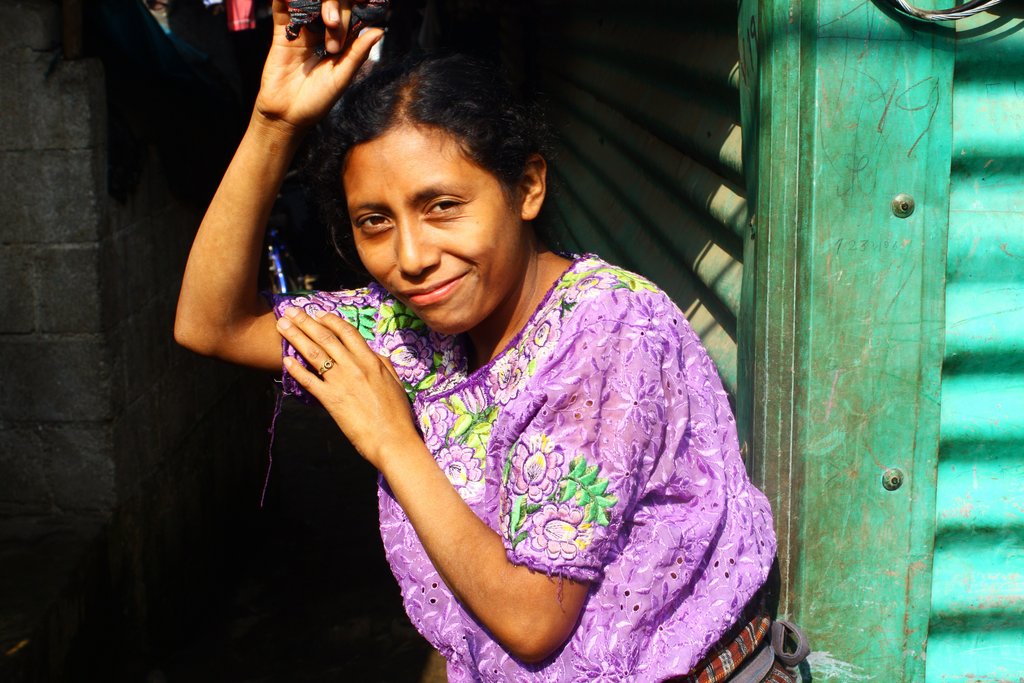
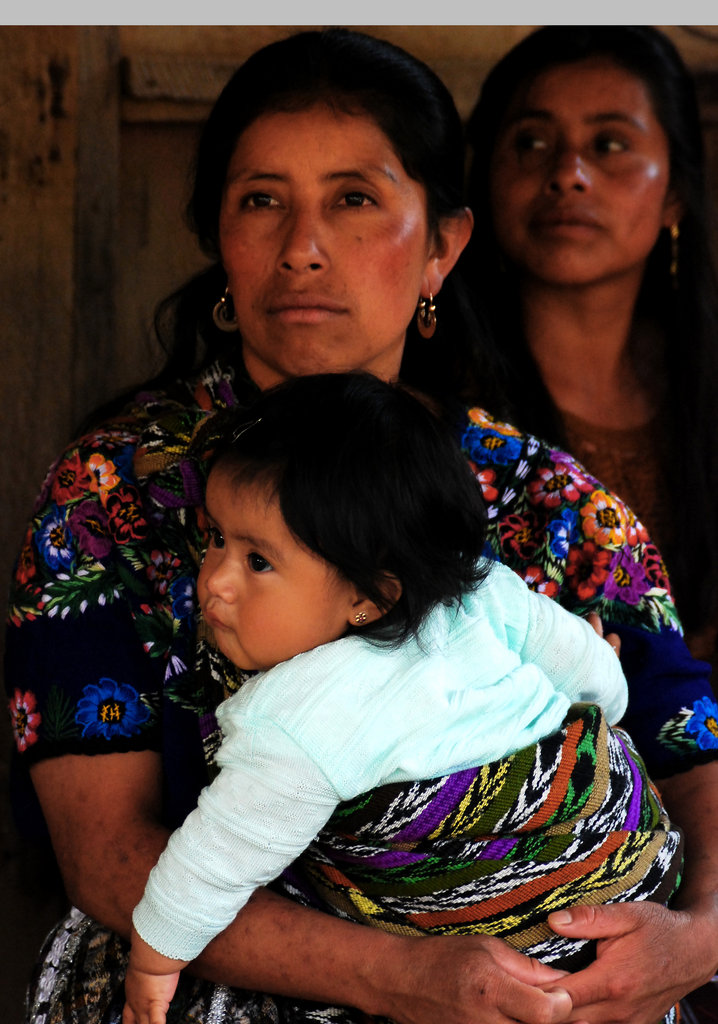
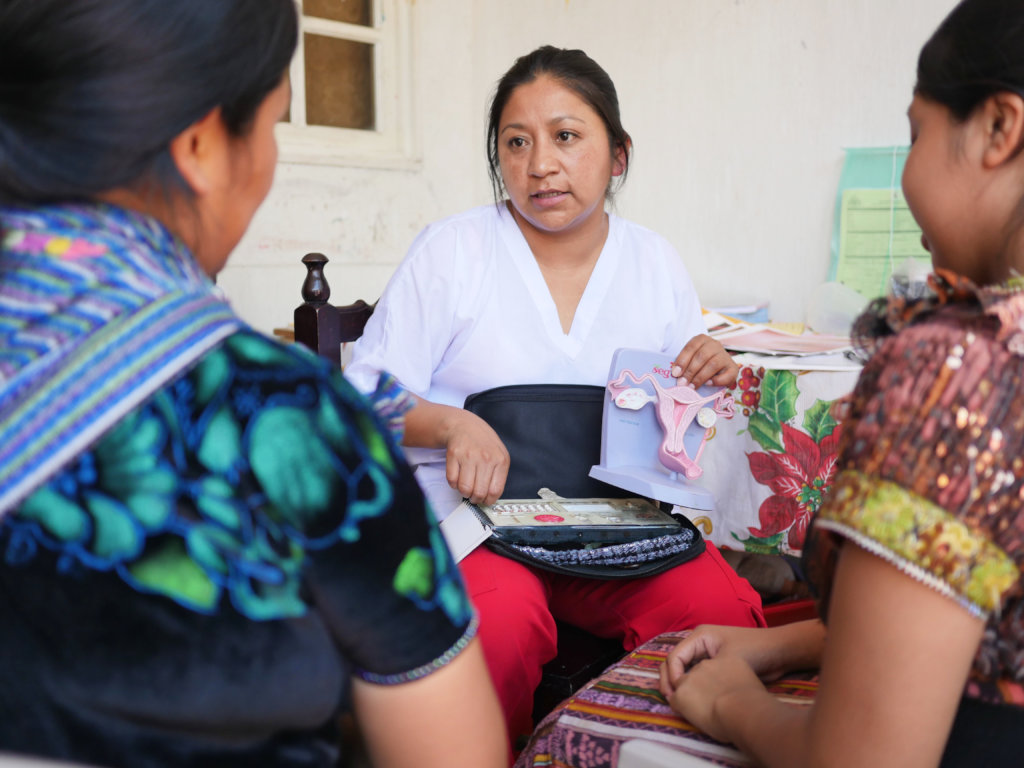
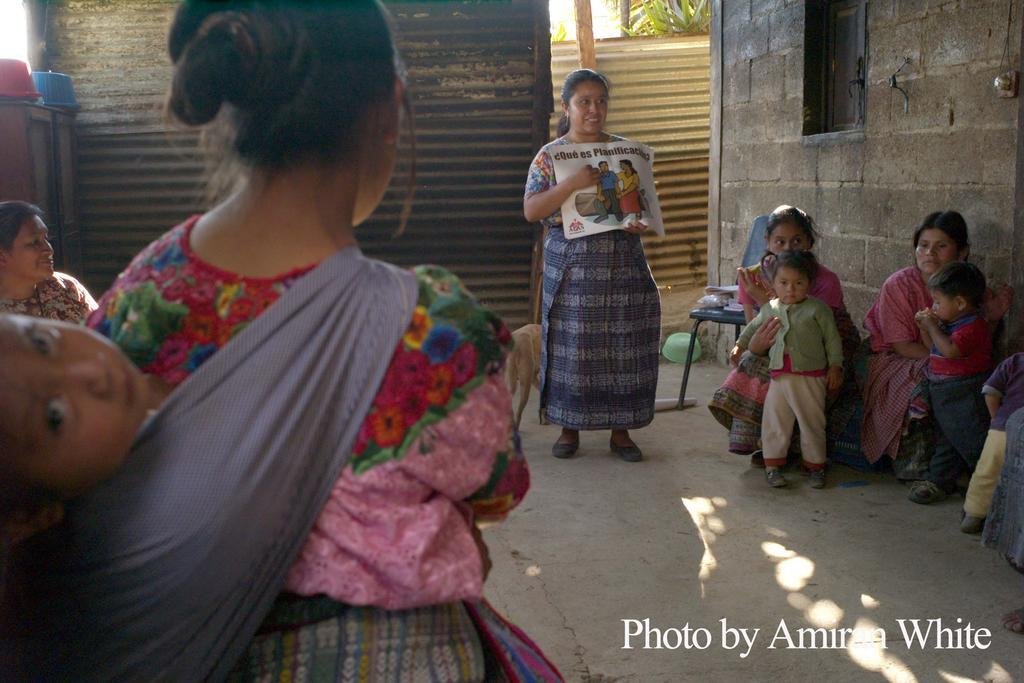

Like many of the women WINGS serves, Elena, 20, made a long journey to reach us. Guatemalan communities, especially in the isolated rural areas targeted by WINGS, are often very small and scattered throughout the countryside, making it logistically impracticable for WINGS’ mobile unit to reach them. While field educators do conduct educational outreach in these difficult to access areas, WINGS schedules mobile unit visits in slightly larger communities that both have necessary facilities for a temporary clinic and are accessible to those living in the outlying villages. Elena walked two-and-a-half hours with her son to reach her village’s nearest health center, where WINGS held a mobile medical clinic.
When she heard a radio announcement about WINGS nearby clinic, Elena decided to see what she could learn. She proudly reported that she now knew that “all women need to do this [cervical] exam to avoid getting cancer,” but was nervous because she did not have any money to pay for the service. WINGS charges women Q10, or about $1.25, for a cervical cancer prevention screening, but will not turn away a patient, like Elena, who is unable to pay. WINGS screened Elena and her results were negative for pre-cancerous cervical cell abnormalities.
“I am so happy and grateful that WINGS helped me get tested even though I do not have money. If I didn’t come to this mobile clinic, I would not have gotten screened at all. It is too difficult to go to San Cristobal [the nearest bigger town where they offer exams].”
Berta, 29, suffered a terrible loss when one of her four children died as an infant. Now, her two-year-old son is also sick. Berta and her husband, Juan, have spent a lot of money trying to keep him well, but on the combined salary of about $150 per month that they earn as bus drivers, they simply cannot afford to buy all of the medicines that might help him.
This harsh reality motivated them to seek out a reliable family planning method at from WINGS. The couple wants to make sure that they do not bring another child into the world in such difficult circumstances. Berta has been getting a Depo-Provera injection every three months, but explained that sometime the government-run health center runs out, and she is forced to go for months without protection from unintended pregnancy.
“It seems that every day life gets more expensive. We are living with my in-laws to try to save money, but sometimes we still have problems making ends meet. We need time to figure out if we can support more children,” said Berta.
At the clinic, Berta received a Jadelle, a sub-dermal hormonal implant that will protect her from unplanned pregnancies for up to five years. WINGS offers the implant at a deeply subsidized price of approximately $3, and will waive the cost for families who truly cannot afford it, so it is accessible to couples like Berta and Juan. The couple is pleased that they can now focus their resources on their surviving children, without worrying about having to provide for another child in the future.
When we saw Sandra, 21, at a recent mobile clinic, she looked tired and bit sad. She explained that she came on foot from her village, about 2 hours away, with one-and-a-half year old Ana in tow. Her aunt had told her that the WINGS mobile clinic would be arriving in the center of town a few days ago and Sandra did not want to miss it.
Upon asking Sandra why she it was important to her to come to the clinic, she hesitated a moment, but then went on to explain that that her husband, a day laborer, drinks too much. “It isn’t fair to bring any more children into the situation we are currently living in,” she said.
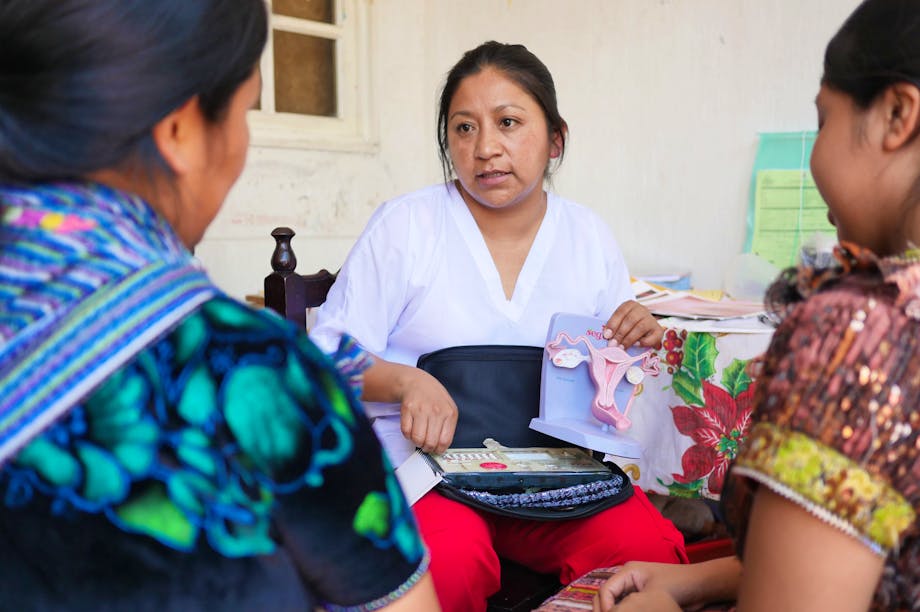
She had used hormonal injections and condoms as forms of birth control in the past, but Sandra wanted a more reliable method. Her face lit up a bit when she began to talk about the Jadelle, the hormonal birth control implant which will protect her from unwanted pregnancies for up to five years. “There is nothing I have to remember to do. It just keeps working. I liked the talk that [WINGS Family Planning Educator] Ester gave because I now know exactly what to expect.”
Sandra also expressed her gratitude for the reduced price because it meant that she could pay for the implant with a bit of the money that she usually spends on household expenses, like food and cleaning supplies. Lamentably, not every story we come upon is a cheery one, but we hope by providing Sandra access to a reliable birth control method, she feels more empowered.