By Micaela Arneson | 2014 CFK Peacock Fellow
Recently I had the opportunity to tag along on a couple of “home visits” with Esther, one of the nutritionists at Carolina for Kibera’s Lishe Bora Mtaani Nutrition Center. Our destination was Gatwekera, a village in Kibera located south of the CFK office.
CFK staff members and Community Health Workers (CHWs) conduct regular home visits for several health-related reasons. CHWs go door-to-door to administer health surveys, acquiring basic health information from families all over Kibera. They also screen children for malnutrition; if the child is malnourished, they send them to CFK’s Nutrition Center. The purpose of our visits was a little different. We were checking up on some of the children who had completed the Nutrition Center’s 8-week program and been successfully brought back to full health earlier this year.
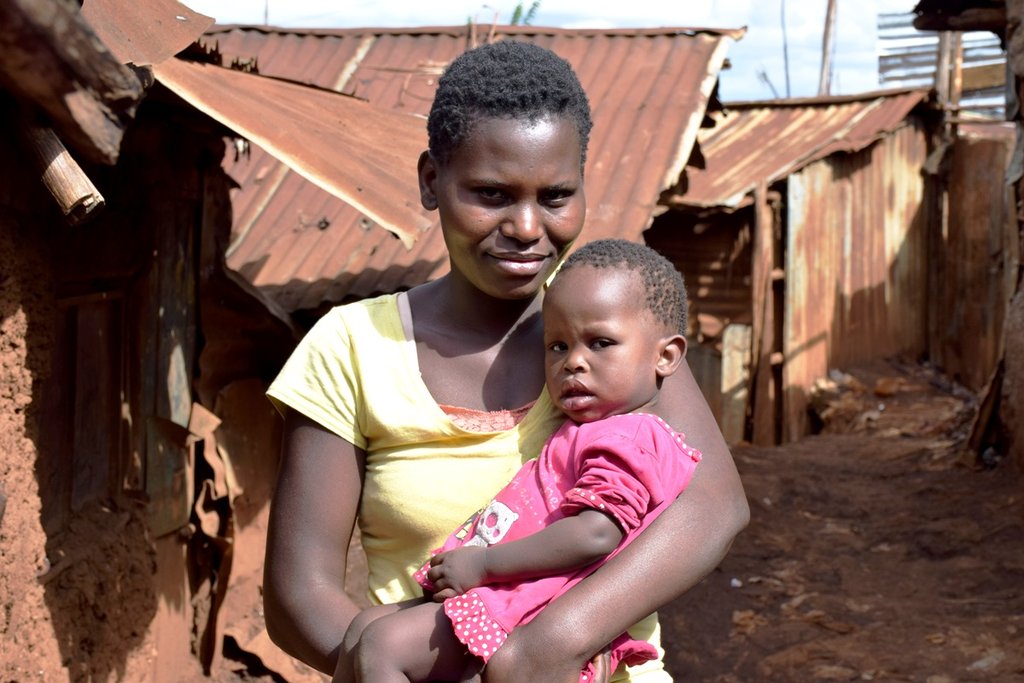
Esther is a resident of Gatwekera and led me through the maze of houses and narrow, winding streets— it’s been raining recently in Kibera, and although the dirt alleyways have been turned to thick, slippery corridors of mud, Esther made her way quickly and nimbly in her flats while I struggled to keep my balance in a pair of oversized gum boots.
Our first stop was at the home of Millicent and her 2-year-old daughter Mary, who was released from the nutrition center in January. As we stepped inside their home, Mary instantly hid herself behind the curtain separating the family’s bed from the main living area— she was happy to see Esther (her second mom/auntie), but wasn’t too sure about me. We sat down with Millicent and Esther asked her about Mary’s progress and status since leaving the center. She’s maintained a healthy weight, has good energy, and is meeting important developmental milestones such as walking and talking. Her mom told us that Mary is also a great eater: her favorite foods are rice and beans, spaghetti, and cabbage. Millicent also recently referred a neighbor to the nutrition center.
The home visits with Mary and other former patients of the nutrition center are a critical element of its holistic approach to treating malnutrition. Parents are equipped with the knowledge and skills to keep their children strong and healthy, and follow-ups serve to identify any challenges and provide support and assistance where needed. It was exciting and encouraging to meet the plump, happy, and healthy babies and their equally happy parents—it takes a village to raise a child, and nowhere does that ring truer than here in Kibera.
Project reports on GlobalGiving are posted directly to globalgiving.org by Project Leaders as they are completed, generally every 3-4 months. To protect the integrity of these documents, GlobalGiving does not alter them; therefore you may find some language or formatting issues.
If you donate to this project or have donated to this project, you can receive an email when this project posts a report. You can also subscribe for reports without donating.