By David Chrystal | Project Leader
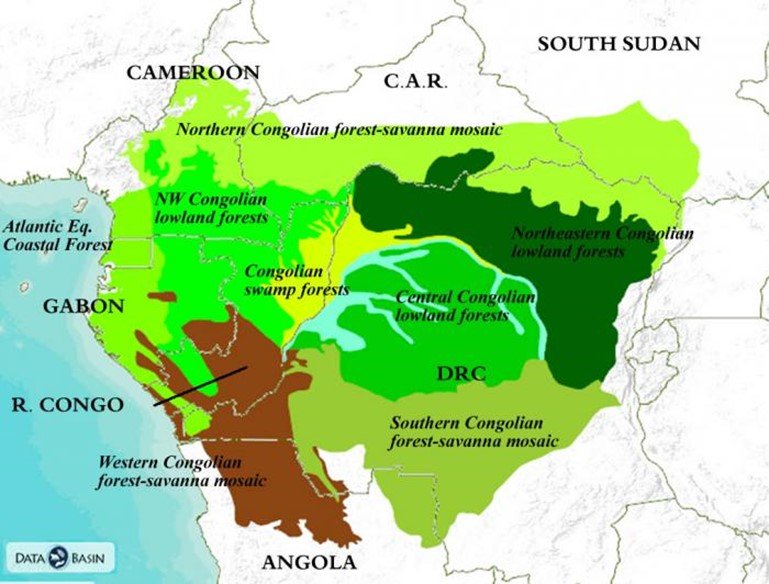
The Congo Basin is home to more than 150 different ethnic groups, and like most forest-dependent peoples, these communities possess an incredible amount of knowledge about local biodiversity as well as the harvest and practical use of local forest products. This type of trade has the potential to support people’s livelihoods, providing a stable source of economic growth.
At the Rainforest Alliance, we recognize that community forestry is among the most sustainable forms of forest management, and evidence from our work in Latin America emphasizes that community forestry can be a working solution in lieu of deforestation. When locals are able to take control of their own lands, their actions tend to reflect the community’s best interests. An analysis of Guatemala’s Maya Biosphere Reserve shows that deforestation rates in community forests where the Rainforest Alliance has worked were close to zero, while adjacent protected areas experienced forest conversion rates that were higher than regional averages.
A very recent example of successful sustainable forestry practices in this region comes to us from Cameroon’s Community Forestry Enterprises (CFE’s). Since revising its forestry law in 1994, Cameroon has established or recognized some 300 community forests, covering a total area of about 2.47 million acres (1 million ha).
Our work in this region lends support for CFE’s as they plan sustainable forest management activities, utilize best forestry practices, boost their business skills, and engage in strategies for value-added processing and penetrating premium markets for timber and other forest products. Since 2011, we have employed these very tactics in Cameroon, by focusing on two clusters of community forests which border protected areas in the country’s southern region.
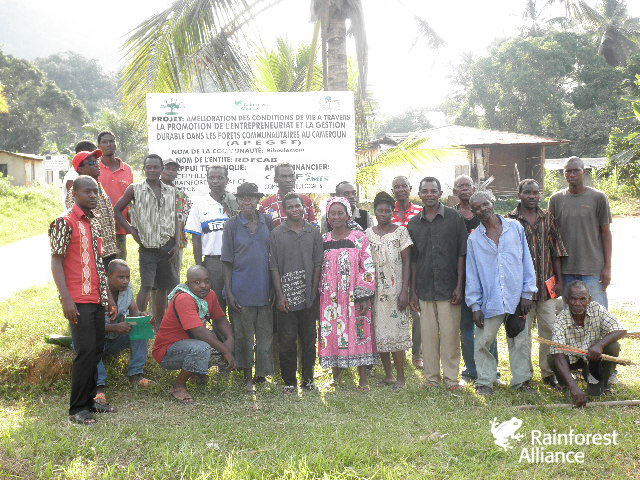
To date, the Rainforest Alliance’s efforts have benefited 12 nearby communities, which are home to around 10,000 people. As a collective effort with these communities, we’ve laid the groundwork for sustainable methods of harvesting timber and non-timber forest products, while strengthening their internal governance and enabling them to operate in a competitive market environment. Additionally, we have facilitated the establishment of four local community-owned forest enterprises as a tool for pooling investments in equipment and social infrastructure, increasing negotiating power and improving access to markets. This work has been carried out in a participatory manner, in cooperation with two local NGOs.
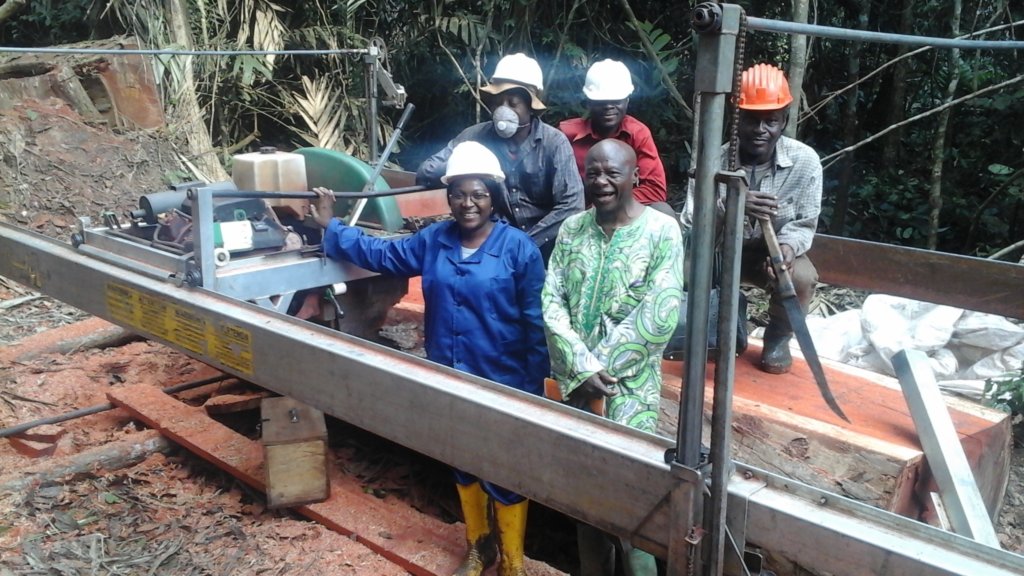
The delivery of sawmills and the training of production teams are essential resources for which the freshly formed community forest enterprises. Portable sawmills are used to cut logs into lumber, typically juxtaposed next to the tree being felled. Pooled resources for the processing of wood also renders operational and maintenance costs more affordable for CFE’s, while allowing communities the chance to attain higher profit margins. First and foremost though, access to this type of processing equipment provides communities with options; it frees them from involvement with agents who may seek to take advantage by imposing unfavorable terms or by exploiting internal conflicts into unilateral and often illegal operations which tend to lack consent from the whole community.
Project reports on GlobalGiving are posted directly to globalgiving.org by Project Leaders as they are completed, generally every 3-4 months. To protect the integrity of these documents, GlobalGiving does not alter them; therefore you may find some language or formatting issues.
If you donate to this project or have donated to this project, you can receive an email when this project posts a report. You can also subscribe for reports without donating.