By David Chrystal | Project Leader
Overview:
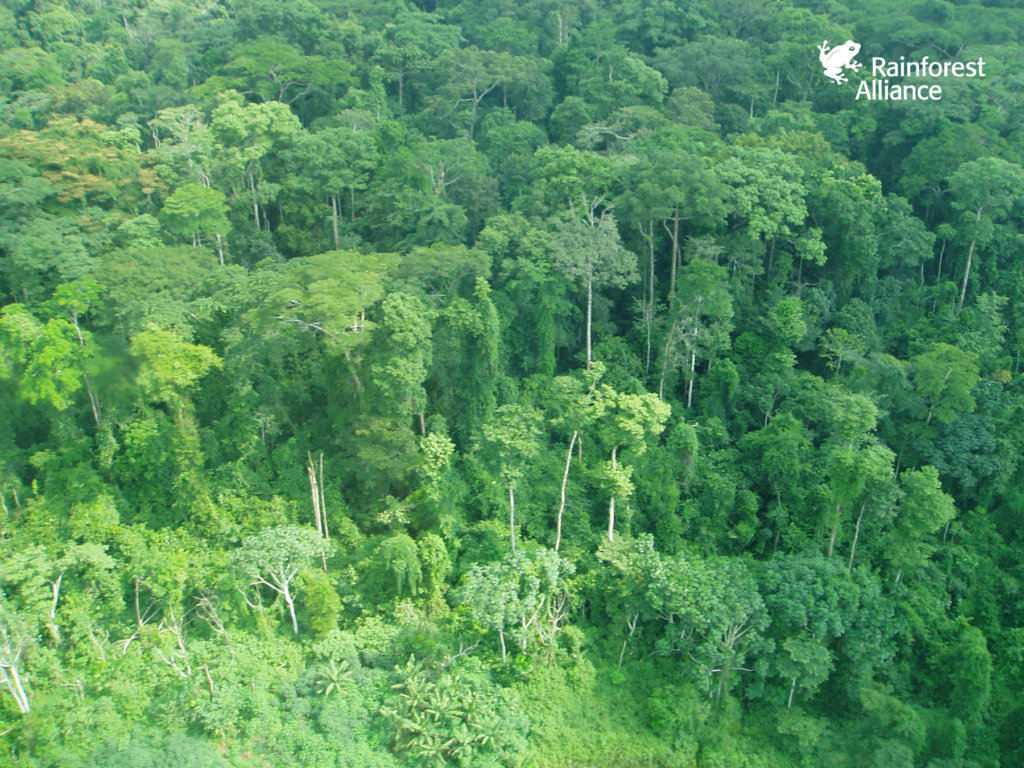
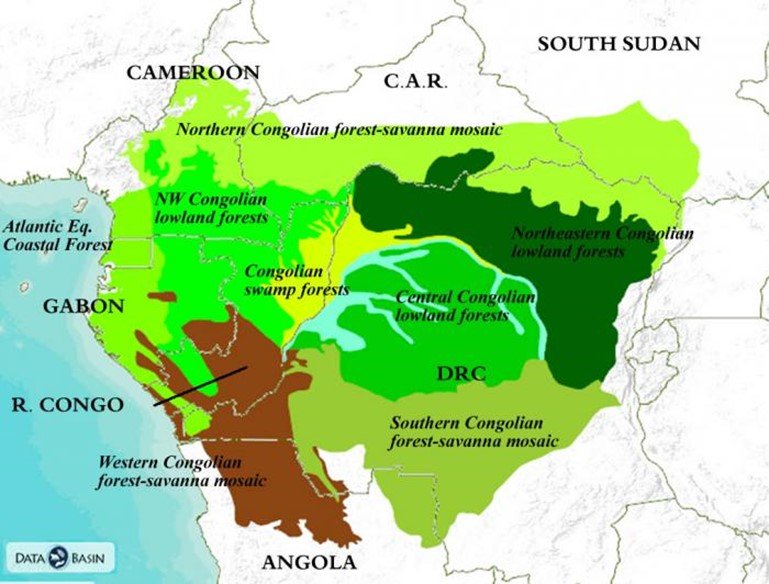
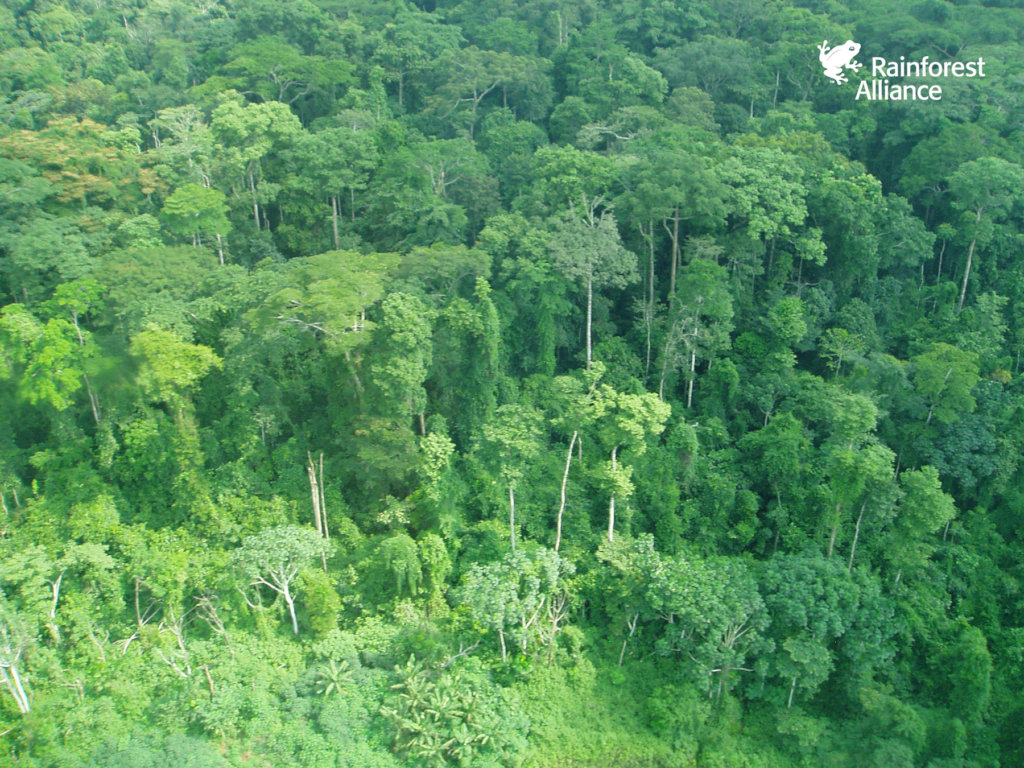
West and Central Africa have strong rural economies set within some of the world's largest forest expanses. The Congo Basin spans eight countries, contains the world's second largest contiguous forest, and boasts abundant biodiversity and natural resources. It also provides food, water, and shelter to some 75 million people. When it comes to sustainability, the definition of success takes many forms. Whether it is rising populations of endangered species, robust crop yields, or higher and more stable incomes for smallholder farmers, studies show that the best management practices the Rainforest Alliance promotes throughout West and Central Africa produce encouraging results.
Deforestation and Climate Change:
There’s no doubt about it: the best thing we can do to fight climate change is keep forests standing. That’s why we works with farmers in the Cameroon and Congo Basin to advance a variety of strategies to develop livelihoods that don’t hurt forests or ecosystems. We stand more of a chance in this fight with forests standing strong since trees capture greenhouse gases (GHGs) like carbon dioxide, preventing them from accumulating in the atmosphere and warming our planet.
That means that, when people clear forests, they’re not only knocking out our best ally in capturing the staggering amount of GHGs that humans create—primarily by burning fossil fuels at energy facilities, and of course, in cars, planes, and other transportation—we’re also creating additional emissions by deforesting. When trees are felled, they release into the atmosphere all the carbon they’ve been storing and, in the end, deforestation on its own causes about 10 percent of worldwide emissions.
Our accounting of the ugly impacts of deforestation only considers emissions and doesn’t even touched on how the lives and traditions of forest communities are ruined when forests are razed, or how many species of plants and animals are lost, upsetting the delicate balance of ecosystems. The uptick in mosquito-borne diseases, for example, or the rapid spread of roya, an insidious plant disease that threatens our supply of coffee are indirect consequences of deforestation and global warming.
Not surprisingly, agriculture causes emissions, too. In fact, farm emissions are second only to those of the energy sector and—in 2011—responsible for about 13 percent of total global emissions. Even more concerning is the realization that agriculture is responsible for at least 90 percent of tropical deforestation. For farming and forest communities around the world, the impacts of climate change are already real. And in today's hyper-connected world, fighting climate change and building resilience to its impact are urgent priorities for us all.
Links:
Project reports on GlobalGiving are posted directly to globalgiving.org by Project Leaders as they are completed, generally every 3-4 months. To protect the integrity of these documents, GlobalGiving does not alter them; therefore you may find some language or formatting issues.
If you donate to this project or have donated to this project, you can receive an email when this project posts a report. You can also subscribe for reports without donating.