By Juliana Osei | National Coordinator
Fifteen Girls’ Club Members Trained in the Production of Affordable, Efficient and Effective Sanitary Towels (AEEST)
A study conducted by FAWE Ghana in 2011 on Adolescent Sexual Reproductive Health and
Rights (ASRHR) revealed that the average age of menarche among adolescent girls is 13
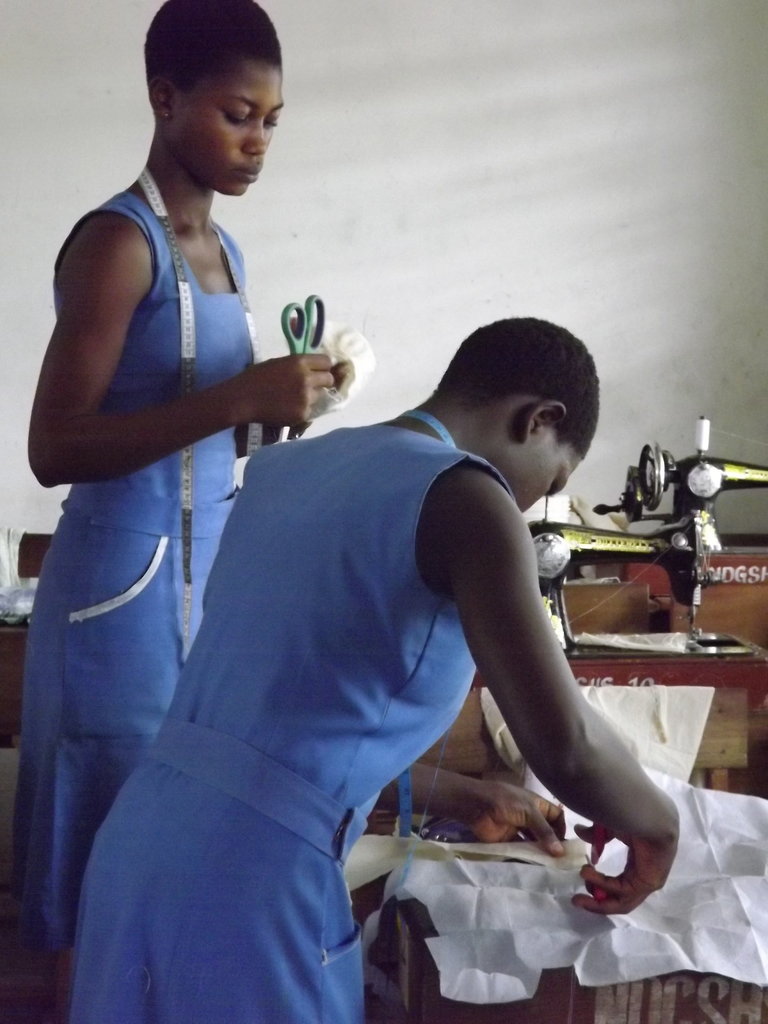
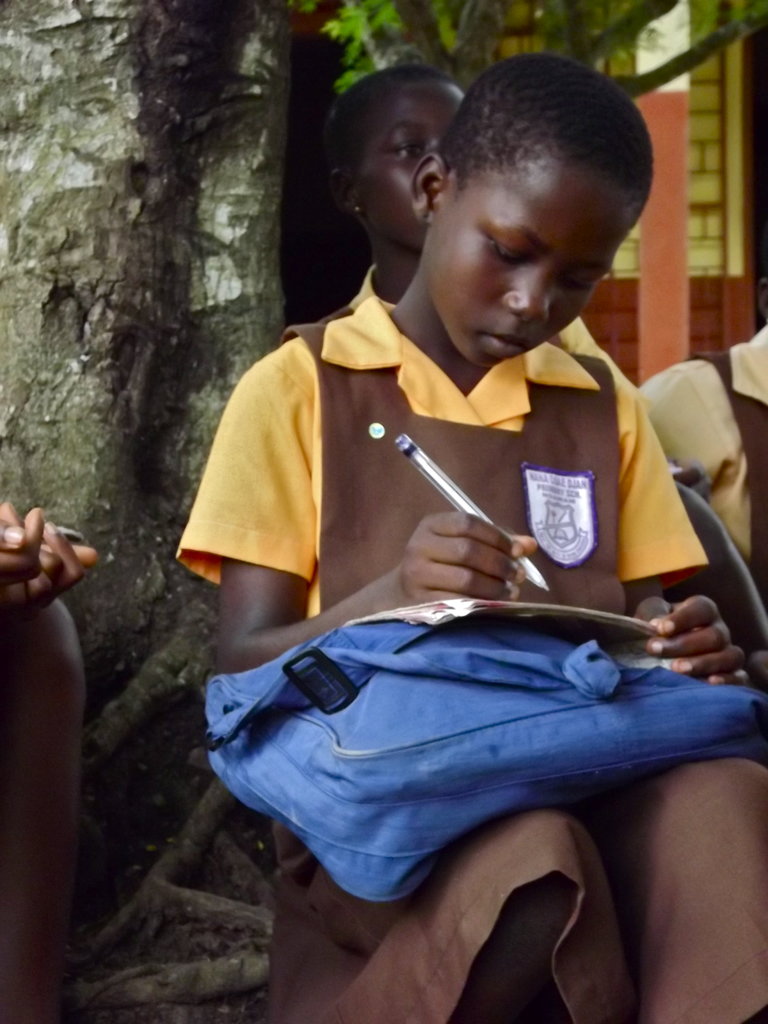
years. The staining of an adolescent school girl’s uniform by menstrual flow was found to be common. A large proportion of adolescent girl respondents to the study (53.4%), stated they had experienced flow stain in their uniform at school or in public. This incident may influence some girls to drop out of school due to the teasing they experience after their uniform is stained. Reasons cited for the flow stain included the high cost of sanitary towels on the market, making them unaffordable to most girls. High costs lead to the use of ineffective and inefficient sanitary towels. This has compelled the Chapter to organise a training of trainers (TOT) workshop for Girls’ Club members to sew their own sanitary towels, train other girls in the production, and receive materials from the Chapter to sew towels to be sold to other girls.
FAWE Ghana’s affordable, efficient and effective sanitary towels (AEEST) have been designed specifically with adolescent schoolgirls in mind, though any menstruating female can use them. Their purpose is to enable females to manage menstruation in an efficient and cost-effective way.
To Use: Users need a maximum of three and a minimum of two AEEST and any clean absorbent material e.g. cotton wool, cotton material etc. which can be obtained at a minimal or no cost. The absorbent material, which is to absorb the flow, is folded and inserted in one of the AEEST and worn. The cods at the sides are tied at both sides of the waist. The absorbent material, when wet, is removed and disposed of, and a new one is inserted. The AEEST is changed daily and replaced with another one which is used in the same way. The used one is washed, ironed and used again.
Shelf life: The two or three AEEST used during the menstruating period of 5-6 days in a month can last for over one year.
Cost: One AEEST costs GHc1.50 (less than US$1.00). This means a girl needs less than US$3.00 to manage menstruation for a whole year.
We would like to sincerely thank you all for your continued support and dedication to the AEEST project. We welcome any feedback, comments and suggestions that would be of use to the betterment and expansion of our project.
By Juliana Osei | Nat. Coordinator
By Juliana Osei (Ms.) | National Coordinator - FAWE Ghana Chapter
Project reports on GlobalGiving are posted directly to globalgiving.org by Project Leaders as they are completed, generally every 3-4 months. To protect the integrity of these documents, GlobalGiving does not alter them; therefore you may find some language or formatting issues.
If you donate to this project or have donated to this project, you can receive an email when this project posts a report. You can also subscribe for reports without donating.