By Masereka Kikumbwa Godfrey | Project Leader
1:0 Background of the project.
Agency for Rural and Urban Development is implementing a program aimed at restoring ecosystems’ health and improving livelihoods of riparian communities. The organization members are strategically located within the upper, middle and lower stream of the Mubuku –Nyamwamba catchment with the focus of tackling the ecological challenges within the area without compromising the livelihood of the riparian communities. Under this program, ARUD has been piloting a number of interventions focused towards restoration of Mubuku-Nyamwamba river banks in the lower River Mubuku-Nyamwamba sub catchment. The river bank stretches 14km on the Uganda side in Kasese district. During this period, ARUD has worked through community-based structures resulting into 5.2 Km of buffer zone established and the riverbank stabilized. Currently, observed at the buffer zone, is a high survival rate of the bamboo specie piloted by ARUD and an increased participation of different stakeholders in the management of the stabilized banks. There is improved coordination of different stakeholders i.e., Uganda Peoples Defense Forces and Kasese District Local government in manning the boarder in arresting and handing over encroachers to the district Local government of Kasese.
1.1. Objectives of the Activities
1.2 Project activities and how they were carried out
1. Identification of degraded Hotspot’s areas where interventions were urgently needed and as well as identification of Sustainable Land Management (SLM) practices upstream the Mubuku-Nyamwamba sub-catchments to deliver the services downstream. The feasibility study conducted around the Rwenzor Mountains National Park by Agency for Rural and Urban Development constituted the causes of the rampant and constant floods in the area especially targeting ecosystem services, critically degraded areas and areas with low vegetation cover. It assessed both water resources and farming systems within the catchment area and selected Hotspot (service areas) where the project was to be implemented. The areas selected were the ones which had record of constant flooding and these areas were Kibirizi, Bulindiguru, Kiharara and Mirimbo and other areas are to be brought on board if sustainable project funding is realized.
2. The project leader organized for a project staff inception/orientation meeting that was held on the 15th March 2021 at Agency for Rural and Urban Development Boardroom in Ibanda 11 Cell, Ibanda Ward, Ibanda-Kyanya Town Council, Kasese District Western Uganda, whose major objective was to equip the project staff with knowledge and skills about the project under implementation as well as explaining the project implementation strategy to them.
3. Held a board of directors’ project inception meeting/ orientation meeting that was held on the 19th March 2021 at Agency for Rural and Urban Development Boardroom in Ibanda 11 Cell, Ibanda Ward, Ibanda-Kyanya Town Council, Kasese District, Western Uganda aimed at introducing the project under implementation to the board of directors of Agency for Rural and Urban Development who are the policy making body of the organization.
4. Held a community inception meeting that was attended by community members ( identified and selected project beneficiaries owning land where a lot of degradation has taken place) , local leaders and the Town Council technical team ( Agricultural officer, Forestry Officer, Environment Office, Natural Resources Officer, The Town Clerk and the Community Development Officer) held on the 23rd March 2021 at Rwenzori Snow Peaks Coffee House in Kikokera Village , Kibirizi Parish, Bugoye sub-County , Kasese District purposely to orient the community, local leaders and the Town Council Technical staff about the project under implementation so as to increase community participation and involvement as well ownership, accountability and value for money.
5. Conducted project community entry inception meetings/community mobilization and sensitization aimed at awareness raising about the project under implementation in the villages of Kibirizi, Bulindiguru, Mirimbo and Kiharara. During these meetings, community members were encouraged, trained and educated to adopt Sustainable Land Management practices that reduce water catchment threats and risks. These included construction of soil and water conservation structures - contour trenches, contour grass strips (e.g., Napier, Setaria and Kikuyu grass), establishment of grass, bamboo (Bambusa vulgaris) and shrubs for stabilization of river and road banks, soil and water conservation structures, establishment of trees and shrubs in contour hedge rows.
6. Supply of farm tools to the farmers (coffee demonstration plots owners) to be used during project trainings that required onsite field demonstrations skills and knowledge on construction of soil and water conservation structures that reduce the rate of soil runoffs by the agents of soil erosion.
7. Procurement, supply and distribution of seedlings to the farmers to plant at river banks, valleys and bare lands where a lot of degradation has taken place in order to reduce the rate of occurrence of floods as well as climate change mitigation measure.
8. Procurement and supply of 50 bee hives to members of Buhuhira Ex-Hunters and community Conservation Association and Ibanda Ward Restaurant Owners Emyooga Association.
9. The project trained farmers in self/peer monitoring which involved building the capacity of the individual farmers to observe, measure and monitor one’s performance during the implementation of sustainable land Management interventions by which farmers can keep track of their own behavior and progress towards their set objectives and targets. This allows the individual farmer to plan, organize, manage, pay attention to details and manage time. To monitor day-to-day activities in the land committed to the project, individual farmers are better placed to effectively carryout this because of their daily presence. Therefore self -monitoring is of great importance in the monitoring framework not only of its effect on reduction of cost of monitoring but also on the minimization of conflicts as farmers carryout this and record their own day -to-day progress. The data collected by self-monitoring has been passed on to the community leaders especially the Town Council Agricultural officer and the community Development Officer to be used as guidelines during quarterly follow up monitoring and also in planning for the sub-county by the sub-county technical planning committee.
10. Conducted follow-up monitoring of the individual farmers by the project staff to basically verify if the established village savings and loan Associations for the women coffee farmers are operational and progressing, checking on the agronomic coffee practices, pre and post-harvest handling practices, pests and disease control using the recommended organic farming methods, and the number of constructed soil and water structures, cases of domestic violence in homes among others at quarterly intervals and this has been intended to fast-track progress of implementation of interventions, utilization of farm inputs, backstop and advise farmers in the project on the implementation of their plans. At this stage the project staff identified both positive and negative impacts affecting the implementation of the sustainable land management interventions and provided timely action. Other factors affecting the farmers implementation were also identified such as natural occurrences (drought, pests and diseases.
11. Conducting progress monitoring used to assess progress on farmers’ performance on the implementation of Sustainable Land Management plans and to quantify the rate of improvement or responsiveness to the set targets and milestones specified in the project. The project staff carried out visits to the farmers for tracking progress in the implementation of sustainable land management interventions on their lands. The results from monitoring involved giving feedback about the progress to all stakeholders including the local leaders, Agricultural officer and the Community Development Officer at Ibanda-Kyanya Town Council Headquarters for planning purposes and also in order to allow for informed decision making and improved performance.
12. Formed Village Savings and Loan Associations (VSLAs) of coffee farmers comprising of 20-30 farmers who come together to save and take small loans from those savings. The activities of those VSLA groups run in a period known as ‘cycles’ of between eight months to one year, after which the accumulated savings and profits are shared out among the members according to the number of shares each member has in the record. This assists in the creation and training of Village Savings and Loan Associations using the participants; own resources, with the objective of improving the socio -economic wellbeing of members and their households.
1:3 Achievements registered
a) The project has enhanced the upper Mubuku-Nyamwamba conservation by improving household incomes of the community living on the slopes of mount Rwenzori. The community trainings in coffee Agribusiness skills development and value addition to fight poverty, entrepreneurship, soil fertility restoration through encouraging farmers to adopt sustainable land management interventions like construction of soil and water conservation measures, bee keeping along the Rwenzori Mountains National Park boundaries, aggro-environmental tourism through coffee production and value chain experience and training in briquette making and energy saving stove construction.
b) The project has restored 128.9 ha of degraded land that were mapped in Kasese Districts along the Rwenzori Mountains National Park (buffer zone). This land has been restored through tree planting in a systematic manner where the indigenous tree species have planted in the identified degradation hotspot areas such as river banks, valleys and bare lands. The drivers behind this degradation were human led due to high human population density around Rwenzori Mountains National Park landscape, which is growing at a rate of 3.3% per year, and in some parishes of the buffer zone, it is closer to 5.5% per year (Kitutu-Kimono, 2013). It is against this background that this project therefore was intended to improve the conservation of biodiversity of Rwenzori Mountains National Park through restoration of degraded hotspot areas and establishing a proper management of the remaining forest around Rwenzori Mountains National Park landscape. Through Agency for Rural and Urban Development in partnership with;Uganda Wildlife Authority, local communities, have been on the forefront to spearhead the above stated activities for permanent and continuous community involvement into conservation, thereisn’t yet tangible sustainable projects as would be as establishing Model Apiary and coffee demonstration plot sites. This will harness inclusive participation of the community members and groups, visitors, students and researchers into conservation. There are a number of reformed poachers/ex-hunter’s groups (Buhuhira Ex-Hunters and Community Conservation Association) engagement into income generating activities (apiary) to harness community livelihood and achieve conservation of natural resources in the long run.
c) The project made an analysis of the business case in terms of feasibility, relevance, sense of reality and profitability and identified possible gaps in knowledge, skills and finance. The project also represents a sufficient number of farmers in the area to which it has provided services in the area of agricultural extension services with respect to increase in output marketing is demonstrable and realistic in relation to the business case, although taking in mind that securing sufficient working capital will be vital for the success. Agency for Rural and Urban Developments’ ambition to become active on the export market is realistic on the mid-long run, but first the organization wishes to focus on strengthening its operations on the local market and professionalize the internal procedures within the organization. In addition, the project embodied respect of other cross-cutting issues like environmental protection, human rights for women, children and youth, HIV/AIDs and gender equity in promoting the agriculture industry. The project also led to the attainment of the government vision under plan for the modernization of Agriculture (PMA) of poverty eradication through a profitable, competitive, sustainable, dynamic and gender transformative climate smart agriculture, this can only be achieved through coffee Agri-business skills development and value addition to fight poverty among the poor and marginalized communities in Uganda
d) Formation of 15 farmer groups trained in group formation and dynamics andProvision of farm in-puts like hoes, spades, pick axes and saws to the farmer groups to be used during project implementation.The project has provided Agriculture in-puts to the farmer groups and established coffee demonstration plots. So far Agency for Rural and Urban Development through her development partners Youth Focus Initiatives for Sustainable Development (YOSDE) has provided tarpaulins and 20,000 coffee seedlings to her members. The coffee seedlings projection is about 15,000 seedlings with improved seeds SL 14 and SL 28 that were provided by Uganda Coffee Development Authority (UCDA
e) Provision of market information about the price of coffee and giving out of credit in form of crop finance to the coffee farmer groups. The project provided some little and limited credit services to the coffee farmer groups members. This crop finance assists the farmers in solving their simple and immediate financial challenges and stops them from selling their coffee to the coffee brokers before harvest time, usually these are short term advances during the coffee season. The project promotes to its members the habit of saving and persuades them to open bank accounts to the local savings and credit cooperative society limited close to Agency for Rural and Urban Development offices. In addition, the organization collects market intelligence from Kasese town and local markets in order to purchase the produce of the farmers at a fair price and sell it against a favorable price. At the office of ARUD there is a daily updated notice board with prevailing prices in order to guarantee trust and transparency.
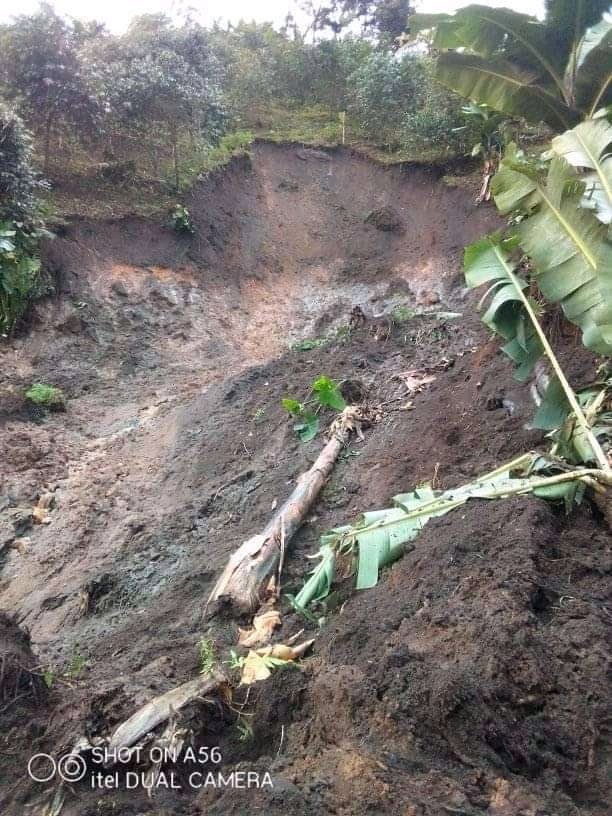
f) The project focused on sensitization and community education as well as encouraging communities to adopt Sustainable land Management interventions that reduce water catchment threats and risks. Such land use practices were implemented on farmers’ land including contour trenches, contour grass strips (e.g., Napier, Setaria and Kikuyu grass), establishment of grass, bamboo (Bambusa vulgaris) and shrubs for stabilization of soil and water conservation structures, river and road banks, and establishment of trees and shrubs in contour hedge rows. The interventions have stabilized river and road banks, improved water infiltration and reduced on-farm water and soil run-off thereby significantly reducing siltation and sedimentation as well as improving water quality and quantity downstream in Isya River which drains into R. Mubuku and Nyamwamba and eventually into Lake. George.
g) Restoration of Farmlands along the River banks, River banks of River Isya have been restored by planting indigenous tree species such as Terminalia suparba, Maesopsis emnii and lowland bamboo, etc. Other restoration measures that have been carried out on farm lands stretching from river banks and they include the following:
Agroforestry measures: a group of measures that combine agricultural and forestry technologies to create more diverse, productive, and sustainable land-use systems. Trees or shrubs have been provided to farmers and grown around or among crops or pastureland.
Terracing measures: This is aimed at reducing erosion and surface run-off by slowing rainwater to a non-erosive velocity. This has also increased infiltration rates, soil moisture and groundwater recharge. There are many terracing options; however, those that will be availed for farmers’ selection depended on soil, land cover, crop type and slope or gradient of the area.
1.4 Challenges and adaptive measure management encountered during project implementation
1.The project had a total budget of $ 45000 which Agency for Rural and Uban Development thought would be raised through donations on the GlobalGiving fundraising platform but only $15000 was raised which necessitated that other proposed project activities be left pending because the proposed project budget had not been realized. The adaptive measured used here was looking at the most crucial project activities while leaving out the less pressing activities.
2. Some political leaders attached themselves to the project with an aim of using the project as a stepping ground for winning support and favors from the community members so that this project lays a ground for their own selfish political ambitions. On realizing this, the project staff whenever they could conduct community inception meetings, they could reveal to the community members that Agency for Rural and Urban Development is a non-partisan organization whose basic aim is promoting community empowerment and development despite the political affiliations that the community members are attached to. The project staff went a head to explain that even the local leaders have been involved in project implementation simply because they are the ones to welcome the project and introduce the project to the community but if anything, they would have been not informed about the project under implementation.
3. The second wave of the COVID-19 pandemic has very much affected the smooth running of the project in a way that members are no longer meeting compared to the previous times whereby farmers used to meet and interact with one another. The adaptive measure used here is every farmer to work on his or demonstration plot in order to reduce the spread rate of the pandemic
1.5 lessons leant
CONCLUSION
I would like to thank our development partners (GlobalGiving and Kalima L. Rose Trust) for their continuous support to environmental sustainability in Uganda. ARUD remains committed to restoration of the degraded Hotspots within the Rwenzori Mountains and the lower Mubuku and Nyamwamba sub-catchments for enhanced livelihoods and floods mitigation mechanism for biodiversity conservation in Uganda and achievement of the Sustainable Development goals and the agenda 2030.
Links:
Project reports on GlobalGiving are posted directly to globalgiving.org by Project Leaders as they are completed, generally every 3-4 months. To protect the integrity of these documents, GlobalGiving does not alter them; therefore you may find some language or formatting issues.
If you donate to this project or have donated to this project, you can receive an email when this project posts a report. You can also subscribe for reports without donating.