By Javier Flores | Director, External Affairs and Development
Peru’s innovative waste project wins world’s largest aid research prize
A project in Peru that turns tonnes of solid waste into income-generating opportunities has won the world’s largest international contest for researchers working in aid and development.
The winner of the award for ‘The Most Innovative Development Project’ in 2007 was announced tonight in Brisbane at the Global Development Conference on Security for Development: Confronting Threats to Survival and Safety.
The Global Development Network launched the competition in 2000 with the support of the Government of Japan. It allows for the best research in developing countries to be recognised and supported so that it reaches policy-makers.
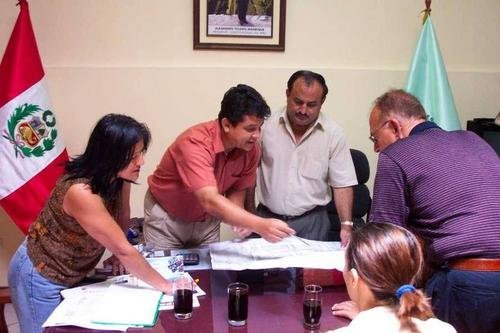
Executive Director of Ciudad Saludable, Albina Ruiz pioneered ‘The Healthy City’ project which sustainably manages solid waste in the rural cities of Peru.
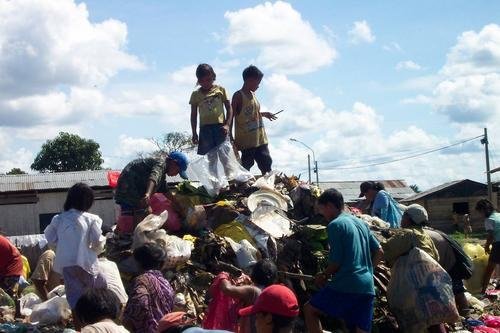
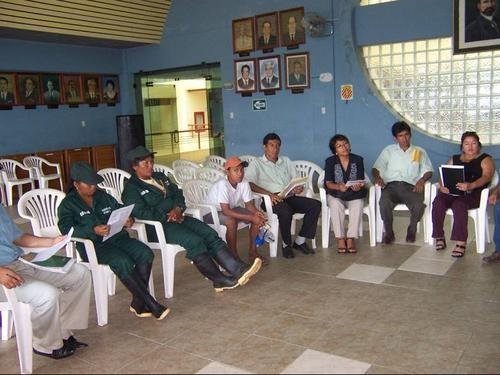
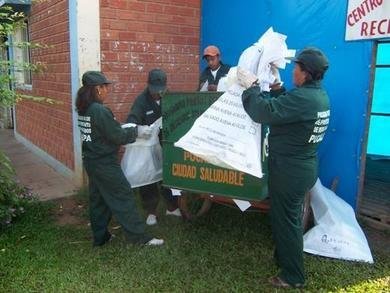
Twenty years ago she became a one woman crusade to clean up the streets of El Cono Norte in Lima and deal with the 600 tonnes of waste dumped daily. She organised the local community who were mostly unemployed to start a garbage collection and recycling programme. She now oversees similar projects across forty cities that provide permanent employment for more than 230 people. ‘The Healthy City’ model is being considered by several countries in Latin America including Bolivia, Colombia, El Salvador, and Mexico and is in the process of being set up in Venezuela.
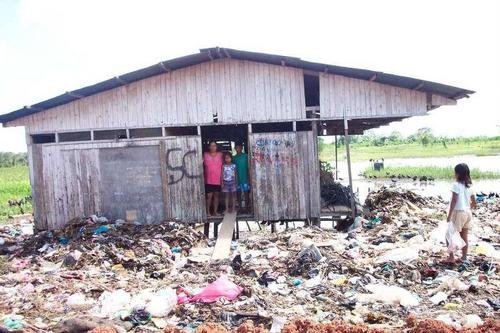
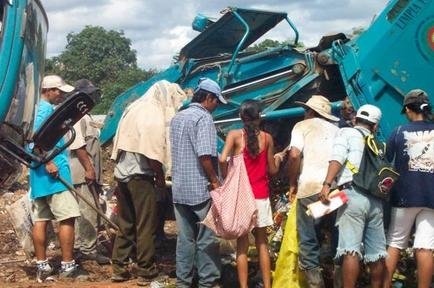
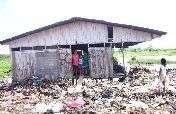
Albina Ruiz will use the prize money of US$30,000 to help the community of San Franciso near Pucallpa in the Peruvian Amazon basin where 300 families live in extreme poverty and survive by scavenging on nearby dump sites.
The two other finalists for the award were from India and Macedonia.
The Byrraju Foundation in India set up the ‘Sweet Water’ project and developed water purification plants that are technically and economically viable on a small scale. It now provides 750,000 people with safe water.
‘Habitat for Humanity’ set up a housing project in Macedonia, the second poorest country in Europe. Impoverished families face an acute need for more and better housing. Habitat for Humanity focuses on repairing, renovating existing substandard housing.
Key speakers at the conference today also discussed the control of pandemics and diseases. Individuals or governments make decisions about how to limit their own risk (or their country’s risk) based on economic considerations, not just health ones.
“When it comes to individuals, it is unlikely that people consider all the costs that their becoming infectious poses for other people, certainly not for people living beyond national borders. From a social viewpoint, therefore, the decision a person makes is not always the best one,” says Mark Gersovitz Professor of Economics at Johns Hopkins University.
“Response rates are governed by economic considerations. H5N1 (‘bird-flu’) enforcement measures in Indonesia called for the culling and vaccination of poultry but met with resistance owing to the government’s inability to suitably compensate farmers for their losses.”
Government subsidies are important if prevention measures are to be effective but they have to be done effectively.
“What can governments do? They can pay people to take condoms if they want, but that’s not the same as paying people to use them. Or if you subsidise farmers to cull their chickens, you may find that farmers fake the illnesses of their animals to get compensation. It’s not a perfect solution. Compensation schemes have to be combined with enforcement which creates a tight ring around the disease area,” says Mark Gersovitz
“Trade-offs are important to people. For example in Thailand they quarantined people but the government offered to walk their pets or do what was needed to help them through the quarantine. That was an effective subsidy.”
The Global Development Conference continues tomorrow. Oxford University professor Paul Collier, author of the recently published ‘The Bottom Billion: why the poorest countries are failing and what can be done about it’, will give a key note presentation. Mozambique’s first female Prime Minister Luisa Dias Diogo will also speak to the conference participants.
About the Global Development Network The Global Development Network is a global association of research and policy institutes. Its annual conferences are held in a different region each year.
It was founded to support more research in developing countries, because when research is ‘home-grown’, it is more relevant and more likely to attract broad-based support. Better research means better policy and better results.
For more information go to www.gdnet.org/ninth_conference
News media interested in attending the conference, interviewing participants or requiring more background, please contact Josie Pagani, +64 29 9050207 or josie@sugarmedia.tv
Project reports on GlobalGiving are posted directly to globalgiving.org by Project Leaders as they are completed, generally every 3-4 months. To protect the integrity of these documents, GlobalGiving does not alter them; therefore you may find some language or formatting issues.
If you donate to this project or have donated to this project, you can receive an email when this project posts a report. You can also subscribe for reports without donating.