![Trangu Monastery, Yushu Prefecture]()
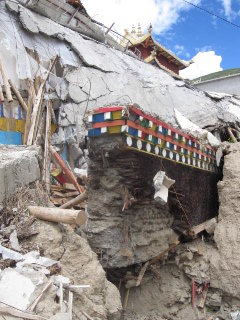
Trangu Monastery, Yushu Prefecture
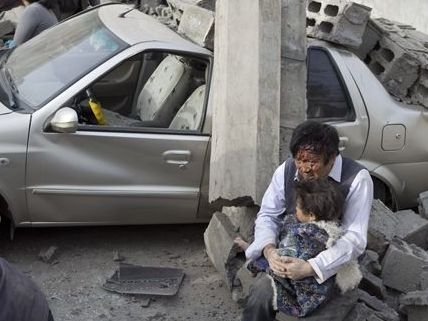
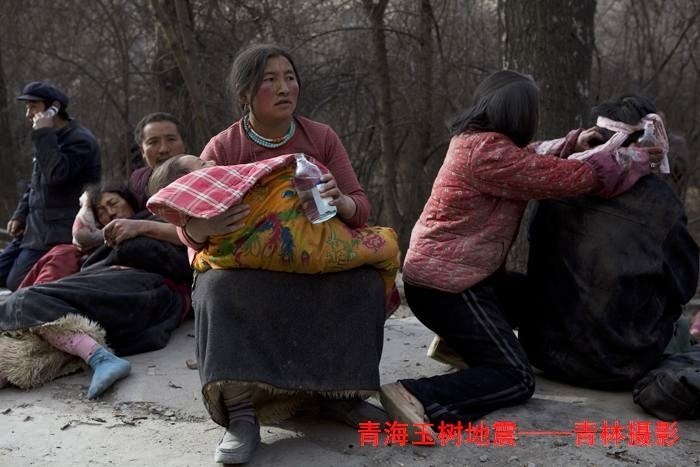
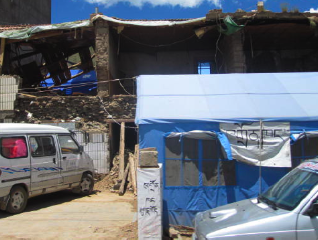
There is a strange and unnatural quiet in the streets of Jyekundo, the epicenter of the earthquake that ripped through the Yushu Tibetan Autonomous Prefecture on April 13. It is a tent city now: a sea of blue encampments where once there were countless rows of proud and bustling Tibetan streets. Local community leaders quietly estimate that over ten thousand Tibetans have perished in the disaster. Most ordinary Tibetans just shake their heads and look away, the scale of human loss beyond words. They are still reeling from the incomprehensible day the earth swallowed the ancient Tibetan city.
I had come to this remote northern corner of Kham to assess the earthquake recovery process and to discuss with educators and community service providers the shifting needs and priorities of local communities now struggling for their very survival. Four years earlier, I had arrived for the first time in this high altitude town with a very different mission. Tucked away in the southern most reaches of Qinghai province, Jyekundo had what was considered to be one of the better education systems in the Kham region. My purpose then was to study the school system in order to better understand the disparity in Tibetan education standards across different provincial administrations.
That education system no longer exists, much of the infrastructure having disappeared under rubble. By the time I arrived in July, all middle school aged students and older had been sent away to schools across inland China – many, inexplicably, as far as Liaoning in the far northeast. For the very young still in Jyekundo, rows of makeshift temporary buildings have been hastily constructed to accommodate the reconvening of primary schools. “Home” for every family unit is now a crowded tent in which half a dozen or so family members – as well as what remains of their worldly possessions – are meant to fit.
As I spoke with parents inside the darkness of their tents, I learned not only of their grief from having lost family members and ancestral homes, but also of their sense of paralysis from the disappearance of their local worlds and an uncertainty about what comes next. Not knowing where to start in remaking their lives, many Tibetans have already left, lured by employment agencies to become low‐wage laborers in distant Chinese cities. In the meantime, outside migrants have rushed in to make the most of the opportunities afforded by the complexities of disaster relief.
But even during these conversations, the question of socio‐economic dislocation is eclipsed by a foreboding sense of anxiety about the long, hard winter ahead. As tens of thousands of displaced Tibetans now brace themselves for their first season of brutal cold while living in makeshift neighborhoods of blue tents, it is clear that this will be a community in crisis for a long time to come.
Machik Earthquake Recovery Initiative
Thanks to the immediate response of grassroots supporters, Machik was able to make an initial contribution $38,000 to the relief efforts in the first days of the crisis. As one of the first responders in the crisis, Machik’s contribution helped bring clean drinking water, basic food supplies, blankets and other emergency assistance directly to communities in the earthquake zone. Through the generosity of individuals, schools and local community groups around the world, Machik has raised in total $200,000 for supporting earthquake relief efforts in Jyekundo. The remainder of the Machik Earthquake Recovery Fund is being used help contribute to the rebuilding and recovery of Tibetan communities in the earthquake zone.
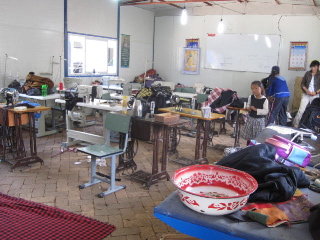
Currently, we are developing an initiative to support the reconstruction of a community health clinic and the expansion of a vocational training program. We are also working with partners to help prepare dislocated Tibetan communities for the winter season by providing winterized tents to the most vulnerable communities. In the weeks and months ahead, we will continue to explore possibilities for longer term efforts to rebuild Tibetan communities in Jyekundo through improved access to educational opportunities and expanded social and economic revitalization programs.
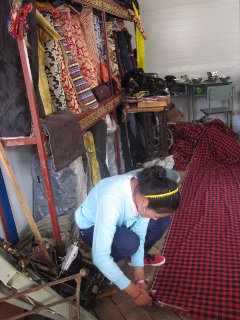
![Local initiative to restart vocational training]()
Local initiative to restart vocational training
![Restarting vocational training - July 2010]()
Restarting vocational training - July 2010
![Jyekundo, a tent city – July 2010]()
Jyekundo, a tent city – July 2010
Links:
![Share on Twitter]()
![Share on Facebook]()