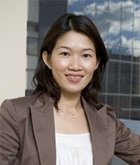
![Dr. Alberto Martin]()
Dr. Alberto Martin
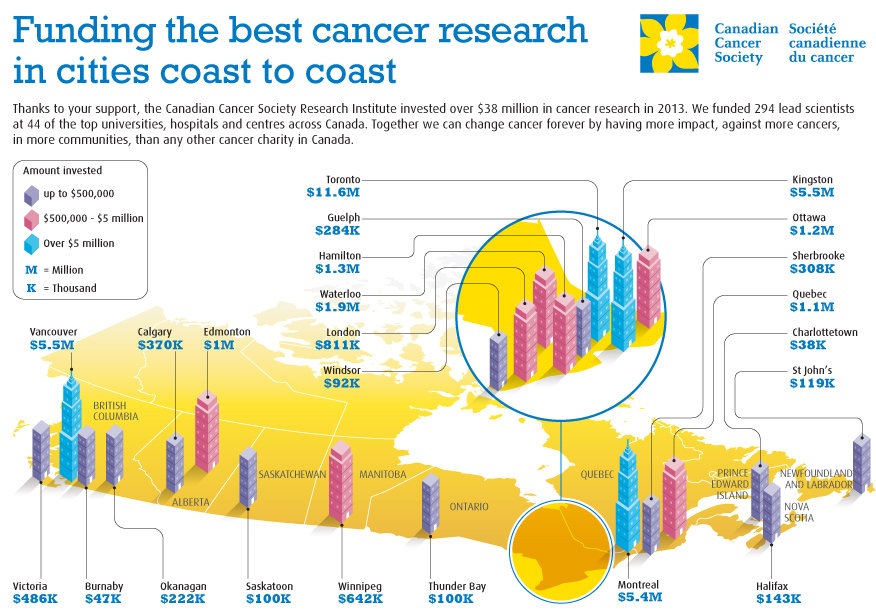
Thanks to the support from our generous donors the Canadian Cancer Society is able to fund research that will ultimately change cancer forever.
The following represents some of the highest impact research of 2014 and highlights the breadth of research supported by the Society's donors.
Carbs, gut microbes fuel colorectal cancer
Genetics, diet and gut microbes all contribute to the development of colorectal cancer, but how these factors work together to promote cancer is not well understood. Dr Alberto Martin in Toronto investigated these connections in a mouse model of colorectal cancer and found that gut microbes resulting from a diet high in carbohydrates interacted with cancer-causing genes to fuel cancer development. These findings have important implications for reducing cancer risk by changing diet and the make-up of gut microbes.
Mapping the evolution of cancer cells
Dr Samuel Aparicio and Dr Sohrab Shah in Vancouver made important discoveries that shed light on how cancer cells evolve in tumours. The researchers developed a new tool to group genetic mutations in a single tumour and used it to predict how cells in breast cancers evolve and grow over time. Understanding and predicting changes in complex cancers may provide new options for targeted treatments.
Gene mutation could be the trigger for leukemia
In Toronto, Dr John Dick investigated the importance of over 100 genes commonly mutated in the early stages of leukemia. He found that a mutation in the gene DNMT3A plays a key role, making cells with this mutation resistant to chemotherapy and faster growing than normal stem cells. These findings identify a possible starting point for the disease which could help doctors diagnose and treat patients earlier.
Genetic test to predict prostate cancer relapse
Dr Robert Bristow in Toronto was part of an international team that developed a genetic test to predict which men are at highest risk of their prostate cancers returning following treatment. This test provides a way to identify patients who need more aggressive treatments, while avoiding over-treatment for patients whose cancers are less likely to return.
Gene mutations linked to lung cancer risk
Dr Rayjean Hung in Toronto was part of an international research team that found rare variations of the BRCA2 and CHEK2 genes associated with squamous cell lung cancer in people of European ancestry. They also found genetic links for lung adenocarcinoma with a gene variation previously only reported in Asian populations. These findings contribute new knowledge about the genetic basis of lung cancer and have implications for the screening of high-risk individuals with these inherited mutations.
Long-term effects of treatment for childhood brain cancer
A study led by Dr Donald Mabbott in Toronto found that children treated for medulloblastoma, a childhood brain cancer, had smaller regions of the brain associated with learning and memory, which was also linked to impairment in these abilities. This study highlights the need for more targeted therapies that minimize the late effects of treatment on survivors.
Banning patio smoking helps smokers to quit
Dr Michael Chaiton in Toronto led a survey of over 3,000 smokers about their exposure to smoke on patios and found that smokers were less likely to be successful in their quitting efforts after being exposed to tobacco smoke on a patio. These findings were used as evidence to support an Ontario government ban on smoking on patios and other outdoor public spaces.
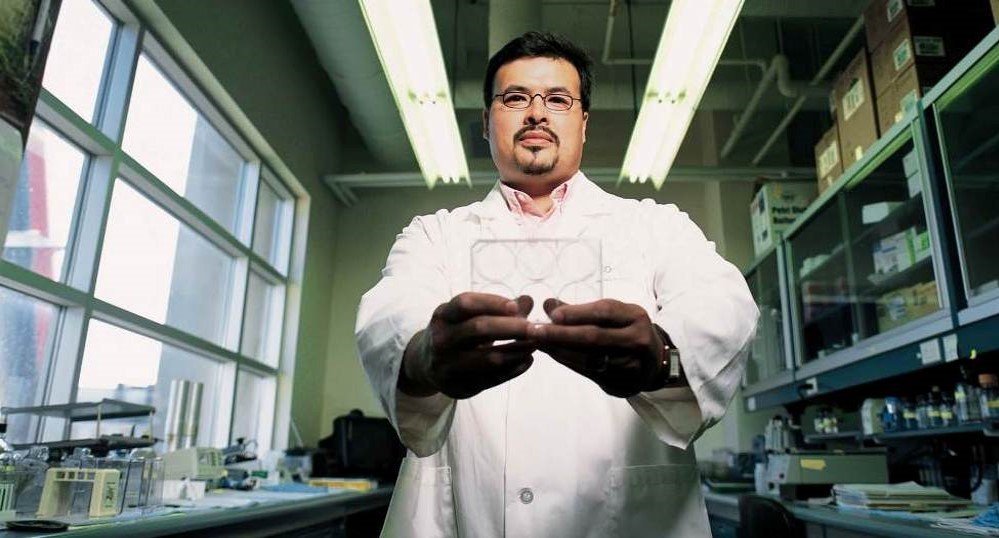
Not all stem cells are created equal
Dr Mick Bhatia in Hamilton discovered that human stem cells made from adult donor cells remembered what cell types they came from. When reprogrammed in the lab they preferentially reverted to their original cell type. Dr Bhatia’s discovery will have important implications for new stem cell therapies.
The costs and benefits of lung cancer screening
A study led by Dr Stuart Peacock in Vancouver showed that the average costs of screening individuals at high-risk for lung cancer and treating cancerous growths discovered through early detection were lower than the costs of treating advanced lung cancer. These findings provide important information to policymakers considering the value of lung cancer screening programs in high-risk groups.
Making immunotherapies work for more people
Harnessing the immune system’s powerful ability to fight cancer, Dr Claude Perreault in Montreal has identified new molecules that attract T cells, the body’s natural killing machines which help fight off germs and diseases. Dr Perreault used a new approach to identify molecules that attract the T cell’s cancer-fighting abilities. These findings could help increase the number of cancer patients who could benefit from immunotherapies.
Thanks to the support from donors like yourself, and gold-standard peer-review process, the Canadian Cancer Society funds the best cancer research in Canada. Our funded researchers work in universities, hospitals and research centres across the country and are mapping new ways to change cancer forever. Please help us to continue to make progress in the fight against cancer. Make a donation today.
For more information, visit cancer.ca or call our toll-free, bilingual Cancer Information Service at 1-888-939-3333 (TTY 1-866-786-3934).
![Dr Mick Bhatia]()
Dr Mick Bhatia
![Dr Claude Perreault and team]()
Dr Claude Perreault and team
![Dr Rayjean Hung]()
Dr Rayjean Hung
Links:
![Share on Twitter]()
![Share on Facebook]()