By Ellie Windle | Corporate Partnerships Manager
Thank you for supporting Sparks and helping us to fund pioneering children’s medical research. Your generosity helps fund research into conditions that affect the health of babies, children and expectant women – like Nicola, who is one of the thousands of women affected by premature labour.
Premature birth – Nicola’s Story
Premature birth – before 32 weeks - is a major cause of death in new born babies and can lead to life long disability. The World Health Organisation has identified premature birth as the leading cause of death for children under the age of five.
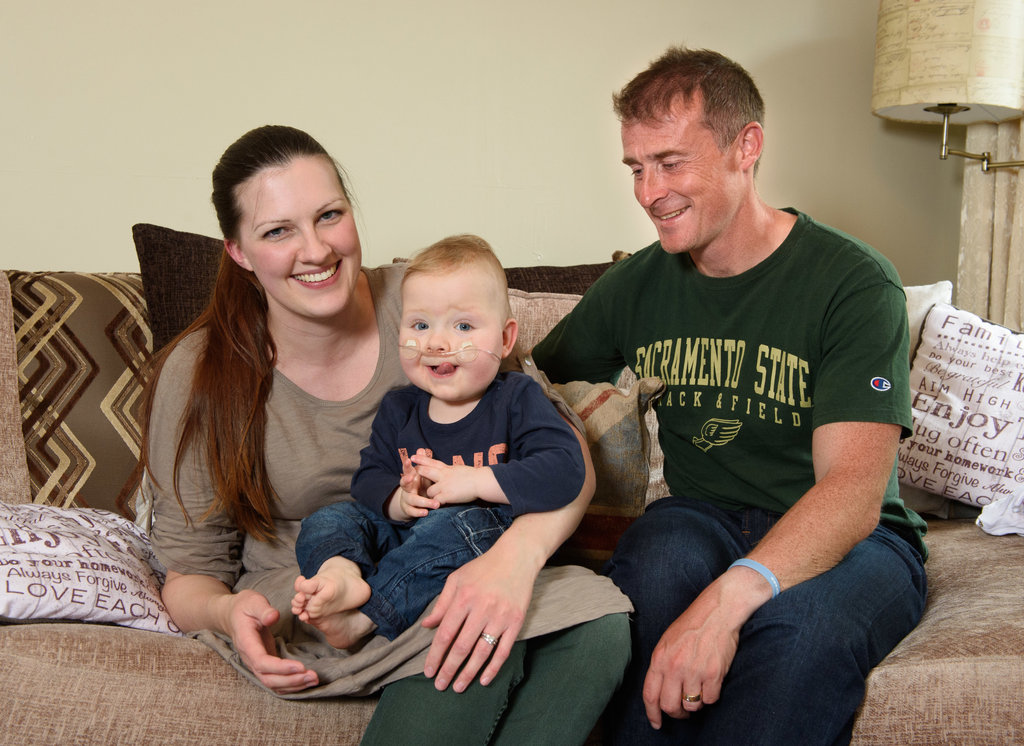
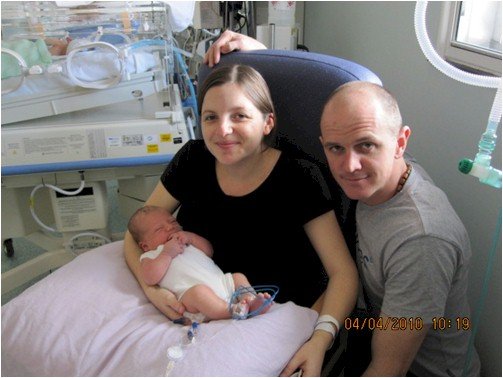
Luckily Nicola was able to take home her son Sebastian, born at barely over 24 weeks, but it wasn’t an easy journey.
“I was in established pre-term labour. I just kept thinking that it couldn’t be true; it was ridiculous because I hadn’t even reached the 5 month mark. We didn’t know if, by the end of the day, we were going to be a family, if our child was going to survive.
Sebastian was in intensive care for 8 weeks. During that time, amongst other problems, he had 11 blood transfusions, a grade 3 bleed on the brain, he got E-coli, his lungs collapsed and he had a skin infection. He spent another 5 weeks in hospital.
“Sebastian is home now and is a cheeky, boisterous 19 month old,” Nicola says. “He’s on oxygen the whole time and has to go back to hospital for tests but we are moving forward. We have some dear friends who had a little girl who was born a week after Sebastian and she never came home, she passed away at 5 months. We feel incredibly lucky but at the same time you feel guilty that yours is a success story.”
How Sparks is helping
Finding a way to accurately predict premature birth could help prevent some of the 50,000 babies currently born prematurely each year in the UK.
With Sparks funding, Professor Phil Bennett at Imperial College London aims to pioneer a technique to predict the likelihood of premature labour through simple blood and urine tests. His team are researching the metabolic changes in blood and urine that can be detected as early as 13 weeks in pregnancy. This could help to accurately identify women who are more likely to give birth prematurely and provide targeted treatment for those at risk.
Thank you so much for helping to make possible research into premature birth which will change the lives of countless families like Nicola’s.
Links:
Project reports on GlobalGiving are posted directly to globalgiving.org by Project Leaders as they are completed, generally every 3-4 months. To protect the integrity of these documents, GlobalGiving does not alter them; therefore you may find some language or formatting issues.
If you donate to this project or have donated to this project, you can receive an email when this project posts a report. You can also subscribe for reports without donating.