By Syed Khalid Mahmood | administrator
CURRENT PROGRESS OF THE PROJECT
April, 2015 TO June, 2015
School children form an important large target group which must be screened adequately for early detection of eye diseases and prevention of blindness. Considering the fact that 30% of blind lose their sight before the age of 20 years and many of them are under five when they become blind, the importance of early detection and treatment of ocular diseases and visual impairment in young children is obvious. Vision problems affect one in 20 preschoolers and one in four school age children. During a child's first 12 years, 80 percent of all learning comes through vision. And yet most children have not had a comprehensive eye exam prior to starting school. Majority of students identified as problem learners have undetected vision problems.
“Vision problems affect nearly 13.5 million children. Rates for vision problems increase as children age…a quarter of adolescents 12-17 are reported to have eye problems” "Poor vision in childhood affects performance in school or at work and has a negative influence on the future of the childVision problems have been shown to adversely affect a child’s achievement in school. Myopic children have trouble reading blackboard notes or other classroom presentation materials. Hyperopic children will have trouble reading or doing any kind of close work. Additionally, several types of eye disorders can lead to permanent visual impairment if not identified and treated early by an eye doctor. Vision problems can and do adversely affect students’ ability to function in and enjoy learning.
There is large evidence that many schoolchildren needing glasses do not get them because their refractive errors are not detected, which might not only hamper children's physical, cognitive, and psychosocial development, but also future employability and earning opportunities. Moreover, if refractive error is detected late the child can suffer from amblyopia (lazy eye)-a condition where vision remains low even after wearing the glasses. This condition can be treated only till 7 to 8 yrs of age, hence the importance of early detection.
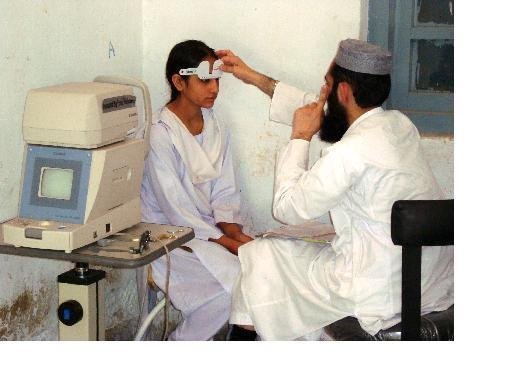
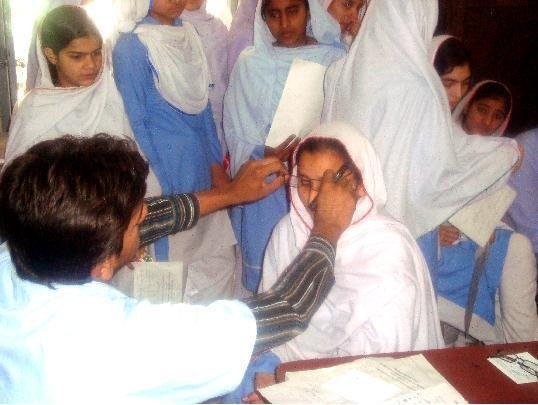
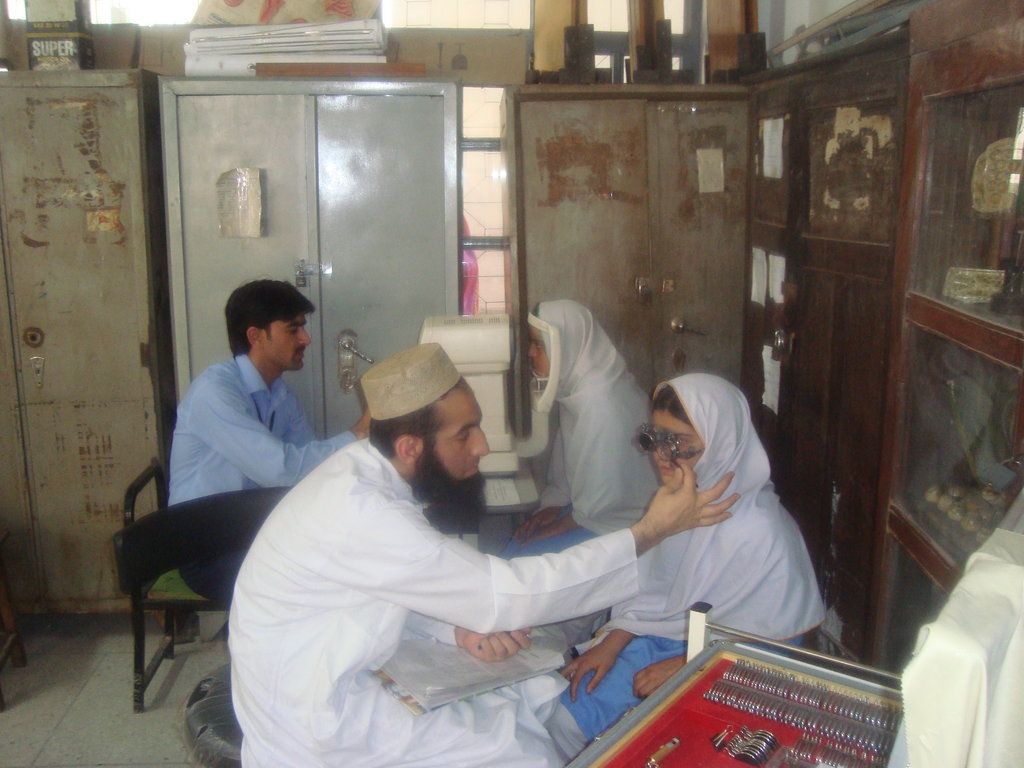
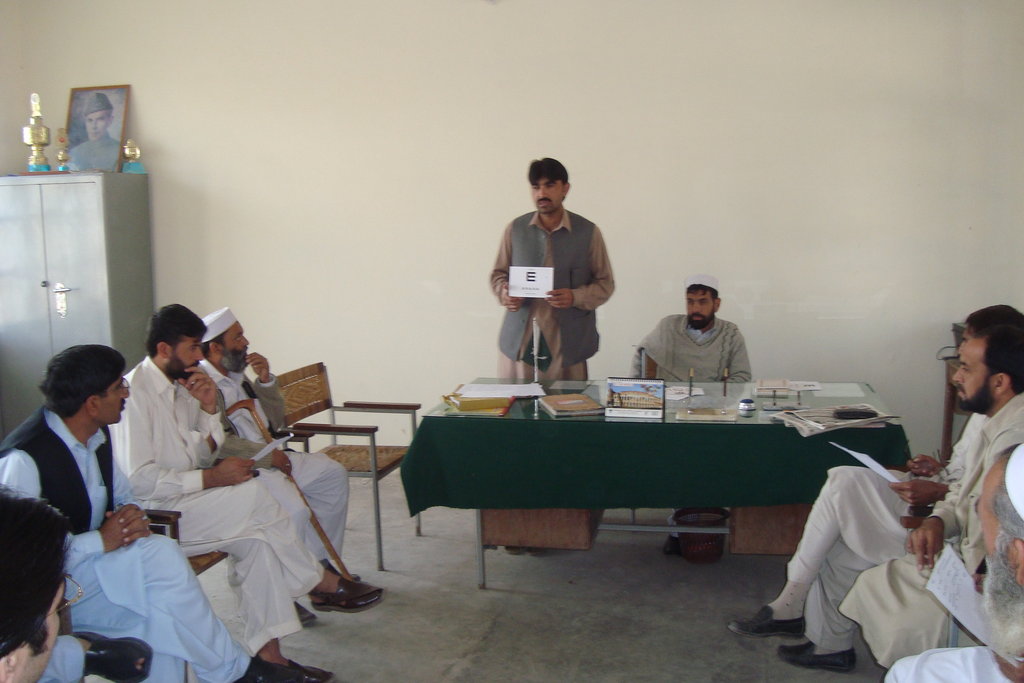
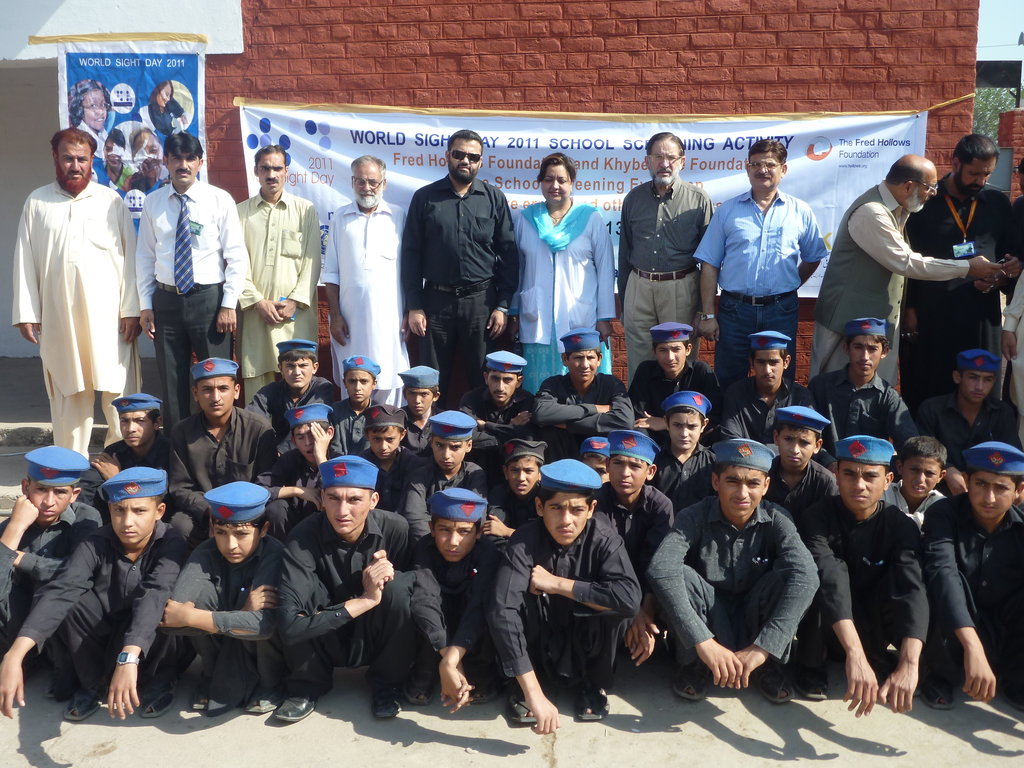
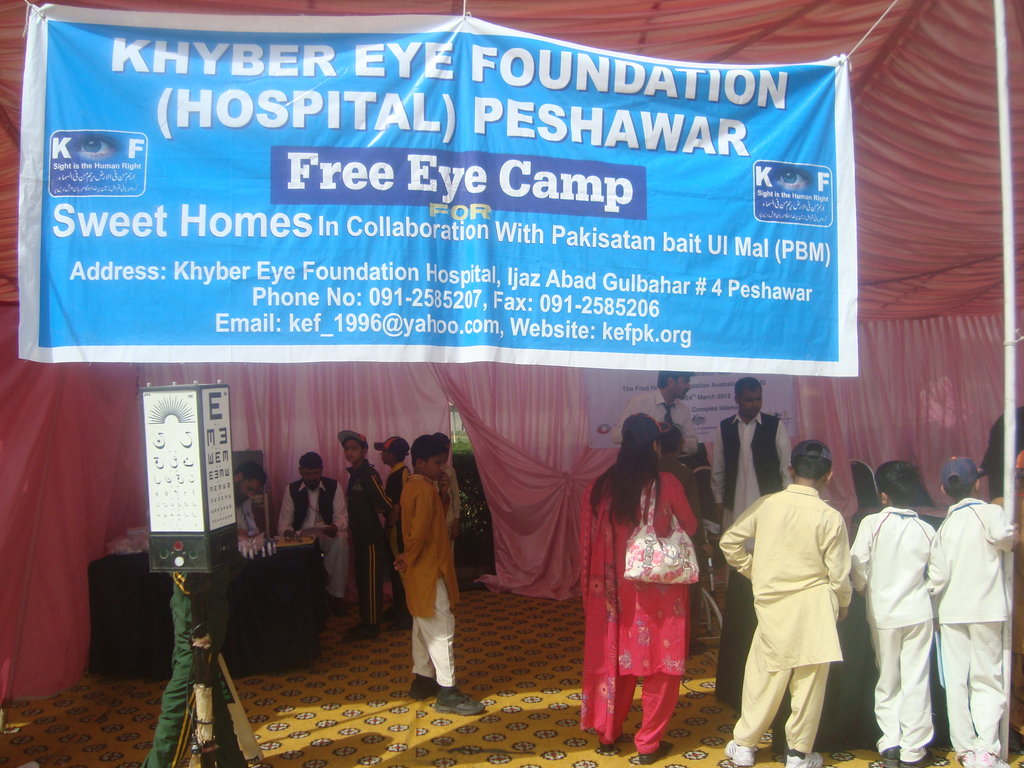
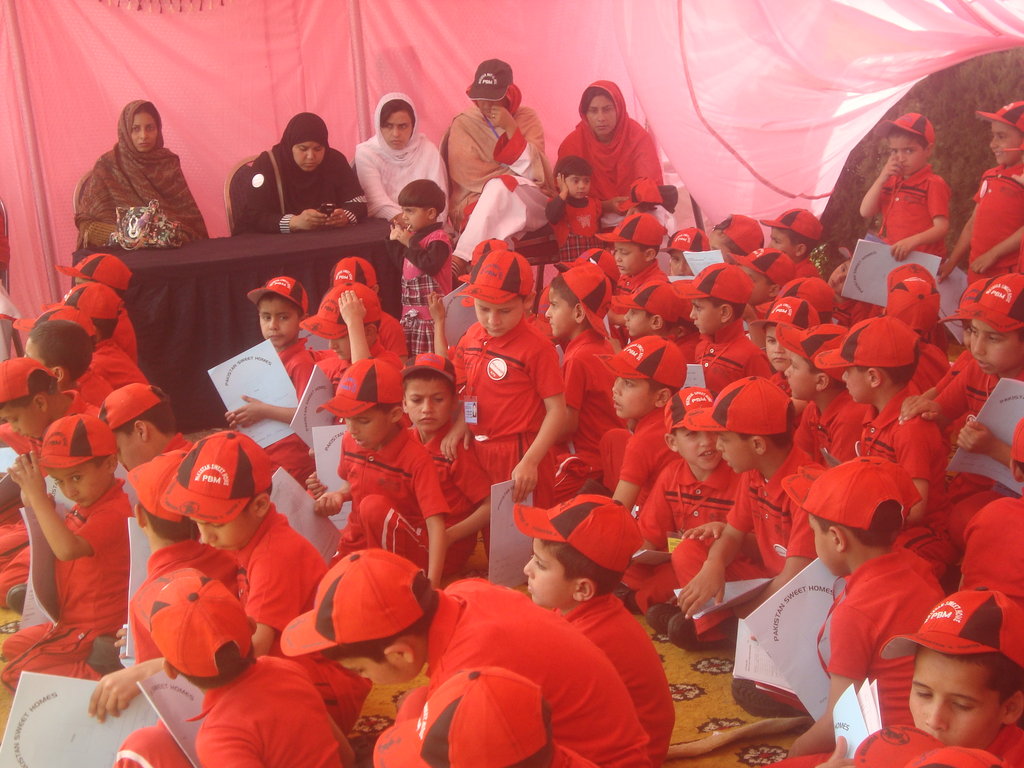
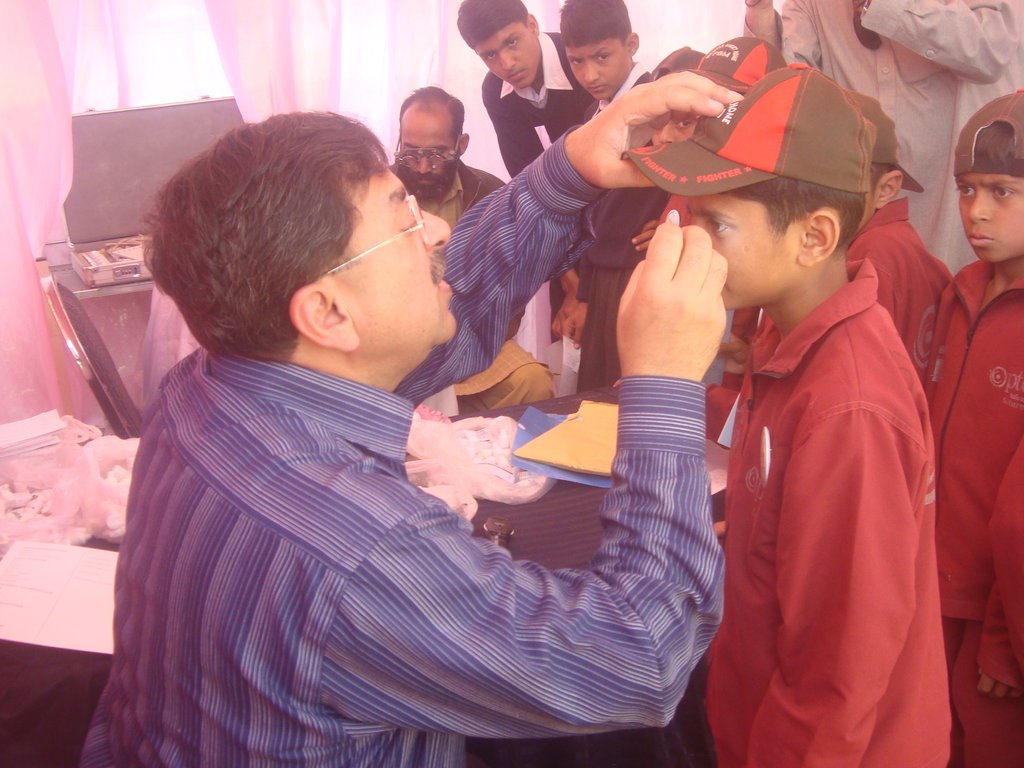
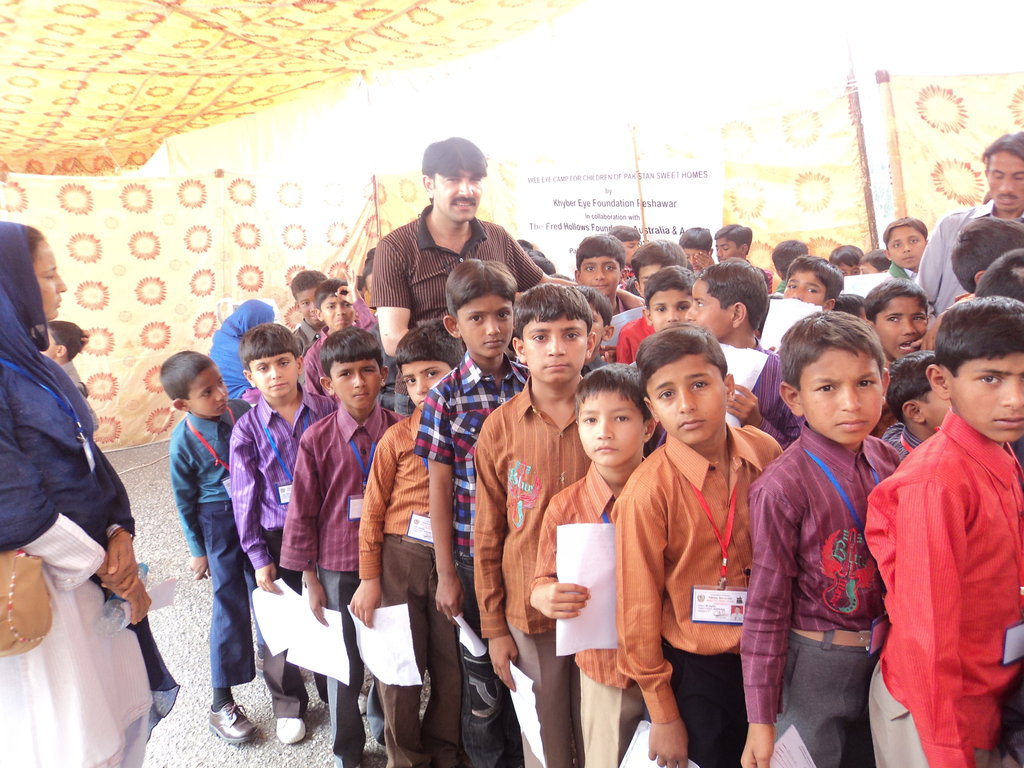
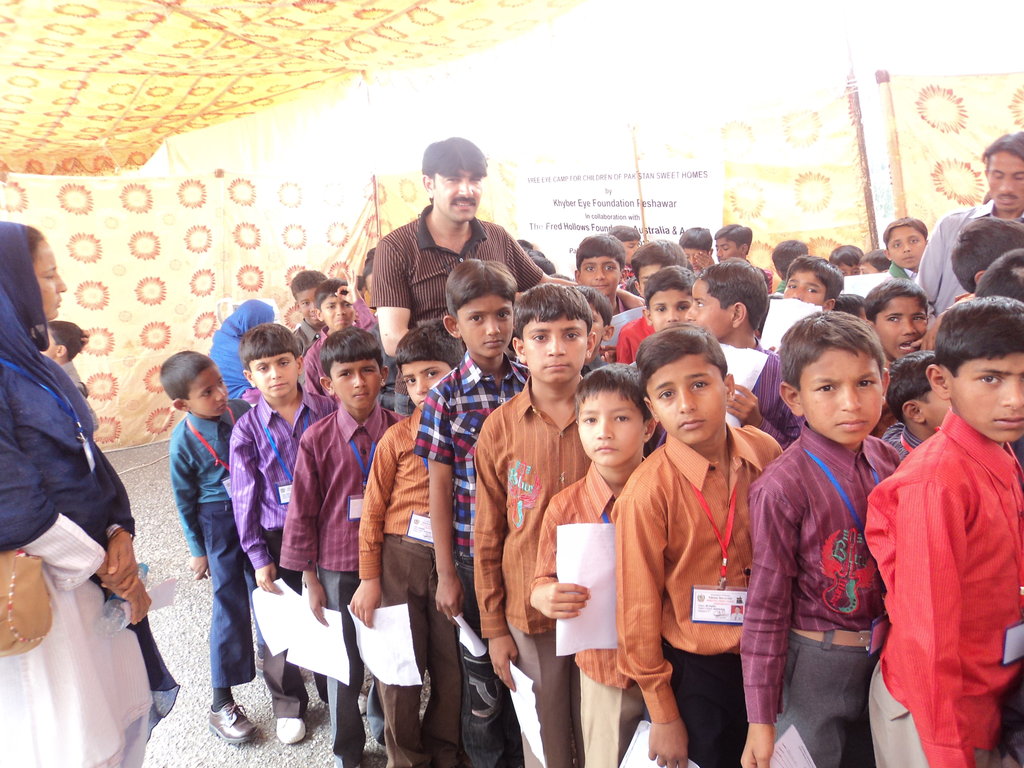
The school eye health program team of Khyber Eye foundation has so far visited 69 school and screened out 29232 students 949 teachers were trained to carry out vision testing of each students, out of 4141 students 1509 were dignosed as refractive error and were issued glass free of cost worth of 2150 $
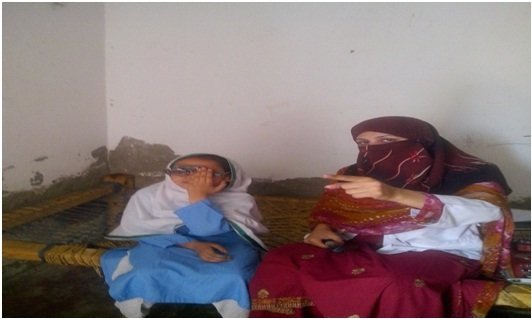
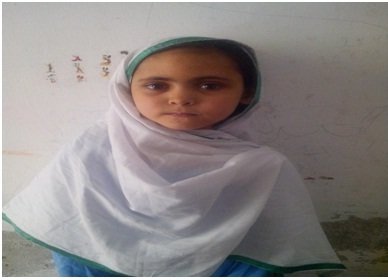
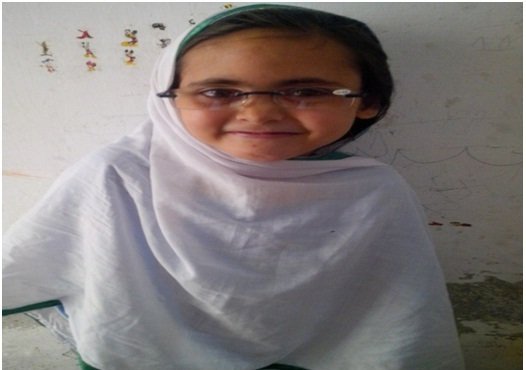
The story of a young boy who had refractive error and how his life changed after, he was issued glasses by the project team.
Hamid belongs to a small village of charsada. He is studding in government primary school chanchano mandani. He is the student of 4th class. His father is carpenter and support 8 family members. The school eye health team visited GPS chanchano and found a shy boy sitting in the corner of the class. When the optometrist asked his teacher about his daily work routine. His teacher complained that he is uncooperative and shy because his right eye is deviated. He lack confidence because of his low eye sight. After listening to his teacher’s complaint the optometrist carried out the checkup of Hamid. The initial visual acuity was 6/60 in both eyes. The right eye had deviation outward while the left eye was normal. Then retinoscopy was performed and found that he had a refractive error of -1.75 diopter in both eyes. When a refractive error is corrected and was issued glasses his vision improved to 6/18 in right eye and 6/6 in left eye. Hamid now has gained his confidence back and enjoy his study as a regular student.
Khyber Eye Foundation is now planning to start the project in District Nowshera in a days to come. We request our donors to donate maximum so that maximum poor children are benefited as we all know children are the future of any nation.
Raised: $ 2,253
Remaining: $ 47,247
Project reports on GlobalGiving are posted directly to globalgiving.org by Project Leaders as they are completed, generally every 3-4 months. To protect the integrity of these documents, GlobalGiving does not alter them; therefore you may find some language or formatting issues.
If you donate to this project or have donated to this project, you can receive an email when this project posts a report. You can also subscribe for reports without donating.