By Goutham Sambath | Project Lead, Whale Shark Conservation Project
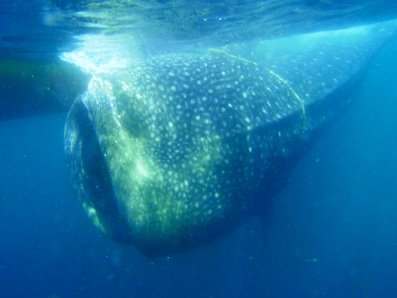
In December 2013, as the year came to an end, India took another small step towards learning more about the whale shark – the world’s biggest fish. An individual was satellite-tagged to learn more about the movement and preferences of the world’s biggest fish that frequents the country’s western coast.
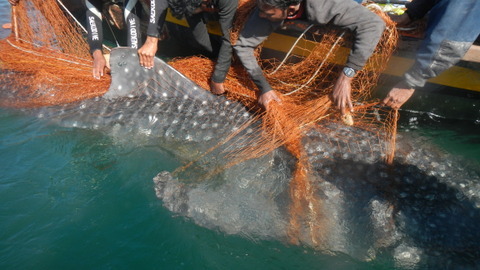
The tagging, second ever in India, was done on the morning of December 27th by the Whale Shark Conservation Project team members with the help of the fishing community in Sutrapada, Gujarat and Gujarat Forest Department. The fishermen reporting the entangled whale shark had used the camera given to them for self-documentation to take pictures of the entire rescue operation.
The individual tagged was a female, around 18 feet long who had been caught in a fishing net. WTI biologist Prem Jothi implanted the tag and the entire operation was completed by the 5-member team in 30 minutes. This is the second ever for the country. The fish was released following tagging, and was healthy when freed. As the fish surfaces, the tag will emit signals that will track its location and the water conditions there. Other inferences will be made based on this data.
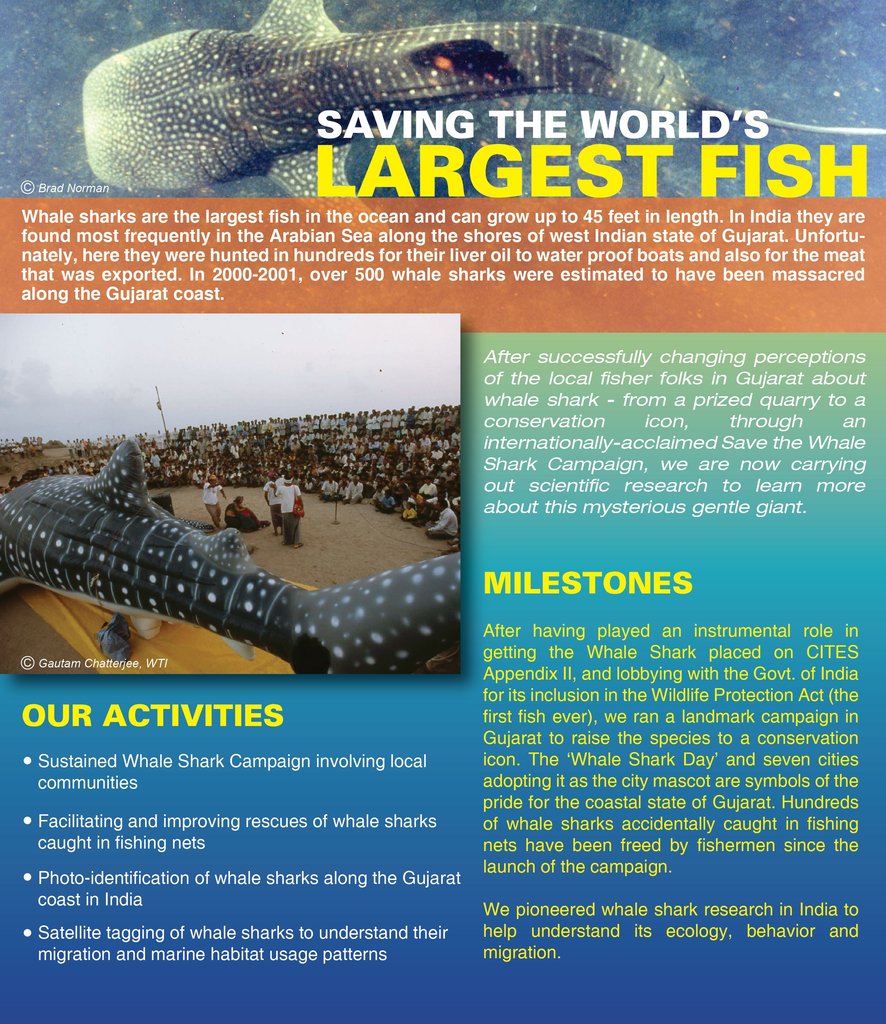
This initiative will help gather more information on the species to help develop effective conservation strategies. Whale sharks were once brutally hunted in Gujarat for its liver oil used to water proof boats. In 2001, the whale shark became the first fish to be listed in Schedule I of the Indian Wildlife Protection Act, 1972.
Following the hugely successful Whale Shark Campaign in 2004, the fishing community of Gujarat began releasing whale sharks accidentally caught in their nets. Till date, release of around 400 whale sharks has been recorded.
Unlike on land, tagging marine animals presents numerous challenges. As tagging free ranging fish is a highly resource-intensive operation, the team had opted for a more feasible option of tagging individuals accidentally caught on nets before release. The team had first tagged a whale shark in 2011 and the fish was followed for about 40 days, tracking its movement along Maharashtra and Gujarat coasts.
This fishing season, the Marine team decided to stay put in a trawler on the sea as the fishermen ventured out to evaluate their catch every morning. Another team kept in touch with the fishing community on land, and helped coordinate quick information transfer.
Earlier, the plan to tag rescued whale sharks had been sidelined for a while to figure out a way to reduce time taken in the operation to minimise stress on the fish. The other option was to tag free-ranging individuals. But this was like searching a needle in a haystack, or literally a ‘drop in the ocean’; and as of now, both options are being kept open.
Project reports on GlobalGiving are posted directly to globalgiving.org by Project Leaders as they are completed, generally every 3-4 months. To protect the integrity of these documents, GlobalGiving does not alter them; therefore you may find some language or formatting issues.
If you donate to this project or have donated to this project, you can receive an email when this project posts a report. You can also subscribe for reports without donating.