By Gabriel Fossati-Bellani | Project Coordinator
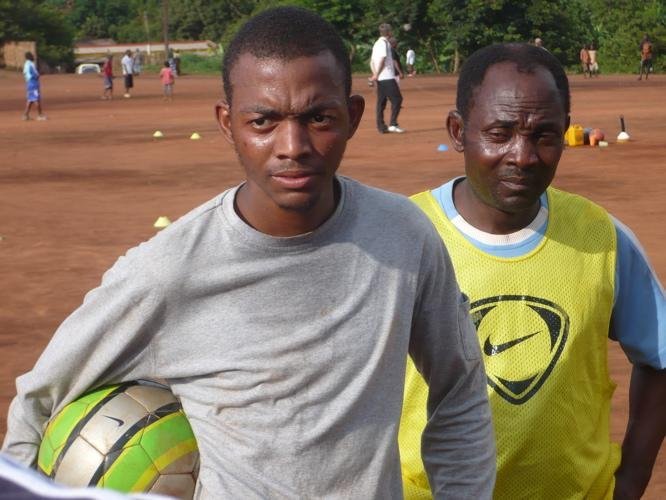
Organization Manuel Monteiro of LMF, Bert Sonnenschein of Iris Imaginações and Martinho Fernandes, the Technical Director for the Mozambican Football Federation, arrived in Gurúe on Sunday December 2. They were met by Miguel Raso, head of the Municipal Department of Sports, local organizer of the event, a Geração Biz activist and eventual volunteer coordinator for the implementation of the program.
The conditions and logistics for the workshop were well prepared, as were the participants.
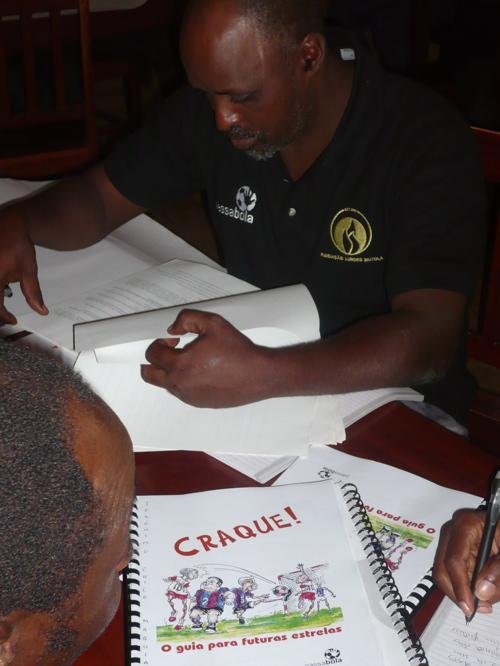
Participants Initially, there were sixty people who showed interested and signed up for the course with Miguel Raso, 17 of whom were women. Five of these women were chosen to participate in the training; only two of them showed up for the course. In the end, 24 people participated in the workshop. Most are Physical Education teachers; others are also in one way or another involved in sports in the district capital, some as active athletes and others in a more organizational role. The interest, background, capacities and experiences of the non-PE teachers complemented well those of the PE teachers and contributed to the positive outcomes of the week.
As mentioned, out of the 24 participants, only two were female. This gender inequality was not seen or experienced as a negative point. There were initially a push to include the intended amount of women after there was a dearth, but the test in Namaacha showed that there would be a low level of understanding and implementation with people who did not fit the basic requirements detailed above. The DDV program explicitly wants to explore and build upon existing motivation of people rather than to bring in alien motives and set-up parallel structures for football and HIV education. More equal gender participation cannot be brought in from the onset, but should be a point of attention for the future of the program.
The first day had the usual delay in appearances and official opening ceremonies by the Director of the District Services for Education, Culture, Youth, Sports, Science and Technology. All other days, the participants showed up on time and motivate and participation was high, much higher and much more enthused than the Namaacha trial.
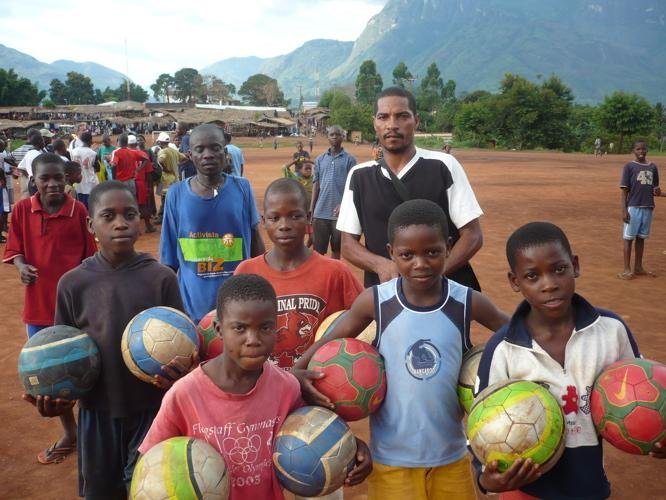
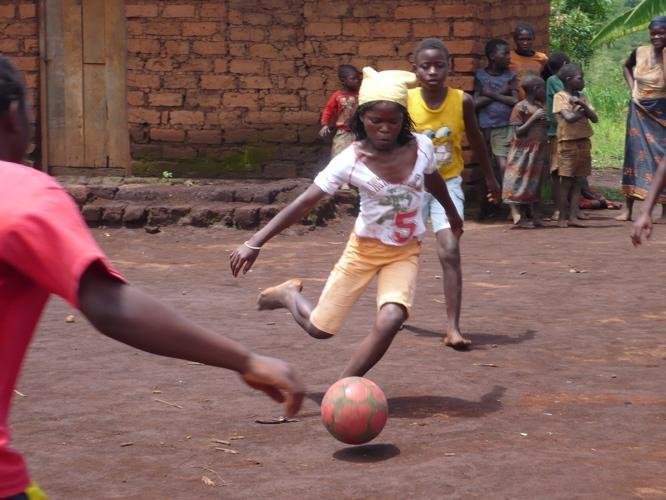
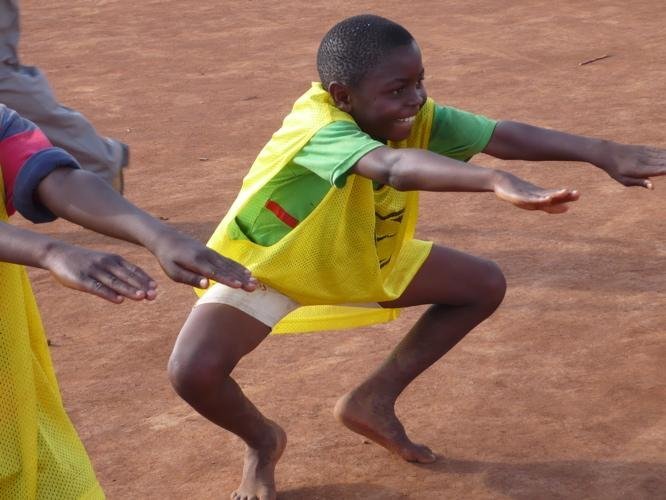
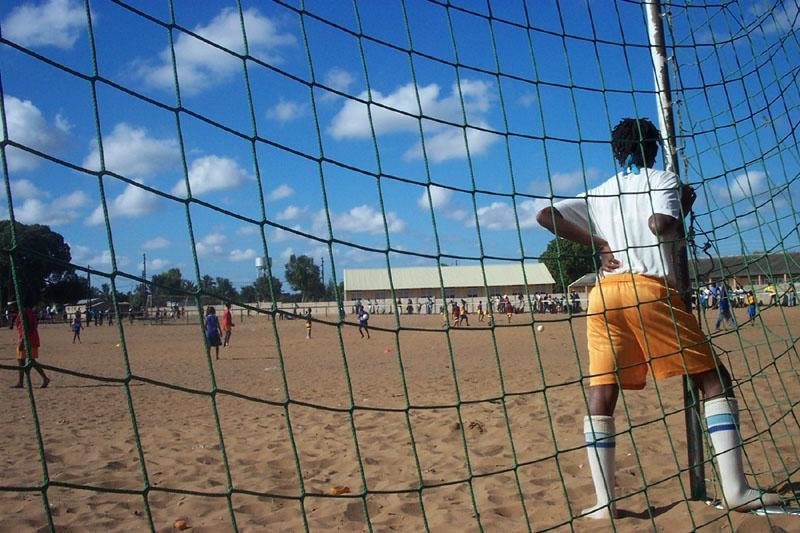
The Program The morning program was reserved for interactive concept and knowledge building, while the afternoons were dedicated to practical training sessions. The first two days training sessions were lead by the facilitators, from the third day onward, the participants facilitated the training sessions, with practical implementation with the participation of more than 100 children each day.
Contrary to the case with workshop participants, equal gender participation was achieved among the children in a natural way: out of the approximate 100, 40 were female.
The training calendar had the following role out during the week:
Monday - Knowledge test - The tasks of a trainer - The characteristics of a star athlete - The philosophy of soccer training
Tuesday - Football and life skills training integrated
Wednesday - Communication skills - Communicating messages - Motivating the athletes
Thursday - Discussing the existing sports organization and activities in the district and how to build and adapt on them using this training and the Champ! manual - Setting-up a plan for implementation of the “Movimento Passa Bola”, a collaboration network set-up by workshop participants, in the district.
Friday - Elaboration of the plan. - Knowledge test
Saturday - Test with all coaches on large field with many children - Distribution of materials
Methodology The methodology used for the workshop was one of interactive concept and knowledge building. Instead of feeding new concepts, knowledge and language into the participants, the participants were taken onto a journey where they shared concepts and knowledge available among them. Based on this, the participants created new concepts, knowledge and a common language and goals that will enable them not only to understand and communicate with each other, but also to work together in an organized form towards a common goal. Each day started with an evaluation game in which participants were asked about the aspects of the day before. This included, for example, whether they had enjoyed the day before, whether they had learned something useful the day before and whether they would be able to apply what they had learned the day before. Any doubts that arose from these questions were answered among the participants themselves before entering the program agenda for that particular day.
This evaluation game worked very well and made it possible to clarify and address specific needs and concerns of the participants.
Read the Rest of the Report in the File Link.
Links:
Project reports on GlobalGiving are posted directly to globalgiving.org by Project Leaders as they are completed, generally every 3-4 months. To protect the integrity of these documents, GlobalGiving does not alter them; therefore you may find some language or formatting issues.
If you donate to this project or have donated to this project, you can receive an email when this project posts a report. You can also subscribe for reports without donating.