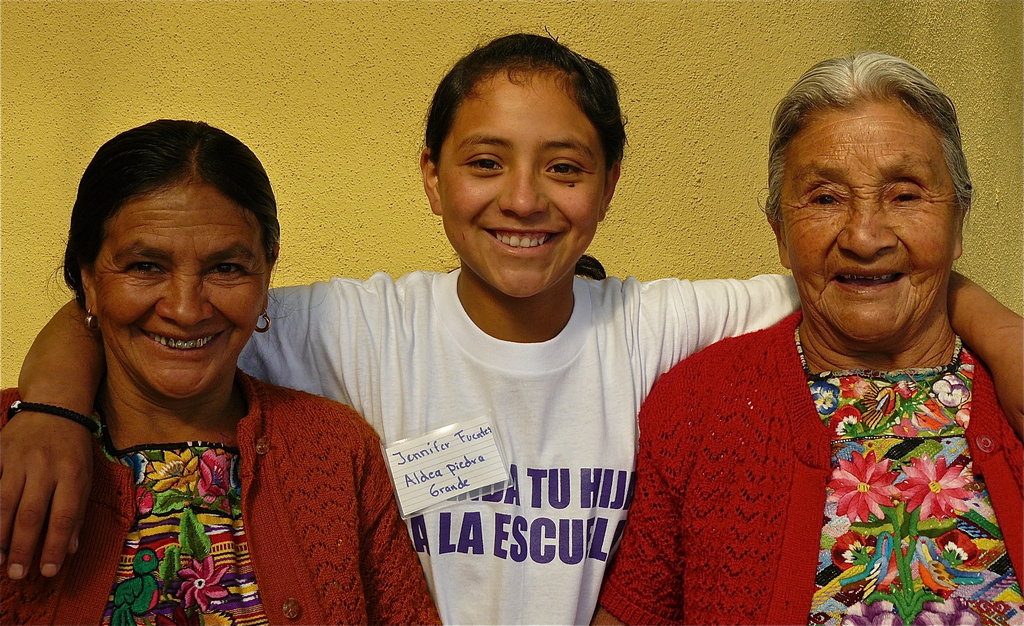
KEEP GUATEMALAN GIRLS IN SCHOOL

 
$18,516
$31,484
Raised
Remaining
Mar 12, 2013

March Field Visit

Teen Leader
Teen Leader

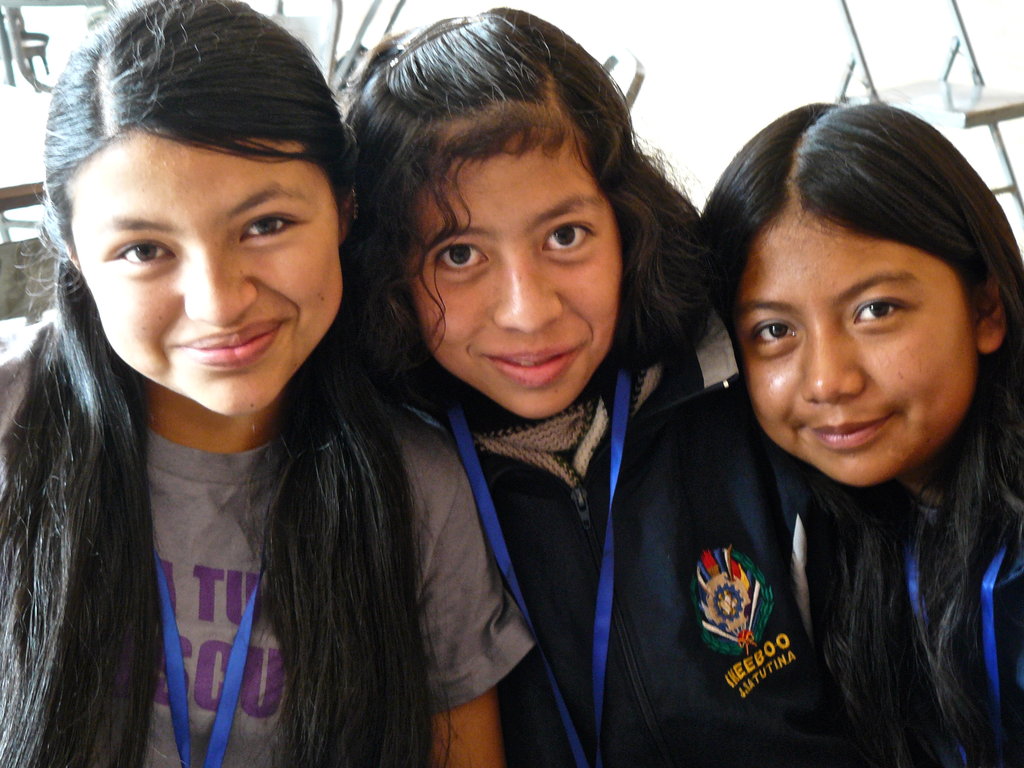
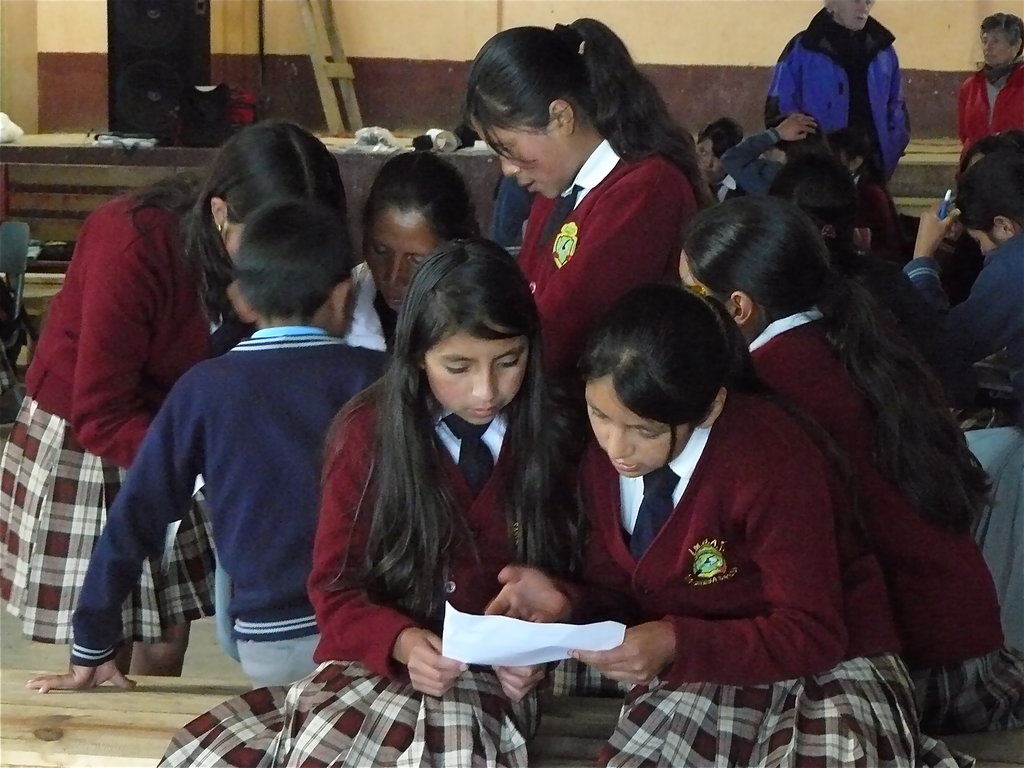
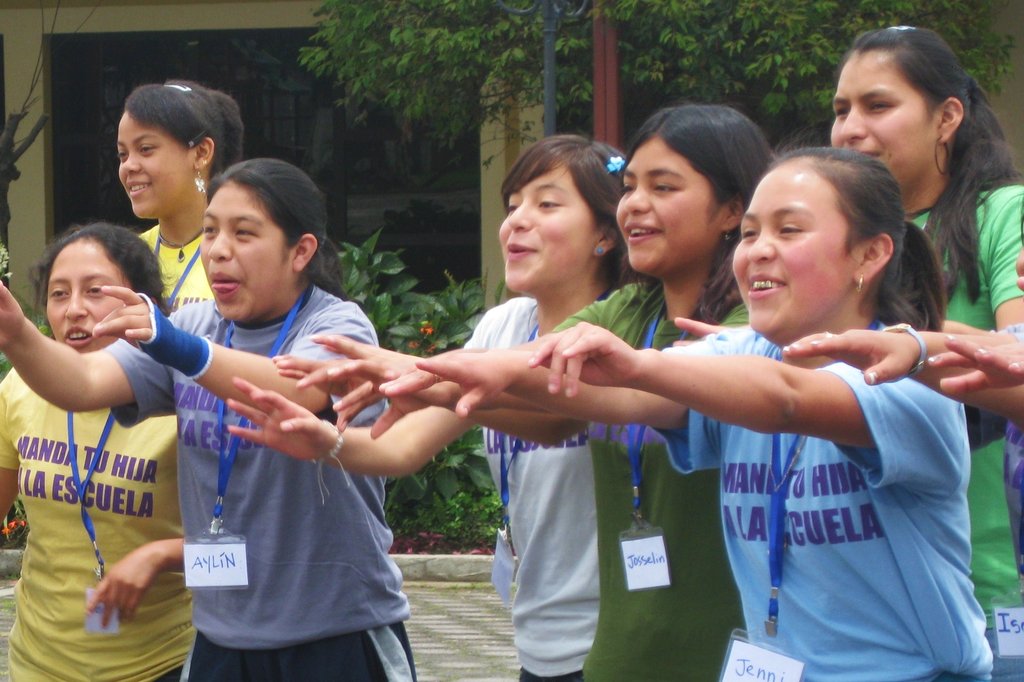
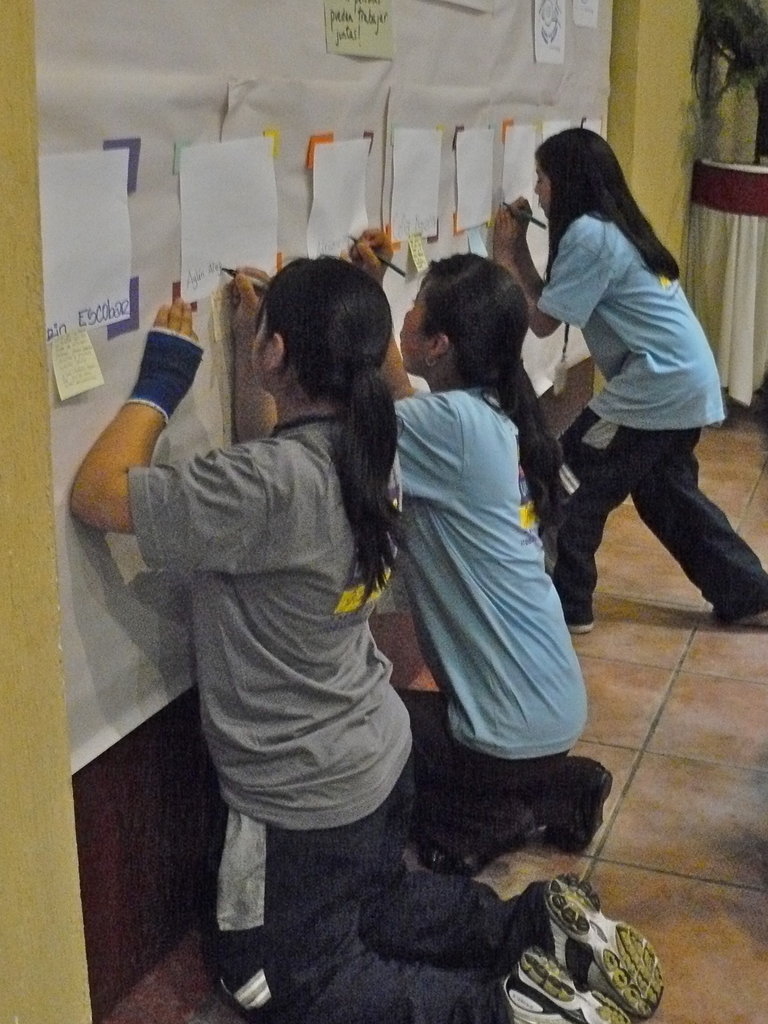
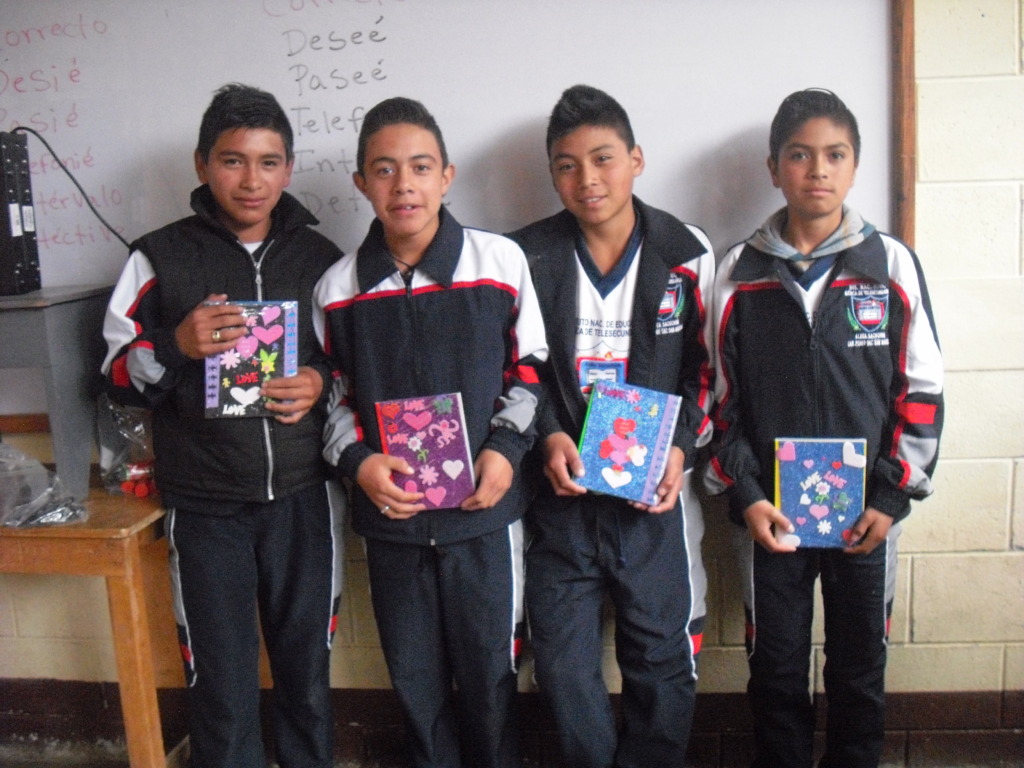
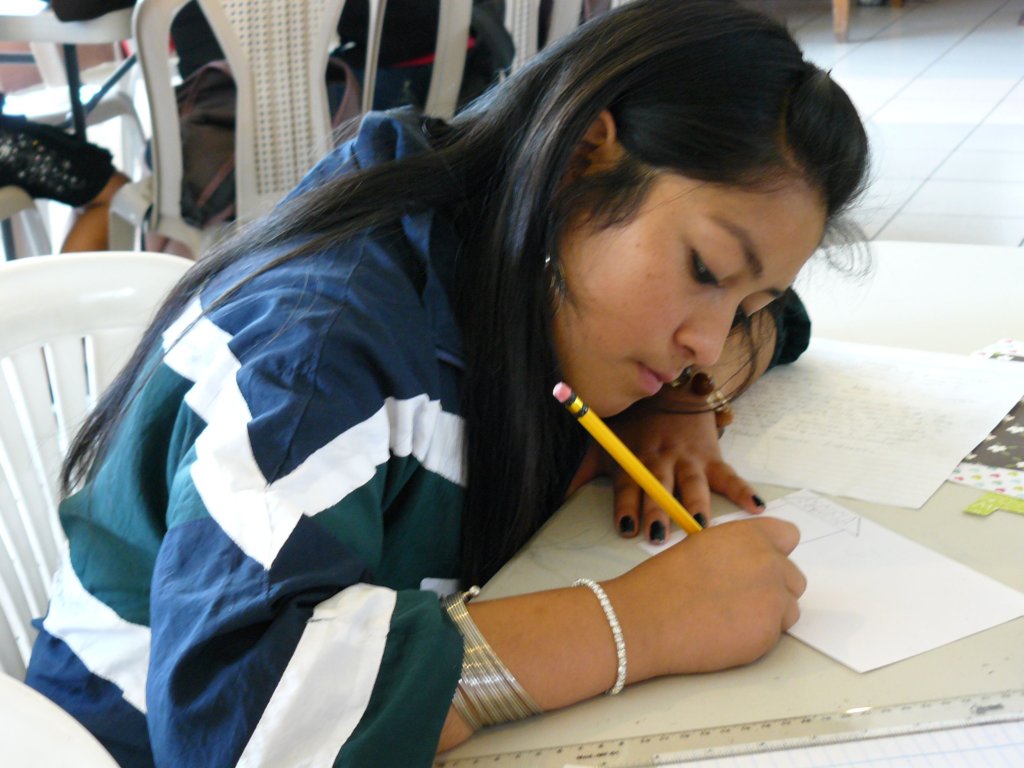
Women Work Together came to San Pedro Sacatepéquez this month first to do two weeks of research and evaluation in 14 villages. Secondly, we are applying what we learned to workshops and institutes for girls, parents, and teachers from the schools we visited. Thirty-five girls who are now in Level 2 of the Leadership Institute gathered on Thursday for a day of activities that reinforced and advanced the work we began with this group last year.  It was exciting to see how much they’ve matured and grown in personal confidence since our last visit. Each has participated in one or more of our core projects – Family Reading Time, My Mother’s Life, Big/Little Sisters – and had a chance to share what she’d learned and consider what the experience meant to her.  Themes of leadership, education, gender and community were woven into the day, with the girls exploring these topics through different means, writing and illustrating some of their mother’s stories, making puppets and reviewing new books.

Transcribing Girls
Transcribing Girls' Stories
Puppetmaking
Puppetmaking
Evaluating New Books

Links:

Nov 2, 2012

Las Hermanitas - WWT's Mentoring Program

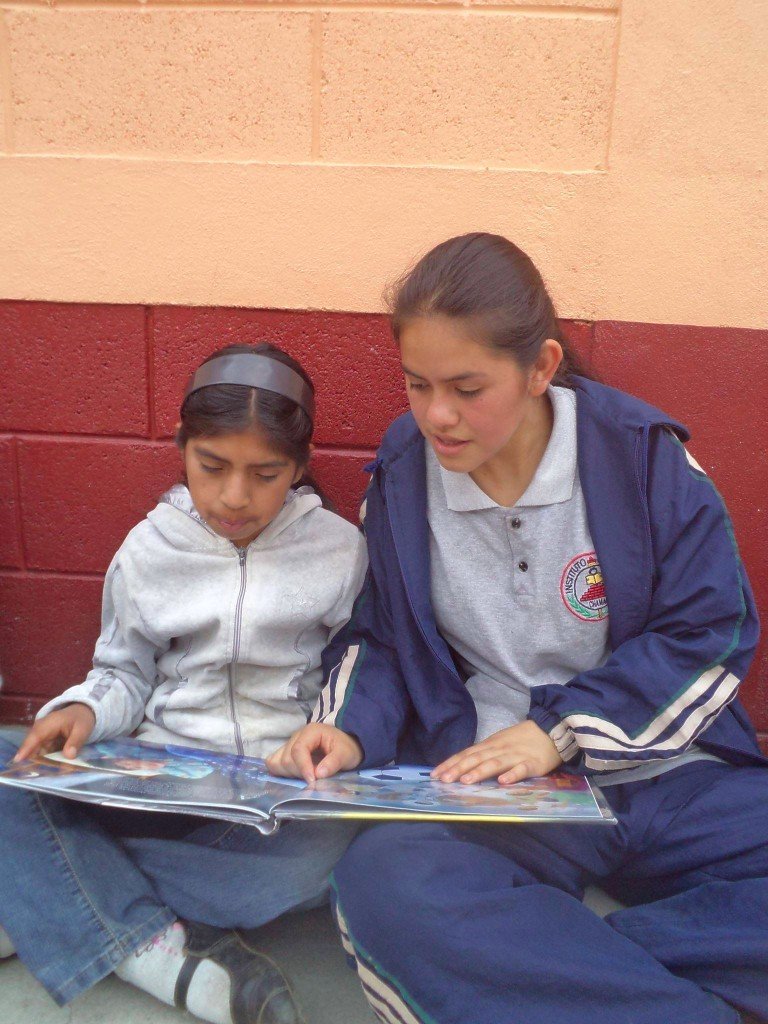
Girls Club tutor and her "hermanita"

Las Hermanitas -  Mentoring in Santa Teresa


Santa Teresa,  is a village about 20 minutes outside of San Pedro Sacatepequez, San Marcos, where Women Work Together works. This is a little town where all kinds of magic is happening. Dedicated teachers, passionate mothers, excited teens, and supportive community in general. And the girls are so into the Girls Club and the programs that come through our local partner, Mujeres Trabajan Unidas.


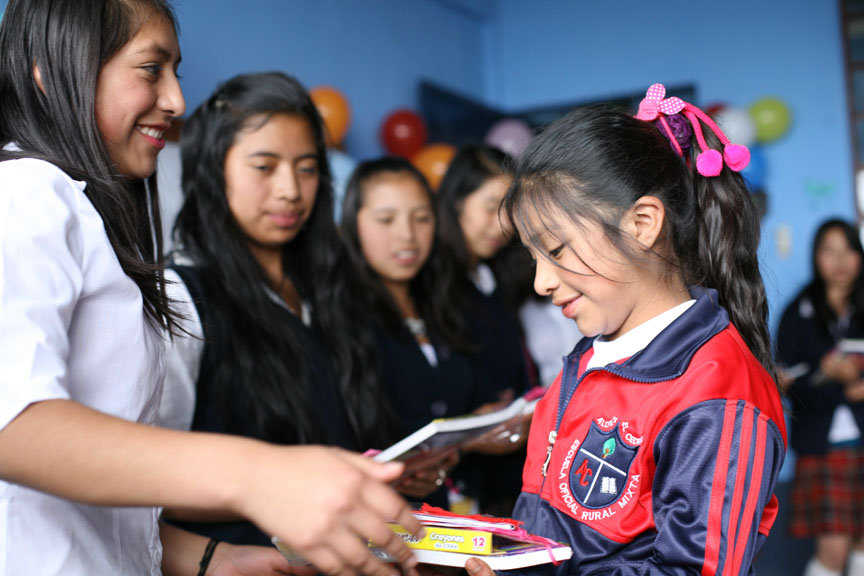
We came to Santa Teresa to hold a workshop about and with Las Hermanitas, a mentoring program we developed with our partners last December. Teens from our clubs mentor 8 or 9-year-old girls who are struggling to make it through 2nd grade. This is the most vulnerable age for girls to drop out of school, but not just because their parents decide that's enough schooling and they need to help at home. A lot of these little girls are lost academically. Their mothers don't read or write, so they get no help from home on their homework. Their grades are poor, they're discouraged, and they wonder why they're in school anyway.


Las Hermanitas pairs them up with junior high school girls who want to make a contribution to their community. Right now we're piloting this project in three villages, hoping to expand to two more. We invited five of the hermanitas to come to the workshop. We learned that all five had vastly improved their grades, had begun to love school and looked forward to being there. Plus they were mastering skills that they never did before. And they were very proud of themselves. They reported the following, in their own words:


  • I'm so happy when I see my tutor walking up to my house. We meet every Saturday at 3 for two hours. I ask her all kinds of things that I don't understand about my lessons. She's helped me with my math. I can now multiply.
  • We talk, we laugh. We paint, we read.
  • Thanks to my tutor, I'm a better person, I'm learning more in class, and my grades have improved.
  • At the last session, we talked about the planets.


We also asked them how they have changed since they began meeting with their tutors. Some of their responses:


  • My mother says I've become more responsible. Now I do my homework and I get to school on time. My parents are so proud of me.
  • I talk up more in class and I read faster.
  • I love the book of short stories we read together like "Caperucita Roja."
  • My grades rose from 70 to 85.
  • I used to get grades in the 80s. Now my grades are sometimes 90!!!
  • Thanks to my tutor, my handwriting is much clearer.
  • Now I pay attention in class. I'm more patient. I am more responsible.


We also learned some fascinating things from the tutors. Many of them had been torn about staying in school when they were young. Like so many American kids, they didn't like getting up early. Or they were uncomfortable speaking in class. No love for mathematics here. Yet, because their mothers taught them that without school their lives would be difficult, they persisted. And now they are communicating that to other girls and, most especially, to their hermanitas. They reported, in their own words:


  • By tutoring, I'm figuring out whether I want to study to be a teacher.
  • This project has motivated me to encourage other girls, not just my hermanita, to stay in school and make something of themselves.
  • Nowadays you aren't anybody if you haven't gone to school.
  • You have to put a lot of effort into your studies to succeed in life.
  • I like school and don't want to drop out, so I talk to other girls about this.
  • With other club members, we are giving talks and holding rallies about the benefits of staying in school.
  • We invite older girls to the Girls Club who talk about their schooling and success in life.
  • I brought my hermanita to meet my mother who is a leader in our community and she saw that because of her I am a leader, too.


Both tutors and Hermanitas said they loved their time together. Here are some of their reports on what they do:

  • Play games, read, draw, paint, practice their math tables, do puzzles
  • Practice grammar, like how to use commas
  • Speak English
  • Read new books
  • Write
  • Help me understand my homework
  • Take walks and just talk
  • She has showed me that I'll be somebody one day because I'm studying.


In all, we are all thrilled with this program and plan for it to continue and spread to other villages. We're convinced that it makes a real difference for the 80 girls who are Hermanitas and the 80 girls who are their tutors. They see their futures differently and so do we.

9 year old "hermanita"
Santa Teresa La Hermanitas Members

Links:

Jul 2, 2012

Our Campaign is Working!!!

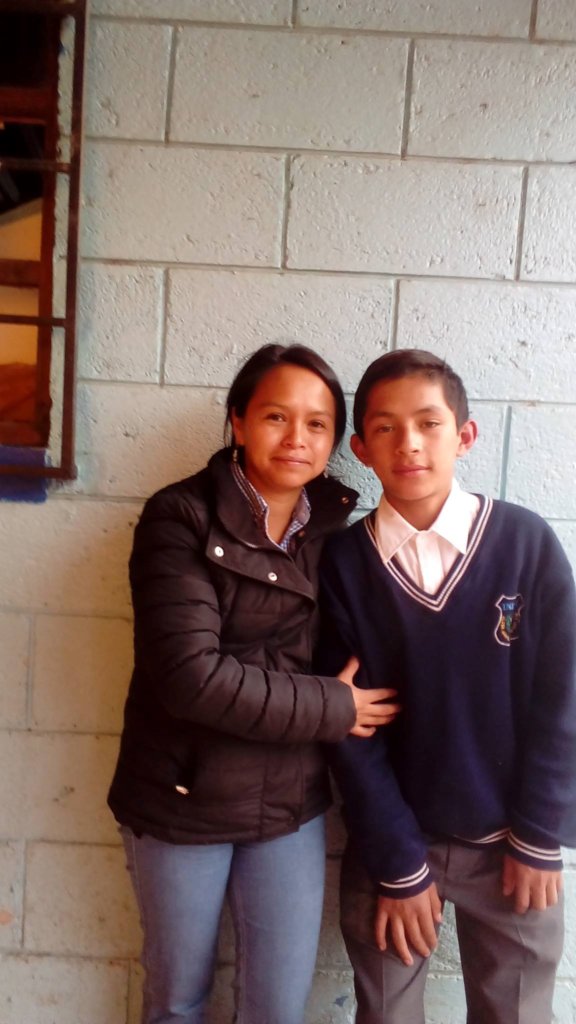
San Pedro Mother & Daughter

OUR CAMPAIGN IS WORKING!!!!

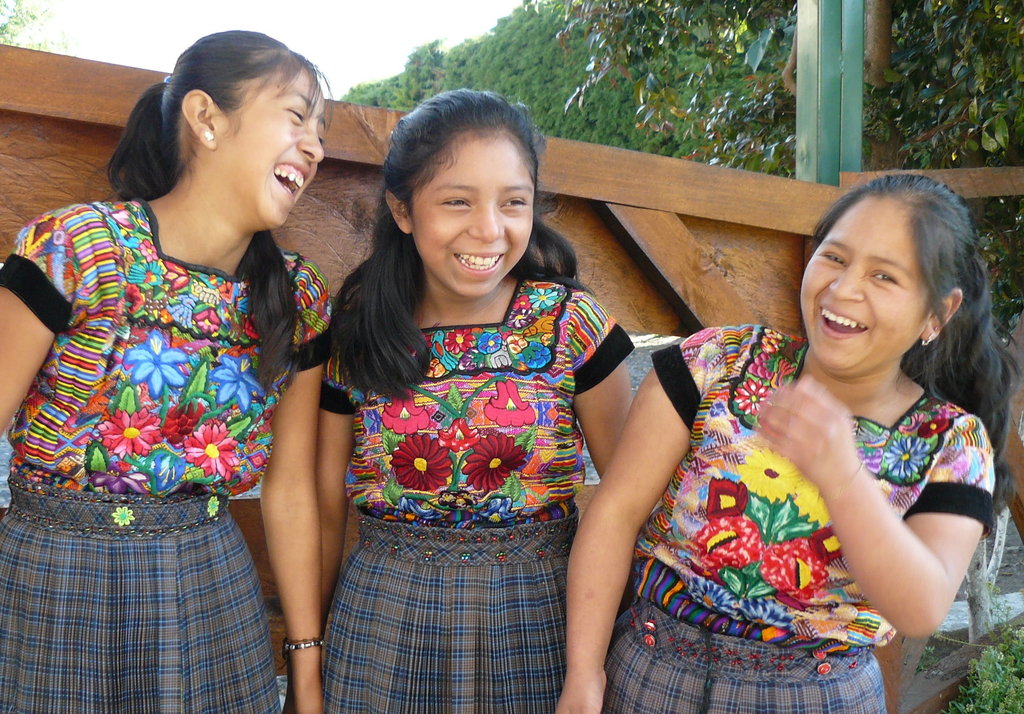
            Women Work Together was in San Pedro Sacatepéquez, San Marcos, Guatemala for a 3-week field trip in June 2012. We quickly learned that our campaign to “Send Your Daughter to School” was working! Every workshop we held was packed with mothers (mostly illiterate) and their middle school daughters. Our projects have enrolled nearly 1500 women and girls from 14 rural villages!!

            So we’re outta here this morning. What do we come away with? Certainly I’ve seen the incredible progress in mothers committed to sending their daughters to school. It feels like our campaign is really working. The projects themselves are having a huge impact. We are going to be looking for funding to double the size of “Las Hermanitas” mentoring program because the data is so good. Fewer dropouts from the second grade, more commitment to staying in school from the mentors, and overwhelming support from all the parents. And our base is growing with the inclusion of professional women from town and teachers from all over the community. I’m feeling pretty proud right now. Sometimes I think there’s something really positive in the air here!!! It smells like The Girl Effect!!!

            The enthusiastic embrace of our work (and that of our local partner) was clear on the last day. We had a huge crowd of about 150. Everything worked smoothly. Nan’s TV Show about the projects worked marvelously with Marina and Leticia as celebrity interviewers. We were having fun. Girls and women spent time writing their walk-in questions with their mothers, like, “If you had one day free with our mom (daughter), what would you do?” Never ever do we get, “We’d go to the beach,” or even, “We’d go visit my sister in another town.” It’s so difficult for anyone to think of time off!!!! One mother said she and her daughter would sit together talking about the mother’s life and letting her give her daughter good advice.

            Nearly 30 girls gave their mothers the books they had made about their lives, “La Vida de Mi Mama,” convincing everyone that it was a fine idea to sign on for this important project where girls and women break taboos that don’t let them talk about sensitive subjects. We are very excited about this program because it brings more mothers into the Women Work Together fold. They loved the experience and the chance, at last, to share the pain and joys of their youth. These women are ready to be part of our campaign to Send Your Daughter to School. In fact, in September, we have planned just such a mother-daughter all-day training on getting the word out in their communities!! Our corps of campaigners is growing!

            Then, as we said good-bye, I called up my team to the front. We linked arms, and all at once a paparazzi of cameras confronted us. More than 20 girls clicking away. And they had been doing it for a while, we discovered. One señorita asked me to sign her book. I thought it was her mother’s La Vida and was hesitant until I saw that she had made another book, this time all about WWT. It was filled with home-printed pictures of us!!!

            We signed their books. We got blessings from more than 50 mothers, hugs from hundreds. The demand for photographs was exhausting. We were rock stars for about 30 minutes. Then came the hard part. When the girls had finally gone, the teams sat around a table and talked. The testimonials from our Guatemalan partners were dramatic and tearful and certainly heart-felt. Many people who don’t normally cry, shed many tears. They swore that they had learned so much from us; they would never be the same again.

            But our teams were weepers too. Especially Stephanie, who has been my student assistant 3 times and is now considering spending next summer working with the local team.  Ms. Leticia, she of “Leticia Dances,” could only get out one sentence before she lost control and started blubbering about how this had been an unforgettable experience, that she would never be the same, that she was miserable thinking of leaving all these wonderful women and girls.

            As for me, what I tried to say was that I felt I had died and gone to heaven. What had I done to deserve this kind of satisfying work with such a fantastic team? How could I be seeing all these changes in the lives of girls and mothers in only a few years? It was totally magic. Or was this all a dream?

            Yes, the experience had been very intense. Everyone worked long hours. We had so much to do. The audience was diverse. Most mothers couldn’t read or write. The girls were usually leaders who had worked with us before, or girls who wanted to be leaders. But there were a few silly teenagers mixed in who were there for a day away from home. And we never knew what kind of a space we would get. Cluttered schoolrooms, echoing halls, rain pouring down in the bathrooms, or a muddy slog up a hill. There were one or two unforgettable drives down twisting, rutted roads. Mostly, things worked out fine and the team figured everything out logistically. But in terms of program, each situation called for quick thinking even after months of developing the schedule and the activities. We revised and revised until we were satisfied that we had gotten it right. And now we’re going home!!! But we’ll be back in September with volunteers for more good work with our Guatemalan partners in our campaign to “Send Your Daughter to School.”

Links:

Mar 28, 2012

Reading & Writing Moms and Daughters in Guatemala

Reading Together
Reading Together

Madres e Hijas (Mothers and Daughters)

 A girl's education requires support from many adults, notably teachers and parents. Beginning in March 2012, Women Work Together introduced a new program in San Pedro Sacatepéquez, San Marcos, Guatemala, called Madres e Hijas whose goal is to jump-start a continuing series of activities that cultivate parental commitment and community involvement in girls' education. It is the first step towards parents sharing the practical difficulties of educating daughters, brainstorming solutions, and sending at least one girl in every family to school.

 Why focus on Madres e Hijas

While Girls Clubs can become dynamic focus groups for discussing issues that concerns the teens, one serious challenge to sending daughters to school is that many of their mothers dropped out of school as youngsters or never attended at all.  And, as a result, they can neither read nor write. Girls lament that their mothers do not show interest in their homework; nor do they appreciate what being in school means on a day-to-day basis. It is clear that worldwide, there exists a strong correlation between illiterate parents and an elevated dropout rate for their children, especially daughters.

A second problem raised by adolescent girls is boyfriends, sex, and teen pregnancy. A cultural taboo in rural San Pedro makes it difficult for daughters to confide in their mothers about their changing bodies during puberty. Nor do they feel that mothers welcome daughters’ confiding in them about young love.

Taken together, these issues inspired WWT to work with our local partners, (Mujeres Trabajan Unidas) and collaborating educators to create appropriate participatory programs for the Girls Club members that

  • involve mothers in their daughters’ school work, particularly, reading and writing,
  • provide a focus for mothers and daughters to work together on a common project,
  • offer designated time periods through the week where mothers and daughters could develop comfortable levels of conversation and mutual confidence.


Madres e Hijas Pilot Programs

1) La Vida de Mi Mama (My Mother’s Life Story) invites girls and their mothers to write the mother’s life story together. Through a series of guided interviews, mothers relate their oral histories to their daughters. The product is a book of memories and stories produced by the pair and proudly shared with Girls Clubs from other participating villages.

2) La Lectura Familiar (Family Reading Time) involves uneducated mothers in their daughters’ schooling through at-home sharing of the magic of books and reading. WWT has found that reading aloud is an engaging activity for small groups. In women’s leadership workshops, we have been impressed by the attentiveness of older women to simple children’s books read to them by their daughters.

 Madres e Hijas is a forum where the more subtle but vital seeds of systemic change can take root across the generations. The long-term goal for this program is to replace the common preference for immediate benefits to the family of a girl's labor with the parents' willingness to invest in the greater long-term benefits of education for their daughters, their family, and their community. We know that this is becoming the case because more and more, mothers’ answers to the often-posed question, "How can we ensure that our daughters have a better life than we do?" is "By sending our daughters to school."

We should note that WWT is mindful of the need for fathers to be involved in activities focused on their daughters’ education, and will be piloting a series of workshops along those lines in Fall 2012. For now, our challenge is to enhance the mother-daughter connection both in terms of school and more personal communication.

Madre e Hijas
Madre e Hijas
Childhood Reading
Childhood Reading
The Family Reads Together

Links:

Jan 12, 2012

CHRISTMAS IN GUATEMALA

Women
Women's Workshop

CHRISTMAS IN GUATEMALA

 Women Work Together spent 3 weeks in San Pedro Sacatepéquez, San Marcos, Guatemala, returning just before Christmas. Our team of American and Guatemalan staff was supported by a truly incredible Spanish-speaking group of Colorado volunteers and dedicated community members from San Pedro. Weeks 1 and 2 were devoted to morning visits to Girls Clubs and afternoon workshops with their Mothers in 7 villages or aldeas. Because school isn’t in session after October, we had no idea how many girls were going to show up, but we were overwhelmed with the response!!! In San Pedro Petz, for example, we were expecting 30, but ended up registering nearly 70 girls from two clubs.  During Week 2, we also provided all-day workshops for junior high schools teachers and WWT extension workers. Week 3 began with leadership training for 175 representatives of women’s mutual support groups. Normally, that many women only show up for celebrations like International Women’s Day, so we were delighted with the attendance for participatory training. The next day was devoted to 70 lideresas, or teen leaders who have been attending our Institutes or leadership conferences. These young women thrilled us with their commitment to their schooling and determination to control their own lives.

What was amazing about this visit was the enthusiastic expression of support for our campaign, “Send Your Daughter to School.” Again and again, we heard statements like this one from traditionally dressed, poor Mayan women: “Years ago, our parents didn’t send girls to school, so we can’t read or write. But now we understand how important it is to educate our daughters. Even though it’s a struggle, we’re doing it!!” We were especially pleased that several fathers attended our “Mothers” sessions and worked with their daughters on art projects expressing their hopes and dreams for the future.

Sadly, we encountered teens where lack of resources was so dire they were being forced to drop out of school. Fifteen-year old Elizabeta was proud of a collage that expressed her dream to be a dancer when she grows up. “Unfortunately,” she said, “this is an impossible dream.” Why? Elizabeta’s father abandoned the family of five when she was born. Her illiterate mother has no way to earn money besides cutting fodder for local animals. So when school starts in January, Elizabeta will have to find a job to help her family survive.

Illiterate mothers do not have to breed illiterate daughters. Women Work Together helps women and girls strategize around this kind of frustrating powerlessness by supporting Girls Institutes and more than 100 women’s organizations in San Pedro. When women and girls talk about this kind of situation, they are taking the first step toward solving it. Thank you to the many supporters whose thoughtful donations make this work possible.

Elizabeta
Elizabeta

About Project Reports

Project Reports on GlobalGiving are posted directly to globalgiving.org by Project Leaders as they are completed, generally every 3-4 months. To protect the integrity of these documents, GlobalGiving does not alter them; therefore you may find some language or formatting issues.

If you donate to this project or have donated to this project, you will get an e-mail when this project posts a report. You can also subscribe for reports via e-mail without donating or by subscribing to this project's RSS feed.

An anonymous donor will match all new monthly recurring donations, but only if 75% of donors upgrade to a recurring donation today.
Terms and conditions apply.
Make a monthly recurring donation on your credit card. You can cancel at any time.
Make a donation in honor or memory of:
What kind of card would you like to send?
How much would you like to donate?
gift Make this donation a gift, in honor of, or in memory of someone?

Project Leader

Tracy Ehlers

Boulder, Colorado United States

Where is this project located?