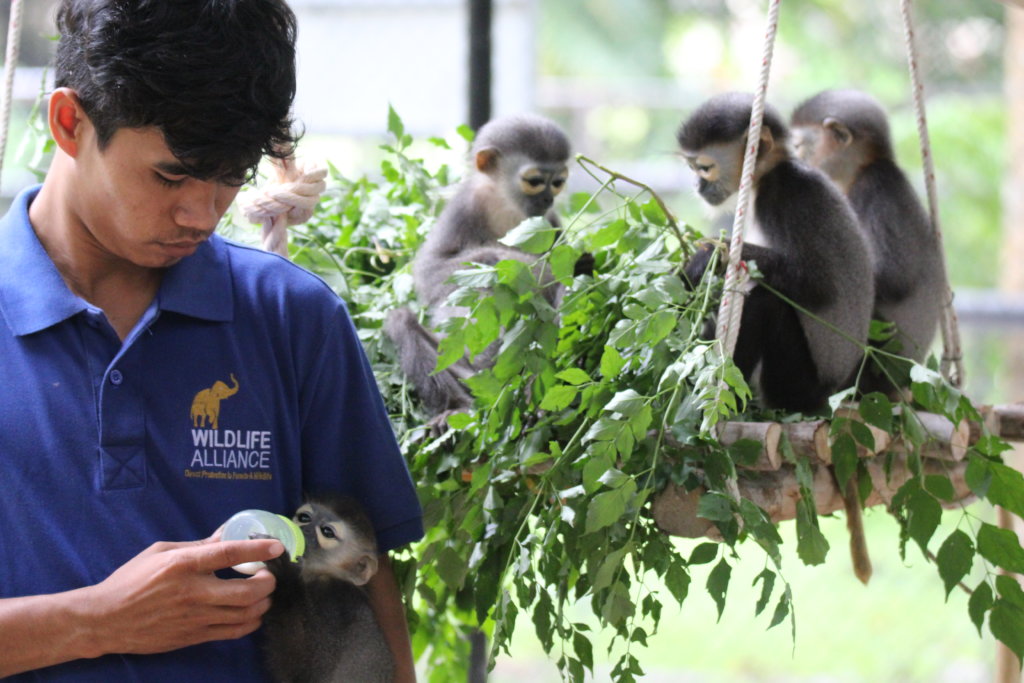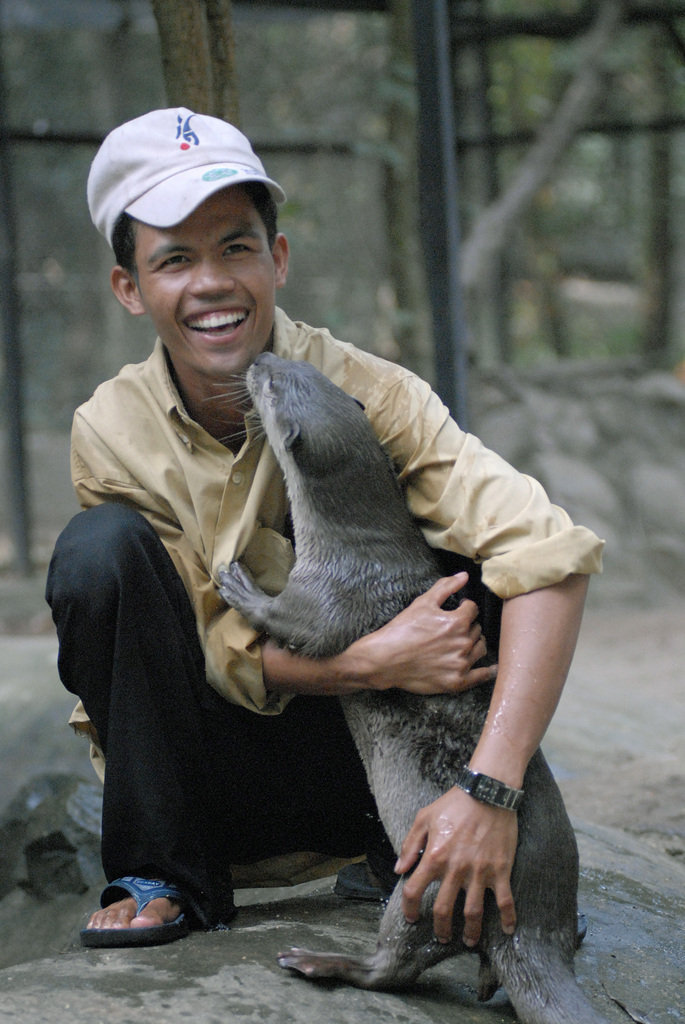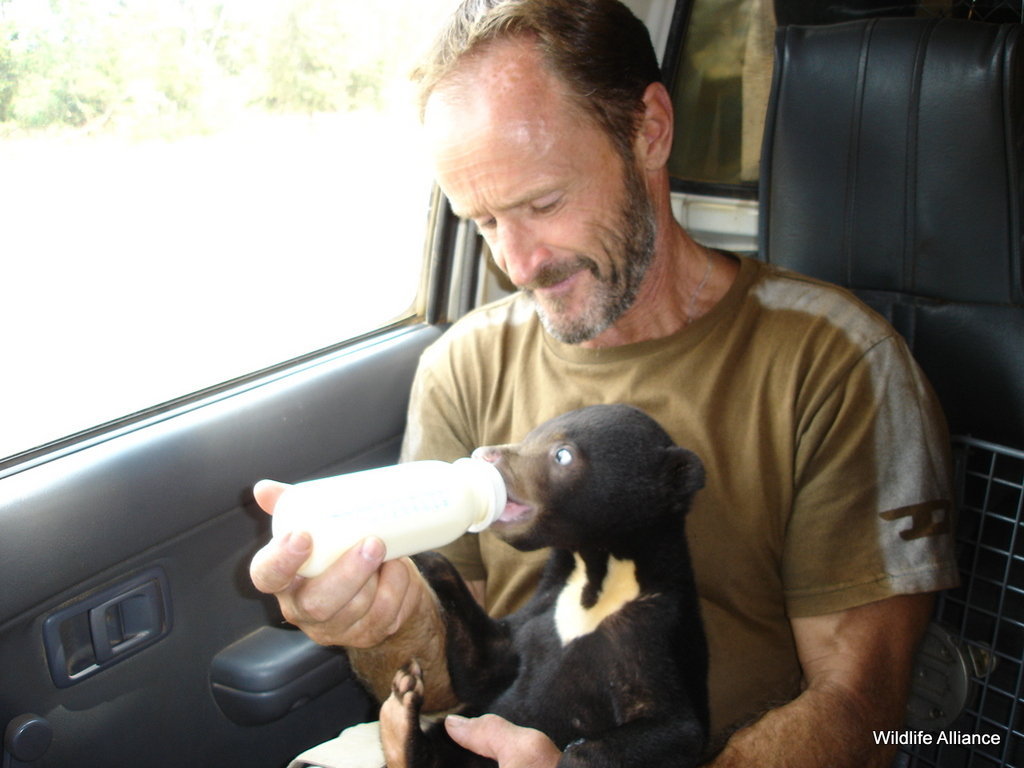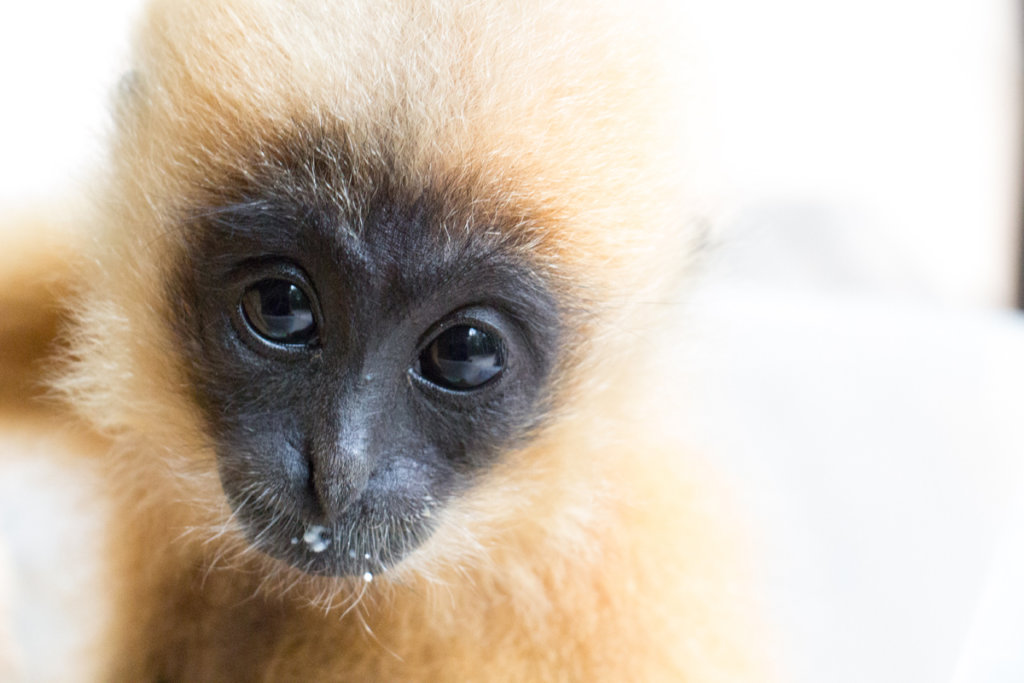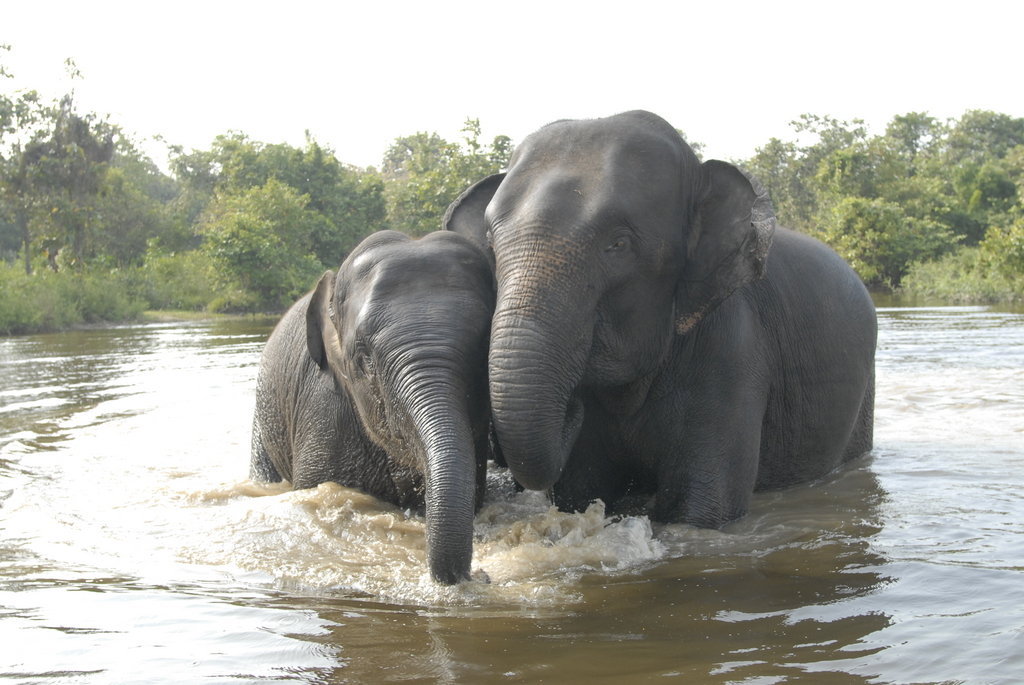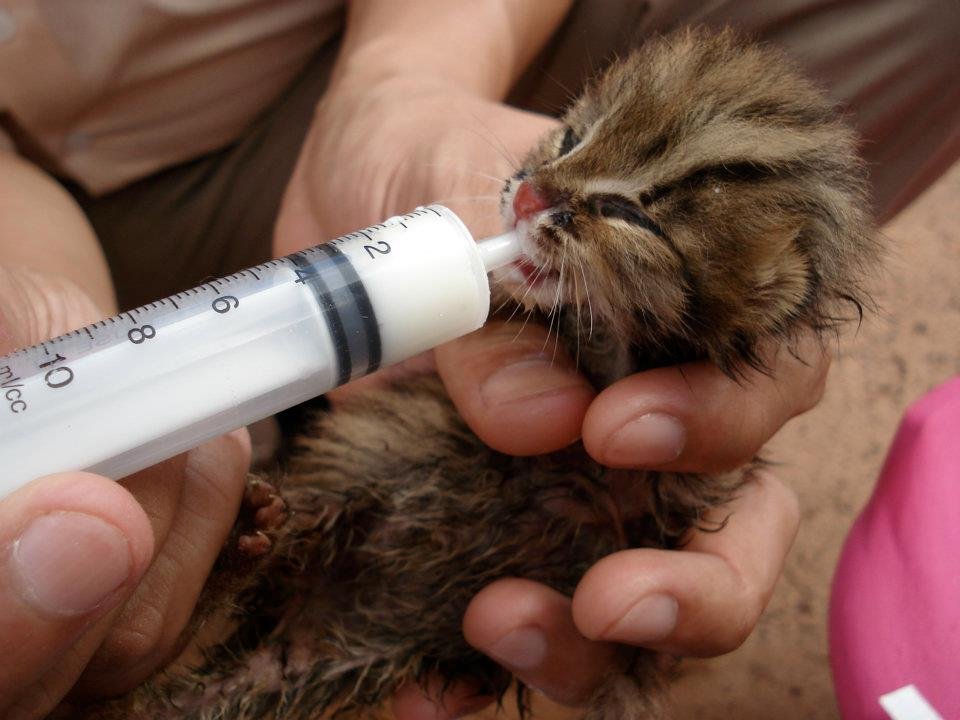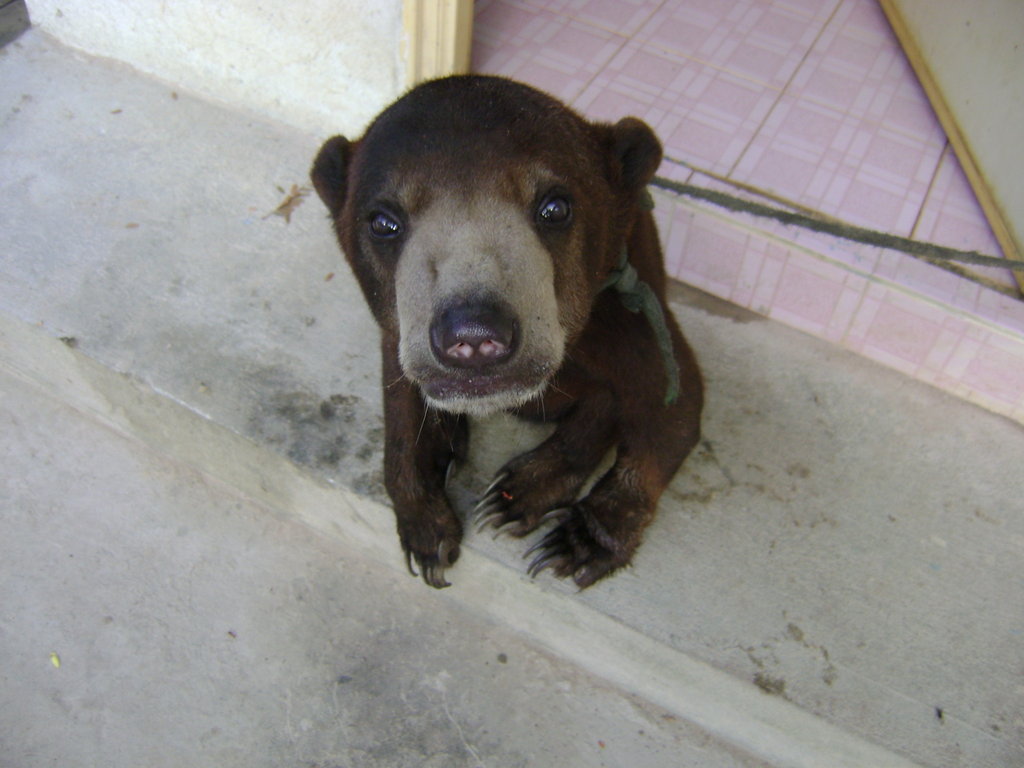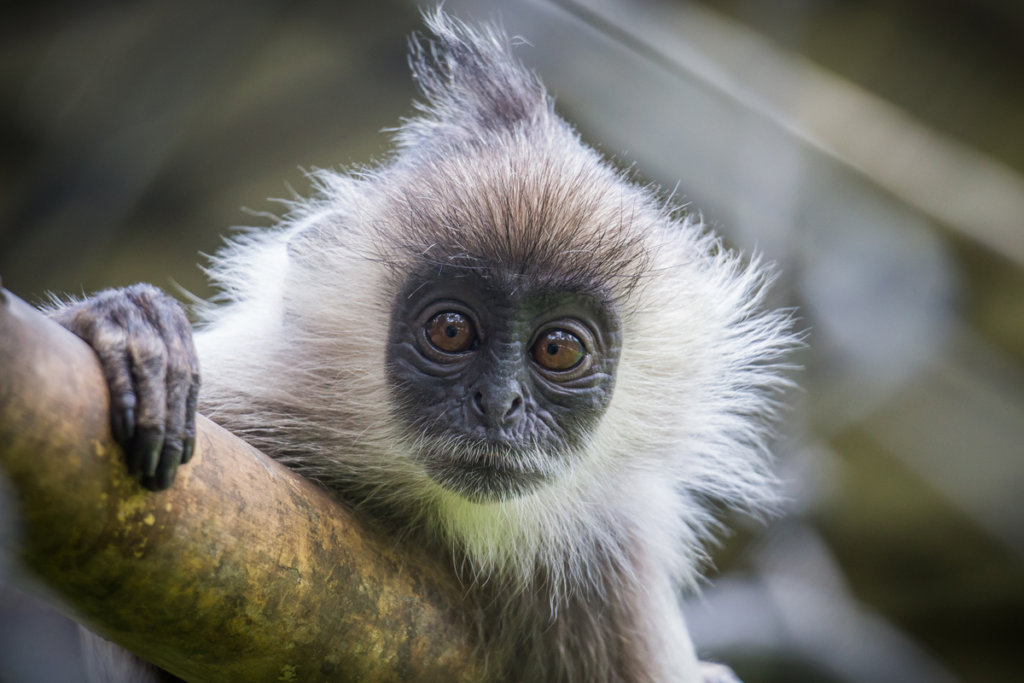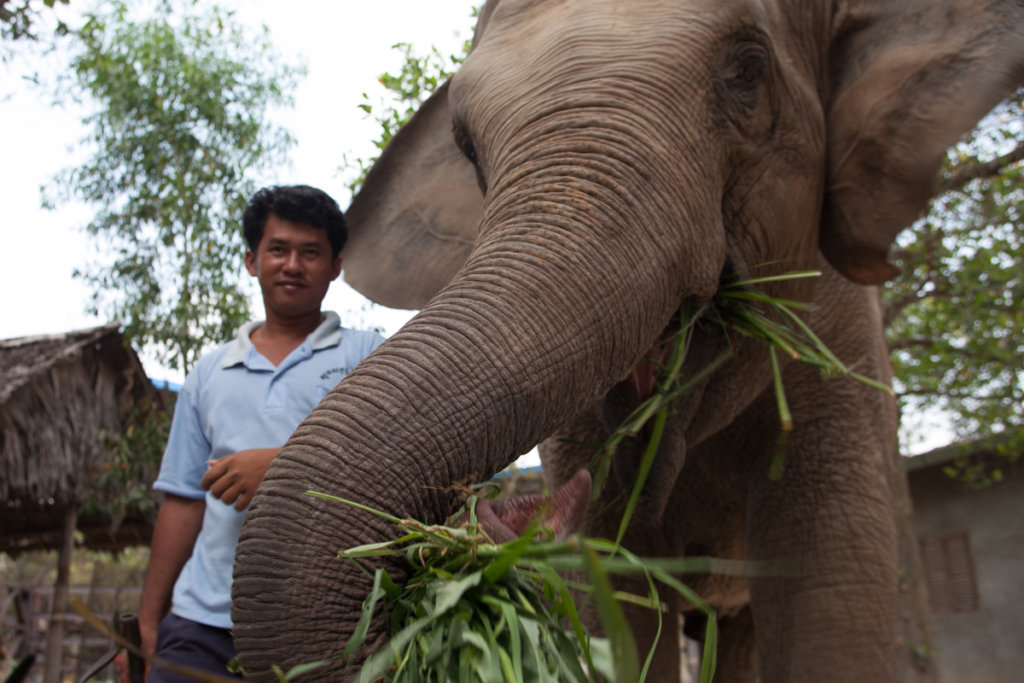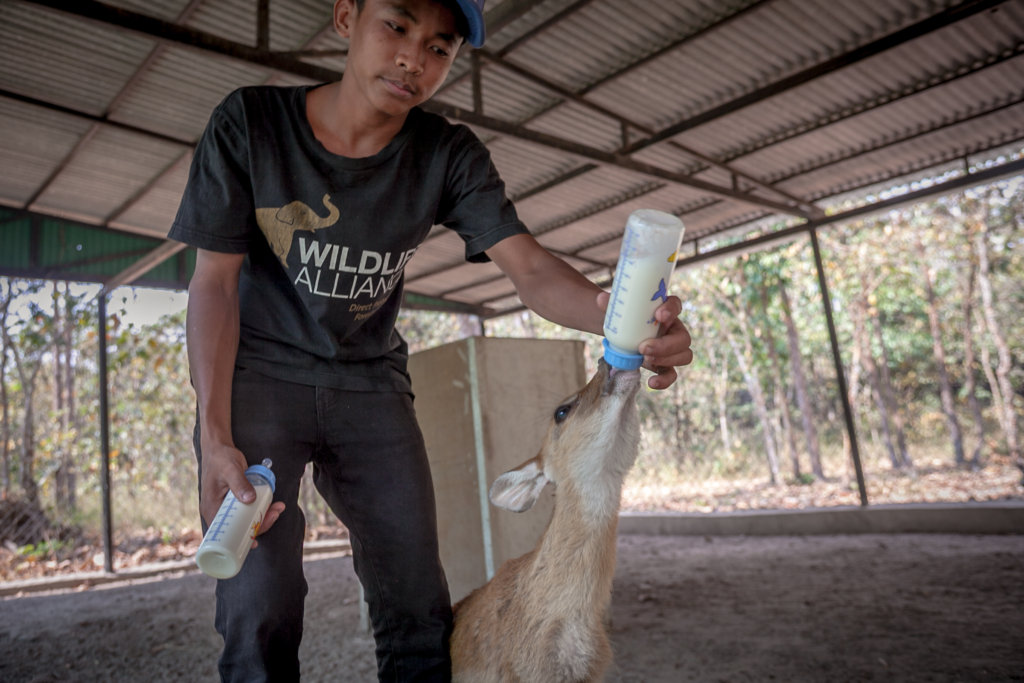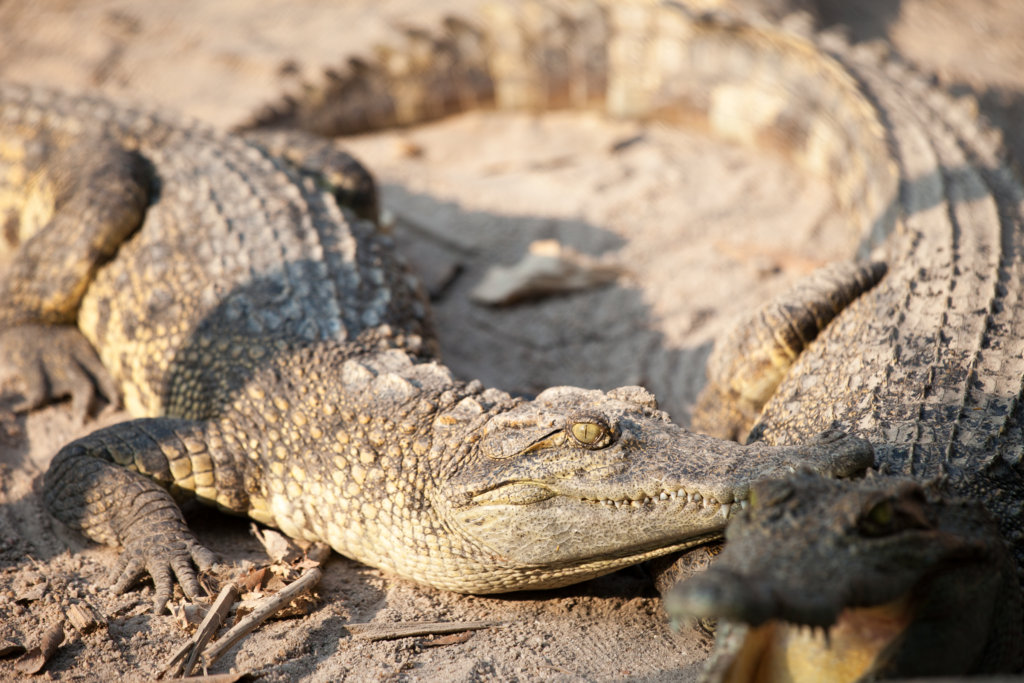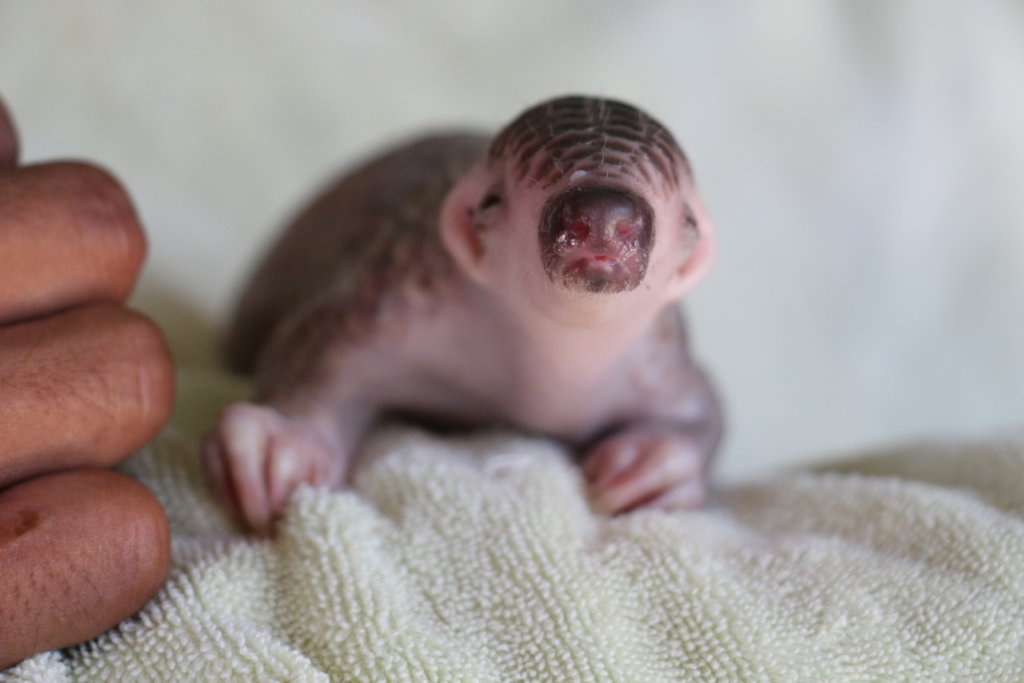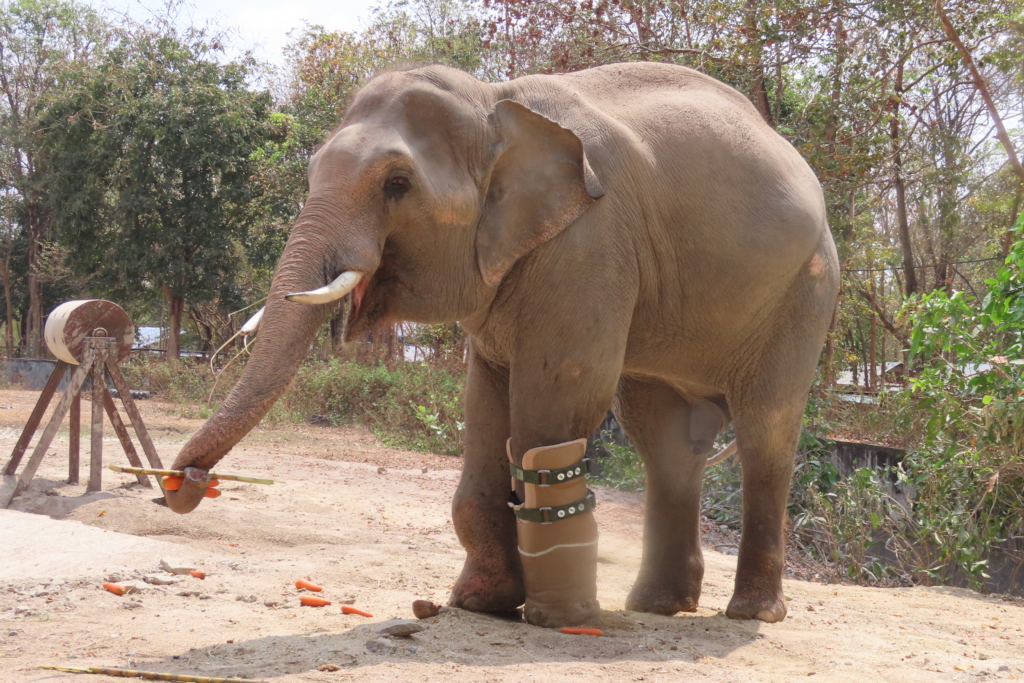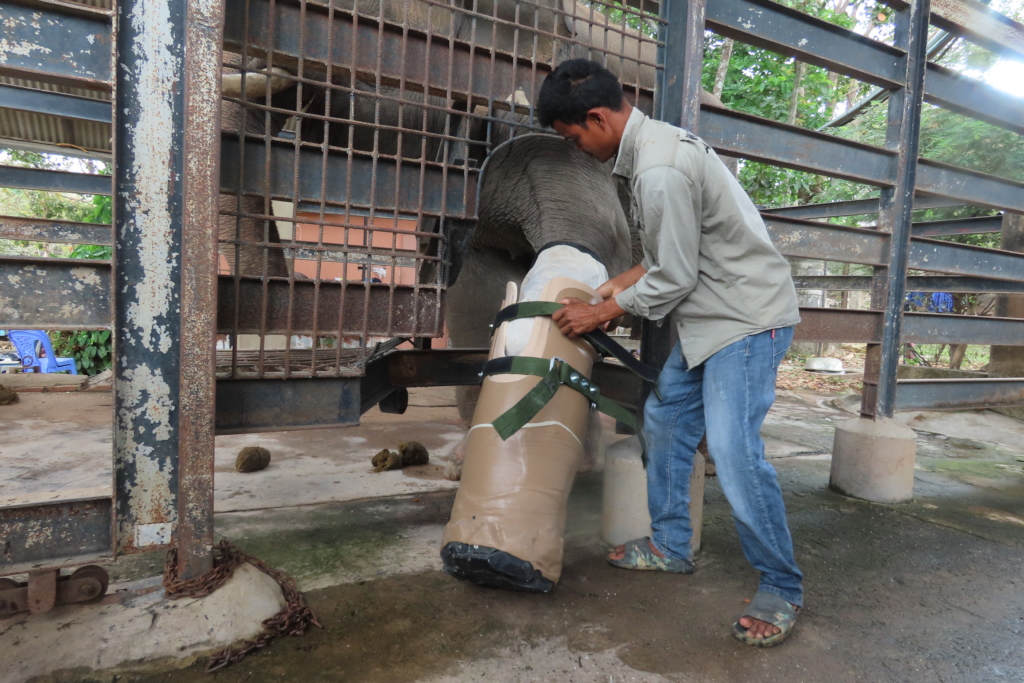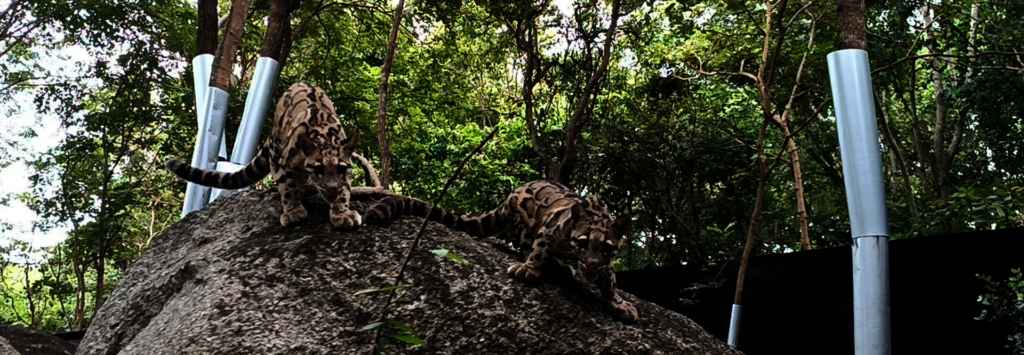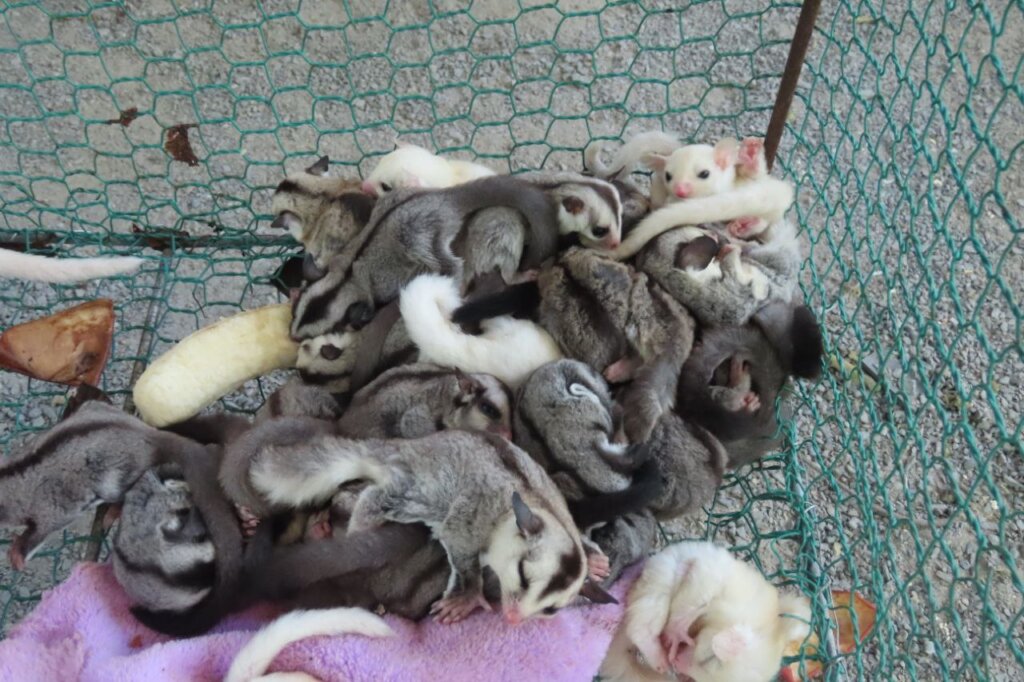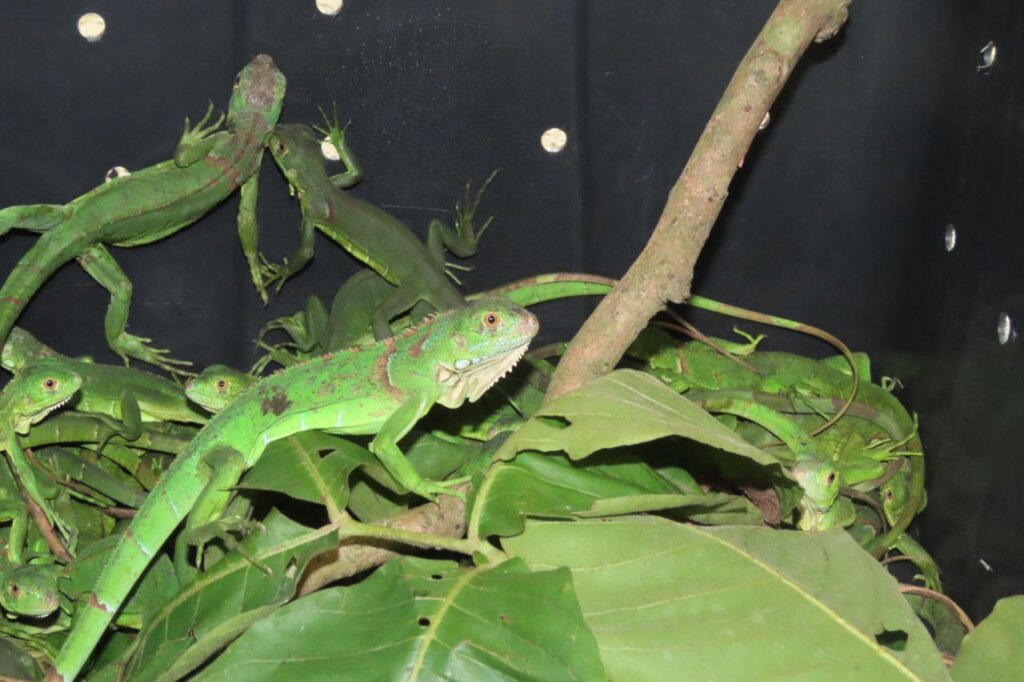
Our Care for Rescued Wildlife program pledges lifelong support for rescued wildlife if needed, but our goal whenever possible is to release healthy animals back into their native forest habitat. How does this all happen?


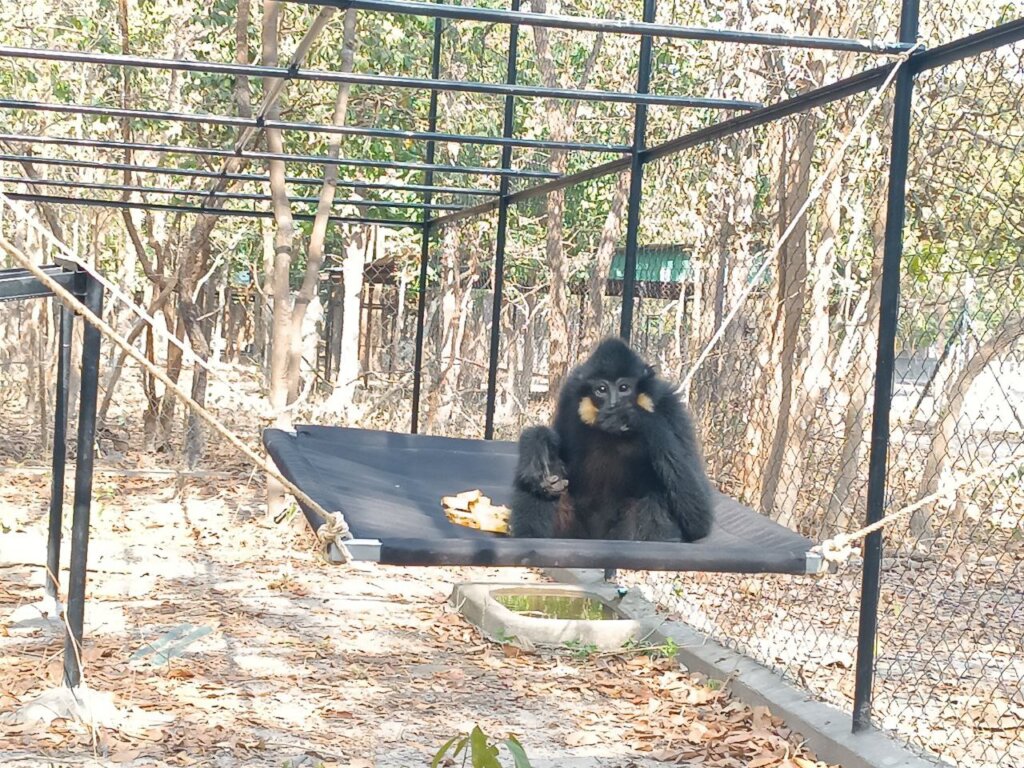
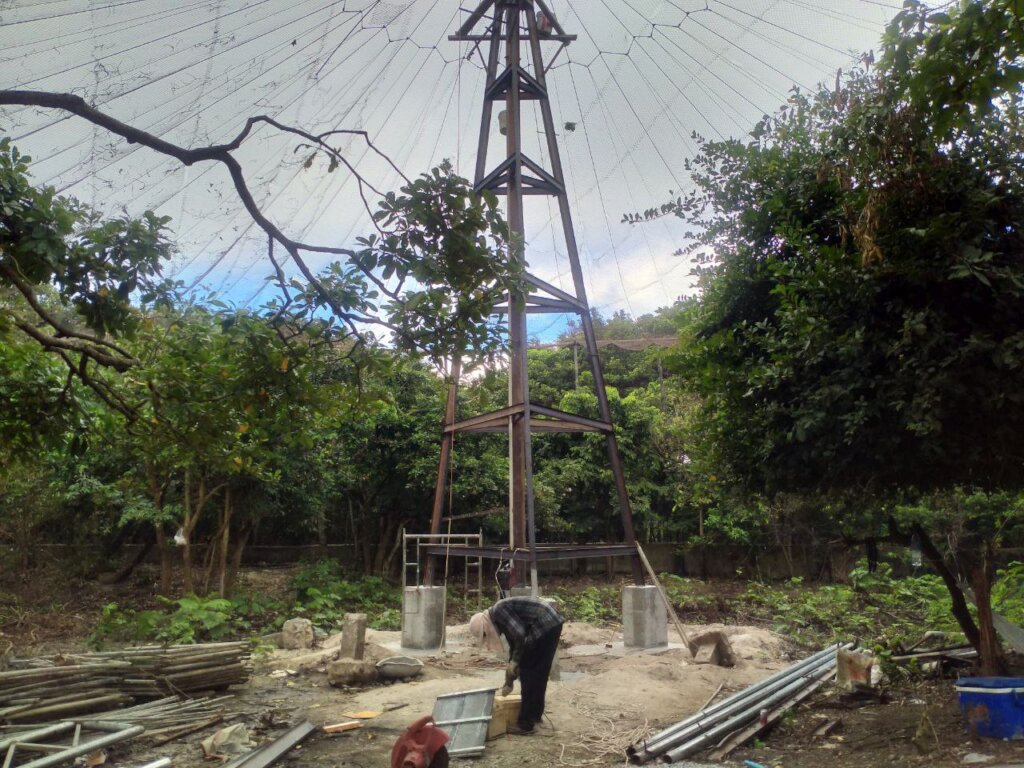
The key infrastructure to make this possible is at our remote Wildlife Rehabilitation Station in the Cardamom Mountains. There, we bring animals after their rescue and rehabilitation in preparation for release, and continually monitor their health. In the first quarter of the year, Wildlife Rescue director Nick Marx monitored the previously released porcupines, parakeets, and hill mynahs - all were staying nearby, but no longer dependent on food. The previously released greater coucal has not been seen in months. He was a capable bird, we could do no more for him and we have to hope he has survived and moved on to another site.
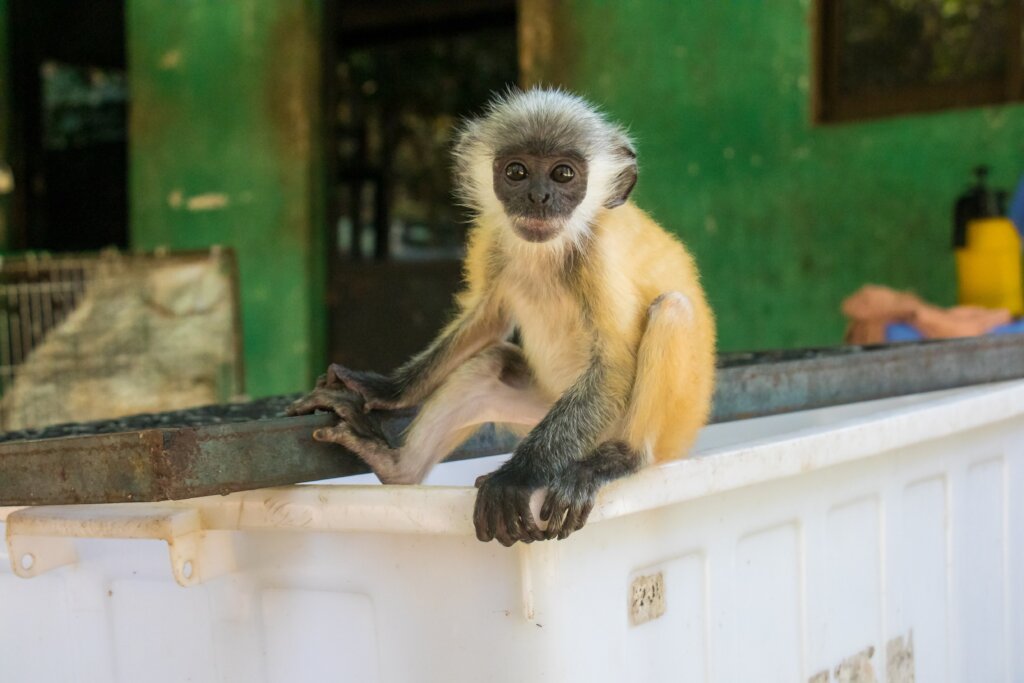
In January we took five more injured porcupines that could not be released immediately to the Rehabilitation Station. They recovered and were soon ready to go. The Wildlife Rapid Rescue Team confiscated 22 long-tailed macaques from traders in February. Most of these were too young for release but we took them to the Rehabilitation Station where they will mature before release. Although they came from the wild and are still very frightened of people, we must hope they do not become too accustomed to human visitors during their time with us.
Towards the end of February, Wildlife Alliance’s veterinarian, wildlife biologist, and Wildlife Rescue Director Nick Marx traveled to fit radio collars on our pair of binturongs that we took down almost exactly one year ago. They had a baby last year, and we hoped to release the family as a group, as the youngster is still only around six months old.
The Wildlife Rehabilitation Station is ideal for releasing animals. The forest is alive with birds and a tiny sunbird couple has built a nest in the small clump of brush besides the WRS camp, a long beak poking out of the untidy cluster indicating someone was home. It is a tranquil environment - protected from hunting and habitat encroachment, and monitored continually by a group of wildlife specialists.
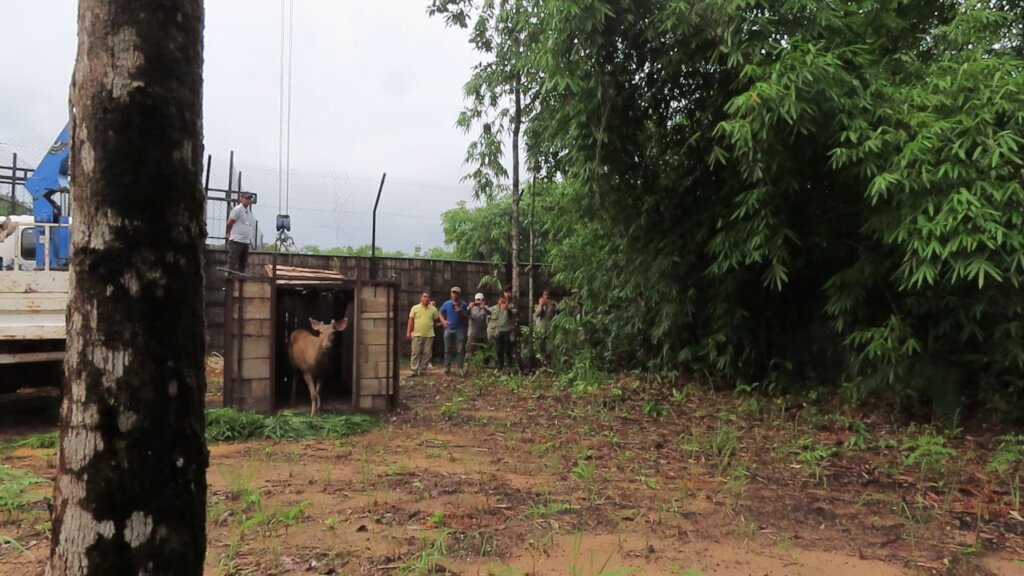
We fitted the collars to the “bintys” and had returned to the daily grind “up country” when Mr. Goeurn, one of our staff members at WRS, notified our wildlife biologist that more baby binturongs had been born. This seemed to be a little soon after the first, but we could do nothing about it. The binturong release had been delayed for too long already, so on March 7th our staff traveled to Chi Phat, just before the start of the heavy seasonal rains. The skies opened up and the truck got stuck when we left the main road. Outside of the rehabilitation enclosure, we set up two camera traps graciously lent to us from the Wildlife Conservation Society, opened the cage slide door and returned to camp to cook an evening meal.
The next morning the male and older baby were sitting on branches just beside the enclosure, the female was in her nesting barrel with her new babies. A second check on the binturongs during the day revealed that the mother had left the enclosure. By nightfall she had not returned. I was worried about the new infants, only around three weeks old, but we did not interfere. The following morning our worries were over. Mother had returned to care for her babies.
We had fitted the binturongs with radio collars to track their health and whereabouts. The collars we fitted give us two options for tracking the animals: One is regular VHF monitoring using an antenna to follow the signal. The second is by GSM, whereby the binturongs’ positions are downloaded and sent to us by email each day. The idea is not necessarily to see the animals firsthand – this is usually impossible in dense forest – but to know they are moving around and coping.
The way points we have received reveal that the female has not gone far from the enclosure and her new babies. The male has been moving around a little further afield. We have not seen the first born youngster as our camera traps are not functioning properly. However he may well be returning at night to eat the food that we are putting inside the cage for them all, some of which is disappearing. There have been some heavy downpours and the rainy season is just starting in Koh Kong, but binturongs don’t seem to care rain, preferring to remain in the tree tops whatever the weather rather than take shelter. It is an ideal time for release. There is an abundance of wild forest fruit available at present so there is every chance that our captive born bintys, mother, older baby and his father, who has now circled around in a radius of around 1km and returned close to the enclosure, will be fine.
We have shipped a new batch of camera traps and memory cards from the United States to improve our ability to monitor the released wild animals. Between camera traps, radio collaring, visual observation, and other assessments, we will be able to ensure the best possible life for all the animals we have rescued, cared for, rehabilitated, and released.


Links:

Dear Friends,
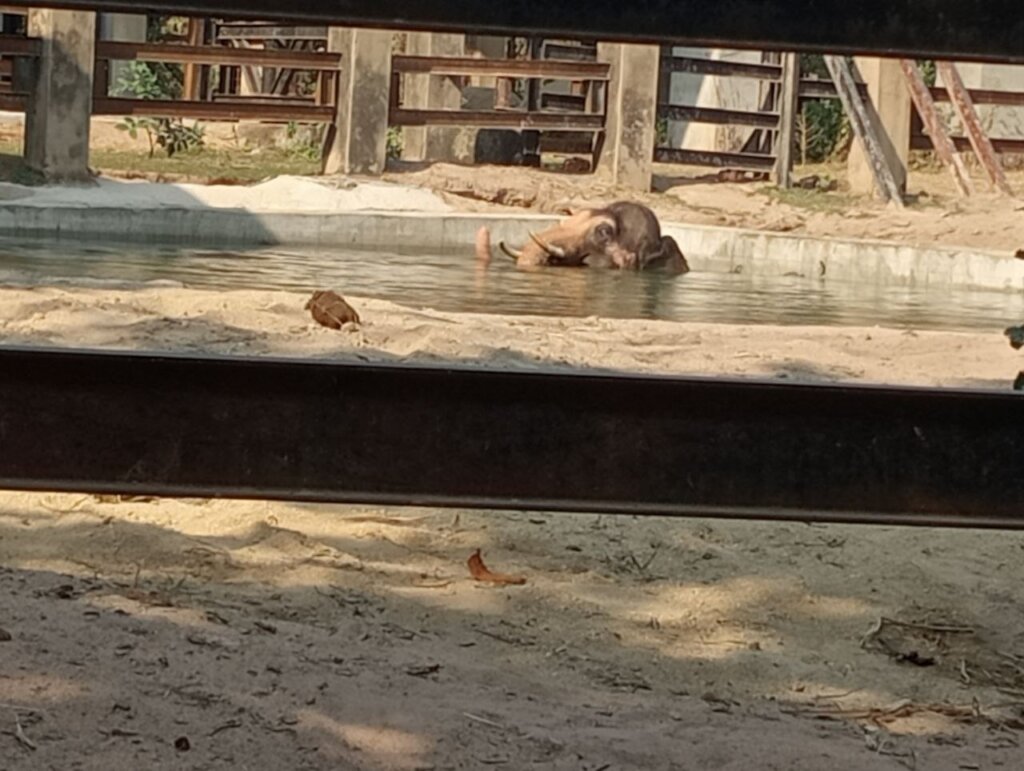
In an unexpected tragedy, Sambo the elephant passed away after a protracted illness from complications following a routine veterinary procedure.
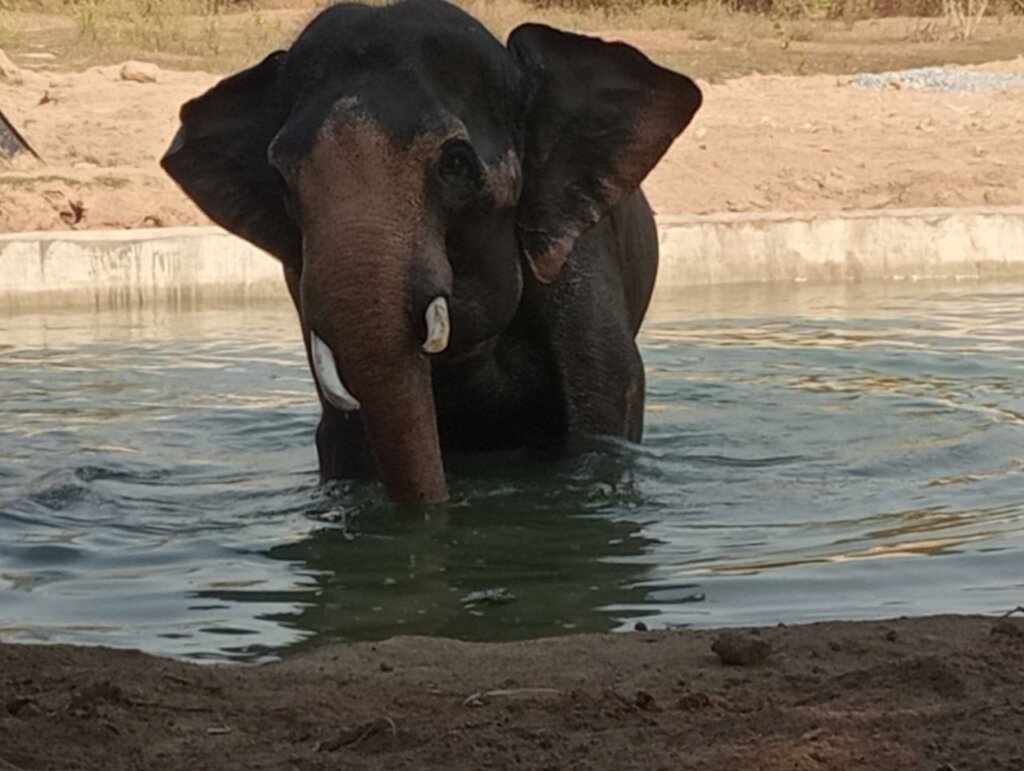
Sambo was saved from a certain death sentence late last year after he killed several people in the village where he lived as a domesticated elephant. The enraged bull elephant was terrorizing a village in Cambodia’s Kompong Speu province and was coming into dangerous conflict with fearful villagers.
Had the situation persisted, Sambo would have been killed without doubt. However, thanks to the efforts of the Cambodian government’s Forestry Administration and Wildlife Alliance, Sambo was captured and transported to the Phnom Tamao Wildlife Rescue Center, a Forestry Administration-run facility that cares for rescued animals. Thanks to your generosity, Wildlife Alliance was able to take the lead in rescuing Sambo, gathering the necessary equipment and overseeing the operation to move the dangerous elephant to a new home.
Saving Sambo from a very dangerous situation that likely would have resulted in both his death and the death of more Cambodian villagers in December was a tremendous collaborative effort.
Unfortunately, the ordeal affected Sambo dramatically and he was unable to eat and get the necessary nutrients. He was eventually convinced to consume fruit laden with antibiotics, and his appetite returned. He seemed well on his way to recovery, but a routine intervention proved too much for Sambo.
He died in February in Forestry Administration care at the rescue center. All of us at Wildlife Alliance are heartbroken by the news.
Consider honoring Sambo by following the progress of other elephants and wildlife at Phnom Tamao Rescue Center. We are grateful for your support, which ensured Sambo spent the last few months of his life cared for and loved.
Thanks,
Suwanna Gauntlett

Dear Friends,
I’m pleased to update you on the status of Sambo, the “rogue elephant” whom Wildlife Alliance has successfully rescued and brought to Phnom Tamao Wildlife Rescue Center, thanks to the support of generous donors like you.
Sambo’s safe capture on December 15th was only the beginning of the challenge. The rescue and transport on Christmas Day 2010 was an ordeal, but despite great technical obstacles, Sambo was sedated, guided into a purpose-built cage, and lifted by crane onto a flatbed truck - in the middle of a rice paddy! Our Chief Communications Officer, John Maloy, documented the entire rescue and transport in photography and narrative for Wildlife Alliance’s field blog. I invite you to read his documentation of the eventful evening on our website.
Sambo is a full-grown, 50-year old male elephant standing more than three meters tall and weighing five tons. Since he is a known killer who was reportedly mistreated in captivity, improving his demeanor and behavior will take years. But we are already seeing positive first steps. The Phnom Penh Post reports on January 3, 2011 that “Sambo’s health has improved, and his temper and stress have decreased in captivity.” According to veterinarian Nhim Ty, “I am very pleased that Sambo has now become a kind and good elephant again, and his stress or temper now have been released from his mind.”
According to Wildlife Alliance’s Wildlife Rescue Director - Nick Marx, Sambo is comfortable in his temporary enclosure at Phnom Tamao. He will need a long-term dedicated enclosure, but it will be cheaper to construct a new enclosure for the 3 females behind our existing elephant enclosures. Building these additional enclosures and continuing to work with Sambo to ensure his happiness and wellbeing are our next steps.
But as you are aware this will be an ongoing story and therefore we encourage you follow Wildlife Alliance’s field blog, Twitter feed @wildliferescue, and Facebook page for the latest news on Sambo, Chhouk, the other rescued elephants under our care, and all our programs in forest and wildlife protection.
Please feel free to be in touch with me if you have any questions or comments. Thank you once again for your generous support!
Sincerely,
Juliane Diamond


Links:

Dear Friends,
On December 8th we told you about Sambo, an Asian bull elephant that escaped captivity and turned violent. Since then Wildlife Alliance has been forging ahead to subdue, rescue and prepare a new home for the elephant before he was injured or harmed anyone else.
I wanted to give you a quick update on our progress and send a thank you to everyone who has recently donated toward our Help Save Victimized Cambodian Wildlife program.
Earlier this month Sambo killed his owner and then fled into the forest, only to return to devour rice from fields that were nearly ready for harvesting. His proximity to the village and the threat to crops put him on a collision course with terrified local residents.
Action was taken last week to prevent further harm in the tense situation when Wildlife Alliance and the Elephants Livelihood Initiative Environment (ELIE) assisted the Cambodian Forestry Administration in subduing the elephant. Sambo has been calmed and is now confined to a rice field until arrangements can be made to transport him to a more permanent home.
For the last week, elephant keepers from ELIE have been working to keep Sambo calm until he is moved to the Phnom Tamao Wildlife Rescue Center. Located outside the capital of Phnom Penh, Phnom Tamao is home to hundreds of wild animals rescued from the wildlife trade or too domesticated to release into the wild. The government-run center, which receives support from Wildlife Alliance, is already home to five Asian elephants.
In preparation for that move, a firm in Phnom Penh is constructing a large steel cage that will be used to transport Sambo by truck from his current location to Phnom Tamao. Crews are already busy reinforcing the barriers of an elephant enclosure at the rescue center that will serve as Sambo’s home.
This week’s transport operation may prove to be a tricky one depending on how cooperative Sambo is.
Sambo is currently in musth—a periodic condition in bull elephants that is often accompanied by highly aggressive behavior. Musth periods are not well understood, but it is hoped that when Sambo comes through the other end of this cycle that he will be a far more docile creature.
Wildlife Alliance’s Care for Rescued Wildlife manager Nick Marx is overseeing Sambo’s move to his future home:
“We will walk him into the cage if we can and then lift the cage onto the truck,” Nick said. “But if we cannot do this then we will have to sedate him and lift him into the cage—this is what I’m worried about.”
At Phnom Tamao, it is hoped that Sambo’s proximity to the other elephants will have a calming effect.
With a new home just in time for the New Year, we are hopeful he will begin 2011 happily under Wildlife Alliance’s care.
We will make sure to keep you up to date on the developments with Sambo as he makes his move and adjusts to life at Phnom Tamao. In the meantime though please follow us on Twitter, Facebook and keep an eye on our blog for timely information regarding this and other critical events.
Thank you again for your much needed support. We at Wildlife Alliance wish you the best for the Holiday Season and the New Year.
Sincerely,
Juliane Diamond
Dear Friends,
I hope you are having a lovely Holiday Season.
I wanted to tell you of an urgent situation in which we must act immediately to save the life of an elephant and protect communities.
We were just informed of an older bull elephant in Kompong Speu Province, Cambodia, that has escaped from captivity and turned violent. It has killed two people and is roaming the countryside. Villagers are increasingly inclined to kill the elephant to protect their families.
The Cambodian Forestry Administration has asked us to rescue the elephant and bring it to Phnom Tamao Wildlife Rescue Center, where it would come under our Care for Rescued Wildlife program headed by Nick Marx. This amounts to a race against the clock to save the life of the elephant and protect the local community.
We wanted to alert you to this emergency situation. You have helped to make our Care for Rescued Wildlife program a great success by donating to Help Save Victimized Cambodian Wildlife through Global Giving. We sincerely appreciate your involvement and hope you enjoy hearing about our on-the-ground response to crises like this one.
We understand that taking on the care of another elephant is a substantial financial burden. We will need to build a new enclosure, increase our feeding budget, and provide veterinary care over the course of the elephant’s life -- but we feel that the need to protect the elephant and the community is just too urgent.
To keep up with this story, please follow us on Twitter, Facebook, or our blog. If you are interested in helping us cover the costs of this elephant, and the other rescued animals under our care, please visit Global Giving’s Help Save Victimized Cambodian Wildlife page.
Please feel free to contact me at diamond@wildlifealliance.org with any questions or comments.
Warmest regards,
Juliane Diamond
Project Reports on GlobalGiving are posted directly to globalgiving.org by Project Leaders as they are completed, generally every 3-4 months. To protect the integrity of these documents, GlobalGiving does not alter them; therefore you may find some language or formatting issues.
If you donate to this project or have donated to this project, you will get an e-mail when this project posts a report. You can also subscribe for reports via e-mail without donating or by subscribing to this project's RSS feed.