By CARE | Project organization
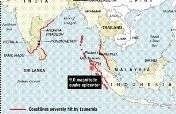
In Thailand, where CARE has worked since 1979, the tsunami claimed the lives of at least 5,000 people and affected more than 35,000 people across three provinces (Phang Nga, Krabie and Ranong). CARE has built permanent houses; helped vulnerable groups access basic health and education services; established 126 revolving loan funds, which are enabling some 34,075 people to access funds to repair or replace boats, fishing supplies, homes, etc.; provided marketing and business training to occupational groups; restored coral reefs and mangrove forests; and helped communities improve emergency preparedness.
CARE has organized a national conference on disaster risk management to be held in January 2007 for 200 participants representing 40 agencies – including community-level, government and private entities – to promote greater coordination of emergency preparedness and response activities in Thailand. We are also working with 30 villages to expand income opportunities through skills training to ensure that women especially have the means to support themselves. A recent survey of the districts where CARE operates concluded that 24 percent of households are not working, compared to 17 percent prior to the tsunami. Moreover, the number of households engaged in fishing since the tsunami has decreased from 19 to 14 percent. To help families find new ways to support themselves, CARE is setting up community occupational groups and equipping them with marketing and business training to establish/strengthen businesses related to fishing, batik, pillow making, baking, etc. Women comprise the majority of the more than 300 participants trained to date.
CARE is also advocating for the rights of vulnerable, marginalized groups such as undocumented migrant workers and unrecognized minority groups like the Moken (sea gypsies). Without the necessary documentation to prove their nationality and ownership of assets, these vulnerable groups are denied access to government compensation and services available to other tsunami survivors. Having lost their homes and sources of income, these stateless groups are in despair and experiencing increased signs of stress and chronic exhaustion. In response, CARE will train health workers and volunteers in the referral, diagnosis, treatment and prevention of mental health disorders, and organize social activities for affected communities.
Read the complete report below for more information about CARE's response to the tsunami in Thailand and other affected countries.
By CARE | Update
By CARE |
Project reports on GlobalGiving are posted directly to globalgiving.org by Project Leaders as they are completed, generally every 3-4 months. To protect the integrity of these documents, GlobalGiving does not alter them; therefore you may find some language or formatting issues.
If you donate to this project or have donated to this project, you can receive an email when this project posts a report. You can also subscribe for reports without donating.