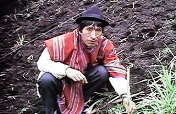
Through community education the program will support 625 indigenous families in 25 communities in the rural highlands to improve agricultural production, health, and strengthen community groups.
Community members have few economic resources, and due to their remoteness have little access to education and health services. Most indigenous families survive on small, eroding plots of land with poor soil, which yield very little. To satisfy basic needs, men and older children migrate seasonally to the cities for work, leaving women to assume additional responsibilities in the family and community.
World Neighbors provides training and support to a network of DEIBCH community educators, who promote sustainable agriculture to increase food production, as well as practices to improve community and reproductive health.
The program will provide practical training to community educators in health, sustainable agriculture, natural resource management, and community capacity building. Local community organizations learn to manage and sustain the development process.
This project has provided additional documentation in a Microsoft Word file (projdoc.doc).






