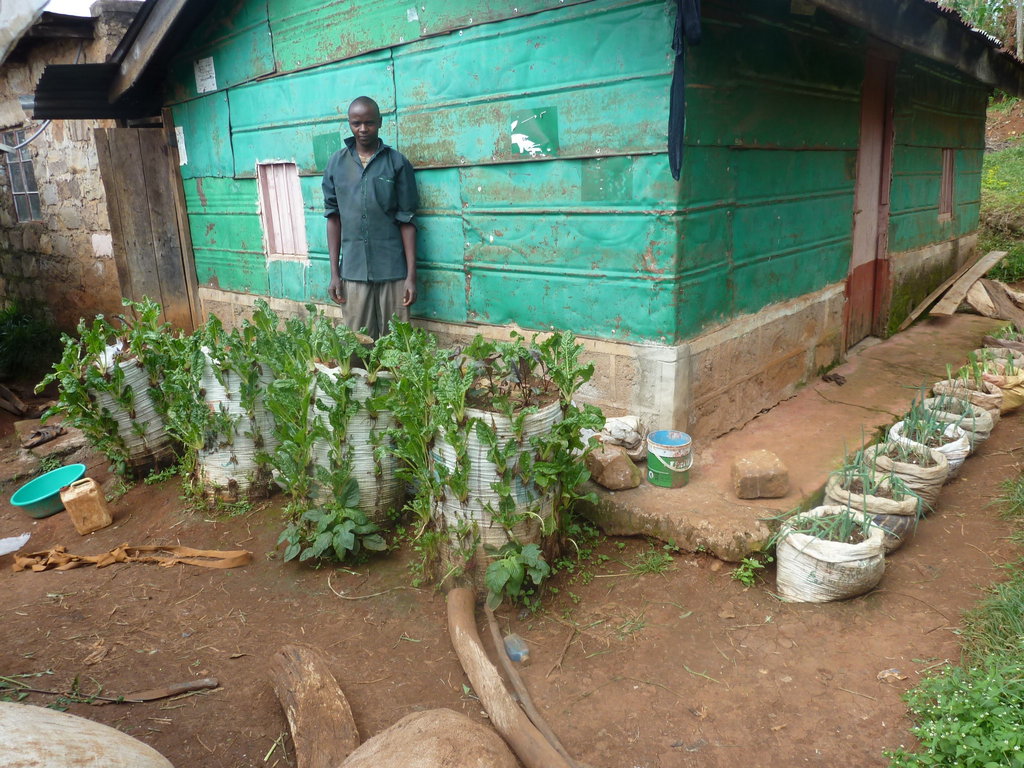
Beneficiaries of this project will largely be tea farmers who have for a long time depended on the cash crop for their sustenance. We intend to build their capacity in managing farm resources and emphasizing on composting as a basic component to build long-term soil fertility and establish rich family kitchen gardens for each participating household. This will go along way to improving their food/nutrition security as well as raise the incomes by growing own food as opposed to market reliance
Farmers in this area have for a long time practised mono cropping and over relying on tea as their cash crop at the expense of food crops. Those trying any other kind of farming are poorly equipped and use non sustainable practices responsible for loss of soil fertility, environmental degradation and food insecurity.
This project approach proposes to use the farm resource management for soil fertility building and designed family gardening. It will impart knowledge and skills to the target beneficiaries, singling out composting and growing own food in family units as the means to achieving its goal. Using the compost in the family kitchen gardens relate the two best practices. It also calls for a careful integration of the farm resources, encourages re-use and recycling thus diversifying the benefits
It is expected that every household learns how to establish and maintain a Kitchen garden. This garden will contain skillfully mixed and diverse crops including indigenous vegetables, cereals and root crops designed to provide a balanced diet to the families. This will solve the problem of food and nutrition insecurity as well as improving soil conditions as a result of compost use. 1, 000 farmers will be trained and after implementation their families will also be positively affected
This project has provided additional documentation in a PDF file (projdoc.pdf).