Dear Global Giving donors and valued supporters of the “My Living Positively” project to support the well being of children living with HIV in South Africa.
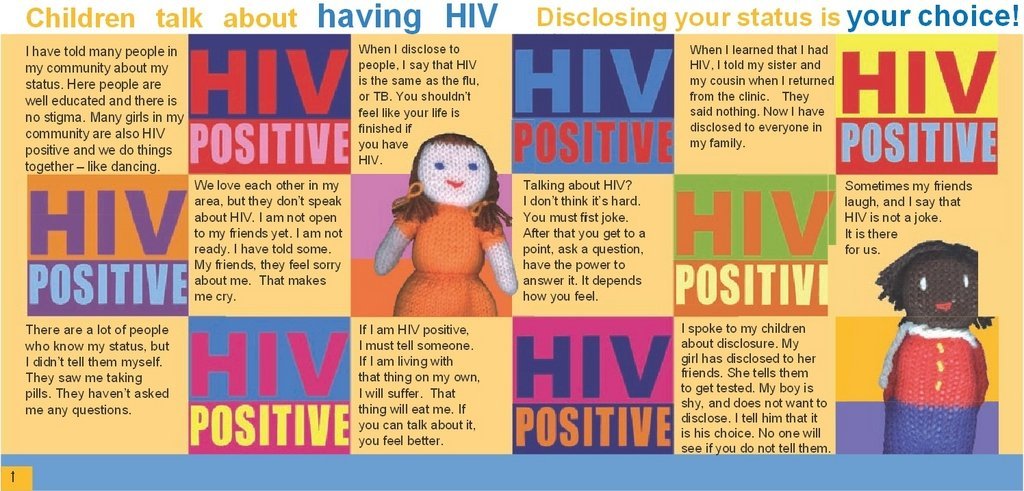
We would like to showcase one of our Yezingane Network member organizations work involving the “My Living Positively” treatment booklet for children. We would like to thank you again for supporting this project and look forward to your continued support.
By: Shanaaz Kapery Randeria
Wits Reproductive Health & HIV Institute
I have been using the ‘My Living positively’ Handbook for many years with adolescents and younger children. Adolescent open weekly support groups are run on Thursdays and a pre-teen support group is now running very successfully on Tuesdays at the facility I am employed at.
The adolescent weekly support group is available to HIV positive clinic patients (13-21 years old) who have been disclosed to.
The pre-adolescent (9-12 years old) weekly support groups are available to all pre-adolescent HIV positive patients regardless of their knowledge of their HIV status.
The psychosocial programs that I develop and implement are:
- Rights-based
- Developmentally informed
- Child/ youth-friendly
The rights that the pre-adolescent group members are most often aware of are the rights to:
- Basic needs
- Education
- Leisure and play
- Clean environment
- Good health care and services
The accompanying responsibilities of individuals to maximize the benefit from these rights are always discussed.
An area of concern, especially with adolescents, is adherence to ARV’s. Developmentally, adolescents are extremely vulnerable to default from their ARV treatment. During the adolescent stage important developmental tasks include: formation of an identity, including a sexual identity, identifying with a peer group, emotional detachment from significant adults, conceptualizing their role in an adult world which includes a career and a family of their own. Adolescence is the stage of sexual debut for most. In addition to being on the threshold of adulthood, which brings with it various adult roles and responsibilities to be fulfilled, adolescents have to accept that their sexuality has come under attack as a result of being HIV positive.
The role of culture in HIV transmission is being acknowledged. The influence of culture is an important and pervasive aspect in the lives of Africans (Hodgson, 1999). Health and ideas about disease and illness are intricately interwoven with our culture. It stands to reason that in order to address HIV/AIDS challenges, that culture should be recognized as an important component of interventions.
The ‘My Living Positively’ handbook lends itself to a lot of creative uses with children and adolescents.
Specific instances where I have utilized it to stimulate discussion includes
- ‘What happens to my body without help?’ (pp. 22-23)
The adolescent group had to find their own metaphors to depict the relationship between
their health, HIV and ARV’s.
Metaphors by the adolescents:
ARV My health
Airtime Cell phone can be used to make calls
Rain and sunshine Allows flowers to grow
Petrol Allows a car to drive
Food Gives the body and brain energy
Policeman Catching a robber
The pre-adolescent discussion on the role of culture and adherence was introduced with the help of ‘My Living Positively’ handbook (p. 38): the role of traditional healers. Two languages are commonly spoken by support group members viz. Sotho and Zulu. The Sotho word for traditional healer is ‘ngaka’ and the Zulu word is ‘sangoma’. The value of culture in our daily lives and for the functioning of our family was discussed. In addition, the importance of adhering to medication, and not mixing it with traditional medication was discussed. The effects of mixing western and traditional medication in particular were addressed including the effects of doing so.
The pre-adolescent weekly support group is open to all patients at the clinic regardless of whether they are disclosed to or not. HIV and ARV’s are therefore not specifically discussed. In a plight to ‘normalize’ living with HIV as a chronic long-term condition (similar to diabetes for instance), HIV is discussed as a one of many organisms that can make one susceptible to illnesses like TB.
The responsibility of adhering to medication is one of the responsibilities that the group acknowledges as important to give validity to the right to good basic health care. Recognizing the medication children take is one of the ways in which they can gain a sense of pride in themselves. This seemingly simple task, of recognizing medication, also imparts a sense of taking responsibility for ‘my health’. The range of children’s ARV’s will be displayed and each group member will identify those they take. Using Art therapy, they will draw their medication (p. 36) and we will then discuss healthy ‘positive’ living focusing on : healthy eating habits, rest, exercise, reducing stress and taking medication-these are 5 basic steps to staying healthy regardless of HIV status.
AIDS orphans are at a higher risk for adverse mental health outcomes, in particular anxiety depression and PTSD (Cluver et al, 2009). Loneliness is another feeling that HIV orphans and youth commonly experience (Davis, 1990). These adverse mental health conditions and feelings are sometimes self-imposed.
In African culture, it is unacceptable for a child/adolescent to challenge an adult. Children and adolescents are typically expected to be seen and not heard. The support group provides a safe and nurturing environment where children and adolescents’ right to be heard are encouraged and respected. Acknowledging feelings and safe and effective ways of expressing them are always practiced. It is also important that they recognize others’ feelings in order to navigate safe and effective communication with the significant adults in their lives. Children and sometimes adolescents as well do not necessarily have the appropriate vocabulary to state or even identify their feelings. Pictures or a list of feelings given to the group members (p. 31) are good for stimulating games and discussions about feelings. A game that is popular with the pre-adolescent group is for a member to demonstrate a facial expression of a feeling and the group has to correctly guess the feeling.
References:
Cluver, L., Gardner, F., Operario, D. (2009) ‘Poverty and Psychological Health among AIDS- orphaned children in Cape Town, South Africa AIDS care 21(6) pp. 732-741
Davis, D.B. (1990) ‘Loneliness in Children and Adolescents’ Comprehensive Paediatric Nursing vol 13 pp. 59-69
Hodgson, I.J. (1999) ‘Myth and HIV: The role of cultural narrative in the construction of HIV/AIDS’ National HIV Nurses Conference June 1999 Available from: http://www.brad.ac.uk/staff/ijhodgson/summaries/Publications/culture_myth_hiv.htm (Accessed: 24 July 2012)

Links:

The My Living Positively booklets have been in high demand recently as organisations see others using the booklets. The information and guidance given in both the adult and child versions have been shown to be invaluable in communicating to children how to live with HIV positively as well as how adults can effectively support children living with HIV.
The books include information such as what is HIV, how to live with HIV, understanding ones changes in the body from HIV, understanding medicines (especially Antiretrovirals), HIV and discrimination, how best for adults to speak to children of different ages about HIV, and much more. Throughout the book there are opportunities to creatively participate with the educational material including drawing and colouring in.
Yezingane Network is a civil society network of networks made up of organisations working to address the impact of HIV and AIDS on children, families and communities. The Network represents the Children’s Sector on the South African National AIDS Council (SANAC), and is one of nineteen Sectors that constitute the Council.
(Click to see SANAC – Children’s sector website and Yezingane Network Facebook and Website).
Recently we held a membership recruitment campaign and many new Yezingane Network members joined, and each new member (now a total of 110 new members at the time of writing this article) has received copies of the My Living Positively booklets as well as other Yezingane Network Publications. Additional grassroots level organisations have also received these valuable information resources. All Yezingane Network Provincial Representatives are currently receiving more My Living Positively to distribute to other grass root organisations. A total of 848 My Living Positively booklets and a total of 738 Helping Children with HIV booklets (a guide for adults) have been distributed between February and April 2012 in all languages.
At the moment these booklets are in three languages, namely, English, Zulu and Xhosa. We are currently planning (depending on funding received) to translate these books into Sesotho because of the expressed need for these booklets in the Limpopo Province.
These booklets are having a major impact in lives of children across South Africa and you the donor are to thank for your support in this project. It has been extremely encouraging to see the increased demand for the My Living Positively Booklets and to see the increased distribution across the country. Thank you for your support and we hope that we are able to continue to distribute these valuable publications across South Africa to children living with HIV/AIDS.
Links:
Compiled by Hema Somai (Children’s Rights Centre)
Best wishes to all our Friends for 2012! It has been a year of success and we look forward to increasing those achievements this year.
Children’s Rights Centre distributed 1076 My Living Positively Handbooks and the Helping Children Living with HIV booklets between October and November 2011 in English, isiZulu and isiXhosa languages. This is a significant achievement which confirms the value these books have for children living with HIV and AIDS.
A few copies were requested by the Southern African Clothing and Textile Workers' Union who distributed at a conference these at their ARV Programme for Pediatrics[j1] in Durban in the KwaZulu-Natal Province. Lesedi Educare requested 300 each of the Handbooks and Adult Guides in English in November 2011which they shared with children attending the Pelonomi Hospital’s Tswelopele HIV/AIDS Clinic in the Free State. In 2009/1010 this organisation ordered 1000 of the My Living Positively Handbooks for use in the same clinic. They reported that our books were welcomed by the doctors and children alike, therefore prompting the request for the second consignment.
We also shared 550 copies each of the books with eMpathy Trust, Southern Africa located in the province of KwaZulu-Natal, who used the books for information sharing. This province continues to have the highest HIV prevalence rate in South Africa and high levels of infant mortality. Linzi Rabinowitz from eMpathy Trust praised they My Living Positively Handbook by saying: “eMpathyTrust has mostly worked in schools, but more and more our work seems to be extending to home/health care workers in communities so your book is an invaluable resource! Many thanks”.
Three hundred and fifty copies of the books were distributed to the Desmond Tutu HIV Foundation located in Cape Town in the province of the Western Cape. This was the second time this organisation requested these books, having reported that “...the children loved them”.
Two hundred books were distributed to the Red Cross War Memorial Children's Hospital in Cape Town, Western Cape province. These books will be used for information sharing and distribution to the children living with HIV and AIDS.
Sinikithemba is the McCord Hospital’s HIV care programme, located in Durban in KwaZulu-Natal. One hundred copies of My Living Positively Handbooks and Guides were distributed for information sharing purposes and use by their pediatric clinic.
Sixty copies of the Handbook were shared with The National Association of Child Care Workers distribute for information sharing in November 2011.
Sixty copies were also shared with an orphanage located in the Limpopo Province by organisation Keep the Dream.
We hope that in the coming months to distribute our books to more organisations in all of the 9 provinces in South Africa, to ensure that children living with HIV and AIDS have their right to treatment, care and support fulfilled.
[j1]Conference?
Created by Hema Somai, Children’s Rights Centre (Global Giving Project Leader)
We are so excited to have finally reprinted 3 000 copies of our English My Living Positively Handbook! Thank you to all the individuals and organisations that gave so selflessly to this project to ensure that children living with HIV and AIDS would have a book they could call their own to help them understand what it means to be HIV-positive. We are also reprinting the English Adult Guide, Helping Children Living with HIV, which is a companion booklet for caregivers and adults living and working with children who are HIV positive, and hope to have these available before the end of October 2011.
Since reprinting the English Handbook in September, we have distributed copies to the Waterberg Welfare Society, a non-profit organization based in the province of Limpopo in South Africa. In Limpopo the HIV-prevalence rate among women attending antenatal clinics (15-49 years) in 2008 was 20.7%. The prevalence rate of children aged 2-14 years was 3.9% in 2008. Almost 1 out of every 5 children in Limpopo has lost one or both biological parents.
The Waterberg Welfare Society is running a HIV clinic in the area of Vaalwater, and wants to start a support group for paediatric HIV patients - which would likely be the first paediatric HIV support group in the Limpopo region. The Managing Director of the Organisation contacted us because she and the clinic counsellors believe that the ‘My Living Positively Handbook’ would be a great platform to start a support group for their Stepping Forward Program. This program is their community outreach program promoting education and testing for HIV. They also have an adult support group, but are eager to start one for children and adolescents. We are very enthusiastic to support and guide Waterberg Welfare Society as they embark on this new project and hope to report on their progress in the coming months. To read more about this organisation and the work they do visit http://www.waterbergwelfaresociety.org.za
Towards the end of September our organisation, Children’s Rights Centre in partnership with the National Department of Health, Child and Youth Directorate and the many other stakeholders who, because of their determination to address the challenges of HIV status disclosure to children, took the first steps to begin formulating National HIV and AIDS Disclosure Guidelines for Children. During 2010 we investigated the issue of HIV and AIDS disclosure, and one of the recommendations from this exercise was the pressing need for the development and implementation of a national framework on disclosure that could serve as a basic guideline for disclosure practice across a variety of contexts. Most commonly, paediatric disclosure issues are addressed as part of healthcare guidelines that deal broadly with treatment, care and support of children living with HIV. However, there is no definitive stand-alone resource dealing exclusively with the challenges of HIV-status disclosure to children of all ages, including adolescents, and which deals with different contexts and specialised considerations for example, disability, abuse, and so on.
We are glad to say that the meeting was a success, and the National Government Departments together with civil society organisations have paved a way forward in terms of the development of these guidelines. A task team has been set up comprising of National Department of Health, Children’s Rights Centre and Witswaterand Paediatric HIV Clinics.
Another exciting development has been the launch of the Clearinghouse for HIV and AIDS disclosure for children. This is a unique worldwide resource centre on HIV and AIDS disclosure materials, resources and information for parents, caregivers and health care professionals working with children around HIV and AIDS disclosure. The clearinghouse also contains examples of tools that illustrate useful practices, links to websites, and other resources that provide further information on issues related to HIV and AIDS disclosure. In addition to this wonderful new website, we have also launched the Disclosure mailing list, which allows us to communicate with people who are interested in learning more about what materials and resources are out there to support the disclosure process. To learn more about the Clearinghouse please visit http://www.hivaidsdisclosure.co.za.
Links:
By Hema Somai, Edited by Sunitha Eshwarlall
Towards the later part of 2011, we were approached by an organisation in Zambia, CIRDZ (The Centre for Infectious Disease and Research), which supports the Zambian Ministry of Health in their ARV scale up programme in four provinces of Zambia. They wanted to reprint My Living Positively Handbooks, to increase the involvement and awareness of HIV positive children in Zambia to HIV support groups and kids clinic rooms.
Zambia is reported to have one of the most devastating HIV and AIDS epidemics in the world (AVERT, 2010). It is reported that more than one in every seven adults in the country are living with HIV and AIDS. The epidemic has been particularly harsh on children in Zambia. In 2010 it was reported there were 120,000 children living with HIV and AIDS (AVERT, 2010). Furthermore, in 2009 it was estimated that of the 690,000 children that were orphaned, HIV and AIDS was responsible for contributing to more than half of that number. The rate of child sexual abuse increased rapidly over the recent years. In 2003 child rape was being fueled by the ‘virgin cure myth’ (which wrongfully claims that sex with a virgin can cure HIV and AIDS). The prevention of mother to child transmission programme began in 1999 and by the end of 2009 69% of expectant pregnant women living with HIV and AIDS were receiving treatment.
Understanding the situation of HIV and AIDS in Zambia and it’s particularly devastating effects on children and families made us very excited when the request came through. We were extremely eager at this prospect as well as knowing that the Handbook was seen as a valuable resource for children beyond South African borders. At the beginning of May 2011, we were informed by our colleagues in Zambia that they indeed printed 25 000 copies of the handbook! What an astounding accomplishment. The distribution of the handbooks began immediately following the printing to children attending HIV support groups. CIRDZ has also trained pediatric support workers on how to use the book themselves and how to show caregivers how to use the book as well. Having developed this relationship with CIRDZ has enabled us to understand that the HIV and AIDS epidemic is quite different in the various African countries across the continent however the similarities are stark in the way it has affected the lives of children and families.
References:
AVERT 2010. HIV and AIDS in Zambia. (http://www.avert.org/aids-zambia.htm)
Project Reports on GlobalGiving are posted directly to globalgiving.org by Project Leaders as they are completed, generally every 3-4 months. To protect the integrity of these documents, GlobalGiving does not alter them; therefore you may find some language or formatting issues.
If you donate to this project or have donated to this project, you will get an e-mail when this project posts a report. You can also subscribe for reports via e-mail without donating or by subscribing to this project's RSS feed.
Durban,
KwaZulu Natal,
South Africa
http://www.childrensrights.org.za
Mr
Durban,
KwaZulu-Natal
South Africa