Updates from the Field - Support 11500 kids out of child labour & poverty

Updates from the Field

Updates from the Field (or Project Reports) on GlobalGiving are posted directly to globalgiving.org by Project Leaders as they are completed, generally every 3-4 months. To protect the integrity of these documents, GlobalGiving does not alter them; therefore you may find some language or formatting issues.

Subscribe to "Updates from the Field" by E-Mail
Subscribe to "Updates from the Field" by RSS Feed

NISD Child Parliamentary Group

By Prakash Palande & Robert Beard - Dipali's Progress, February 01, 2010 11:05 AM

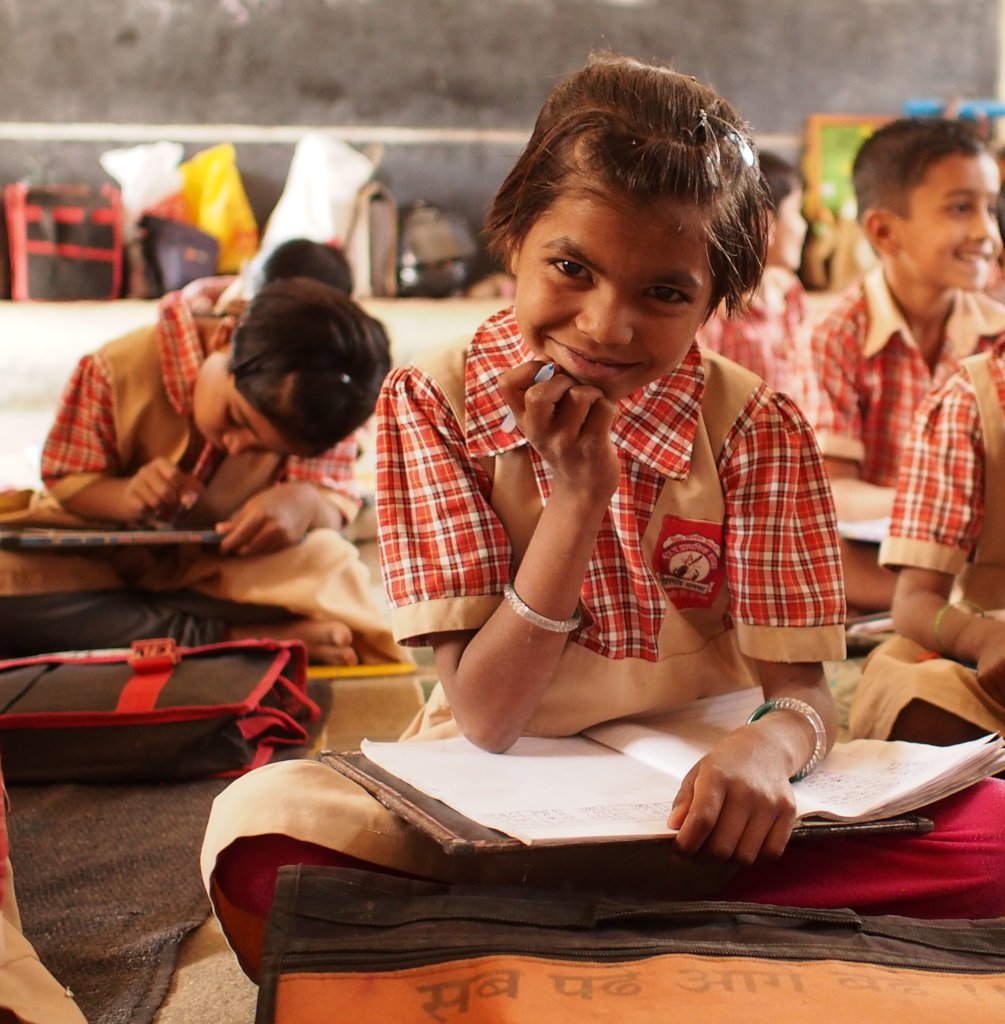
Deepali busy in her studiesPlaying with other gourp membersDeepali receives prize in Science-math Competition
During Diwali celebrations children from well off families in the city area build or purchase forts. They make these forts from mud and decorate them with artificial trees, people, the military, horses, animals and so many other things.

The members of Balpanchayat group decided to organize their own Fort Building Competition. Dipali was responsible for organizing this and around 24 children participated in making and decorating these holiday Diwali forts. At the end of the competition some small prizes were distributed amongst the children and Dipali was able to successfully complete her duties in organizing and seeing the event through to its end.

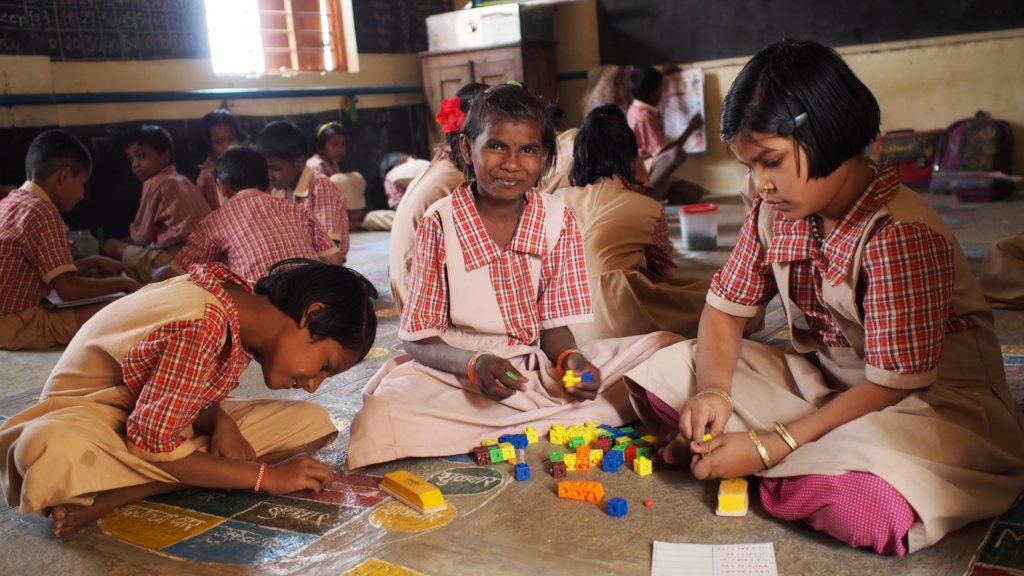
In other learning experience the parliamentary group members decided to organize a study of two different Dairy Co-operatives and learn about their work. They divided into two groups and each group visited one of two village dairies. They observed and tried to understand all the processes of milk collection, chilling etc. and to learn from that. Then both the groups came together and shared their learning with each other. This provided a good learning experience for the children.

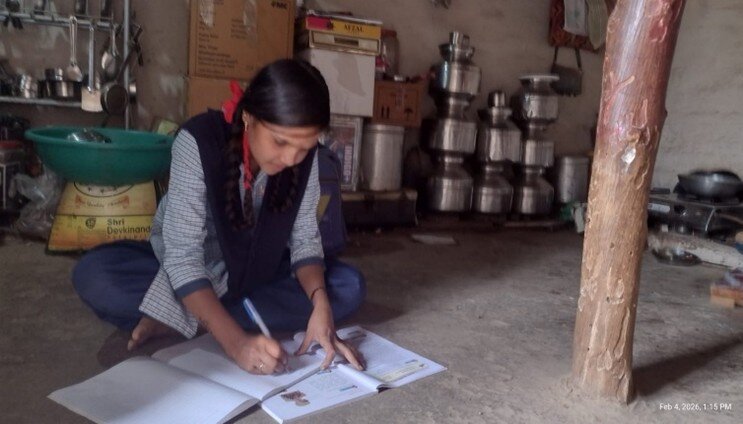
Dipali’ interest in her studies has increased as she has studied more regularly. She motivates other children to study and helps them if they have difficulties. In the half yearly examination she was very pleased to get a first class mark.

In December the block level Educational Department organized a ‘Math-Science Exhibition’ and asked all schools to participate in the competition. Dipali participated on behalf of her school. She prepared her exhibition on one of the local pulses and its nutritional value for the human body. Her project received first prize in the 5th to 7th standard at block level and became eligible to participate at the District level. At the district level of competition, where selected block level school projects were displayed, she did not get any prize but was awarded with a certificate. She reported that she was very happy to be able to learn a number of things from the other children’s projects. Her confidence and interest in science has now greatly increased.


Dipali and her Child Parliamentary group are active in social work. On January 10th the Government decided to give a polio vaccination to all eligible children under 5 years of age. Dipali’s group divided into two and visited all the houses with children below 5 year of age. In two days they visited every household and asked parents to bring their children for a ‘pulse polio dose’ explaining how this dose will help protect the child from polio. On the day of the ‘pulse polio dose’ vaccinations they also helped the Government personnel in keeping discipline and provided whatever help they could and this was much appreciated by all involved.

NISD organized a visit of members of the Child Parliamentary Groups to several villages. They visited ‘Anandwan Vidhyalaya, Nashik’ which is well known for preparing educational and other materials. The Child Parliamentary Group members learnt how to produce different materials from these teachers.

Dipali is now more confident and takes the lead in many different activities. She is a very active member of her Parliament and as a consequence is respected within her group as well as in the school. Her mother is very happy and proud to see Dipali’s progress and thanked NISD and Karuna Trust for their efforts in developing the children’s potential.

Pictures:

Want to support this project's continued work? give now

Was this report valuable...
vote divider
Loading...
Tell us why (your comments may be shared publicly).
Rules for Comments 
Comments

Dipali's story

By Steven Murdoch - Project Manager, October 08, 2009 11:45 AM

Dipali with the child parliament
Having just returned from India I am pleased to share this story of one of the girls your generosity is helping to support.

Dipali Shinde’s story

Sitting on a wooden bench, dressed in her school uniform, 13 year old Dipali Shinde looks like an ordinary school girl. Away from school; however, this talented and dedicated teenager, has helped to transform her village of Pokhari into a model rural community which demonstrates good hygiene and sanitation.

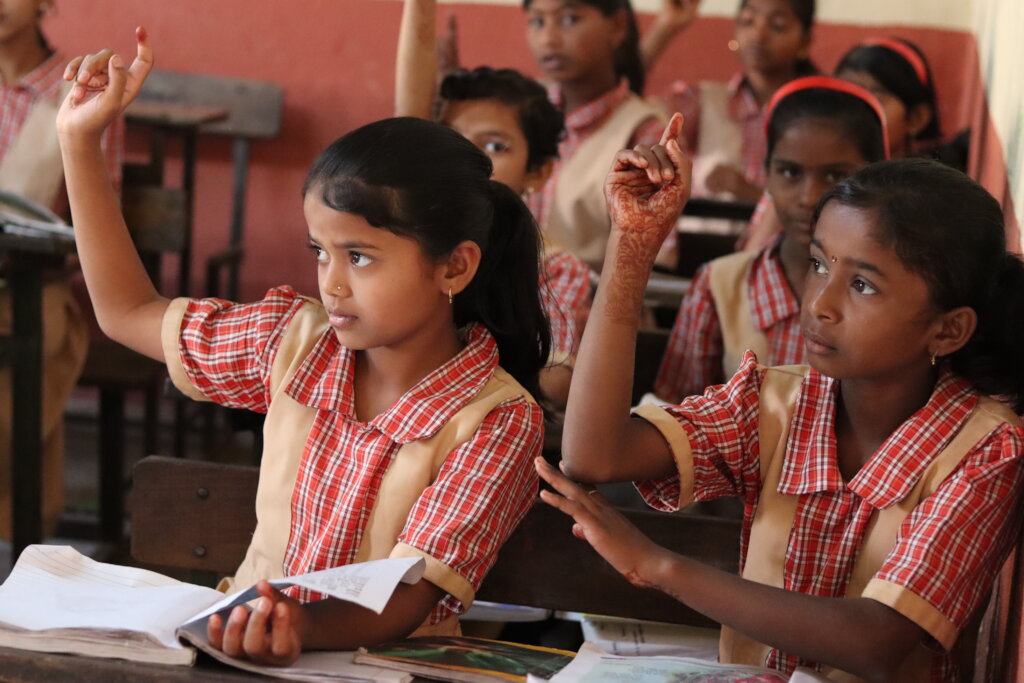
Since the age of eight, Dipali has played an active role in the village Balpanchayat. This Child Parliament was formed under the supervision of Karuna project partner NISD and as Minister for Sanitation and Hygiene Dipali is responsible for protecting fellow children of the village against illness by ensuring the teaching of good hygiene practices and lobbying householders to improve sanitation.

Dipali explains a little about the group and her role.

Why are children taking responsibility for issues usually dealt with by grown ups?

If the grown ups dealt with these issues we wouldn’t have to. Our Balpanchayat is for the protection of children. We want to live in a village which is safe and clean for children. Before we started no households had toilets. People used to go to the toilet anywhere and children and adults had bad hygiene practices.

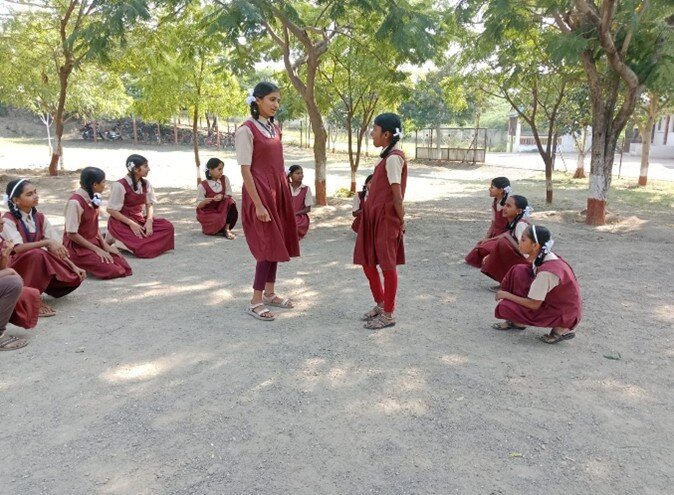
By holding rallies and teaching good hygiene practices through street plays we have made a big difference. Now all households have toilets and children know to cut their nails, to clean their hands after using the toilet and how to keep food and water clean.

What difference has that made to children’s health?

Children would often be ill with vomiting, headaches and diarrhoea. Children got illnesses like Dengi, Malaria and Typhoid. Now it is much less common.

You seem to know a lot about the effects of poor hygiene and sanitation?

Yes, I want to be a doctor when I leave school. I want to provide better health to those who are sick.

What is the biggest health risk now?

A lot of households do not have soak pits for waste water. Instead the water goes onto the ground. It then becomes stagnant which attracts mosquitoes, which carry disease.

What are you doing about the problem?

We are campaigning householders to dig soak pits. They are six feet deep and filled with broken bricks and stones. If every household does this we will have no more stagnant pools and many less mosquitoes.

What message do you have for supporters of Karuna?

We know we are very fortunate. Not many children have this opportunity. Thank you for giving us the chance to do this. If you keep giving, more children can be helped in this way.

NISD is a project partner of Karuna, committed to giving children living in poverty in 150 villages across rural Sangamner and Pimpalgaon Joge, Maharashtra the opportunity to enjoy better health, education and equal rights.

Thank you for your generous on going support.

Pictures:

Want to support this project's continued work? give now

Was this report valuable...
vote divider
Loading...
Tell us why (your comments may be shared publicly).
Rules for Comments 
Comments

Positive news from the project

By Steven Murdoch - Project Manager, July 19, 2009 12:54 PM

Sairaj, Prime MinisterThe Child ParliamentPimpalgaon Joge Dam
Thank you so much for supporting this project which I recently had the privilege of visiting.

Many of the children and families benefiting from your generosity live in a rather rural part of Maharashtra. Although only 150 miles from my starting point of Pune, the poor condition of the road meant a journey of several hours to reach a cluster of villages, displaced by the building of the Pimpalgaon Joge dam.

These villages represent one of the two key activity areas for the project, the other being the slum villages on the outskirts of the large town of Sangamner 70 miles away.

On first seeing the large expanse of water which has been created by the completion of the dam, I was fooled into thinking that this was a valuable resource which must be of benefit to the local community. I was wrong.

Underneath the water are the lost villages and fertile fields which once were home and larder to generations of this proud and previously self sufficient community.

At a village meeting, members of the local community painted the wider picture of the true nature of the significant negative effect of the construction of the dam.

The water for a start, I was told, is not fit for drinking without significant treatment. New villages have had to be established on the sides of the hill and the new land being claimed for agricultural use is unlevel and infertile. Until the project started, none of the households had drinking water or sanitation.

With no income through agriculture, the villagers have been forced to start day laboring. This work usually involves many days away from their homes and families, working long hours, for little pay, constructing and repairing highways.

Thanks to your support, I witnessed a JCB digger being used to level the land and so prepare it for agricultural use. The village I visited now boasts outside toilets for 80% of the homes. The same village now also has its own water supply complete with purifying system. I found it incomprehensible to think that these villagers had previously been walking for miles to find suitable water for drinking.

The mood of the village meeting was subdued as it is going to be a number of years before they will really know what the new land will produce. Having said that, there was certainly hope and much appreciation for the support they have been receiving from our donors for their village.

On reaching Sangamner I was fortunate enough to meet Sairaj, Prime Minister and his Ministers of the Pokhari village Child Parliament (beneficiaries of the project). Sairaj explained to me some of the issues facing children of the village, including malnourishment and school drop outs. He explained that the parliament meets weekly to identify issues and find solutions.

One significant problem, he explained, is that girls are being withdrawn from school early (aged 12 -14) and are not being allowed to complete their education.

The parliament devised a street play to show to parents. The play highlighted the problems of school drop out as well as the benefits of allowing girls to complete their education. Sairaj also explained that a representation party of the parliament visits families to understand their fears and encourage them to allow girls to complete their education.

The skills these children get from the Child Parliament are considerable. They learn how society operates, how village law works, how to engage with adults, how to present arguments, what their rights are and how to speak in public, to name but a few.

In all the projects I visited, these children, aged 11 to 16 years old were the most engaging, socially active and confident I met during my month long visit. Meeting these children gives me confidence that your generous donation is going to a very worthwhile cause. Thank you again for your continued support.

As a key stakeholder in this project, we would really appreciate your considered feedback. How could we attract more people to this project? What inspires you to support it? What can we do better?

The difference you are making is significant and really appreciated. Thank you.

Pictures:

Want to support this project's continued work? give now

Was this report valuable...
vote divider
Loading...
Tell us why (your comments may be shared publicly).
Rules for Comments 
Comments

The story of Mrs Bhagubai Ashok Tajanpure

By Dryan Kitchener - Programme Manager, August 07, 2008 05:15 PM

Mrs. Bhagubai Tajanpure with her goats.
A story of one of the beneficiaries that exemplifies the work of the project:

Bhagubai [age 42] from Saikhindi village belongs to a very poor family. Her husband works on daily wages and Bhagubai works in the Bidi-rolling factory to make ends meet. She could continue schooling only till 3rd standard after which she had to leave school to support her family.

With the help of Karuna NISD started working with the women in the Bidi factory. At that time Bhagubai attended all the awareness programs conducted by the organization; later becoming involved in a Self Help Group (SHG). She attended almost all the trainings organised by NISD and the Income generation training proved to be a turning point in her life. With the guidance provided she decided to start her own income generation to support her family income. Her SHG group sanctioned her loan application, giving her loan of Rs.10,000 for a goat herd. She started her small goat herd from which she obtained milk for children, goats for sale, female goats to expand her herd and also manure for her small farm.

As she started getting a good income she repaid the loan easily. She also leveled her three acre uneven barren land and made it productive. By keeping some money aside and taking a further loan from the SHG, in 2006 the family dug a well in their land. Because of water availability and their hard work they started getting even more income from their land.

Bhagubai’s financial status improved but still she wished to have a good house for her family because her house was just a hut, which was not safe and secure. Bhagubai got information in her SHG meeting about a housing program assisted by Habitat for Humanity. She had some savings but her SHG group did not have access to sufficient funds to support her. So she applied for a loan from the SHG Federation. Seeing her track record the Federation sanctioned her loan application and she constructed a house in 2007.

Bhagubai and her husband do not want their children to face the problems they faced due to poverty. They want to give them a good education. Bhagubai has reduced her bidi-rolling work and is now concentrating on her goats and on agriculture, which give her family a better standard of living.

Pictures:

Want to support this project's continued work? give now

Was this report valuable...
vote divider
Loading...
Tell us why (your comments may be shared publicly).
Rules for Comments 
Comments