In my role as the project leader I visit the site and review the progress “on the ground” twice each year. I have been
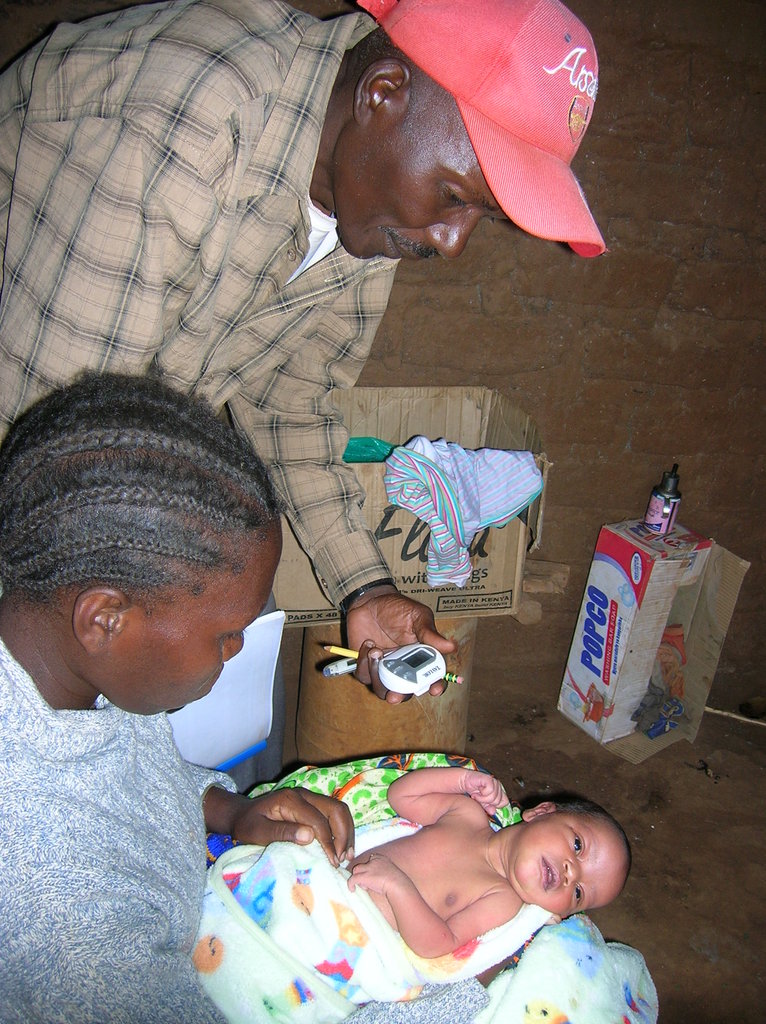
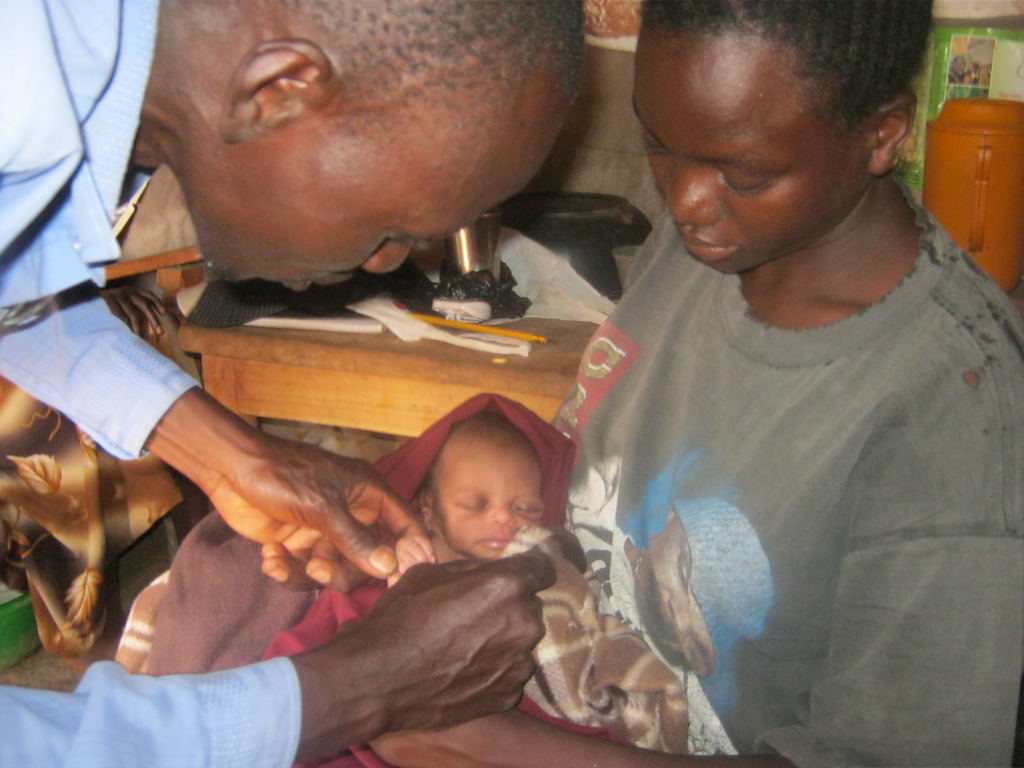
in Kenya for the past one month meeting with the CHWs and reviewing their work. The 20 Kenyan CHWs who were trained by Global Health Partnerships volunteers have continued to visit the homes of newborn infants during the first week of life. On multiple occasions they have successfully detected severe illness (sepsis) in the newborns and referred them for treatment to a health facility. Early detection of severe illness in young infants can be life-saving because they often die quickly if an infection is not detected and treated promptly. The photo shows one of the young infants who was found by a CHW to have signs of a severe infection and referred to the clinic, and the nurse has started intravenous antibiotics. This child survived the illness because of the CHW’s prompt detection of the problem and the rapid initiation of appropriate treatment.
At the end of last month (February 2013), the project had been in operation for 24 months, and a total of 1,401 newborn infants were visited by the CHWs. There were 8 newborn infant deaths during that 24 month period of time, which constitutes a mortality rate of 6 per 1,000 live births. The most recent national data on child mortality for Kenya (2008-2009) cite a neonatal (first month of life) mortality rate of 31 per 1,000 live births. Therefore the observed mortality rate of 6 per 1,000 for this project suggests that the “saving newborn lives” intervention is indeed accomplishing its goal.
The generous donors who provide the funds to continue this project can be assured that their investment in the health of young children is being used effectively and efficiently. Over 95% of donations to Global Health Partnerships go directly into the program services!
In September this year the World Health Organization and UNICEF reported encouraging progress in reducing child deaths in developing countries. The successful efforts to improve child health and survival are working, and sub-Saharan African countries have shared in this success.
But the news is not all good. There has notbeen much progress in reducing the many childhood deaths that occur in the first month of a child’s life, which is called the neonatal period. Most neonatal deaths happen early, within the first few days of birth. The deaths are from infection or other preventable causes. Progress in the prevention of these deaths has been difficult because most newborn infants and their mothers have very little access to health care during the critical first days and weeks of the infant’s life.
How can we save the life of a newborn?
In poverty-stricken areas like rural Kenya the key to the problem of access to health care for newborns is to train local
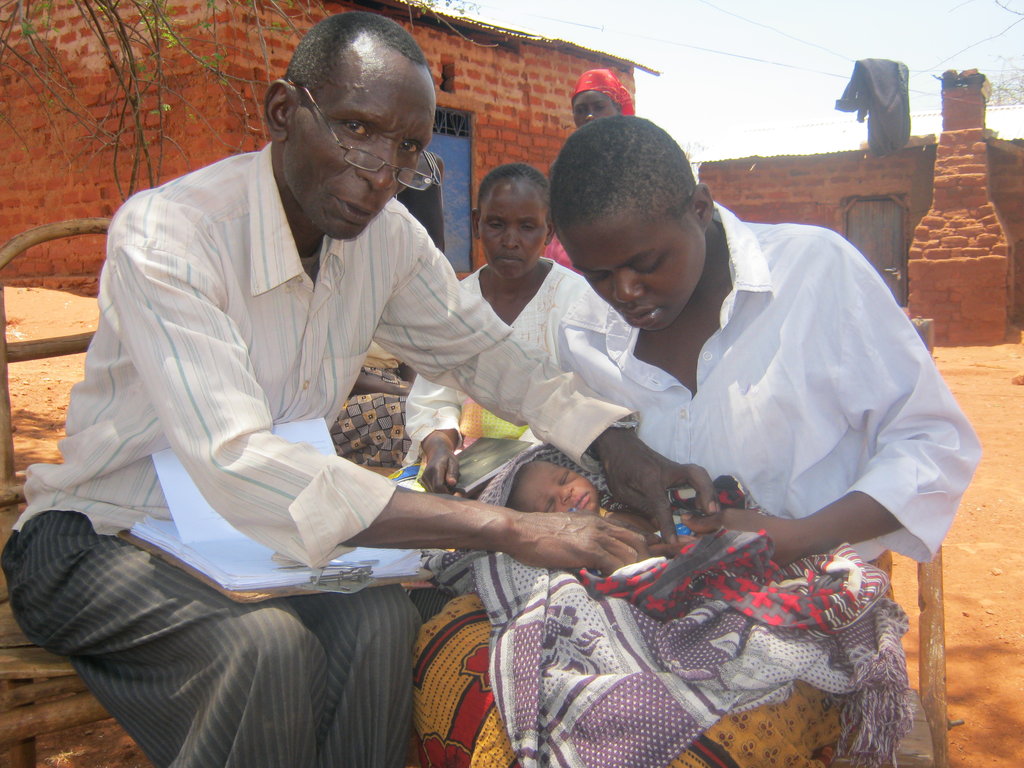
community health workers (CHWs), who live and work in the villages and know the mothers and infants who need care. The CHW home visitation project that was started by Global Health Partnerships has trained a network of CHWs who now have the capability of saving the lives of newborn infants, who often die quickly if an infection is not detected and treated promptly. The CHWs have been visiting 60-70 newborns each month, and the death rate (mortality rate) for these infants during the critical neonatal period has been much lower than the mortality rate in other parts of Kenya.
Some generous donors have provided the initial funding to get this project started, but we need to raise more funds quickly if this life-saving project is to continue. It takes only $10 to provide all 3 home visits for a newborn during the critical first week of life.
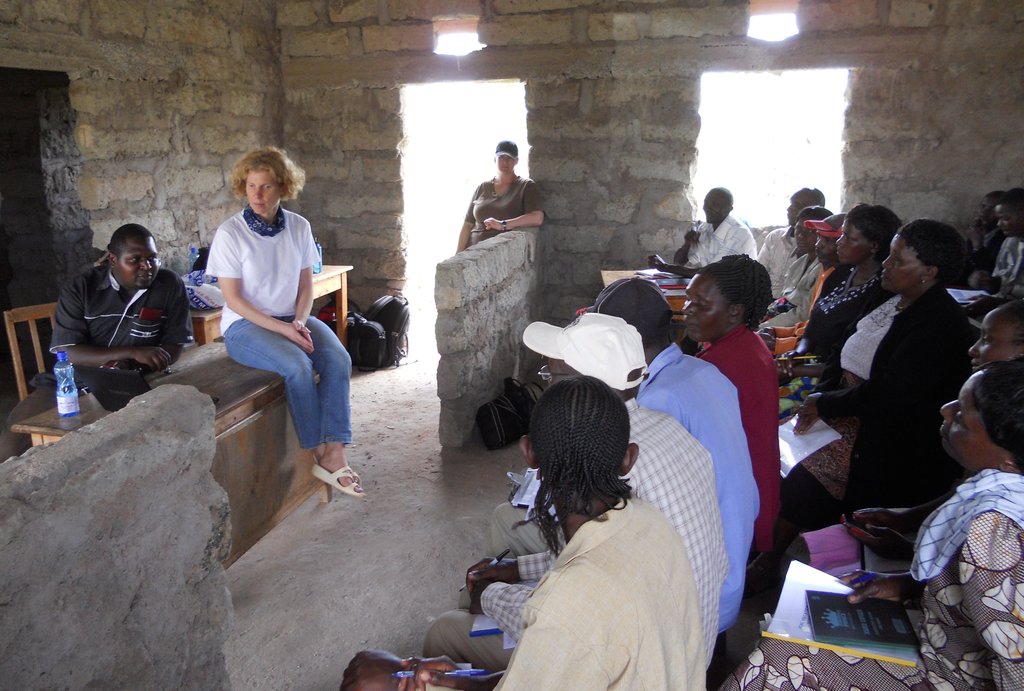
A refresher training course was conducted recently by Global Health Partnerships (GHP) for the Kenyan community health workers (CHWs) who visit newborn infants during their first week of life. The 20 CHWs in attendance had the opportunity to share their experiences from more than 700 infants visited during the first year of the project, as well as solidify their skills for the assessment of newborns. Their main task is to check for signs of infection, such as fever, rapid breathing, and skin pustules (boils), that can rapidly lead to death if not identified and treated quickly. The meeting also provided an opportunity to address challenges and concerns that have arisen, such as how to arrange rapid transport of a sick infant that is found during a home visit. The CHWs renewed their commitment to serve their villages as volunteers to improve the health of young children.
Like many women receiving care at the Kisesini clinic in eastern Kenya, Joyce’s pregnancy progressed normally without problems. She delivered a baby boy who at first appeared very healthy. Later that day while at home the baby was warmer than usual and was not breast-feeding well. Joyce did not realize that this was the beginning of a life-threatening infection. Fortunately, the community health worker (CHW) in Joyce’s village paid her a visit, as he does for all newborn infants in his village. John is one of 20 CHWs who received training in a Global Health Partnerships (GHP) newborn home visitation project. When he found that the baby had a fever of 104°F he brought Joyce and her baby to Kisesini clinic, where the nurses immediately recognized the signs of sepsis (severe infection) and started high doses of intravenous antibiotics. Joyce and her baby were then transported by ambulance to the nearest hospital to continue the life-saving treatment.
In Kenya and other African countries many newborns die within the first week of life, usually from infection or other preventable causes. The CHW home visitation project, funded by your donations to GHP, can save the lives of newborn infants who often die quickly if an infection is not detected and treated promptly. The CHWs have visited more than 700 newborns during the first year of this innovative project, and the mortality rate for these infants during the first month of life is considerably lower than the average mortality rate in Kenya

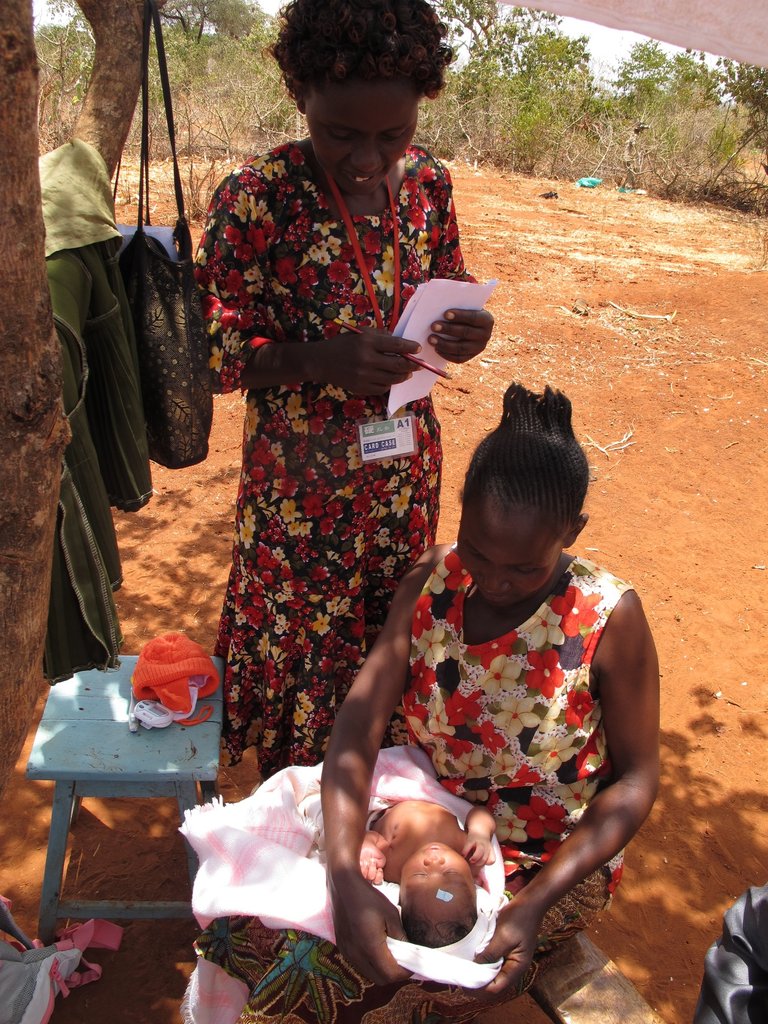
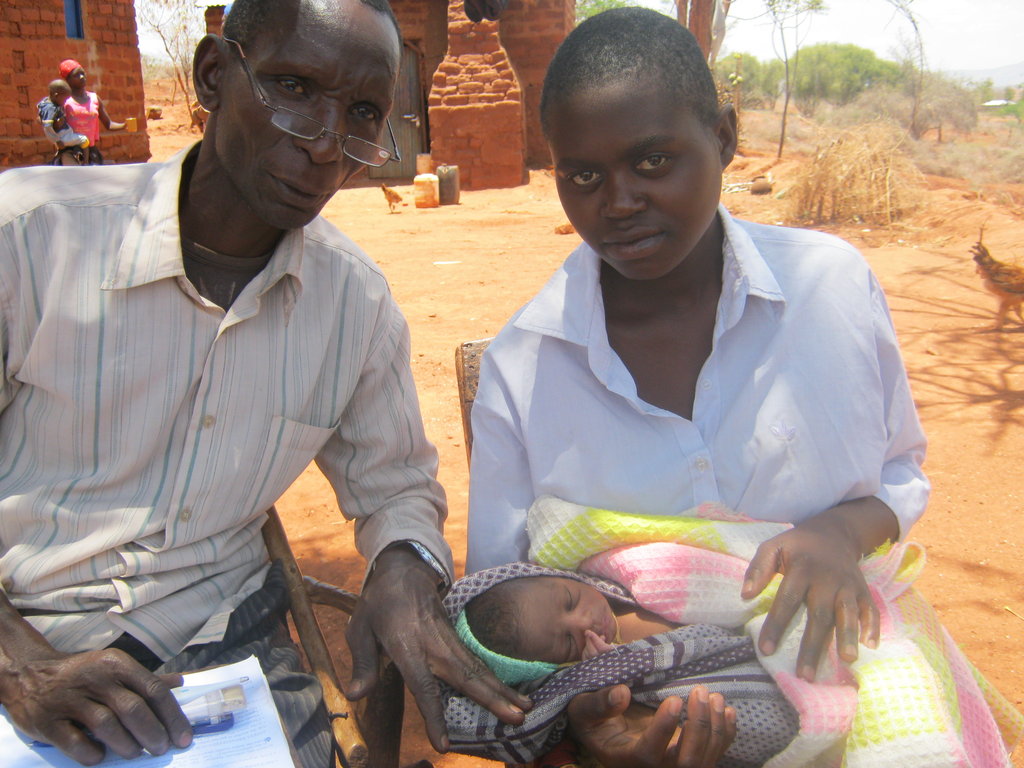
Elizabeth is a healthy and happy 5 month old infant, but her start in life could have ended in tragedy. Her mother delivered her at home prematurely, weighing about 4 pounds. The village community health worker (CHW) was called to the home, and fortunately she had been trained to assess and provide initial care for newborns in the GHP newborn home visitation program. The CHW recognized the signs of the baby’s trouble breathing and arranged transport to the nearest hospital with incubators and capability to care for premature infants. Elizabeth stayed in the hospital for 3 weeks before she was healthy enough to go home to her village. She is now a healthy 5 month old infant, shown in the photo with her mother, thanks to the support of donors who are providing the funds to continue this newborn survival project.
Project Reports on GlobalGiving are posted directly to globalgiving.org by Project Leaders as they are completed, generally every 3-4 months. To protect the integrity of these documents, GlobalGiving does not alter them; therefore you may find some language or formatting issues.
If you donate to this project or have donated to this project, you will get an e-mail when this project posts a report. You can also subscribe for reports via e-mail without donating or by subscribing to this project's RSS feed.
Albuquerque,
NM,
United States
http://ghpusa.wordpress.com/