The Sahel Food Crisis
Merlin responded quickly to malnutrition and food crisis in Chad and has managed to set up a successful program. Local authorities have expressed their appreciation of the program and of Merlin, and this will be the basis for our expansion of operations in Chad. We have successfully implemented activities that will reduce the vulnerability of communities to malnutrition. Drawing from this experience, Merlin is designing longer-term programming using its own expertise, to address the underlying causes of malnutrition, such as poor access to clean water, hygiene and sanitation, child and infant feeding and care, and health promotion.
Key activities
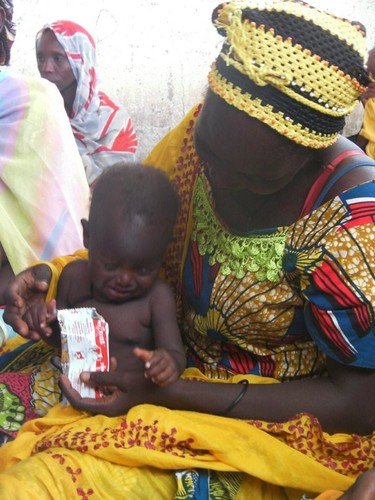
Improving the prevention, diagnosis and treatment of malnutrition:
· 16 Health facilities supported are providing supplementary feeding program (SFP) and Outpatient Therapeutic Program (OTP) services.
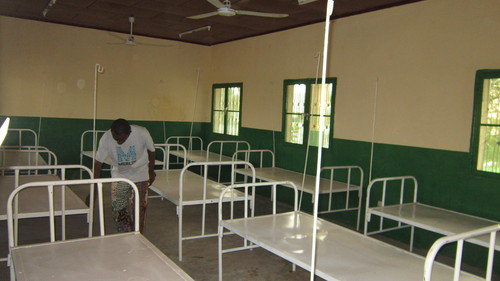
· One stabilization center was set up, assisting 255 children suffering from severe malnutrition with complications.
· In total, 6,565 children under-5 were treated for severe acute malnutrition next hunger trap.
· malnutrition with complications.
· In total, 6,565 children under-5 were treated for severe acute malnutrition.
· 10,423 children under 5 and 4,191 pregnant and lactating women were treated for moderate malnutrition.
· 16,704 caretakers received health and nutrition training.
· 210 community health workers were trained on community-based management of acute malnutrition (CMAM).
· 48 health workers from the Ministry of Health were also trained on CMA.
Improving access to health:
· 3,568 patients were effectively treated for malaria, acute respiratory infection (ARI) and diarrhea.
· 2,190 children were vaccinated against measles.
· 1 mobile clinic provided nutrition and health services to 6 remote sites.
Improving the preparedness of communities:
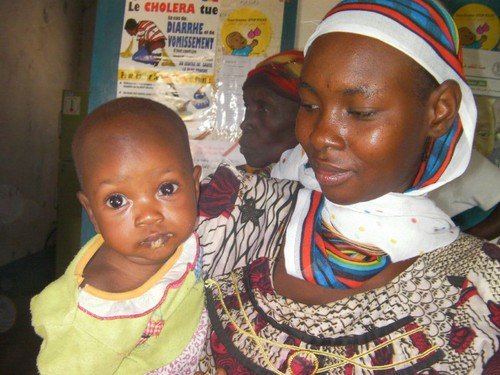
· 1 cholera preparedness and response plan was developed for Massaguet health district by the local health authorities, with Merlin’s support.
· 1 cholera kit was positioned in advance in the district and all Health personnel and community informed on cholera case definition and procedures to reduce contamination.
Feed the body – feed the mind:
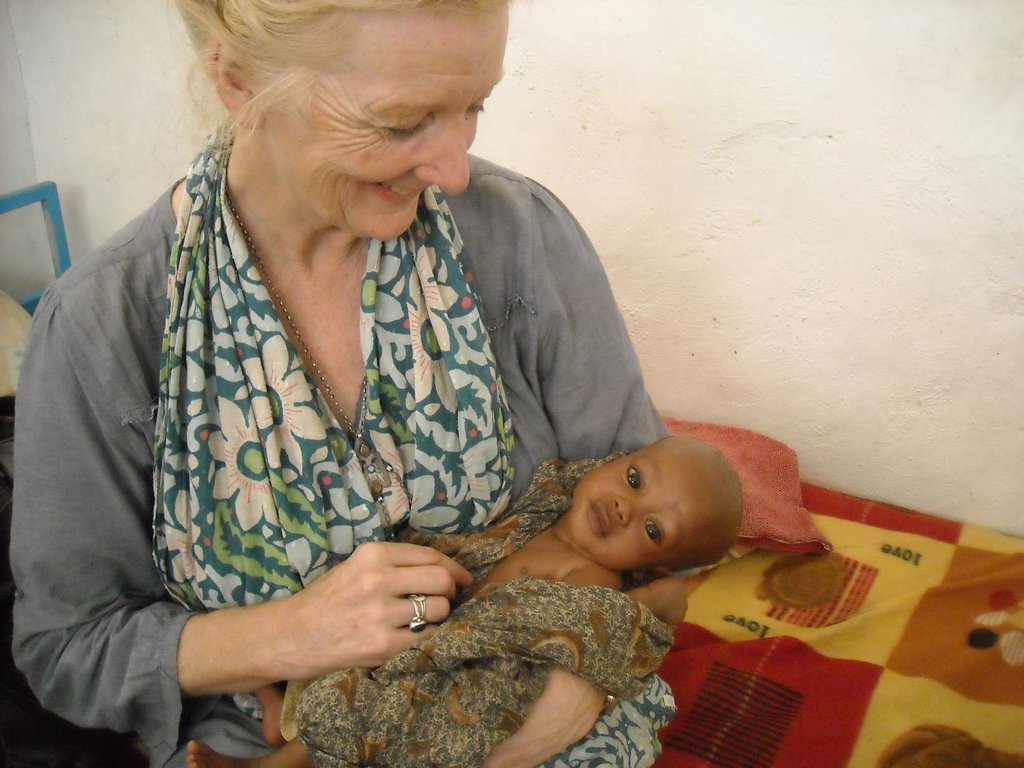
A growing body of research shows that integrating early childhood development activities into emergency nutrition programs is crucial child health. Child growth and brain development depend not only on good nutrition but also on stimulation and caretaker emotional responsiveness. Merlin is piloting the integration of psychosocial and early childhood development services within its stabilization center to improve support for the recovery of malnourished babies, and strengthen their caretakers’ abilities to adequately care for the child.
Coordination
Merlin has been successful in establishing solid relationships with both local authorities and communities. Merlin has ensured that its programs were developed in support of existing health authorities so as not to duplicate efforts, and to create unsustainable services. Merlin conducts regular meetings with community leaders and local authorities to discuss issues, and coordinates with all existing humanitarian forums. We continue to be open with authorities and respectful of cultures so as to ensure that we operate effectively.
Monitoring and Evaluation
Merlin monitors its programs systematically to be able to anticipate issues and provide solutions to mitigate them. Supported health centers report on a weekly basis to Merlin and our staff conducts regular monitoring visits to every center.
Where We are Now
Although donor response was large for the Sahel, funding available for Chad has decreased to a point where it is threatening all the gains made during the 2012 food crisis response. Despite this, Merlin is developing longer-term, cost-effective programs to target the underlying causes of malnutrition but is aware that with limited donor engagement, gaps will increase during the next hunger gap. It is only with you further support can our successes in Chad continue.


The Growing Crisis Merlin faces
In 2012, lower than anticipated rainfall, poor local harvests, high food prices and continuing conflict across the Sahel region of West Africa resulted in an escalating food crisis across Burkina Faso, Mali, Mauritania, Niger, Senegal, Chad, northern Nigeria and northern Cameroon. Millions of people have been left with little food to eat, as they can neither grow enough themselves, nor afford to buy food at the market.
Merlin’s Response Team conducted an assessment of the region in early 2012 to determine the needs of the population and design the most effective response possible, and identified Chad as the country most in need of nutritional and health care support.
Background
Chad is one of the poorest countries in the world. Currently:
- Chad is ranked 183/187 on the Health Development Index.
- Maternal mortality of 1,200 deaths per 100,000 live births.
- Average life expectancy 46 years.
- Over 3.6 million Chadians were food insecure as of May 2012.
- Only 30% of health centers are estimated to be functioning.
- Malnutrition is the fifth cause of death among children.
Targeting the Vulnerable
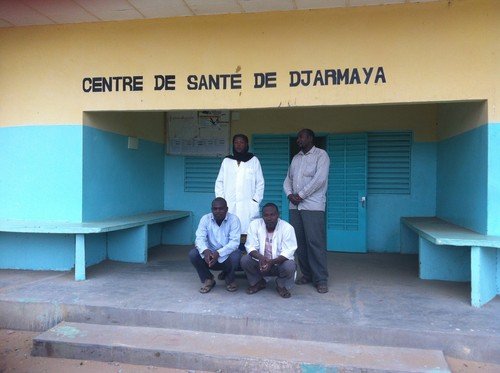
Following our assessment, we launched an emergency response, establishing a new program in the Hadjer Lamis region of Chad to react immediately to the growing needs of the population. This emergency program is aiming to increase access to free primary health care and nutritional services for young children and pregnant and breastfeeding women and to improve the capacity of local authorities and organizations to respond to future disease outbreaks.
By arriving in country early on in the crisis, Merlin could begin to alleviate the stress on a high-risk malnourished population before the arrival of the peak malnutrition season. It gave us a crucial window of opportunity to save lives, reduce suffering and reinforce the coping mechanisms of those most affected, before that peak was reached.
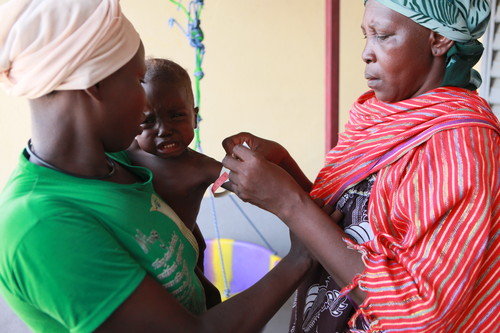
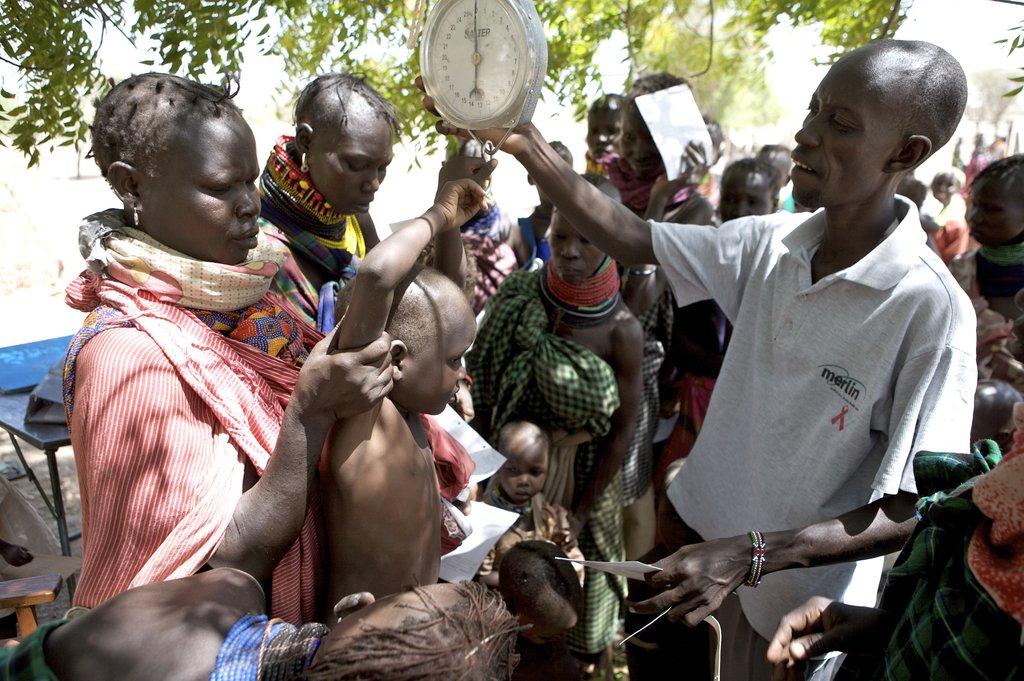
Our aim is to focus on the worst affected areas and the most vulnerable groups, particularly children. We have gone into these areas to find and treat the children who are most at risk – not just from malnutrition, but from killer diseases like malaria. We have done this by setting up health centers, training local volunteers as health workers, and providing them with high-energy foods, medicines and equipment to save lives in their own communities.
How You Can Help
Now, with the food situation worsening, it is predicted that 127,000 children aged between six months and five years old will be affected by severe acute malnutrition this year in the Sahel belt of Chad. The tragic result will be that more children than ever will die if help does not come in time.
Hunger and suffering on this scale seems almost too much to even imagine, let alone prevent. Yet in Merlin we know that with the right kind of action we can make a big difference.
Please help us to do what we need not just in Chad but the rest of West Africa where we are workin to save lives in the face of the region's poverty, hunger, and disease.


Merlin’s Emergency Response Team in Chad
In March 2012, Merlin teams carried out assessments in Chad, to determine health needs and design the most effective response possible. In response to the crisis Merlin now has a full team in Chad consisting of a Country Director, Country Health Director, Logistician and a Program Manager.
Merlin’s Activities
Recent stats from the field show that nearly 5,000 children under five have been screened for malnutrition, as well as, 1820 pregnant and lactating women. Out of this combined number 93% have been successfully treated.
Currently, the management of children with Severe Acute Malnutrition, with complications continues at the Stabilization Center at Massaguet District Hospital. 15 health facilities continue to implement nutrition activities services. There is daily follow up and on-going training of nurses and other agents by District hospital administration and Merlin medical team at the Stabilization Center. Finally, the Massakori Pediatric Unit continues to provide referral assistance for malnutrition complications when Massaguet district hospital is not able to deliver needed care, as it is the second referral stabilization center for Merlin in the region.
We thank you for your continued support in our fight against hunger.


Links:

Merlin has been working in Chad for nearly three months now. Why did we send out an Emergency Response Team in the first place? The facts speak for themselves:
Our emergency response was led by Lea Gilbert (see photos below). Once on the ground, Lea and the initial team began the set up process. Merlin’s logistician Justin Bangue searched out an appropriate base, to be used as an office and place to sleep, eat and have a little down time. He and Lea were also in charge of liaising with country representatives of government donors about ongoing funding and talking to various Chad government departments to make sure all the paper work was in order, including recruitment procedures and non-profit certifications.
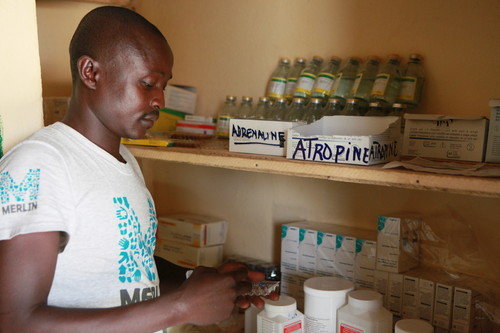
Justin also coordinated the delivery of procured supplies and medicines, to make sure everything was in place for our health and mobile teams, to make sure they could start offering services as soon as possible.
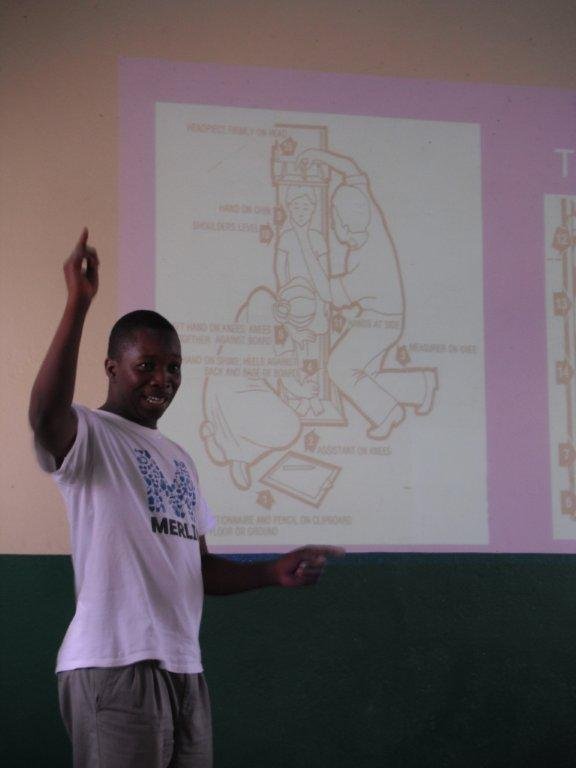
The health & nutrition teams come under the supervision of Angela Muruiki, Merlin’s Health Manager in Chad. She has been leading training sessions with local health staff and outreach teams in basic health and nutrition care. Angela ensures that every health worker has the required skills to offer quality health care to everyone that needs it, including those living in more rural and remote communities. Since the outreach services were available, and now word has spread, the number of families visiting the outreach clinics has risen each week, from double to triple figures.
Angela’s team has also set up a therapeutic Feeding Center in Massaguet Hospital, one of only 3 hospitals in Hadjer Lamis province, in the central, west of Chad. On June 13th alone, the Feeding Center received more than 30 new, severely malnourished children into the feeding program, and a neighboring health clinic registered 50 more.
Our teams will be there to help 100’s, maybe 1000’s more children, mothers, the elderly, in fact anyone that needs our care, over the coming months.
If you love our work, then tell the world! You have an exciting opportunity to help Merlin (Medical Emergency Relief International) make even more of a difference. GreatNonprofits - a site like Amazon Book Reviews or TripAdvisor - is a website where people can share their stories about nonprofits that they really believe in.
Will you help us raise awareness and support for our life saving work, by posting a review of about Merlin?All reviews will be visible to potential donors. It's easy and only takes a few minutes. Please go to:http://greatnonprofits.org/organizations/reviews/medical-emergency-relief-international-usa-inc and log your comment.
With your help, we can gain visibility and ultimately funds for our health care work around the world.
Merlin can respond to situations such as the food crisis in Sahel, because of you. Thank you.


Links:

Thank you for offering your support to our work in Chad. If you are thinking of supporting again, tomorrow (June 13th) would be a great day to do it. Those lovely people at Global Giving will give an additional 40% on donations. So a $20 donation from you, is actually a $28 gift to Merlin.
PS. Please try and get that gift in early, they only have $75,000 to give away.
Nigel Young, Merlin's Head of the Emergency Response Team took a trip to Chad to meet with the emergency response team who have been setting up primary health care and nutrition services.
Read about his week (as told to Third Sector Magazine)
Monday: It's a big week for Merlin's response team. After three months of leg-work in London and Chad, we are about to hand over to the regional management team there. I am flying from Heathrow to N'Djamena, the capital city of Chad, to check all is well before the handover. To make the most of my trip, I am traveling via Amman and Addis Ababa, so I can catch up with the team in Ethiopia.
Tuesday: I fly from Addis Ababa to N'Djamena, where I am pleasantly surprised to find the visa arrangements go like clockwork. I travel to the office to say hello to the team, who have been working in the punishing 40C heat without any air conditioning. Then it is off to a UN meeting on the Consolidated Appeals Process, used by aid organizations to plan and implement their activities. This is all conducted in French, but I pick up roughly half of what is said.
Wednesday: My first day in the field is a visit to Massakory, a three-hour drive from N'Djamena, where I meet the governor of the province. I look over a couple of clinics and the field hospital, where Merlin is setting up a stabilisation centre to treat malnourished children in cooperation with the Ministry of Health. Everything is pretty much on track after the painfully slow process of getting donors' contracts signed.
Thursday: I visit the great and good in N'Djamena to gain an understanding of their concerns and, I hope, to allay a few of them. One difficulty with finding funding for Chad is that the food crisis is a slow burner. There is no one trigger event, so it is hard to get media attention that is unrelated to the jubilee, Euro 2012 or the Olympics.
Friday: The idea is to be on the plane for the 18-hour flight home, but there is a dust storm at the airport and the flight is delayed. Chad is different from many of the countries I have visited. On the surface there is visible wealth, but underneath that gloss the poverty is severe. We have been a bit slower than we would have liked and have lost two or three weeks navigating the bureaucracy, but considering this is our first time here we have done well.
Thank you to everyone who has supported us.
Links:
Project Reports on GlobalGiving are posted directly to globalgiving.org by Project Leaders as they are completed, generally every 3-4 months. To protect the integrity of these documents, GlobalGiving does not alter them; therefore you may find some language or formatting issues.
If you donate to this project or have donated to this project, you will get an e-mail when this project posts a report. You can also subscribe for reports via e-mail without donating or by subscribing to this project's RSS feed.