Bridge to Self Reliance 2000 refugees San Diego CA

 
$9,940
$70,060
Raised
Remaining
Jan 23, 2012

Ripple Effects of Refugee Medical Problems

The Episcopl Refugee Network is frequently needed to solve the many problems that a family faces when one member gets sick.  A salary lost may mean the rent cannot be paid.  It can mean having to decide between buying needed medication for Grandma and putting food on the table for several days.  Even a week with no income may spell disaster for the family.  Because few entry level jobs carry health insurance for employees, and able-bodied adults 18 and older do not qualify for government sponsored health insurance, many families are just one illness away from disaster. Sometimes there are other unexpected consequences, and often there is a lag of weeks between being declared eligible for government sponsored assistance and the actual arrival of the money.

Recently two Karen sisters were attacked by a man with a large knife when they were collecting a child from an apartment in a large complex, to take her to a nearby church service, in the City Heights area of San Diego.  Both sisters suffered cuts on the head requiring many staples, and one also suffered damage to three fingers, including a severed tendon in one finger.  A neighbor heard their screams and also had fingers cut when he let the three into his apartment and struggled to shut the door against the attacker.  The police were called, the attacker was arrested and the three injured people were taken to hospital for treatment.  The severed tendon required surgery, and the two sisters were in pain, and traumatized by the events.  They live with their mother and brother.  Only the one with the severed tendon spoke English  well, and the two sisters provided the family income.  One worked as a dental assistant and had medical insurance, but her doctor said she must be off work for 3 months.  She now could not drive with her hand in a caste.   The other worked assembling electronics. She would be eligible for health insurance when she had worked for 6 months.  She had worked there for only 5 months. The Network provided emergency food for the family,  blankets, help in working through the various reports and interviews that needed to be completed, and filling in forms so that  assistance to victims could be accessed.  Then the sister with the injured hand was required to be at the court hearing where the attacker would be formally accused. Such unfamiliar proceedings are daunting, even if you do speak English. The Network provides a volunteer who attend such hearings to give the refugee confidence, and to advocate for the refugee if necessary, especially where language and custom play a part in the reactions of the people concerned.  This is the kind of situation which is not over in a short time.  Sometimes fallout from traumas goes on for a very long time.  And where there is a lag between the need to pay for medication and the arrival of funding from the Aid to Victim's Fund, the Network can provide interim funding.   Until the sister with the damaged hand is able to drive again, the Network provides transport, and where translation is required, we also provide that.

While this is an unusual case because it began with an unprovoked attack, it illustrates the range of activities required for the Network to respond to the needs of new residents who find themselves in situations they have never before encountered, and involving laws and agencies with which they are totally unfamiliar.  Because of the experience of the Network staff and the many volunteers,  and because of the interest of those like you, who support us, we are making great progress toward helping more and more refugees get their feet on the bridge to self reliance, by building their self confidence.  Please continue to visit us on the web, and if you are ever in our area, we would love to meet you and introduce you to the refugees we serve.  We also welcome you to read our newsletters which appear regularly on our website.

Oct 17, 2011

Mmoving Forward in the Building of The Bridge to Self Reliance

Most cultures have a set pattern of greeting such as, "Hello James. How are you?" "Fine thank you.  How about you?" Neither person expects a long list of ailments in reply - it is simply an expression of pleasure in meeting.  Many of our refugee families come from cultures which go a step further.  For them, it is important to appear to be doing very well in all respects. They are expected never to reveal failing health, or intense hunger, or any family adversities.  It would be a sign of personal weakness, or failure, to ask for help.  So problems with these families can easily escalate, until finding a solution is much more difficult than it could have been, if they had been known earlier For example, if the breadwinner has lost his job, and cannot produce the monthly payment on a car, it is often long after the car has been reposessed, that someone who could have helped, finds out. The refugee loses all he has invested in the car, when it could have been sold, and some of the money kept by the refugee.

Having staff who know the languages and understand the cultures, is critical. Helping volunteers understand the different cultural orientations of each group is also essential. Our paid staff, who arrived as refugees themselves, are the ramp up to the bridge to self reliance.  They can remember the things they, themselves, found puzzling and they still share some of the difficulties our newer arrivals face.  They are also an important piece of reinforcement for the bridge, by providing information to the volunteers, about why some approaches and solutions will work better than others. As the staff members obtain effective skills in communicating in English, they become confident in being able to function, not only in their own original community, but also in the new society in which they find themselves, as well as in the other communities of refugees, as each wave of newcomers arrives.

Most refugees would consider it very rude to write down a list of things they would like to receive.  But most volunteers do not have time to visit for enough time with each family to observe what was missing in each household, so they expect a list.

If a volunteer, with the help of a staff member, can spend enough time getting to know each family to gain its confidence, then the family can learn that a list is not rude in the US as long as the items are requests, not demands. The volunteer can also learn to bring appropriate items and to find ways to build relationships that make it possible for many families to be served in a timely way that does not appear rude or inconsiderate to any group.

The success the Network has had in helping refugee families and individuals address the difficulties they encounter, and develop the skills needed to become self sufficient is becoming known more widely.  The current economic climate in San Diego, California, has brought a greater number of needy families to our doors than in previous years. It will be challenging.

Thank you to those who have found us and recommended us to your friends, families, and colleagues. We look forward to your help in drawing their attention to the great opportunity provided by GlobalGiving with their Matching Grant day in the 24 hours starting at 12 01a.m. on Wednesday October 19, EDT  (GMT-4)  Please let them know that the 30% match while funds last, can be make a significant difference in the lives of struggling refugees.  To receive that match the donation must be made via GlobalGiving's secure web site. We would love to win the extra $1,000.00 awarded to the project with the most individual donors, on that day.  Please tell them that donations from members of the same family will count as from different individual donors, as long as each donor uses a different credit card.   One way of their learning more about us is to reach GlobalGiving website through our website at episcopalrefugeenetwork.org.  Just click on Sponsors and Donors, then click on the symbol for GlobalGiving. Make a note of the date and time - it is very close at hand.    Many Thanks.

Links:

Sep 1, 2011

New beginnings and challenges

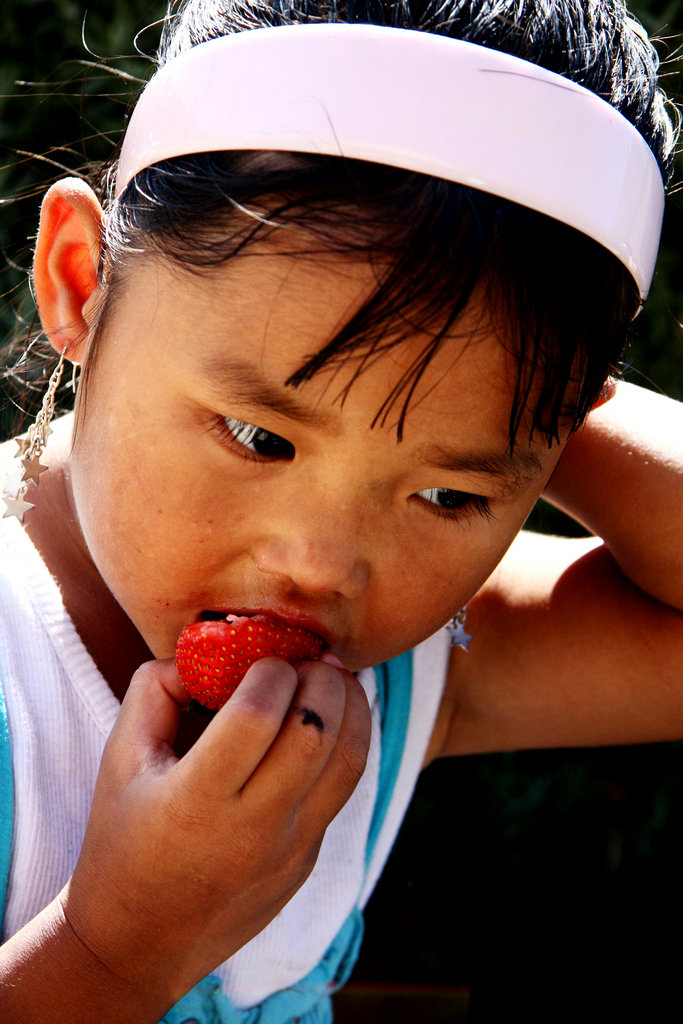
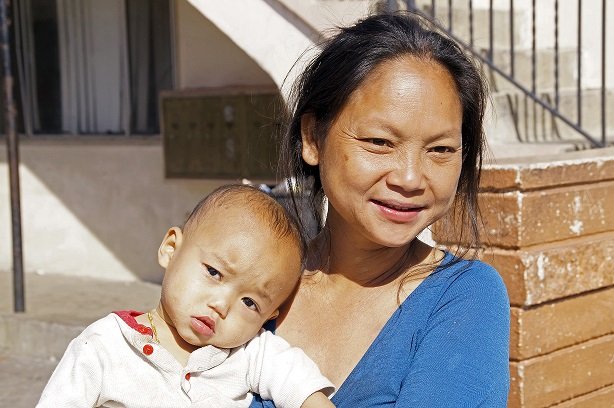
For our poster girl for June, in picture 1, the end of the school year marked a huge step into a bigger world. She had attended high school in San Diego for two short years, and had enthusiastically attended every Thursday's after school tutoring/homework coaching progam, run by the Network. She had also come to community meetings with me where we spoke about the experiences of refugees as they transition to life in San Diego. But now she had reached her 18th birthday, so she was not permitted to remain enrolled in school. Fortunately she was a very able student, who worked very hard both at mastering her English skills, and at assimilating the content of the other classes, for which she had had no academic background. She is now a sales person in a small clothing store. This is in itself a real achievement, as entry level jobs are very hard to find. For most who arrive after the age of 11, this success is often beyond reach. She is an inspiration to the younger students , and to the tutors, who volunteer so many hours to encouraging and coaching these new community members.

The tutoring also provides opportunities for finding out about other needs of the children, or of their families. One tutor asked her dentist to assess the damage done to a Sudanese child's teeth under a basketball hoop. The intense pain was not so much because of the teeth! The jaw was broken. So medical and dental help were both necessary and while the jaw was wired shut, liquid diet was needed. This led to more discoveries such as the absence of pillow and bedding on the bare matress on which he was sleeping, and help needed by the grandmother with whom he lived. That young man is now in his second year of University studies.

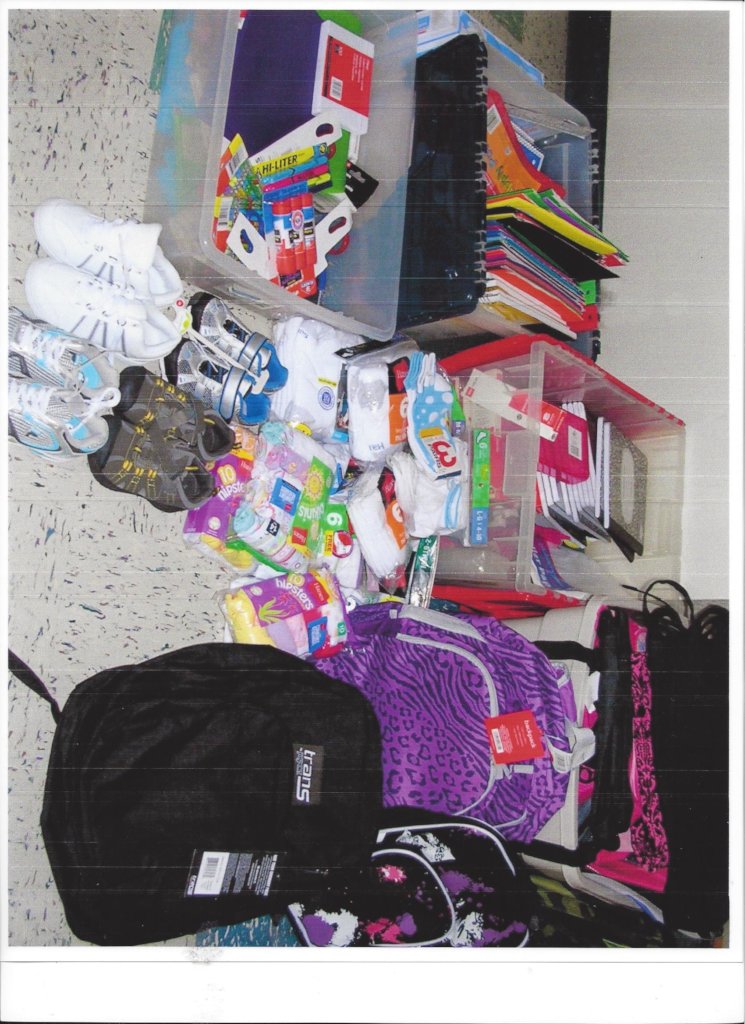
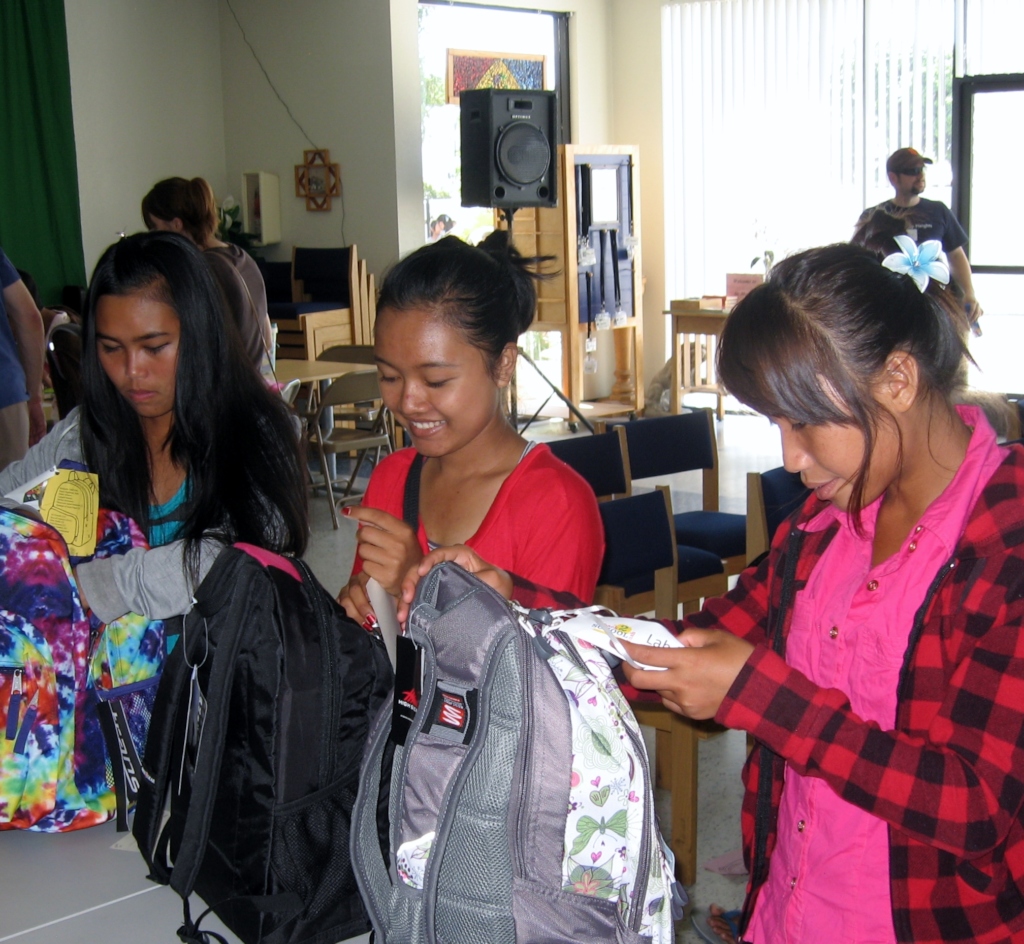
The past three months have included finding and trainig new tutors to replace those moving on to university or to other job locations; updating materials; and collecting and filling backpacks for new arrivals, for those who have outgrown the first one we gave them. Some of the newcomers, even if they are of high school age, have never experienced formal education of any kind. We are expecting a much greater need for the services we have been providing. On July 1, this year the allocation of federal funds for refugees receiving initial help through the 4 resettlement agencies, was cut 8%, and the way that some of the initial sevices are now provided, no longer includes a specific outreach worker from the resettlement agency assigned to each family. This means that many families are likely to need someone to ask when they do not kow how to read something, or how to do things expected of them, or if they have an emergency outside of office hours. They will also be more in danger of not being able to stretch the allocation to cover food as well as rent or bus fares, let alone school supplies and clothing. A lost job, or a cut back in hours, for one or more of the breadwinners in a family who may have been in San Diego for some time, will also bring them to us, as they attempt to make ends meet.

Your interest in the work we do is very much appreciated, and your donations have made a difference in the lives of the families. There is a new Global Giving matching grants day coming up in October. Keep tuned for details later this month, and a reminder just before the day. Stretching the amount of your gift in the 24hour window of opportunity will result in more children with nourishing food and a back pack to be proud of; and help with family emergencies of many kinds. We especially appreciate your referring our project to your friends and contacts, as one you think worth supporting. That is very encouraging!

Links:

May 24, 2011

Basic needs and exciting successes

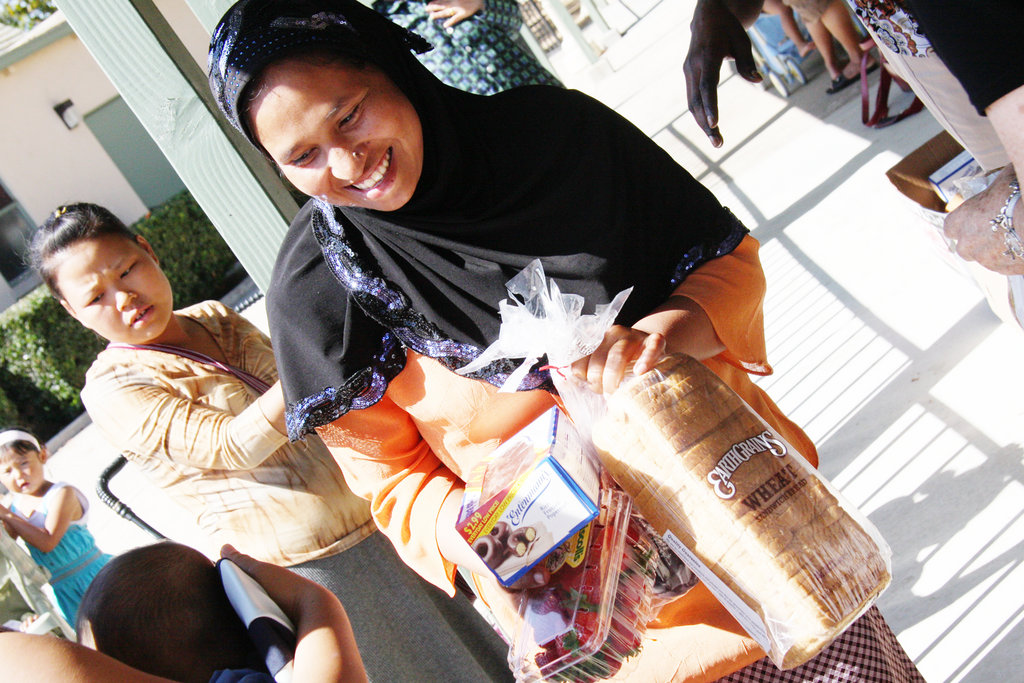
preparing food for distribution

In the last three weeks the Refugee Network has received several exciting pieces of news about what refugees we have helped in the past are doing now. Those who knew how to speak and write English when they arrived, and those who had work experience or education, had a definite advantage when it came to adjusting to this very complex society, but some of those without these advantages also reported having made great strides towards self reliance.

One had started his own towing business, one was already a successful model, one had a job at a hospital, which provided free medical care for her family, many had completed high school successfully, some had graduated from colleges and universities, and others had taken vocational courses to prepare themselves for the job market.

One of the most noticeable inclusions in the success stories was mention of the development of a dream that made it possible for the refugee to envisage himself or herself in a particular job or profession, and then to reach out to opportunities to gain the knowledge or experience to get on the pathway to get there. Those we heard from mentioned the importance of being encouraged to think in this way, and the people among the Network staff and volunteers, who had kept up their hopes. It was little things that made a big difference in their aspirations, like learning how systems work in this society; being taken to see a small business, just like the one being dreamed of; being given the right clothes to go to a successful job interview; being introduced to successful business people and students, who could tell them what to do and not to do, as they followed their dreams; or being helped to find  treatment for a health condition that was making it difficult to believe in ever having a productive and satisfying future. The Network has gained the trust of the refugees we serve. With that trust comes sharing of ideas and encouragement to nurture dreams and make them reality.

For the refugees who have been brought to San Diego during the last 4 years, there are more difficult paths to tread.  Most of those from Burma, and from Bhutan, do not speak English when they arrive, and the skills brought from rural villages or from many years in a refugee camp, do not fit them for jobs available. The regulations governing the federal assistance to these newer residents have also changed in ways that make it much more difficult for them to learn how to make a new life for themselves, than it was for earlier refugee arrivals.  As we have always sought out those who were about to fall through the cracks, it is not surprising that we are finding our services needed much more often each month, and the variety of difficulties for which a remedy is being sought is also much greater than in previous years.  Both our staff and volunteers are kept very busy.

For the newer arrivals there is little chance so far, to think beyond the end of the week.  They are still in need of basic food and clothing and it will be quite some time before they can afford bus fares and learn how to reach remote official offices at which they are required to appear.  Two weeks ago I met with a group of Bhutanese refugees.  I had taken some of them to our storage area to look for warmer clothes than those in which they arrived.  One of the women asked for "pads".  On further inquiry, with the few words we had in common, I realized that she was telling me that the women were in great need of feminine hygiene products.  They cannot be bought with food stamps (even if there were enough available to buy them) and it is not surprising that such items are not high on the priority shopping list for the men, who control the expenditures of the family!  I brought them some that evening, and we are seeking a reliable monthly supply.

So for those refugees who are new  and for those who have been here longer, but have had the misfortune of losing a job or becoming ill and missing work, the bridge may be only just in sight right now, but we are hoping they will be ready to set foot on it, when a few more months have passed.  Your help is making a real difference,     Many thanks!

Links:

Mar 2, 2011

Food deliveries needed for survival

It happened again on February 18th!  It was a Friday. The telephone rang. It was a refugee who had used our services in the past and knew where to turn for help. 

"Did you know there is a family in our block of apartments that has no food for the weekend................?"  

 A conversation beginning this way frequently occurs.  When it does, a Network volunteer or staff member goes out that day with food to visit and to assess other needs, which are reported to the staff for further attention. This is one of the ways that newly arrived refugees get referred to the Network.

We deliver over 1,600 lbs of food per week to families who have no car, live far from shops and markets, and are struggling to make ends meet. Some need short term help when jobs are lost, sickness strikes, or there is a gap of several weeks between applications being filed for food stamps, and authorizations being received.  Others have complications in their lives and may need food deliveries for a longer period.

The Network drivers and a staff member or volunteer collect food from the San Diego Food Bank or Feeding America.  Although the cost of the food is relatively small, we must also take into account the costs of the time of the drivers and other staff,as they select and deliver the food, and the gas for two of our donated vehicles. To make the process as efficient as possible we make two deliveries a week, one to Karen, Karenni, Chin, Shan and Butanese refugees on Tuesday, and one to Sudanese and other refugees on Thursday.  This allows us to select as balanced a diet as is available, while at the same time taking into account the preferences of the Asian and the African refugees.  When a special local fruit or vegetable is available we also add it to the selection, and deliver it with directions on how to prepare it and its food value.

The availability of milk, eggs, fresh fruit and vegetables, and occasionally a chicken, makes a huge difference in the nutrition of those adapting to new foods and learning how to stretch meager resources and makes both children and adults more ready to do well at school and in preparing for employment.

Thanks to your generous donations, this food service has been expanding and we are seeking more volunteers to help meet the increasing requests for this vital part of the assistance we provide. Your help makes a great difference in many lives.

Links:

About Project Reports

Project Reports on GlobalGiving are posted directly to globalgiving.org by Project Leaders as they are completed, generally every 3-4 months. To protect the integrity of these documents, GlobalGiving does not alter them; therefore you may find some language or formatting issues.

If you donate to this project or have donated to this project, you will get an e-mail when this project posts a report. You can also subscribe for reports via e-mail without donating or by subscribing to this project's RSS feed.

An anonymous donor will match all new monthly recurring donations, but only if 75% of donors upgrade to a recurring donation today.
Terms and conditions apply.
Make a monthly recurring donation on your credit card. You can cancel at any time.
Make a donation in honor or memory of:
What kind of card would you like to send?
How much would you like to donate?
gift Make this donation a gift, in honor of, or in memory of someone?

Project Leader

Elaine McLevie

Encinitas, CA United States

Where is this project located?

Map of Bridge to Self Reliance 2000 refugees San Diego CA