Field Train Students, CSOs & Officials in Morocco

 
$673
$24,326
Raised
Remaining
Jun 10, 2013

Good Governance in Mohammedia

The High Atlas Foundation recognizes that good governance with the partnering civil society organizations (CSOs) is critical for enhancing democratic governance, improving service delivery, and fostering empowerment.

CSOs that apply good governance systems for organizational management and development are able to not only provide quality services to their constituents but also hold the local government and state accountable and make it responsive to their needs and create partnerships to address key social, political and economic issues.

This week, the HAF project team focused the capacity building program for CSOs and University students on a very powerful message “Good Governance within CSOs”.

During a meeting with the director of Dar Chebab (Youth Center) in Ain Harrouda to discuss a partnership agreement between HAF and the Dar Chebab in order to benefit Youth in Ain Harrouda from the capacity building program, the project team advanced the principals of good governance as a way to enhance the role of Youth. During this meeting, the Director of Dar Chebab was very pleased and welcomed HAF’s initiative to bring such valuable and necessary capacity building program to benefit CSOs and Youth in Ain Harrouda. He assured the project team of his full support and welcomed us to use the Dar Chebab premises as a platform to interact and partner with CSOs and Youth in Ain Harrouda.

Following an invitation by members of Association Salam for Integration and Development in the commune of Sidi Moussa Ben Ali, the project team visited the site and met with the association to discuss ways HAF could support their efforts to recruit and mobilize constituents for community action plans. The project team, once again, advanced the principles of good governance within the association structures, including the use of the participatory approach and democratic planning for project development and management.


Meeting with Association Salma for Integration and Development, Commune of Sidi Moussa Ben Ali:

At the end of the meeting, both parties agreed on an ambitious capacity building program for the association members and extensionists.

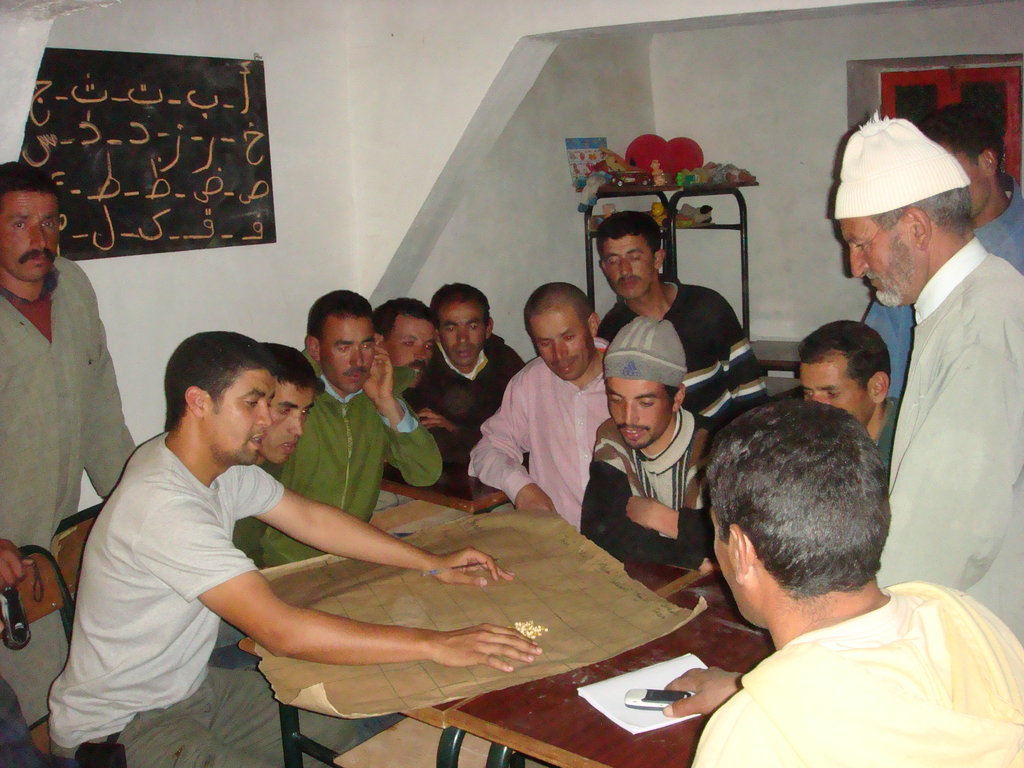
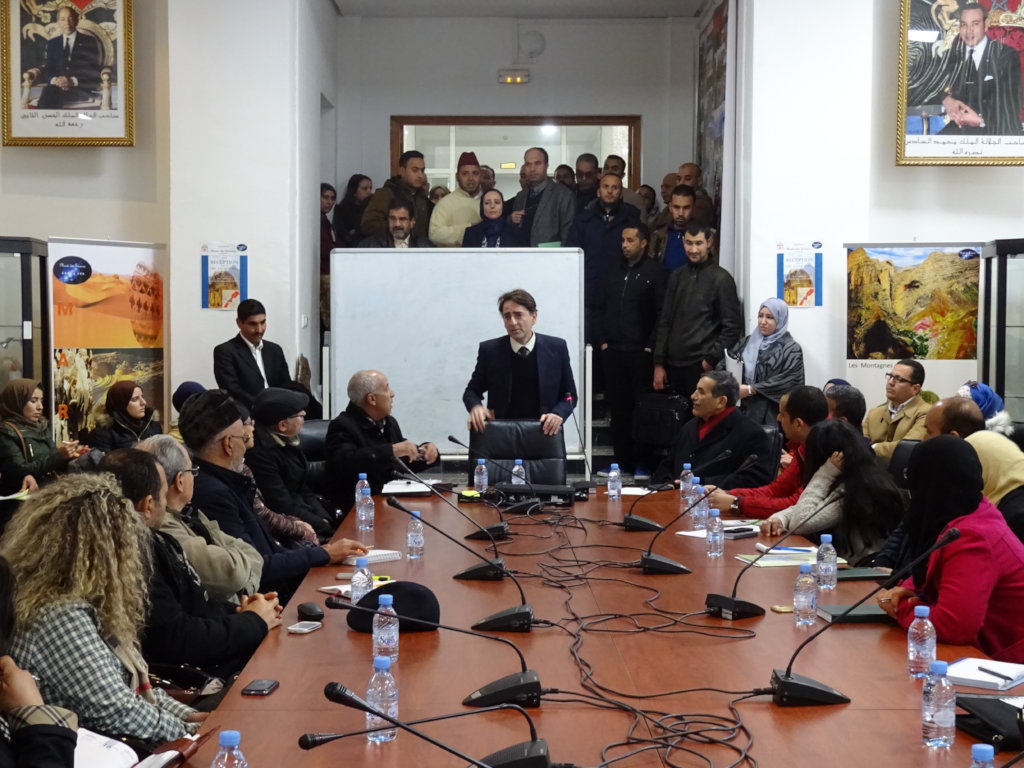
During a follow up meeting with representatives of associations in Beni Yekhlif commune at the local Dar Chebab, where representatives of associations reported on their efforts to create a “Federation of Associations” as way to consolidate resources and create synergy and effective partnerships, the project team advanced ways effective board of directors could contribute to providing good governance and leadership by working effectively both as individuals and as a team. The meeting was an opportunity to meet with representatives of new associations and to invite them to join our capacity building program.


Meeting with representatives of Associations in Beni Yekhlif Commune:

At the end of the meeting, it was decided to invite other Associations (both newly created associations and old associations) to join the “Federation of Associations” project and to allow them time to review the drafted bylaws and regulations. It’s important to note that the constitutive general assembly will be organized as soon as these new Associations share their feedback and suggestions to the working committee and a final and agreed upon bylaws is drafted.

Training session at the University on effective organizational development and management:

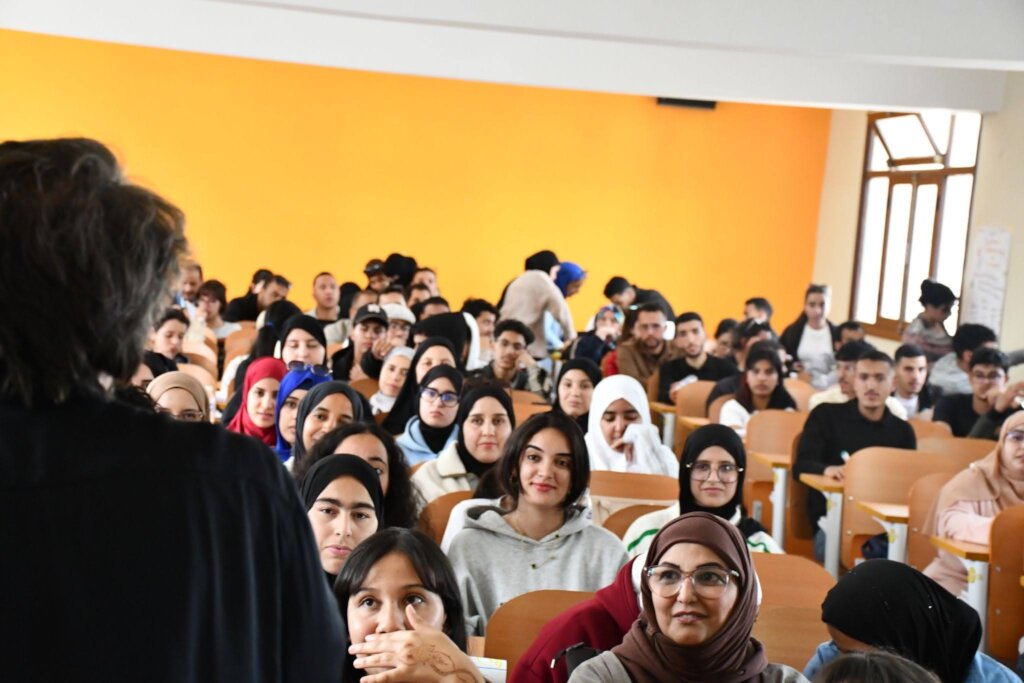
The last activity implemented by the team this week was the first part of a training workshop at the University on effective organizational management and development as way for good governance within CSOs structures. The training session, which focused on effective administrative management was very well received by 23 participants, who expressed their appreciation for the opportunity to learn these principles and techniques and to apply them within their associations.

Thanks for your interest, and supporting us to expand capacity in civil society to make good governance part of the democratic process. 

Links:

Mar 21, 2013

Can We Build a Community Center?

Some of the Students, Full of Energy

Students, together with CSOs has agreed on the priority project of building a community center in Mohammedia. To do so, they have two options. The first is to gain access to a center that was built and completed in 1995 and then immediately closed and never used, or to request for the governor of the province to identify land to build a new community center. The associations and students have opted for the first opion, to gain access to that empty sitting structure, and toward that end, letters are currently being drafted to the governor, the Wali, the Minister of Youth, Sports, and also the communal council's president and assembly members. Student and CSO leaders will meet with the communal council at the commune office in the next couple weeks. After yesterday's meeting, the students contacted the delegue of the Ministry of Youth and Sports, who voiced his full support of the development of this strategy.

This is no small project, and likely, it will be the first of many. A community center would change the meaning of community for the better in Mohammedia. It would be a place of saftey for sub-Saharan African community members who often feel they are targets for violence, it would be a place for youth to come together and play sports and study, it would be a place for associations to meet and to develop further strategies. This is the goal, and our task now is how to get there. 

Particapatory methods exist precisely to define architectural and structural projects for a community. These are the techniques that will be used by HAF team leaders to design the building. 

What we need now is support to make this project real. We hope this will come from the governor, and from those people in Morocco and around the world who have benefited from a community center and want others to share these benefits. Please donate to support this project, which will change the course of community for youth and adults alike in Mohammedia for years to come. 

The conversation never stops - so we look forward to updating you on our progress soon. 

Thanks as always for your support, and check out our photos to see this process in action! 

The HAF & Mohammedia Team

Links:

Dec 27, 2012

Training Students and Political Leaders

West African Student Leader works with peers

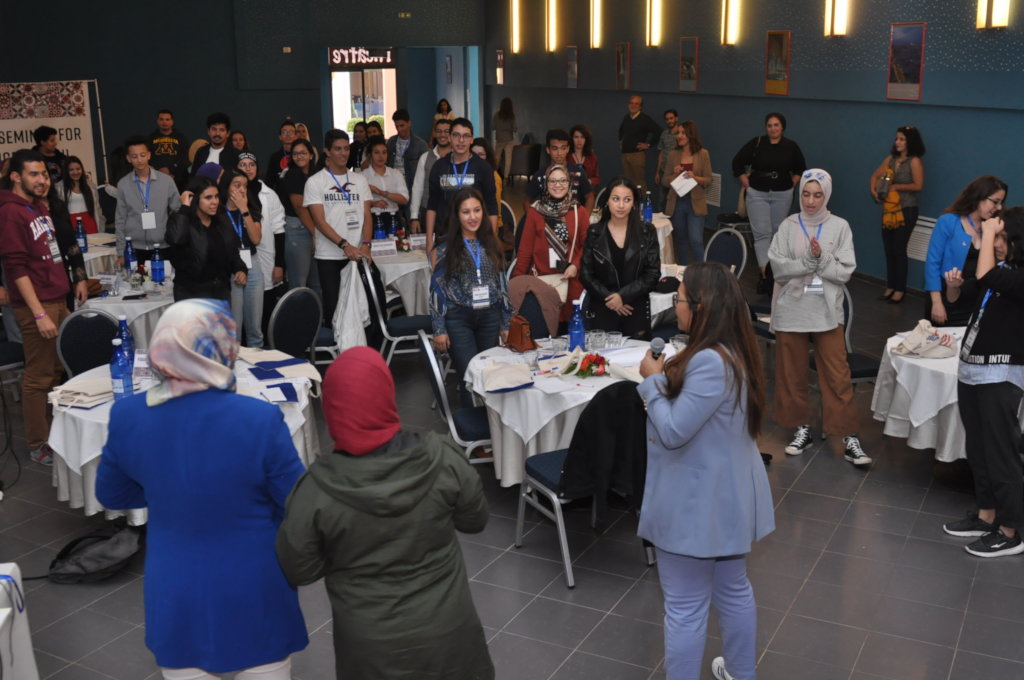
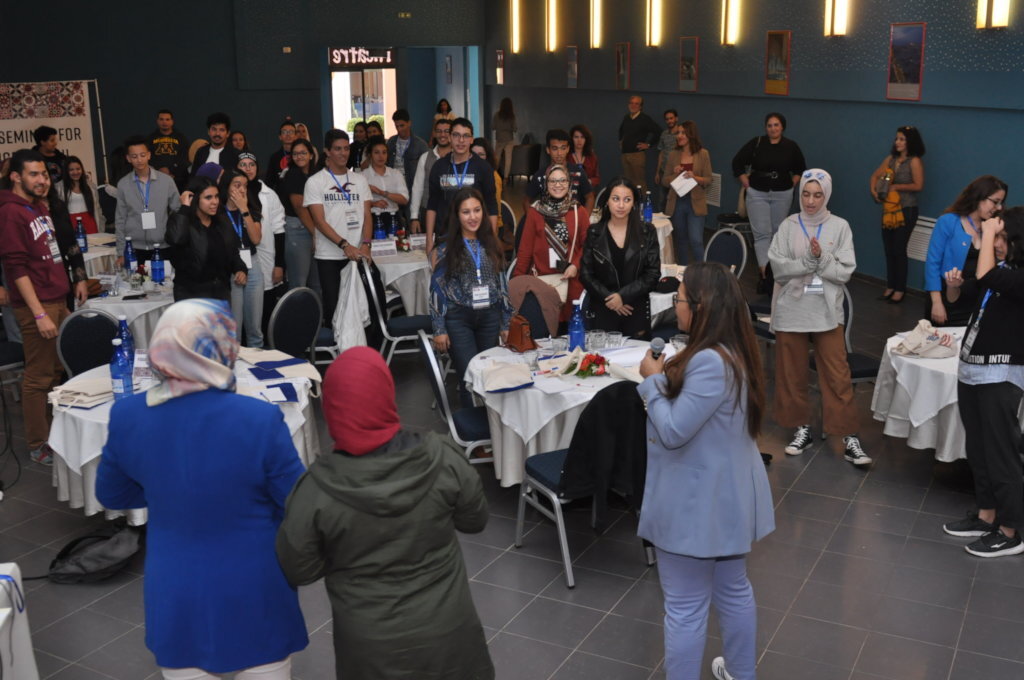
Wednesday was an amazing day.  A day full of possibilities and adventure for the HAF Interns we have been training, as well as for our professional staff.  The training was.  The High Atlas Foundation’s MEPI program in Mohammadia had its first large scale – 65 people – meeting and training (held in the main auditorium of the University of Hassan II with full approval of the Dean) in Community Development with both students and a number of Community Service Organization (CSO).  The latter were represented by the presidents of several your association.

The training, with lunch provided was supposed to start at 11:30. I started getting nervous when 12:30 rolled around and we only had 5 students and large amount of food had arrived!  But as if by magic by 12:45 or so the room was packed!  The students from the various faculties – law Science, and Technology came in groups in quick succession.  It was wonderful to see so many eager faces. Food was distributed and the Vice Dean – Dr. Salim OURYAGHLI -- was sent for as he had expressed a wish to address the student and CSO before the training got on the way. 

Dr Salim OURYAGHLI gave a rousing speech, short, but to the point and powerful.  He encouraged the audience to take advantage of this wonderful opportunity that HAF/MEPI was offering them.  An opportunity that would help them themselves and their communities to reach new heights in community participation and the development of helpful projects the community would choose.  He emphasized that the mastering of the techniques that would be taught to them by HAF would in fact be good for all of Morocco.  The audience gave him a strong ovation before he retired to his office to his extremely busy schedule.  HAF was honored that he had taken timeout of that very busy schedule to talk to the congregated students and CSOs.

Next the HAF Interns (HAFI), introduced themselves: their names, the places of origin, by explaining their place in the PD process, and how they hoped to assist those in the audience to begin to learn the same process.  Ms. Malika Kassi, who conducted the training for this session, introduced herself and had me introduce myself, and then explained what she was going to do for the remainder of the session.

Handouts were given to each member of the audience, in either Arabic or French according to their personal preference.  The handouts delineated the PD mission and process, and were clearly stamped as a MEPI.  

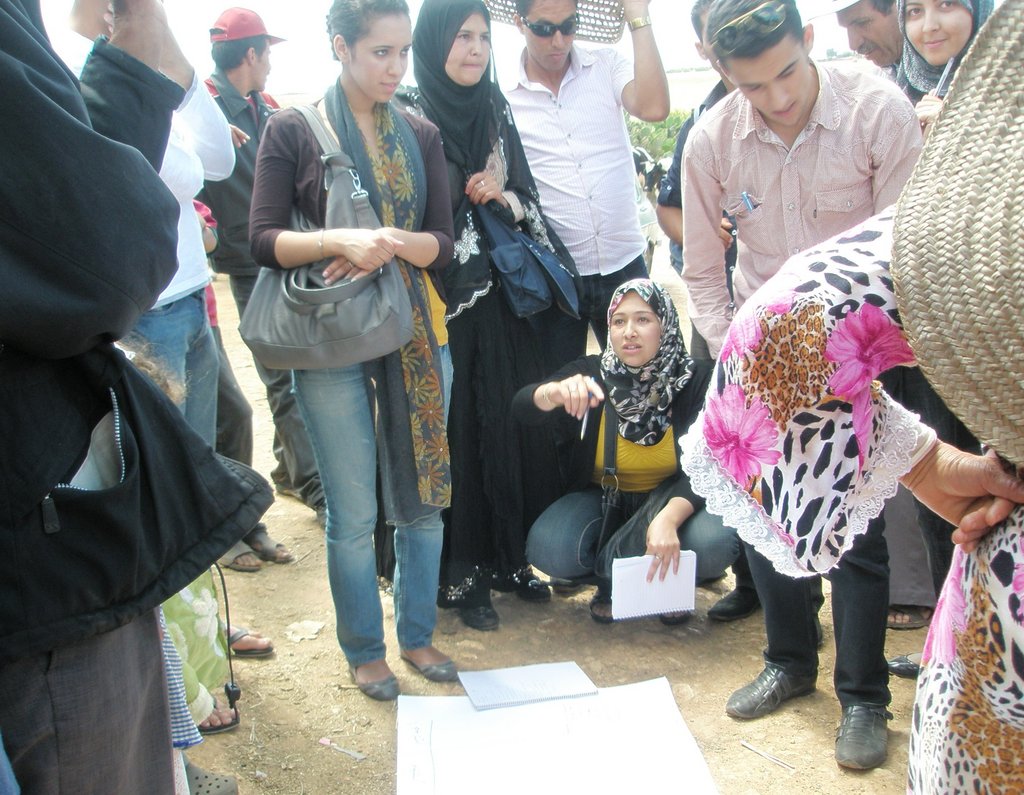
The audience was asked to stand and Ms. Kassi led them in an icebreaker: She would call out a world and each individual had to pantomime what the world meant to them.  For example when she called out the word “peace” many participants held up their fingers in a victory sign, some hugged another person, etc.    After the Icebreaker the audience was divided into four groups and the training began in earnest.  Each group was staffed by a HFAI who assisted them through the first exercise, under the direction of Ms. Kassi, and which consisted of defining a communities and subsequently mapping them.  The chosen “community” for the sake of this training was the University Hassan II itself. The students identified what they would like to see improved and created maps that reflected their impressions of the university.

For almost an hour the groups poured over their definitions and maps, then each group choose a representative to explain their conclusions to the other groups.

Because of time constrains, both by having had started so much later than the designated time, and because more than half of the students had to leave for a class, the training was stopped at that point.  Evaluation forms were handed out and those that stayed completed theirs and the students that had to leave for class gave their word that they would return the complete forms to the HAF Training Center.

Before any of the students left for class, a date was set for the next training session, Wednesday, December 26, from 11:30 to 2:00pm with lunch again being provided.  The audience enthusiastically endorsed their willingness to come to the next training on that date.

The HAFI have been asked to provide a full report of the training, pros and cons. Those reports will be combined and posted here also.

Thank you so much for your support for enabling this project. We are headed in the right direction, and with your support we can make a great community impact. 

Links:

Oct 8, 2012

Ben Guerir region: Female Elected Officials Learn HAF Participatory Planning Development Techniques

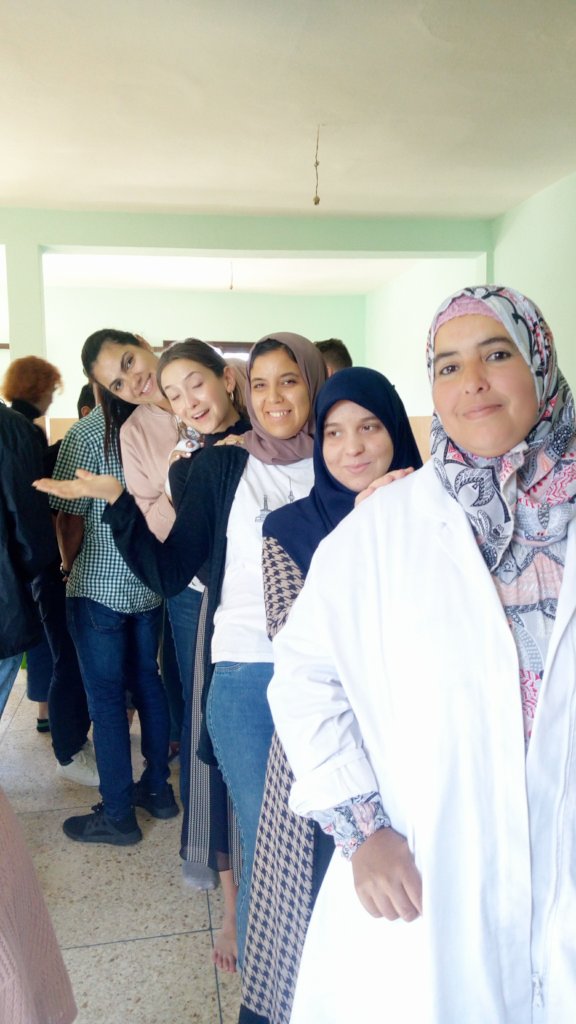
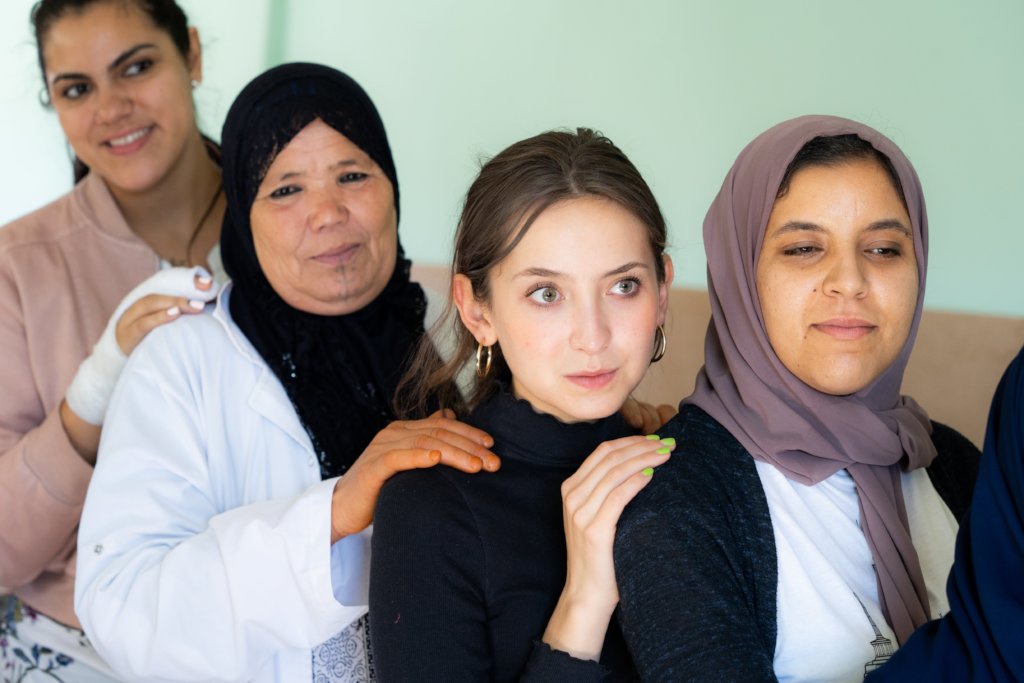
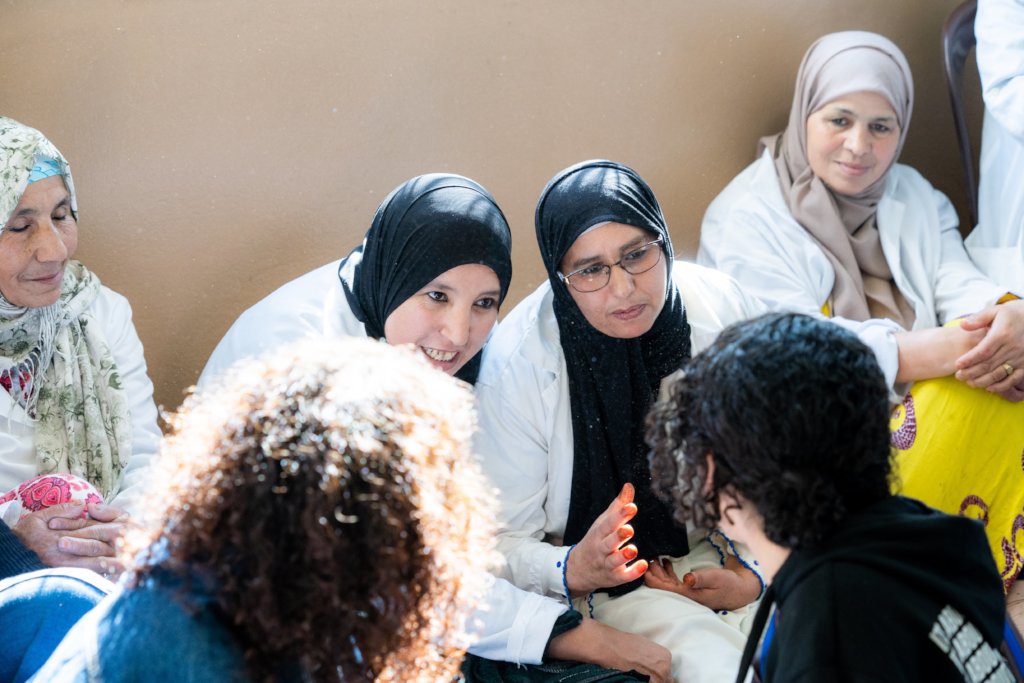
Thanks in great part to funding received from MEPI (Middle East Partnership Initiative), HAF has been teaching another group of female elected officials some participatory planning techniques that help them voice their views and be heard, thereby empowering them to strengthen their roles and become more active and effective leaders in building the capacities of their communities. This training is "learning by doing". While conducting participatory planning activities, HAF is coaching these elected women, supporting them to enter into the process and actively contribute to their communities' development. 

___________________________________________

HAF Community Facilitator Malika Kassi reports:

This particular program benefits 20 elected women from the province of Rhamna, and HAF’s goal is to implement 10 of the projects proposed during their community participatory planning activities, eventually benefitting 4000 people. 

The women trainees expressed that the training has already made a difference in their lives because they feel proud that they will be able to be active leaders in their communities. 

Prior to the training, most of the elected women found it challenging to participate in the political life of their communes because they lacked the necessary skills to be decision-makers concerning the issues of their communes. 

To understand more about their roles, we opened a discussion with them through the following questions: 

How do you feel about your role as elected women?

Some of the elected women feel that they haven’t had opportunities to get involved in political life in the sense that most of the decisions when they are made, do not include them. 

Others expressed that they don’t have enough knowledge about how the communes work, and they are not aware about their roles regarding nonprofit associations and civil society. And some of them said “I am not happy with my role because I feel as stuck in place as a stable rock and I can’t make change happen, although I want to do something good for my community but I don’t know how to make my role effective’.

In addition, some of them said: “I have enough knowledge but I don’t have the power to express my thoughts freely”.

How would you like to see your role as elected women?

Elected women hope to develop a sense of their responsibility for communal issues and be more active in their communities so that their thoughts will be voiced — and heard — in the communes they are working for.

What skills need to be gained in order for them to be more proactive? 

Elected women expressed that: “We have been participating in different workshops but we didn’t feel that we gained enough skills to be active in our communities”. And one of them added: “But I think the way HAF approaches us makes us feel that we can do a lot, and we will gain trust among our communities by being more responsible and active”.


To support them and motivate them, HAF organized a set of trainings and workshops where the elected women learned new skills of both group facilitation and identifying the needs of their communities. 

HAF has been supervising the trainee women in the participatory planning meetings held in their communities where they use  the methods and tools of the HAF participatory development approach in order to understand the community’s needs.  

In this program, HAF is trying to encourage and empower elected women to share their ideas with their communities and discuss social issues and governmental actions by being very proactive in order to acquire full political and social participation. Most importantly, with MEPI’s support, HAF is seeking to enhance leadership skills among elected women.

As we near the end of this particular program, the elected women feel supported because they finally are discovering how to assume their roles in a proactive way.

Not everything is certain, but everything is possible

___________________________________________


Attachments:
Jul 2, 2012

Trainees' view of a Participatory Planning Meeting - as reported by Abderrahim Ouarghidi

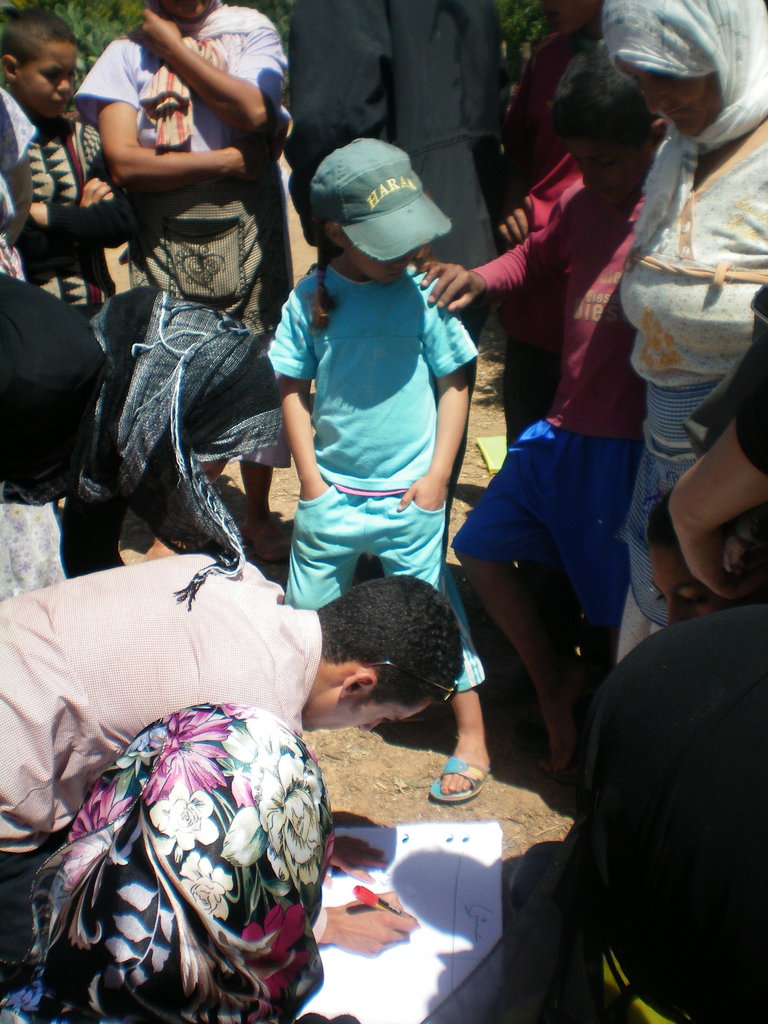
In September 2011 to December 20011, a hands-on training program was conducted (in the Toubkal Commune, Taroudant Province of Morocco) to teach facilitation skills in participatory development planning to local community members and leaders. 

During the course of this training, participatory community planning and development activities were carried out with five village-communities of the Tifnoute Valley.  Field facilitators of the community meetings (who were “trainees” of this program) included 15 community members, who were supervised by HAF’s project and training manager, Abderrahim Ouarghidi.  

  1.  Conducted Community Planning Meetings with Men’s and Women’s Groups: 

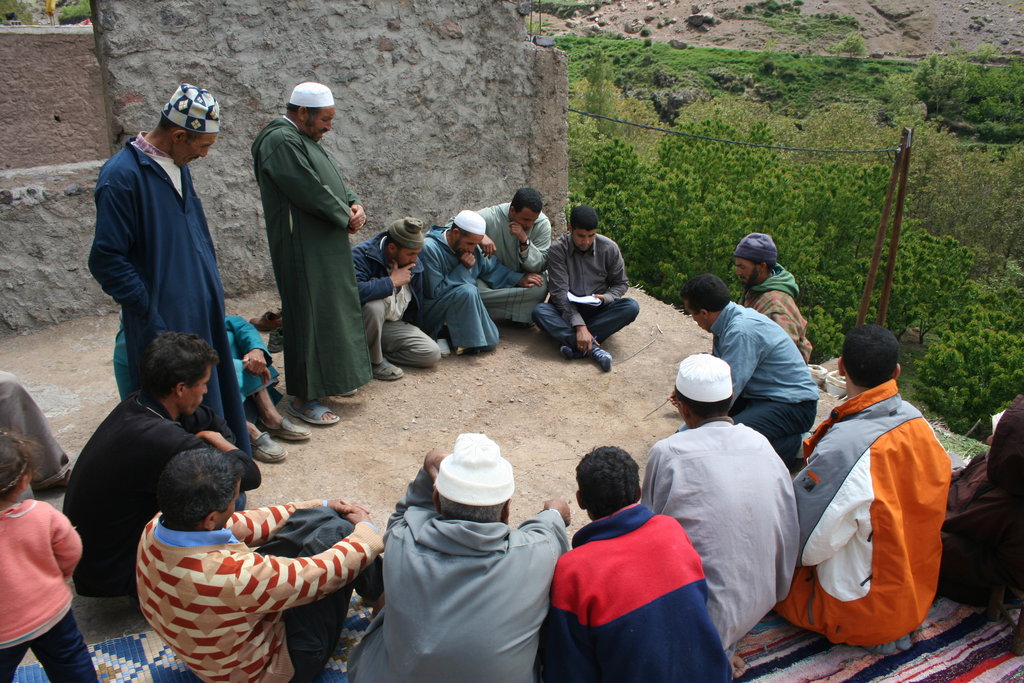
The Men’s Groups:  Building on prior community meetings, the men’s groups identified fruit tree agriculture among their top development priority, and planning meetings that took place during this report period focused on which fruit tree was most viable (environmentally and economically) for their area, and also how most efficiently can they meet their high demand for fruit trees.  During the community meetings in two villages (Tiddildai and Missour), men utilized the participatory method called – pair-wise ranking – to help them identify the fruit trees most viable for their area.  The pair-wise method helps groups to discover opportunities available to them, and what limits may exist – in this case, relative to the type of fruit tree.  The activity is called “pair-wise” because communities compare the importance of each single idea with each other idea.  Approximately 60 men from the two villages participated in the community meetings.  

The field facilitators first worked with small groups as they completed their own matrix and created a ranking list of preferences.  Then, that information was inserted into a community wide matrix, which all the men together worked through.  The facilitators needed to make sure that all voices were heard as people stated their ideas as to the relative important of different options.  Considerable amount of information was generated during these discussions, which facilitators needed to consider and record.  The meetings were very helpful and productive field experiences, for both trainees and communities.

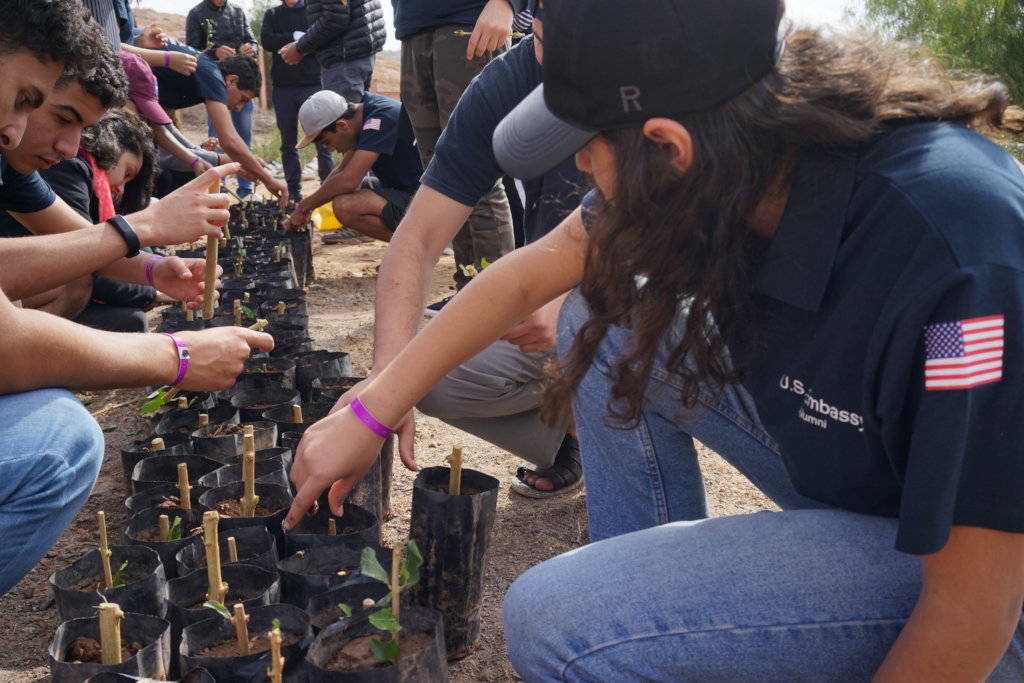
Community meetings conducted for this “learning by doing” training  in a third village, Agadir, focused heavily on building a community-managed almond tree nursery, whereby saplings are planted for two years and then distributed to the targeted households in the entire Tifnoute Valley (lower laying villages where it is warmer) for their orchards.  The total cost of planting 40,000 almond seeds on the land the village identified is approximately $5,000.  This project will economically and environmentally significantly benefit 500 households in the Toubkal Commune.  Seeds are about 5% the cost of two-year old trees villagers normally purchase, and local people will develop new skills in order to maintain the tree nurseries.  The Agadir village is strongly behind this, as is HAF to this agricultural development approach; HAF partners with the Commune to implement this project area.

2. The women’s groups explained, in different ways, that they have either never been to school or left at an early age, and they want to fulfill that need of knowing either by learning how to read and write or by developing other craft-related skills.  This exclusion of women and girls from the socio-economic sphere is due to a range of causes, including: limited financial resources within the household; the burden of household chores assigned to young girls, particularly in rural areas; the absence of adequate educational, communication, and transportation infrastructure; and beliefs that prioritize the education of the male child in the family.  Personal status codes also discriminate.


About Project Reports

Project Reports on GlobalGiving are posted directly to globalgiving.org by Project Leaders as they are completed, generally every 3-4 months. To protect the integrity of these documents, GlobalGiving does not alter them; therefore you may find some language or formatting issues.

If you donate to this project or have donated to this project, you will get an e-mail when this project posts a report. You can also subscribe for reports via e-mail without donating or by subscribing to this project's RSS feed.

An anonymous donor will match all new monthly recurring donations, but only if 75% of donors upgrade to a recurring donation today.
Terms and conditions apply.
Make a monthly recurring donation on your credit card. You can cancel at any time.
Make a donation in honor or memory of:
What kind of card would you like to send?
How much would you like to donate?
gift Make this donation a gift, in honor of, or in memory of someone?

Organization

High Atlas Foundation

Project Leader

Alex Stein

NYC, NY (US) and Marrakech, Al Haouz (Maroc), Morocco

Where is this project located?

Map of Field Train Students, CSOs & Officials in Morocco