Mapping Cholera in Bangladesh

 
$6,375
$23,625
Raised
Remaining
Apr 29, 2013

Moving from Data Analysis to Informed Action

Dear Friends, Family, and Supporters, 

As the summer of 2013 approaches, the Village Zero Project is one year past our first phase of data collection in Matlab, Bangladesh. In one year, we have moved from being data analysists to being informed actors. The data  collected last year has become compelling visualizations of the progression of cholera in space and time. The visualizations show that the number of cholera cases show clear trends both geospatially and temporally. 

Over the course of the last few months, we focused on creating new visualizations to help us understand the areas most affected during each month with greater statistical precision. Our next step was to investigate why we were observing the trends that we observed. By doing extensive research on the causes of endemic cholera, we learned a great deal about the strong link between climate and cholera. We collected climate data, and used this data to understand which factors are strong predictors of disease occurrence. 

We are in the process of publishing our findings in a peer-reviewed journal. In addition to writing up our findings, we have also given two presentations of our findings at the Water: Systems, Science and Society Sympossium, and the Education for Public Inquiry and International Citizenship Symposium: Global Health and Security. 

Apart from our findings, we also presented briefly about another project currently in progress: an interactive applet that enables data discovery. We are currently in the process of designing the interactive system that would allow the user to find connections between climactic data and disease incidence data. This applet will be posted on our website in the coming months as it is developed. 

With so much that has already been achieved in a year in the way of data analysis, we look towards a future of informed action. Now that we have conclusive evidence for the geospatial and temporal trends in endemic cholera, the next step is to increase the scope of Village Zero. We plan on using mHealth (mobile health) to collect realtime data about disease incidence to help create a prediction system for cholera based on all the data analysis we have done this year. This prediction system will eventually allow resources to be diverted to the right place at the right time. 

We have gotten through the data analysis phase of the Village Zero project with the support of our donors. The next phase of our project involves implementing an mHealth data collection system, and creating a framework for resource allocation. As we now move into the action phase, we need more support then ever.

Thank you for your support, and help us transform data analysis into informed action!

-The Village Zero Project

Links:

Jan 28, 2013

Preliminary Data Visualization

Our Mission: V0P seeks to track the spread of endemic cholera in Bangladesh via static and dynamic “ghost-mapping”: the mapping of an endemic disease that is unseen and unheard, but is a chronic threat to livelihood. Static ghost-mapping uses existing health and climatic data to retrospectively map cholera. Dynamic ghost-mapping, which we wish to incorporate in the future, will involve the use of mobile health technologies to collect cholera incidence data and generate disease propagation maps in real-time.

Dear Friends of Village Zero,

As Kate and David have discussed in project reports before this one, we implemented first phase data collection via static ghost-mapping in Matlab, Bangladesh during summer 2012.

We utilized existing health incidence data from our partner, the International Centre of Diarrheal Disease Research, Bangladesh (ICDDR,B), to develop an preliminary data visualization of cholera transmission. We presented the visualization linked here at the American Geophysical Union (AGU) Fall Meeting in December 2012 and received excellent feedback on the importance and necessity of our work! A thorough overview can be found in the poster attached to this report. In short, this visualization shows how cholera spreads in Matlab, Bangladesh over the course of a year, and we plan to publish our results in an open access, peer-reviewed journal in February.

As 2013 progresses, we will develop geospatial models of cholera proliferation in Matlab that employ ICDDR,B incidence data and climatic data. Our models will include temporal and environmental input parameters such as rainfall and temperature amongst others. The output of these models will be a map that highlights villages in Matlab that can expect to experience cholera under given conditions and at what percent incidence. User-friendly applets that are programmed with our models will be made publicly available on our website as they are completed.

This is a very exciting time for Village Zero. We have received much encouragement from the field - and from our friends - that our work is of value and fills an unoccupied niche in infectious disease initatives. Without the support of our friends, we would not be able to accomplish what we have thus far, nor would we be capable of forging ahead as our organization grows and flourishes.

Thank you!


Attachments:
Oct 28, 2012

Data Analysis is Progressing

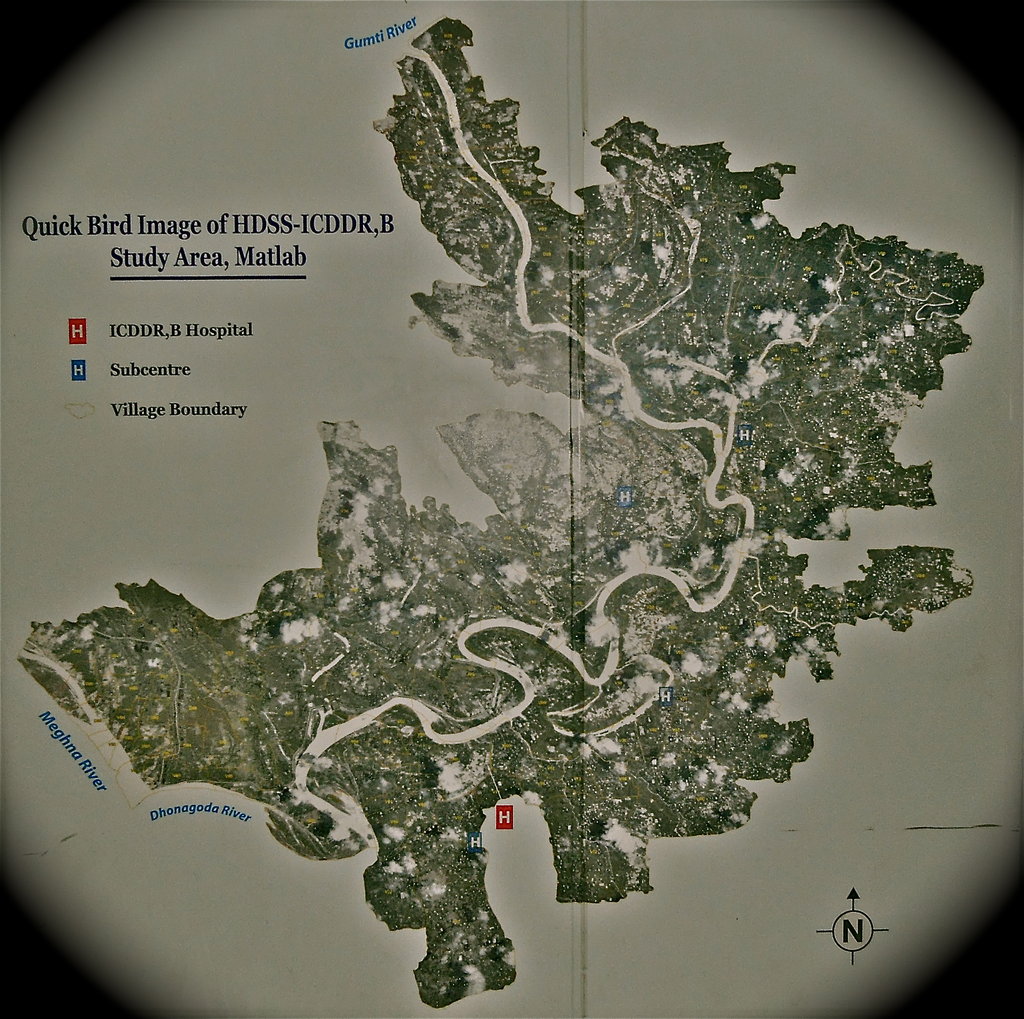
An example map of Matlab

Since the completion of our trip during the summer we have each been very busy working back in Boston on the data we collected. Due to the generosity of the ICDDR,B, we have a lot to work through to help us to prepare for the next stages of the project.

Currently we are working on analyzing data on cholera spread in the Matlab region of Bangladesh from the past 10 years to see if there are any discernible patterns. We are also working with some geographic data in order to create an interactive map application that can be used to visually explore the cholera trends. As there is a considerable amount of data, we expect this stage to take some time, but we firmly believe it is important to understand the traditional trends cholera shows before we can look ahead.

In addition to the data analysis we have been researching a variety of different major research grants that we plan on applying to in order to continue this project into the future. We also have added a new member to our team, Tara, who is assisting with the data work.

We would like to thank all of our supports once again. Without the help you’ve provided us with, we would not be able to complete this work. 

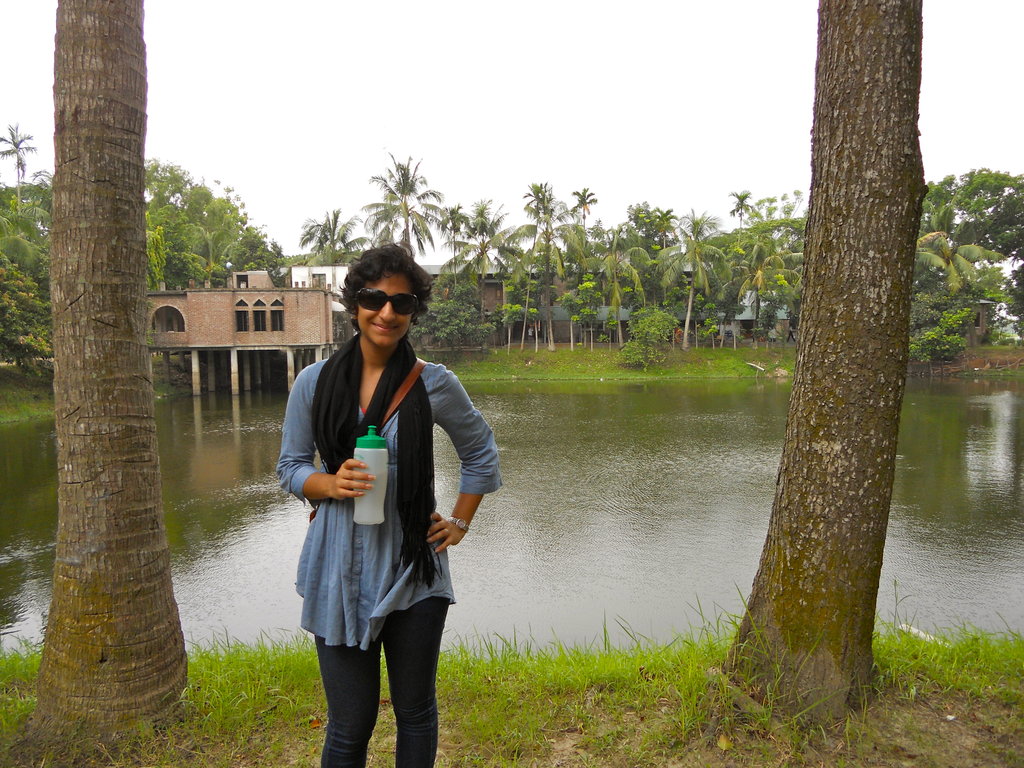
A River in Matlab where our data comes from
Jul 30, 2012

V0P Trip to Bangladesh

This summer has been very important for the Village Zero Project (V0P). We started off with a one-month trip to Bangladesh to collect data and lay a solid foundation for future implementation of our project. We spent the majority of our time in Dhaka, where we met with potential partners and colleagues at the International Center of Diarrheal Disease Research, Bangladesh (ICDDR,B); however, we also had the opportunity to spend three days in the rural province Matlab, where the ICDDR,B has another campus.

The meetings that were held and the data that was collected taught us a great deal about the current state of the spread of cholera in Bangladesh. We were able to hear first-hand accounts of people’s struggles with cholera and their hopes of a cholera-free future. These experiences also brought to light the types of challenges that we can expect to face as our project progresses. Together these experiences have helped us shape our approach towards the next steps of our project.

Now that we are back in the United States, we have started to process the data that was collected during our trip. We hope that the data will show whether there is a geographic progression of cholera in the Matlab region in order to give us an early indication of what we might find when we launch a larger-scale tracking schematic.

Our trip to Bangladesh would not have been possible without the support of the friends and family of the V0P team and we would like to extend our warmest thanks to everyone who supported us.

About Project Reports

Project Reports on GlobalGiving are posted directly to globalgiving.org by Project Leaders as they are completed, generally every 3-4 months. To protect the integrity of these documents, GlobalGiving does not alter them; therefore you may find some language or formatting issues.

If you donate to this project or have donated to this project, you will get an e-mail when this project posts a report. You can also subscribe for reports via e-mail without donating or by subscribing to this project's RSS feed.

An anonymous donor will match all new monthly recurring donations, but only if 75% of donors upgrade to a recurring donation today.
Terms and conditions apply.
Make a monthly recurring donation on your credit card. You can cancel at any time.
Make a donation in honor or memory of:
What kind of card would you like to send?
How much would you like to donate?
gift Make this donation a gift, in honor of, or in memory of someone?

Organization

The Village Zero Project

Medford, MA, United States

Project Leader

Maia Majumder

Medford, MA United States

Where is this project located?