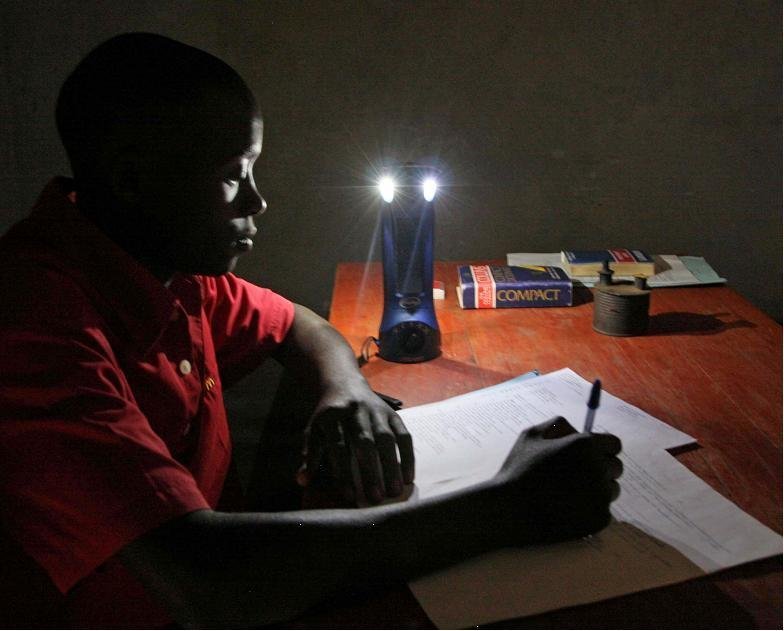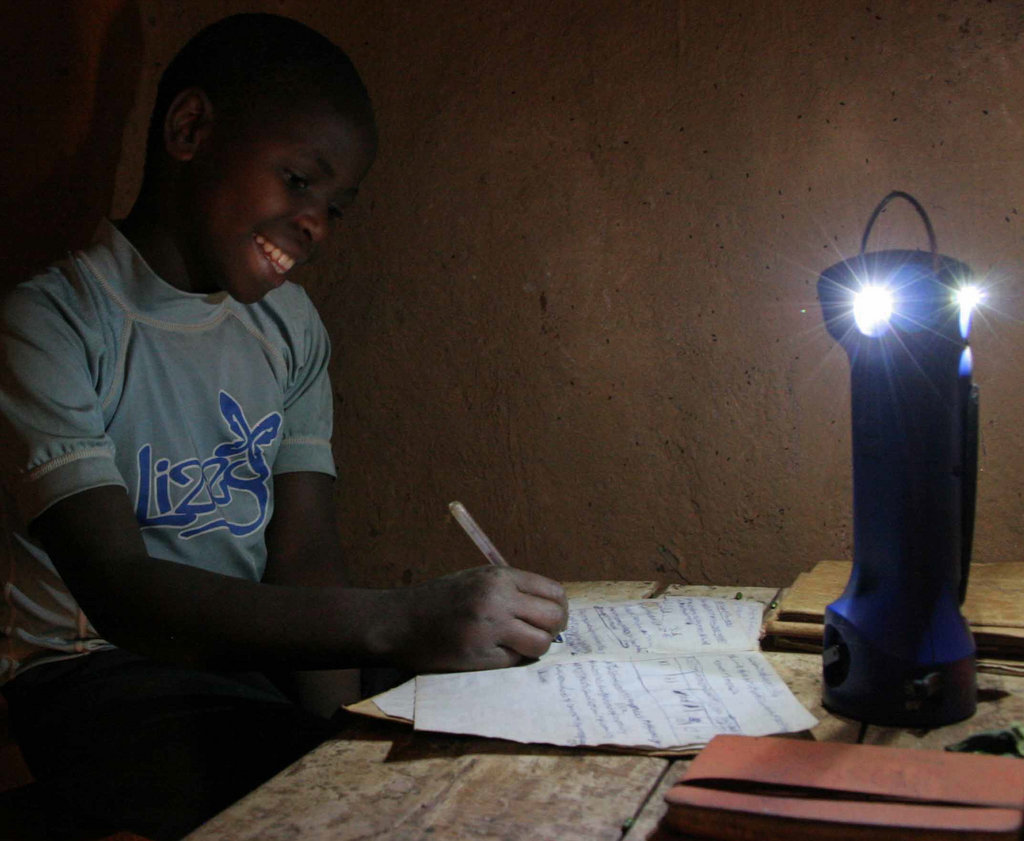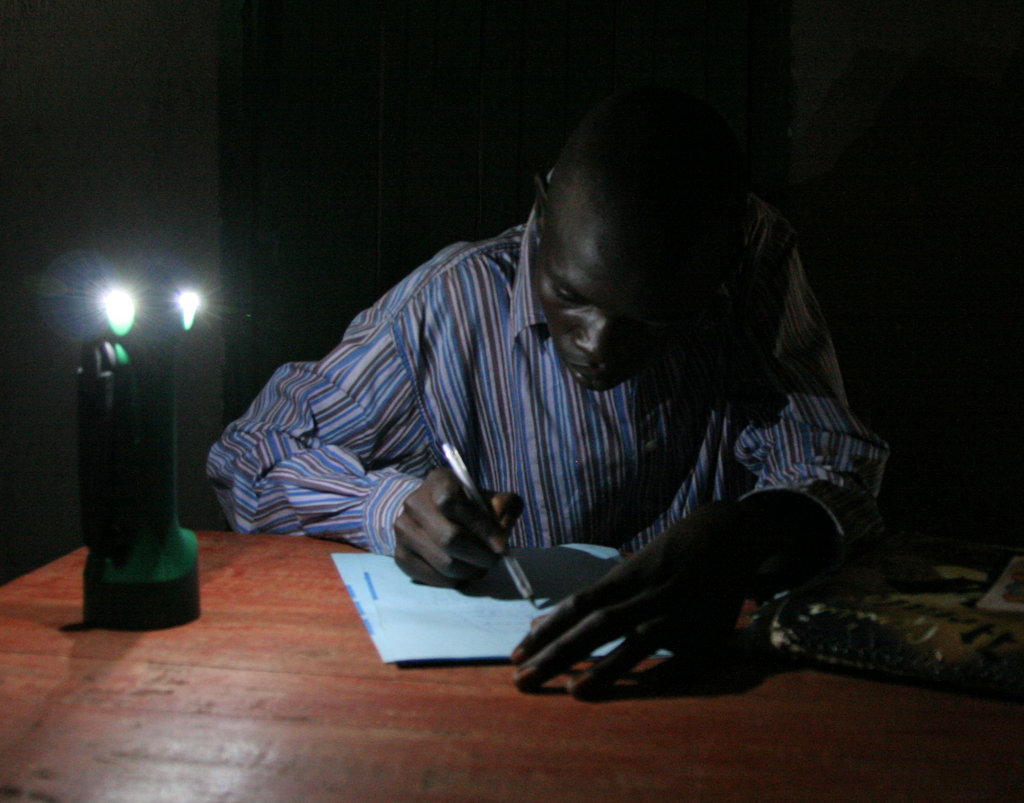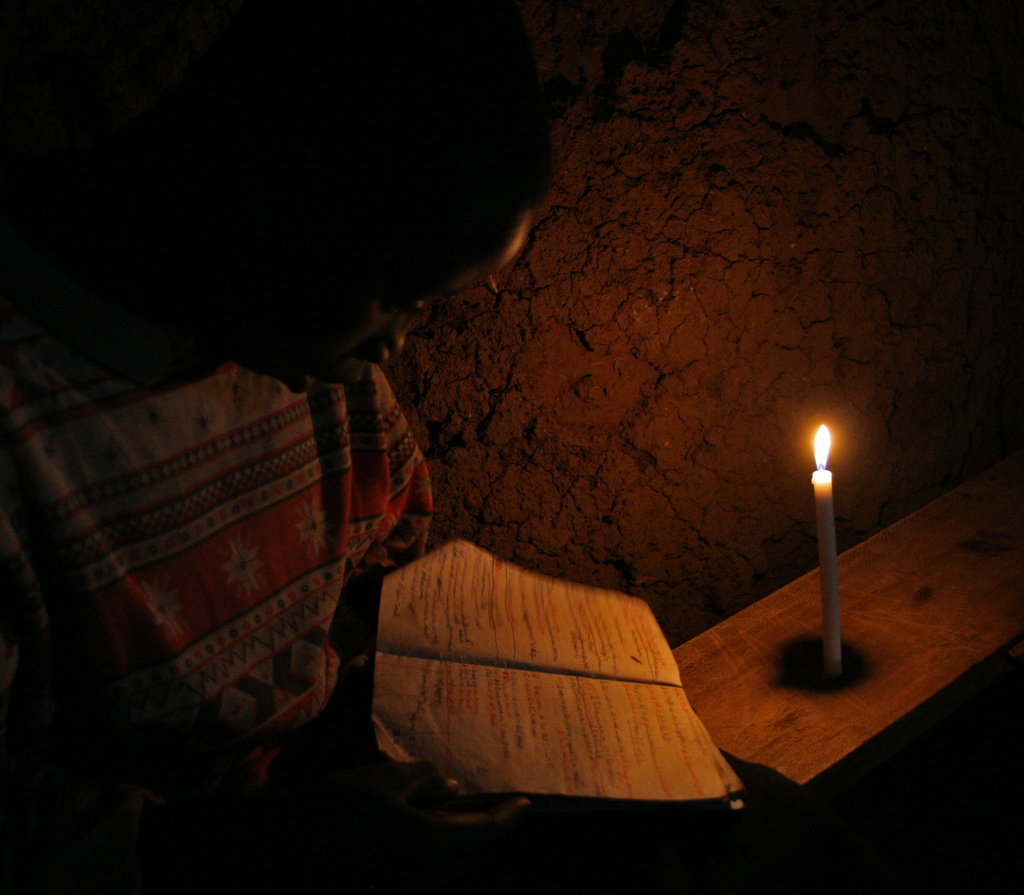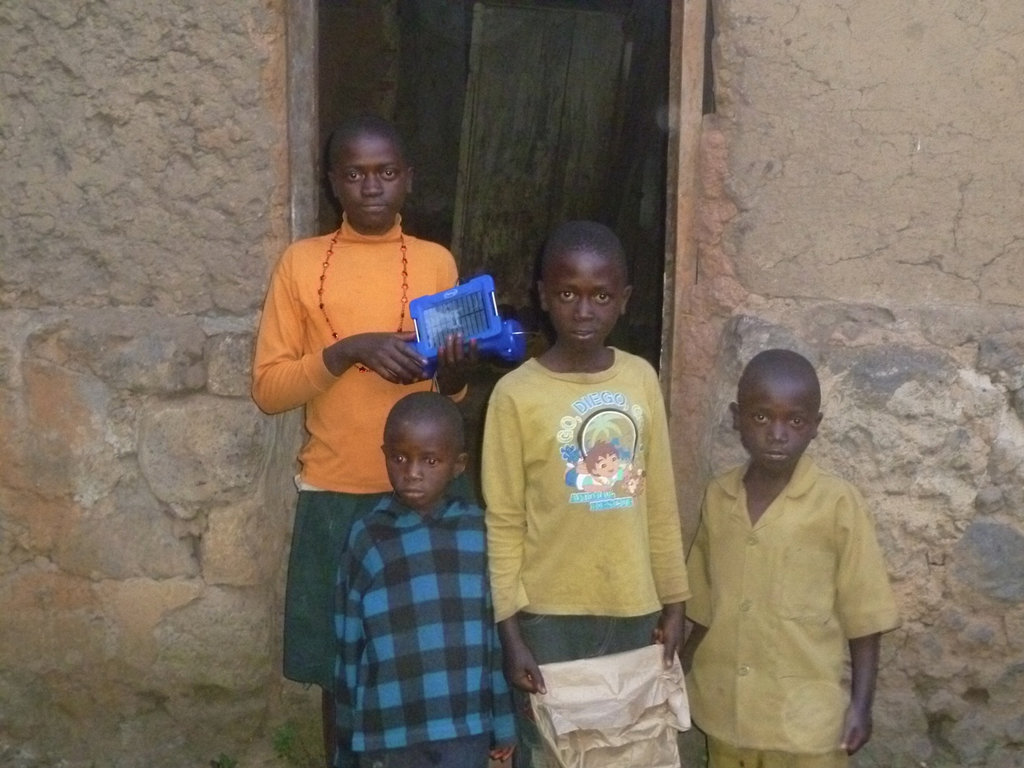
This child-only family in far northern Rwanda was utterly destitute. There are five children, and the eldest boy, Manuel, 15, was away doing odd-jobs to earn money for food when we arrived with our local partner. Faina, 13, looks after the three smaller children while Manual tries to eke out a living. The neighbours also donate food and clothes to them. Faina tried to go to school, but she has to look after the youngest, whom is five. They were thrilled with their light and couldn't imagine anything like it. Once dark, the only way they have any light is from firewood. Faina said that being alone, they are often afraid at night and the light would ease their fears. She also said that Daniel, 11, goes to school, and he would be able to revise his schoolwork.
Working closely with local partners, Lifeline Energy's lighting programming provides clean energy lights to orphaned families in Rwanda.

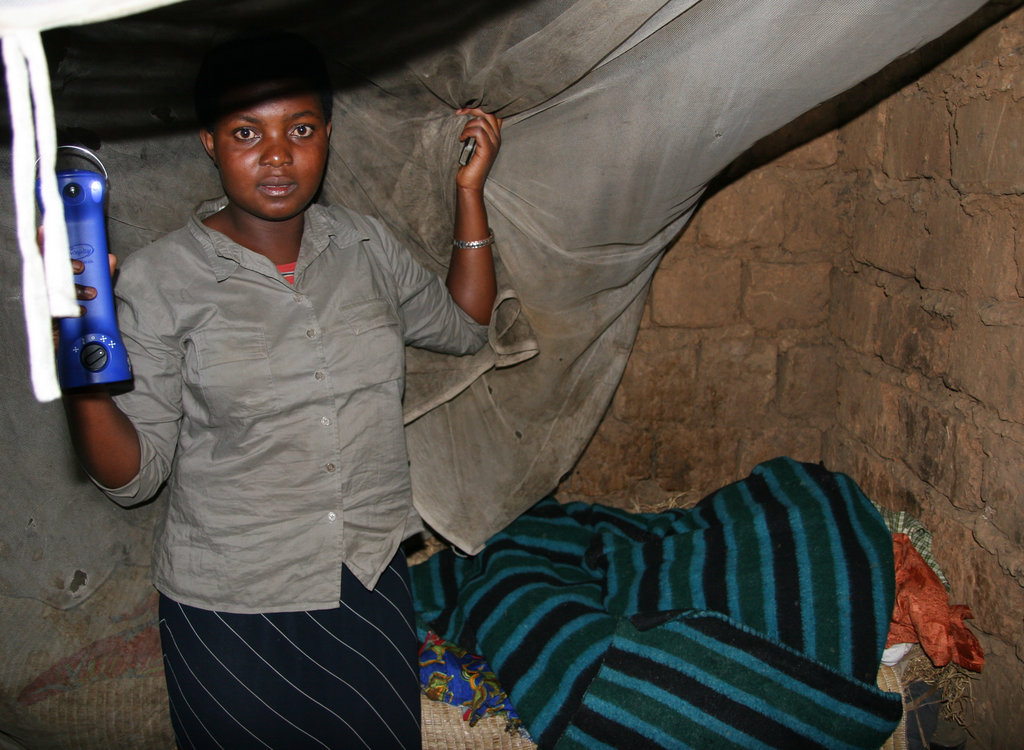
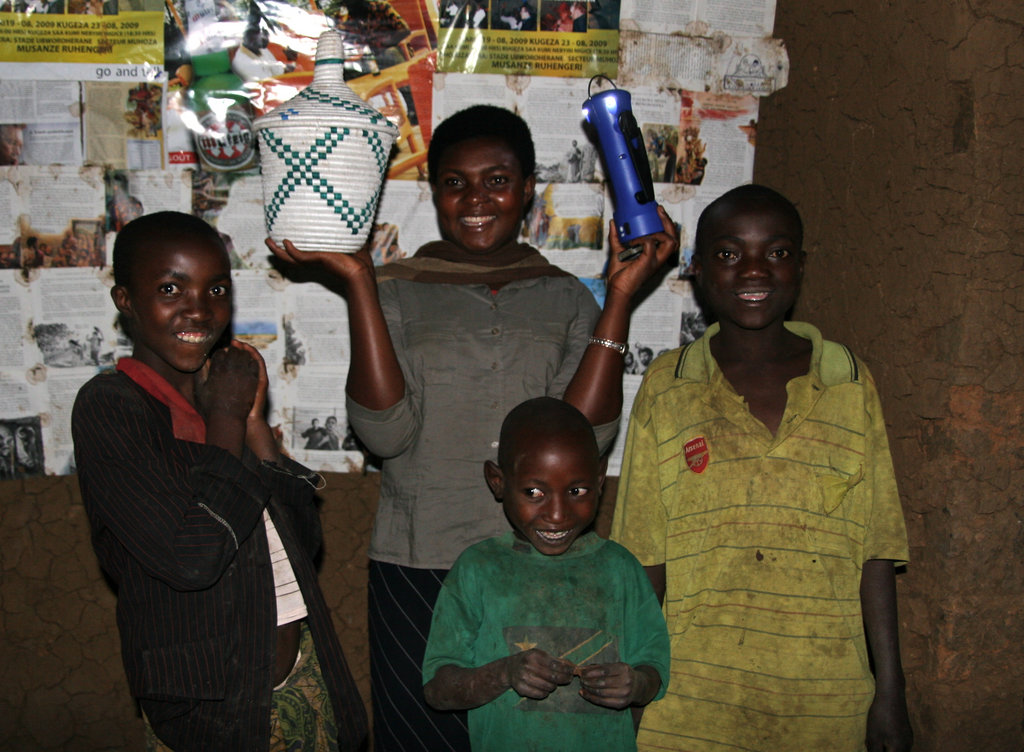
This is 21-year old Diane, who has been heading her household since she was 11 and looks after four younger siblings. The family inherited the two roomed mud brick house when their parents were killed in a raid by militia from bordering Congo. The isolated dwelling sits high above Musanze town in northern Rwanda on a steep hill - a 45 minute walk from the tarred road.
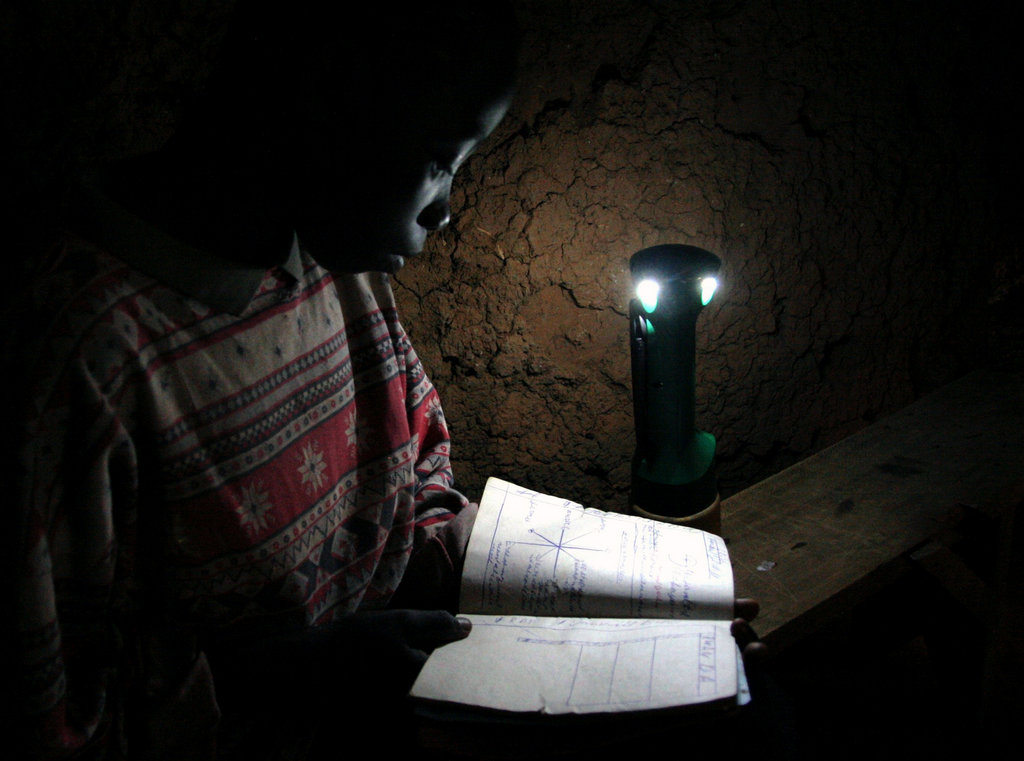
Diane was thrilled with her light, as all the family’s nighttime activities were dimly lit by a tin can ‘agakoroboi’ kerosene lamp. She uses the light to help her cook, to wash up after dinner and keep rats away. The younger school children use it to read and revise their homework after the evening meal. In addition, they all use it to walk to neighbors after dark. Previously, Diane told me that she used to count the steps to the walking path, to the toilet and to their neighbors house. Now she flicks on her light to lead the way.
Diane just received a Solarstor solar panel in February that charges cell phones and also has an LED light. To her, a mobile isn’t a luxury, it’s a necessity, as she is part of a women’s association that weaves baskets and needs to communicate with the other weavers. Diane will not only save money and time charging her phone, she will also have a light source for nighttime weaving.
Dozens of children were there to greet Kristine Pearson as she delivered 28 of Lifeline Energy’s solar-powered lights to orphaned children several miles outside Nyamata town in Rwanda’s Bugesera district. Dressed in their best clothes (although that may mean the only clothes they have), many walked for up to two hours to the distribution session held at a community center and some had received lights in previous distributions.
The children – many of whom have been forced by circumstances to lead their households – said they spent a disproportionate amount of the meager monies on kerosene to be able to see at night. However, with our renewable lights – which were first distributed last year, the money they are now saving from not having to buy fuel goes towards school supplies, food, soap and other necessities. Older children earn money by digging in a neighbor’s field or doing odd jobs.
The children who received lights in December or May already told Kristine that with using kerosene, they found it difficult to study or even go to the toilet after the sun went down – and in Rwanda that is at 06:30 every night given its proximity to the equator. One child told her that before the light, if there was an emergency at night they had to “wait until the day.” They can now handle the problem when it happens.
One recipient of a light, 14-year-old Daria, who lives with her sister and widowed, unemployed mother in a two roomed mud and thatch house, was delighted. She said, “I can now study at night. Normally, by the time I get home from school, fetch water and do other work around the house, I have no time to study. I also won’t have to spit up ‘black’ anymore from the fuel.” Children and adults alike always complain about the the irritation that kerosene causes to the eyes and lungs.
Kristine first traveled to the area in 1999 and says since then massive changes have occurred. She says: “It used to take over two hours to just to get Nyamata town from Kigali, but with the newly tarred road, it only takes 40 minutes.” In addition, all tarred roads have sidewalks for people to walk safely. Even in rural areas, many of the dirt roads have been resurfaced and have gutters for drainage during the rainy season. Nyamata town now has electricity, but the rural areas around it do not, making the lights all the more important.
Bugasera districts was one of the hardest hit during the 1994 genocide. Prior 1994, the population was estimated to be 64,000, afterwards it was 2,000.
Project Reports on GlobalGiving are posted directly to globalgiving.org by Project Leaders as they are completed, generally every 3-4 months. To protect the integrity of these documents, GlobalGiving does not alter them; therefore you may find some language or formatting issues.
If you donate to this project or have donated to this project, you will get an e-mail when this project posts a report. You can also subscribe for reports via e-mail without donating or by subscribing to this project's RSS feed.
London,
United Kingdom
http://www.lifelineenergy.org
Projects on globalgiving.org undergo compliance checks to ensure they have a bona fide charitable purpose and meet applicable laws relating to international philanthropy. Organizations listed as partners do not necessarily endorse or support any particular project listed on globalgiving.org. The GlobalGiving Foundation is a 501(c)3 organization (EIN: 30-0108263).
GlobalGiving
1023 15th Street, NW, 12th Floor, Washington, DC 20005
Phone: (202) 232-5784 Fax: (202) 315-2558
Contact us