Earlier this year, I attended the World Toilet Summit in Delhi, India. The agenda boasted several items likely to appeal to attendees like me who came to the conference with education access and female empowerment on their minds. Over the two-day event, panelists discussed topics like “School Sanitation: Nurturing Young Minds for Swacch Bharat (Clean India Mission)” and “Dignity for Girls/Women through Sanitation Access.”
But conference attendance is inevitably as much—or more—about the “who” as the “what,” so my most meaningful hours were spent not at the historic Vigyan Bhavan Convention Centre in New Delhi, but visiting many rural villages in the state of Odisha (formally Orissa) with representatives of the organization Gram Vikas.
Gram Vikas (“village development” in Hindi and the local language Oriya) partners with rural and tribal communities to address critical needs like education, health, safe drinking water, sanitation, and livelihoods. I was particularly interested in Gram Vikas' initiative to equip all communities in Odisha with toilets and clean water. That’s a daunting task. According to UNICEF, Odisha has one of the poorest indicators on sanitation in India. Only 22% of households have access to toilets (see more at http://www.unicef.in/StateInfo/Odisha/Challenges).
Thrive Networks, of which Reach Global is now a part, also has an ambitious sanitation program, which builds an average of 6,000 toilets a month in rural Vietnam and Cambodia. So, I was keen to compare approaches. And with my education hat on, I was particularly keen to understand how critical sanitation and hygiene education is, or could be, in India. Gram Vikas mobilizes communities using a very particular approach, one built on foundational community governance and financing principles. This approach requires communities to agree that: 1) everyone in the community—from the most well-off to the poorest Dalit (also known as “untouchable”) member—will be included; 2) every family that is able will contribute to fund clean water access and toilet construction; and 3) no member may defecate outside of a latrine within the community. To achieve this last agreement in India is huge, as India has the single highest rate of open defecation in the world, reflected in the graph below. To give you some perspective on what that looks like, UNICEF estimates that 1,200 children under the age of five die every day from diarrhea in India due to lack of proper sanitation. This is one of the silent killers that new knowledge and practices can address right now.
There are downsides to Gram Vikas’ approach. It usually takes many years and the consistent presence of paid community advocate in each village to achieve the goal of an open defecation-free community. Perhaps more importantly, this “all or nothing” approach means the whole community has to participate or Gram Vikas won’t work with it, even though we know that a partial reduction in open defecation reduces the health threat it poses. Nonetheless, in a country with such a daunting challenge, I find their approach compelling.
In my conversations with Gram Vikas I raised the question of which element of the approach is most critical to their success, and hardest to get right. Is it the toilet technology? The financing of community toilets? The community mobilization? In fact, it’s none of these. The “hardware” of toilet and water technology is not the critical need. Money is not the issue, as the current government has made sanitation a priority like no other before it, allocating huge amounts to toilet installation. No, it turns out the critical issue is getting people to use the toilets that are built. Behavior change is the thing. Full stop.
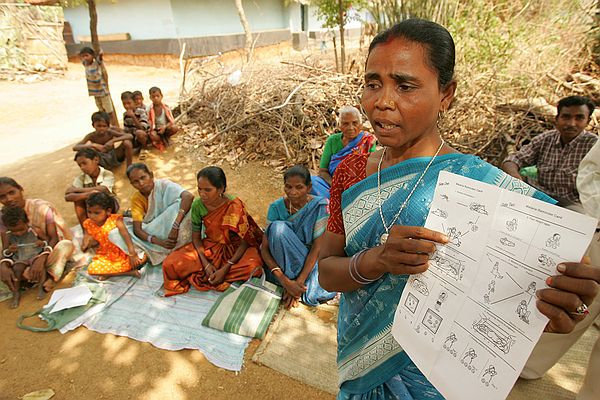
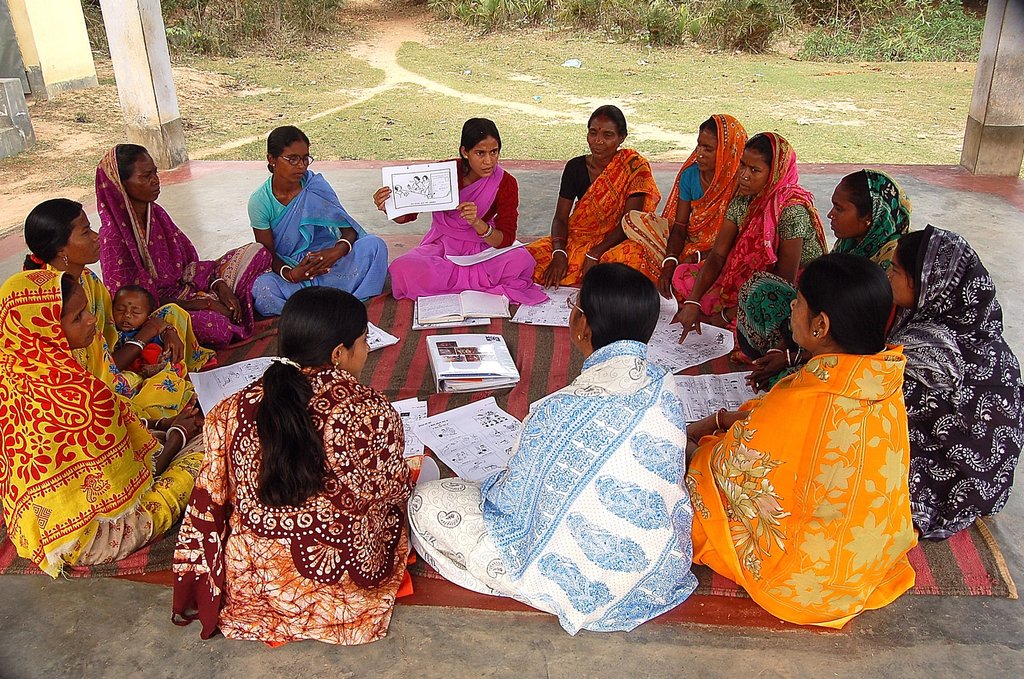
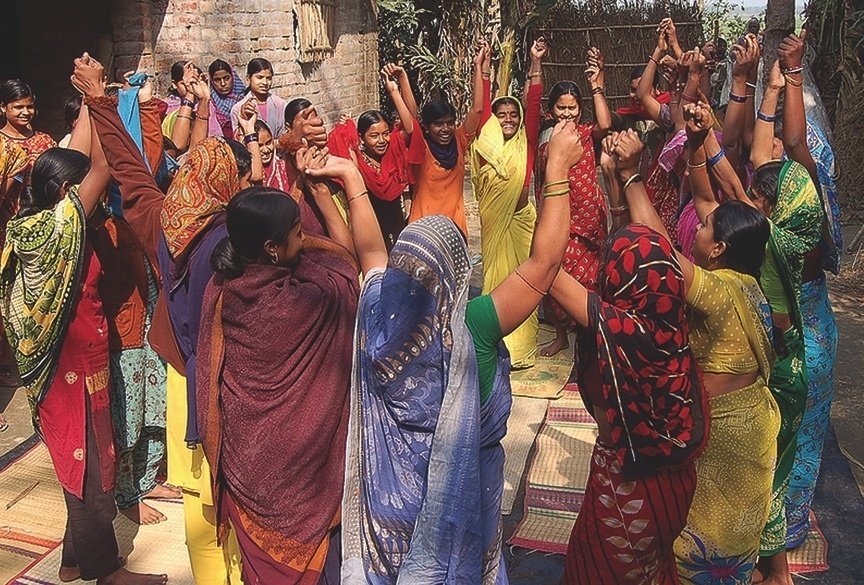
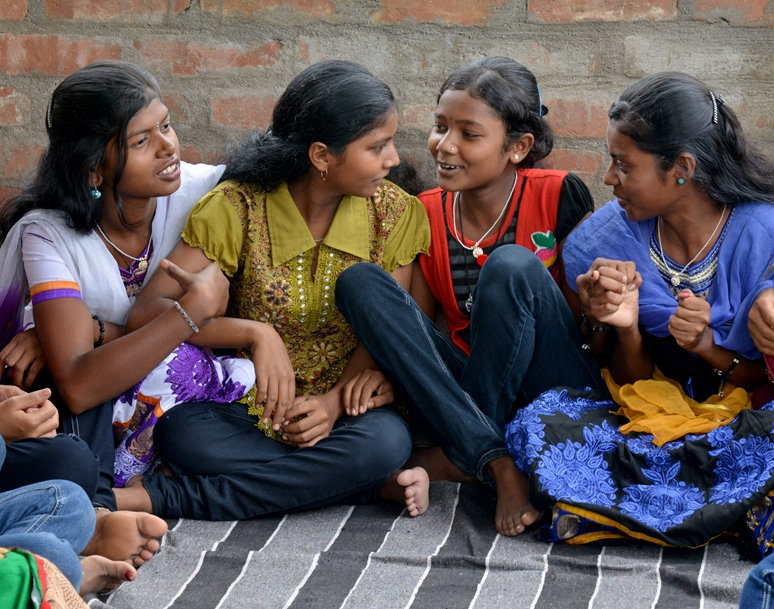
Now, that is a challenge I know something about. Reach Global and its in-country partner, Reach India, have trained thousands of community organizations across 14 states of India to facilitate behavior change education for hundreds of thousands of groups of adolescent girls and women. This education has spanned sexual and reproductive health, family finance, malaria, HIV/AIDS, nutrition, and how to avail the benefits of government programs that provide low-cost health insurance and rural employment.
Reach Global is keen to identify ways it can help communities across rural India improve sanitation and hygiene practices. This, in turn, will go a long ways towards reducing malnutrition, diarrhea, and a host of other health threats women, girls and their families face regularly.
Thanks again for your support,
Sean