By Felipe Cordero | Enterprise Development Associate
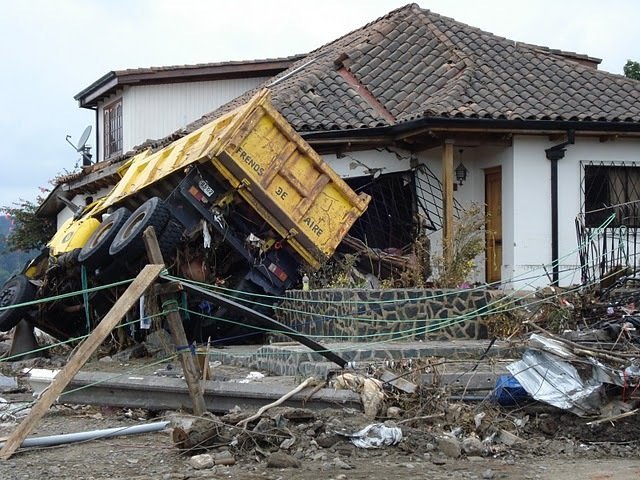
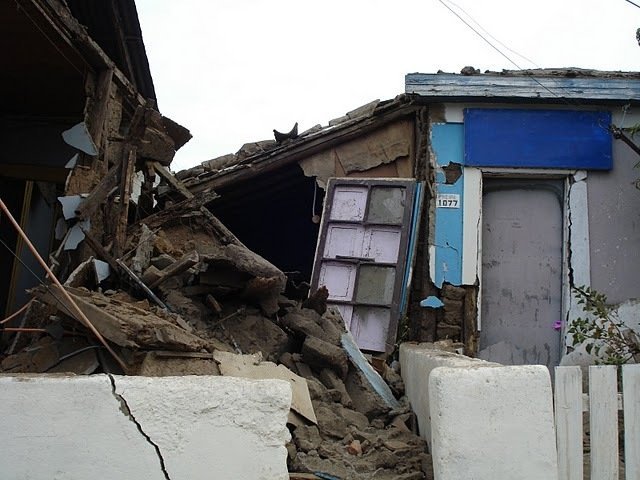
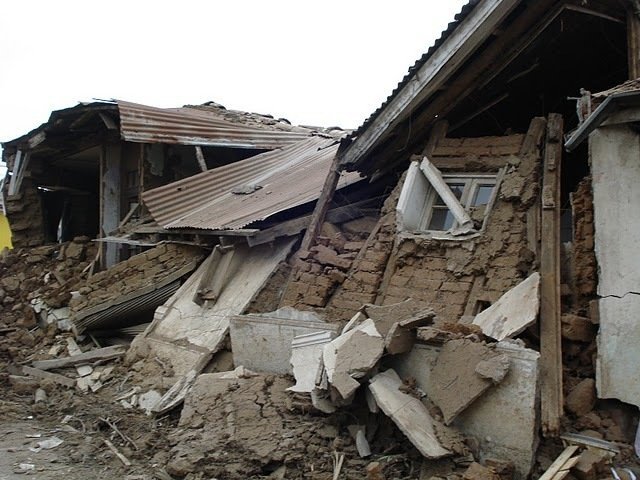
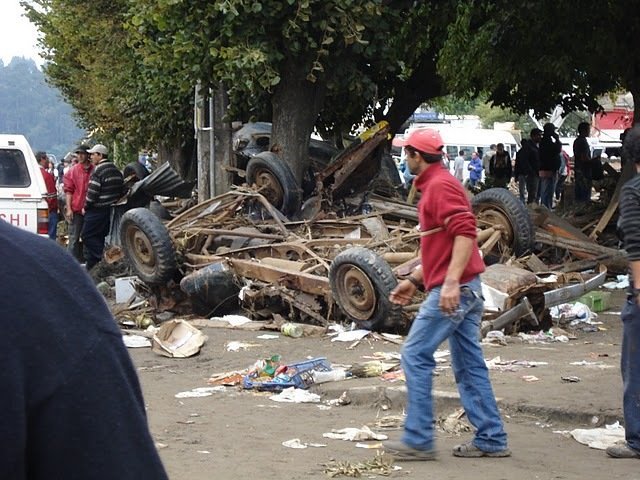
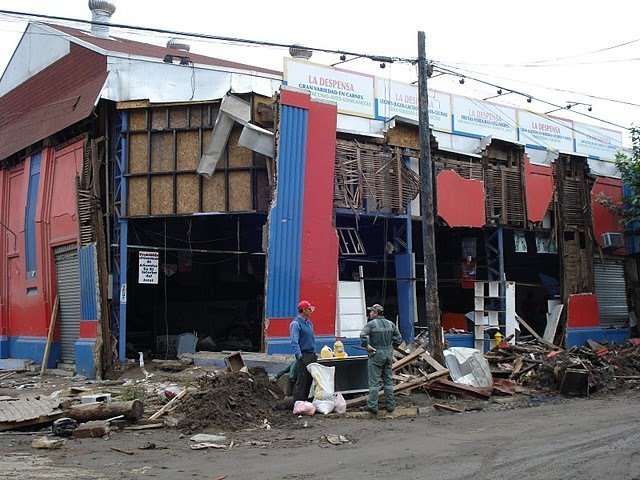
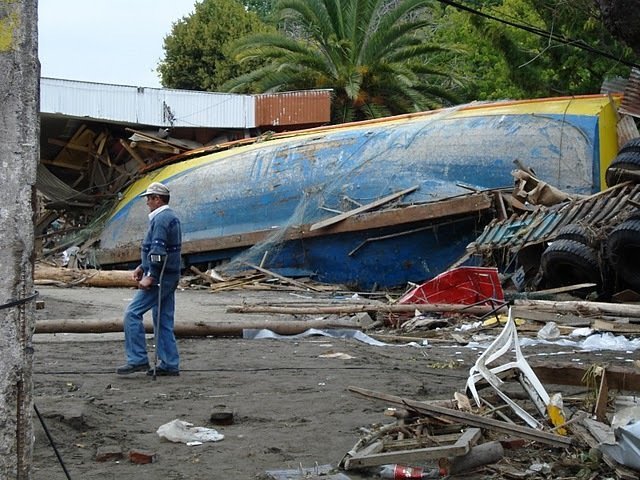
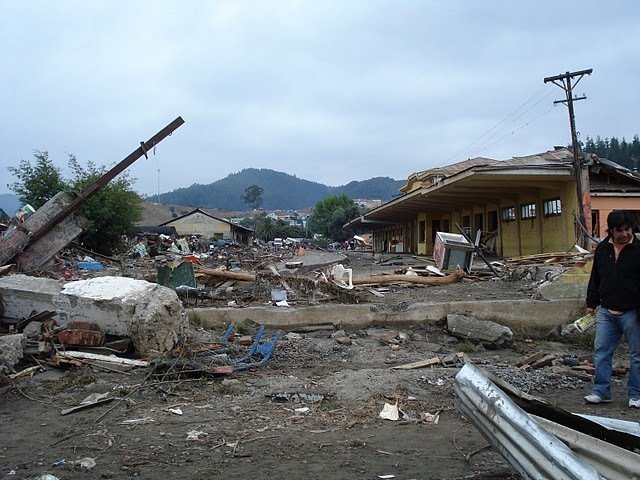
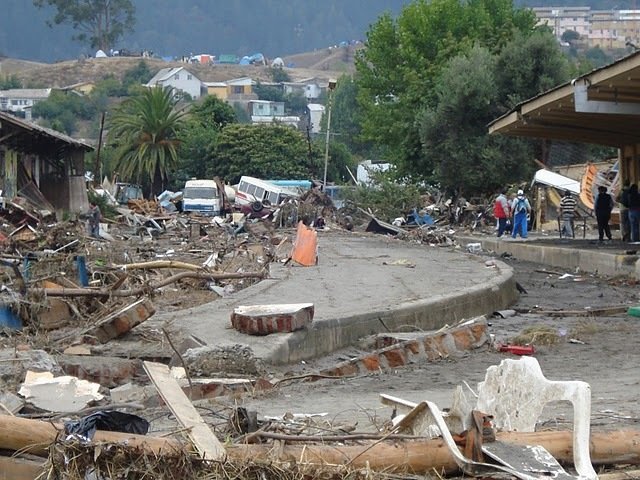
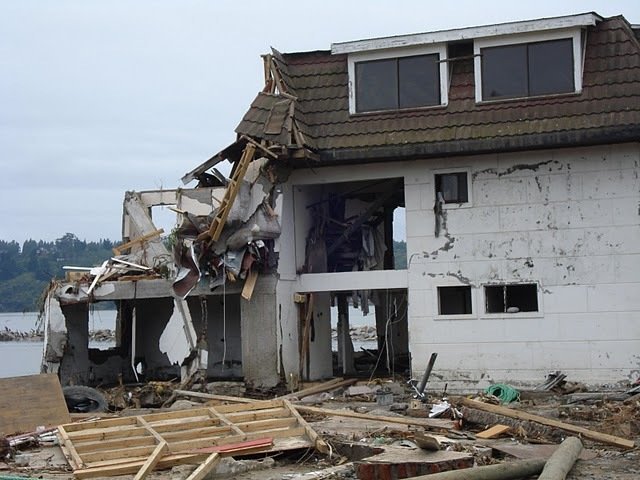
Greetings from Santiago, Chile! Once again, it is a pleasure to share some exciting updates about the final days of this successful project working towards our goal of supporting 372 producers and artisans from southern Chile who were severely affected by the 2010 earthquake and tsunami. Here are some of the latest developments:
Social Enterprise Competition:
Investment Plans: In our previous update, we reported that NESsT had devoted significant efforts towards finalizing sound investment plans with each of the winners of our special Social Enterprise Competition. At this point, the investment plans have been finalized and approved by NESsT and our partners at the Multilateral Investment Fund.
Monitoring Performance: We also reported that we were providing advice and support to finalize the “Performance Monitoring Tool” (PMT), which is a unique tool used by NESsT to measure progress, performance and social impact. This tool sets out very specific, measurable objectives and goals for each social enterprise and each newcomer to our portfolio must learn how to use it. At this point, we are happy to announce that all 3 winners of the social enterprise competition have finalized their PMT’s.
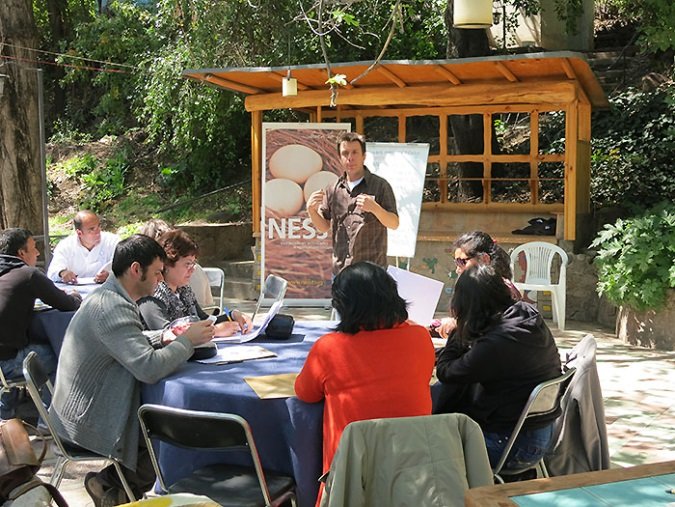
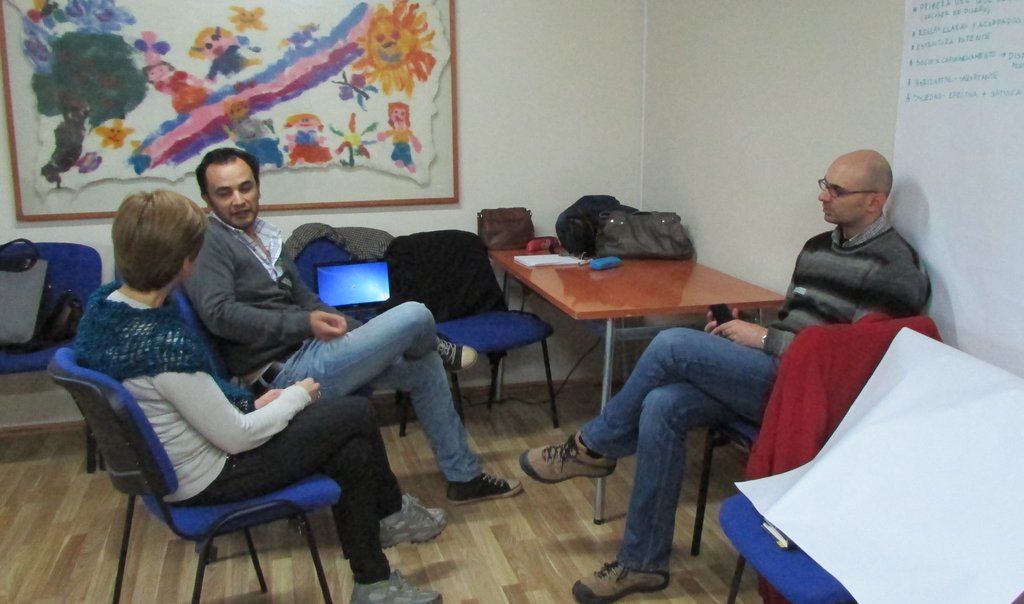
Sales, Marketing and Leadership Workshop: on October 9 and 10, NESsT took the entire Chile portfolio (9 social enterprises) to a wonderful retreat lodge in the Andes Mountains for two days. This was the first time that the 3 winners of the social enterprise competition for earthquake-affected regions participated in portfolio activities. As such, a formal introduction ensued.
During these two days in the mountain, NESsT held two training sessions led by professional consultants and supported by the enterprise development team in Chile: Ignacio Blanco, Felipe Cordero and Rodolfo Madriaga. Both workshops sought to improve the social enterprises´ capacity to sell, as well as their entrepreneurs’ leadership skills. On October 9, NESsT held the sales and marketing workshop led by professional business consultant Mauricio Espina. Mr. Espina especially designed a workshop that was meant to strengthen the skills of the social enterprise leaders. The workshop dealt with the toughest issues described by social entrepreneurs as the main barriers to the success of their social enterprises. The goal was to identify and solve problems and to help them implement their business models.
The following day NESsT brought Mr. Hector Vega, a professional organizational psychologist with more than 10 years of experience in human resources. The 1 day workshop dealt with very common problems faced by social entrepreneurs: how to lead organizational conversations about productivity, how to ask questions that add value to the experience of a worker, how to ask and promise things to workers and how to create safe emotional spaces. Most importantly, the workshop helped social entrepreneurs develop their skills in appreciative leadership skills.
As a refresher, these are the winners and their social enterprise ideas:
Apiunisexta: A store specialized in providing high-quality products for beekeeping activities. It will sell a range of products, such as health items made from honey, food for bee colonies, machinery, and equipment for beekeepers in the O´Higgins Region, to support the needs of producers and increase the market for their products. Beekeepers were severely affected by the earthquake because they lost their production, tools and infrastructure prior to the harvesting season, which meant that they were left with little or no income for that year and with unpaid loans that they expected to pay with revenues from that season.
Surmaule: Surmaule developed a new social enterprise idea to provide its services to government institutions, NGOs and any interested persons about the practice and methodology behind community development initiatives. This social enterprise will be based in the City of Talca, which was severely affected by the earthquake. In addition, Talca is a city with where few professionals can access the latest knowledge and best practices from the field of development.
Ludovico Rutten Foundation: A business that will develop high-quality welders, providing them with skills and a certification that enables them to better perform their work and ensures the quality of their work. The social enterprise will provide this service locally at very affordable prices. Also located in Talca, this social enterprise will serve communities located in poor and marginalized parts of the city. Given their socioeconomic vulnerability, these areas were also the most affected by the earthquake.
Social Enterprise Day –Chile 2013:
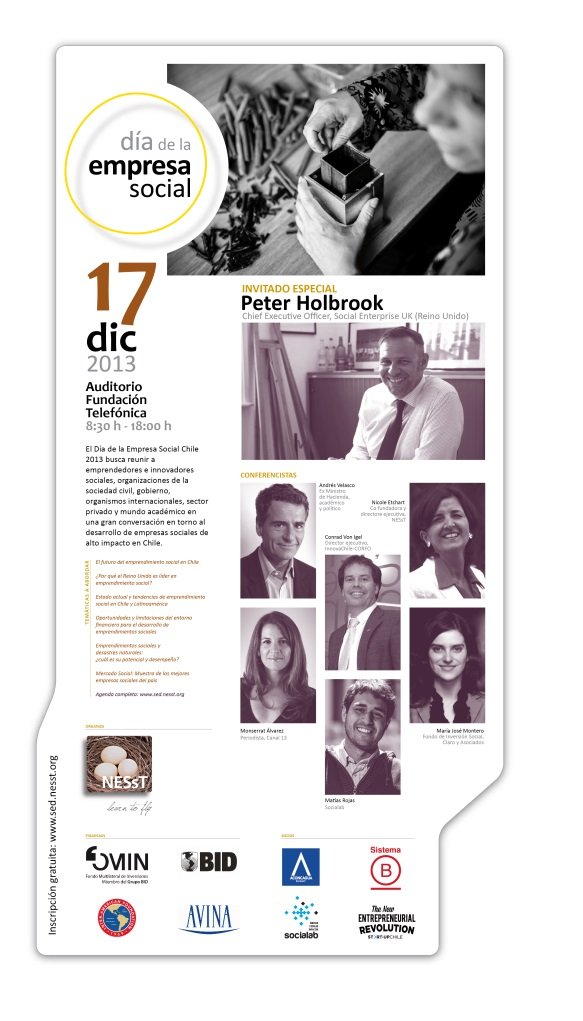
On December 17th, 2013, NESsT was the host of one of the most important social enterprise events in Chile. The 1-day event sought to promote the development of social enterprises in Chile. To do so, we brought a fantastic keynote speaker: Peter Holbrook from Social Enterprise UK. We gathered the best speakers and social enterprises around the country . We developed a very engaging plan for the day that included panels and presentations about the latest research by NESsT on funding for social enterprises, policy to suppport social enterprises and the establishment of social investment funds.
During the first part of event, NESsT introduced Andes Velasco, former Minister of Finance, economics professor and politician, who began the day by presenting his views on the economic and social challenges of Chile. Then Peter Holbrook went on stage to tell the 200-people audience about the state of social entrepreneurship in the United Kingdom. The lessons from the UK are ncredibly relevant to the Chilean context.
The second part of the day was devoted 100% to the Levantando Chile Fund. We began the afternoon sessions with a presentation about the history and achievements of the fund by Ignacio Blanco, Country Director and responsible for the implementation of this project. After presenting the program, we invited the 3 winners of the social enteprise competition to come on stage for an award ceremony. Nicolet Etchart, co founder and CEO of NESsT awarded the prizes. They also received the praise and encouragement from Patricio Santander, leader of Upasol, a social enterprise that in northern Chile that collects and processes reciclable material to fund a physical rehabilitation center. It was a great moment of the event. Finally, their work for over a year in the business plans paid off and they are entering the NESsT social enterprise portfolio.
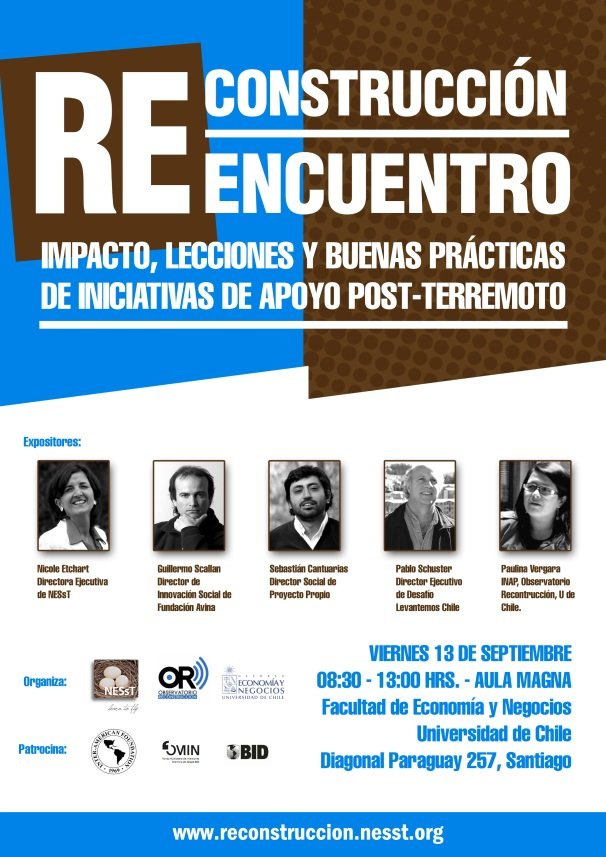
Ignacio Blanco then delivered a presentation about the performance of social enteprises in natural disasters. This was followed by a panel comprised of Matias Rojas (Socialab), Sebastian Cantuarias (Proyecto Propio), Pablo Schuster (Desafío Levantemos Chile) and Peter Holbrook (SE UK).
By Felipe Cordero | Enterprise Development Associate
By Felipe Cordero | Project Coordinator
Project reports on GlobalGiving are posted directly to globalgiving.org by Project Leaders as they are completed, generally every 3-4 months. To protect the integrity of these documents, GlobalGiving does not alter them; therefore you may find some language or formatting issues.
If you donate to this project or have donated to this project, you can receive an email when this project posts a report. You can also subscribe for reports without donating.