Engaging students through innovative teaching

 
$10,800
$130,781
Raised
Remaining
May 14, 2013

Why I'm Becoming An Inspired Teacher

This piece was written by Zia Hassan, who was accepted into the Inspired Teacher Certification Program’s 2013 cohort of Teaching Fellows. This post appeared originally on March 12 on his Tumblr page. 

The 20’s are a funny time, aren’t they?

The first couple decades of my life were fairly well structured, and I imagine that’s true for many of my friends.  Kindergarten at five. Go to college at eighteen. Maybe grad school, maybe not. The real world at last.

Ah, the real world. It’s a term that was always mentioned in the same breath as words like “understand” and “older” and it was always uttered out of the corner of the speaker’s mouth, like some kind of secret that everyone else was in on.

I graduated college and got a job with IBM, and there it was—the real world. Looming over me. Staring at me, poking me with sharp glances and wordless gestures during the eight weeks I had off between college and the start of my job as a consultant.

I used to imagine what my life would look like in the real world. In my fantasy, I had a high tech apartment with moving furniture. I wore a suit and said important things to people (not actual words, but shadows of real world business goings on).

In my fantasy real world, I was always on my feet. I was happy. I had a wife and two kids and I took them out for pizza on Fridays or perhaps order in the finest Chinese food. I would teach them about the values of dental hygiene, and I would tell them about the time their old man had to have nine fillings and two root canals done in the span of six months, and they would brush their teeth til their gums were sore. To me, this was the realest world I could imagine at 22.

It wasn’t much like that.

I got paid a decent amount of money and spent time trying to break computer systems. I’d come up with creative ideas only to be told that the priority was on fixing things, rather than re-inventing them. A handbook of best practices was shoved into my lap, as if good job performance was as easy as following a set of instructions. That’s consulting, though. Re-inventing is costly.

Year after year, I was told my performance was adequate, if not excellent. But it was never about my ideas or my ability. If I could charge more hours to a client than my colleagues, I would win big. Sort of big, anyway. Nothing to write home about.  Perhaps something to text home, or tweet.

Once, we were told to increase the weekly minimum billable hours to 44 from 40–no raises or bonuses, just a new standard.  Going above and beyond to get a “C” grade.  If you wanted to do really well, you could try to bill more than 44.

Don’t get me wrong–I’m not complaining about having a job that most would consider respectable, with a good salary and benefits and all of that.  But we’re talking about the real world, after all, and the real world goes much deeper than money and status.

Another time, IBM accidentally laid me off. A labeling accident in HR landed me in the “fire” pile, and no research was done to confirm my actual value at the company. I had a termination date and everything. I had already returned my laptop and had received my severance package.  A month later, with no explanation or apology, the decision was reversed.

Back in my cube, after being un-fired, I was blinded by a brilliant flash of Obvious.

The real world is false.  

Indeed, the real world is so far removed from reality that we might as well call it the pretend world. We pretend that fancy designer costumes make us better at what we do. We pretend that the more money you make, the more valuable you are to society. We pretend that other human beings are “above” us instead of “with” us, and so they have the right to yell, scream, and dehumanize us whenever they wish. We pretend that being good at what we do means we’ll be safe. We pretend that we know what we’re doing. We pretend that the acceptance of others is far less important to us now than it was in the schoolyard.

Two years went by since my accidental layoff. I searched for other tech jobs. I even got a few interviews, but nothing ever came of them. Meanwhile, the pretend world roared on.

“You shouldn’t wear jeans to work,” my supervisor whispered to me, one day at the office.

“It’s Friday. Most people wear jeans,” I said, incredulous.

“How about something casual but not too casual, like a button down and a nice pair of khakis?” she suggested.

“All my khakis have yogurt sauce stains on them from that Mediterranean place downstairs. And also, what you’re describing is my version of formal attire.”

My supervisor is lovely, of course, and we work in a client-facing office, so her comment wasn’t out of place. But after six years of working here, I’ve lost the desire to pretend. I’ve lost the desire to wear costumes. I even started giving a sincere and lengthy response to the random people asking “hey, how are ya?” when they passed me on the way back from the restroom.

And then Seth Godin released his book, Stop Stealing Dreams. There was no audio version, so I made one and sent it to him.  It started as the fulfillment of a dream I’d always had (to record an audiobook for an author I respect), but doing the reading affected me in a profound way.

Over the course of the two-week recording session, I found myself deeply engaged with the text. I learned about how the school system was built on an outdated industrial age, one where the goal was to simulate the process of working in a factory. I learned about some innovative schools that are adapting to the needs of the current economy; schools that value creativity and artistry above rote memorization and regurgitation. Schools that wouldn’t just ask when Christopher Columbus sailed the ocean blue, but schools that would ask a student how she would go about exploring and discovering new territory.

And the solution, in Seth’s mind, starts with teachers. The goal was to figure out how to be engaging. How could you utilize and harness creativity in a way that made school a joy, rather than a chore? How could you use art to create a school where children were leaning forward in their seats, eager to discover the properties and rules of the natural world?

Well, this was a problem worth investigating. Or at least, it was a solution that I could see myself participating in. Or maybe leading.

A master’s degree was out of the question, so I applied for an alternative certification program at a local college. I was late on the deadline, so I was told to wait a year.

And then we had lunch with one of Liza’s friends from her study abroad program in college. She was working at a place called the Center for Inspired Teaching, and told me about their two-year certification program.

“You take coursework and co-teach in a DC public school in your first year. It’s a residency model, like what they do with med students. At the end of that year, you’re certified to teach full time in DC as you continue taking coursework. Then, you work for three years after that in DCPS,” she told me over a gyro platter.

“I don’t know,” I sighed, while stuffing a french fry into my mouth. ”Isn’t it all about standardization and tests and stuff?”

“Inspired (Teaching) is a little different. They really focus on teachers with creativity, and they’re more about the children than about the numbers. They create change-makers, in fact.  You’d be a great fit.”

So I applied.  I got past the first couple layers of the online application and then was scheduled for a phone interview. A couple hours before the interview, I prepped. I wrote down a list of the skills I’d acquired as a resident assistant in college. I reflected on Seth Godin’s words in Stop Stealing Dreams. I was ready to discuss how good I was at presenting, and how I believe that teachers have the power to change the future.

“Tell me about a time that you interacted with a child who fascinated you,” the interviewer said. Like a deer in stadium lights.  I took a silent breath. I closed the laptop in front of me, which had all of my prep notes on its screen. I hadn’t prepared for a question like this. I had prepared to answer questions with my brain, but it was my heart that broke the radio silence.

“I… uh.  Fascinated, huh.  I’m… I’m constantly fascinated.”  Good one. Try again.

I completely forgot about this 9-year-old philosopher that I met and videotaped. If I had remembered, my words could’ve filled volumes.

Instead, my mind jumped to an eight year old I’d met in California at one of Liza’s family barbecues. I was performing magic for her.

“Wowwww,” she stammered, after I made her chosen card appear out of nowhere.

“Want me to tell you how I did that?” I baited her.

“Nope!” she said.

I was perplexed. Even adults can’t help but ask how I do the tricks. I always reply with the Magician’s Rule #1:  A magician never reveals his secrets.

“You don’t want to know?” I asked her.

“The world is more fun when you aren’t told how it works!”

She scampered off.

Hm.

And all this time I was taught to believe that there was such a thing as a “best practice.” This kid (and the one in the video) knew more about reality than I did.

Come to think of it, I thought, was I that smart when I was her age?  Were all of us?

Kevin Arnold, in an episode of the Wonder Years, said that when you’re a kid, you’re a number of things. You’re a scientist. A detective. A magician. An artist. A singer. A dreamer. A fashionista. He comes to the conclusion that growing up is just the process of giving up these identities, one by one.

What happened along the way to force us to hide that curiosity?

How did the adults in our lives erode our mountain of passions until it was nothing but a laundry pile, forgotten and stuffed under a table?

At what point were our dreams stolen?

When did we give up?

When did I give up?

Did I just, at some point, assume that I knew everything there was to know? Was it in a college classroom, or perhaps an office conference room, where I killed my imagination with bullet points on a yellow legal pad?

And as the country aims to become more competitive, is this tragedy happening even sooner with today’s youth?

Her words returned to me:  The world is more fun when you aren’t told how it works.  

Ah, yes. Of course it is.

Of course. Countless teachers have tried to explain how the world works. Employers, too. Parents. Cousins. Friends. Barbers. Bartenders. Bankers. Celebrities. Everyone has their own idea about the meaning of life.

But wait a freaking minute, all of these people were unintentionally and unknowingly making the world less fun!

And that’s it.  It’s not that the world becomes less fun when you learn about how it works.  No, it becomes less fun when you are told how it works.  It’s the discovery that’s joyful; not the explanation.

And so, I am quitting consulting to pursue a career that will allow me to make the world more fun.

Today, I signed my acceptance letter with the Center for Inspired Teaching’s residency program.

And when I get in front of my students, I will not reveal my secrets. I will not explain the inner workings of a clock, or how I knew that their chosen card was the eight of clubs.

I will not say to them that life is a bowl of cherries, or that the key to success is this or that. I will not give them a packet of best practices, or a handbook on anything. I will not tell them what a meaningful career is and I will not tell themwho they are.

I will not explain the steps involved in learning how to ski. I will not teach them origami.

I will not provide How-tos. How-tos are for YouTube. And they all know how to use YouTube.

But I will show them that the coin that was once in my hand is now gone. And they’ll wonder where it went. And they’ll develop their own hypotheses, and right or wrong, those hypotheses will result in their own beautiful discoveries.

And there will be days where I will fail to inspire, but on the days where I am triumphant, I’ll be able to go sleep knowing that my students are triumphant as well.

And I will find chosen cards, read their minds, walk through walls, chop myself up into tiny pieces and restore myself. I will draw a perfect circle. I will make chalk float.

Most importantly, I will never tell them how it all works. They’ll squint a little harder. They’ll strain their necks to look under the veil. And I will show them just enough of the rabbit to make them wonder about what’s happening in the top hat. I’ll even let them poke it and examine it. Like the best magicians do.

I hope it makes them want to create their own magic tricks. I hope they never tell me how those tricks works, either. I hope they develop abilities that they, too, can’t unfold immediately. I hope my students find full masterpieces standing at the forefront of their imaginations, waiting to be transcribed. I will be there, telling them to “GO!”

I hope they live in a world where everyone is encouraged to discover their own unique abilities. That place would be the real real world.

And if you’re wondering how I’m going to do all this? How, in the face of a society that wants to turn children into data, could I possibly have the audacity to believe that I can just leave consulting and make waves in the education world?

Well, I’m going to have to stand by Magician’s Rule #1.

The world is more fun when you aren’t told how it works. Trust me.

Links:

Feb 13, 2013

Community Learning: Anything but Mundane

This piece was written by a DCPS prekindergarten teacher and 2011 Fellow in the Inspired Teacher Certification Program.

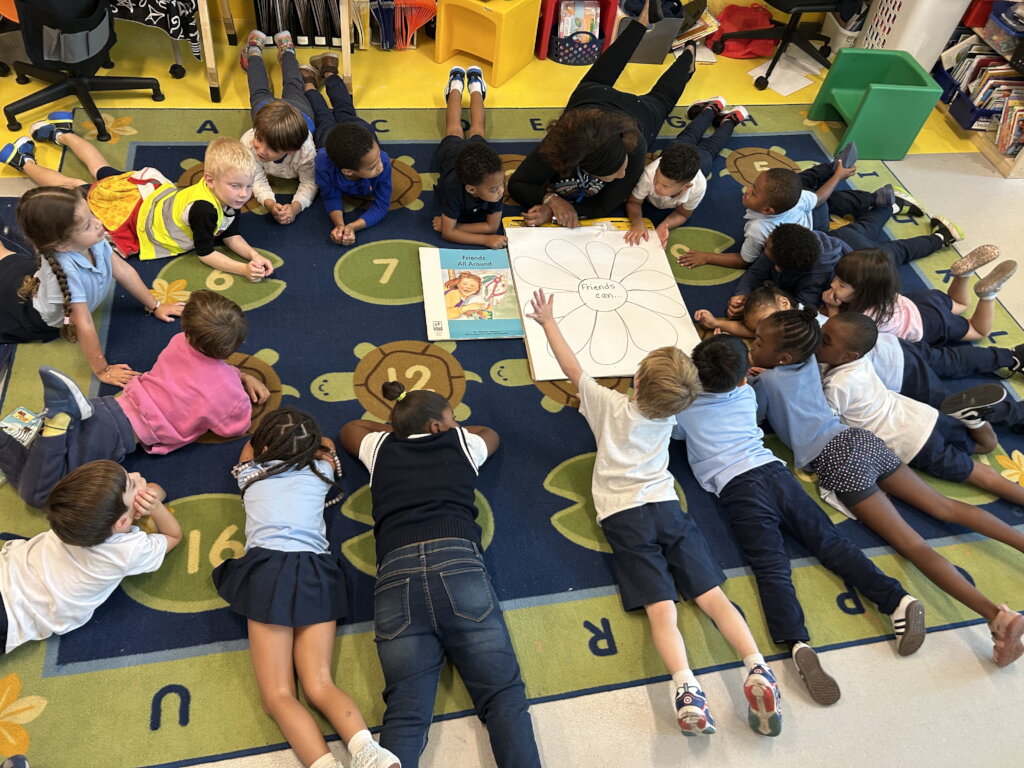
Finding ways to incorporate the community into my classroom—as well as take our learning out into the community—is a big focus of my second year as a prekindergarten teacher. In my first year, I was timid about taking 4-year-olds out of the classroom and into our neighborhood. I saw their age, our lack of private transportation, and our geographical location as barriers to taking advantage of DC as a rich resource for learning.

I came to realize that these perceived “barriers” were simply that. The summer before my second year, I decided that I would bring down those barriers and enrich my curriculum with real experiences. I had heard fellow cohort members talk about taking students, as young as mine, on public transportation and walking trips. And I just decided, “I can do that too.”

By setting rigorous expectations and creating pre-field trip lessons—and even practice runs, we have now taken three local field trips. The first outing into our neighborhood of Marshall Heights SE took the form of a walk to the local library. This was the perfect opportunity to show the students how wonderful it is to check out library books. The trip also sparked our full-fledged obsession with Mo Willems and even started an author study!

Our second trip took us to the local grocery store in November. We asked our Supplemental Nutrition Assistance Program Education (SNAP-Ed) Coordinator to accompany us on our Metrobus ride to the store. This trip helped increase my students’ background knowledge for a classroom learning unit on understanding the jobs people perform in the store. Our SNAP-Ed Coordinator also taught us about healthy foods and different ways that fruits and vegetables are grown.

Our third trip took us (via Metrobus again!) to the neighborhood Denny’s restaurant. My students and I were building a new dramatic play theme in our classroom. This trip provided research for us to create our own restaurants, fill the different restaurant staff roles and responsibilities, and be good customers. Much to my students’ excitement, we were treated to placing an order off a real menu with a real waitress, met the cooks, and even got a visit from the manager.

Although these trips may seem mundane, the learning that has taken place in our own neighborhood has been anything but. My students now have library cards, have tasted spaghetti squash, and can demonstrate the roles necessary for an operational restaurant in a dramatic play setting. Along the way we encountered patient city bus drivers, kind neighbors, and lots of community members who were excited to teach.

I have plans for more community trips in the new year, all of which will take place on foot or via public transportation.

Nov 26, 2012

A System for Remembering, Relating, and Reflecting

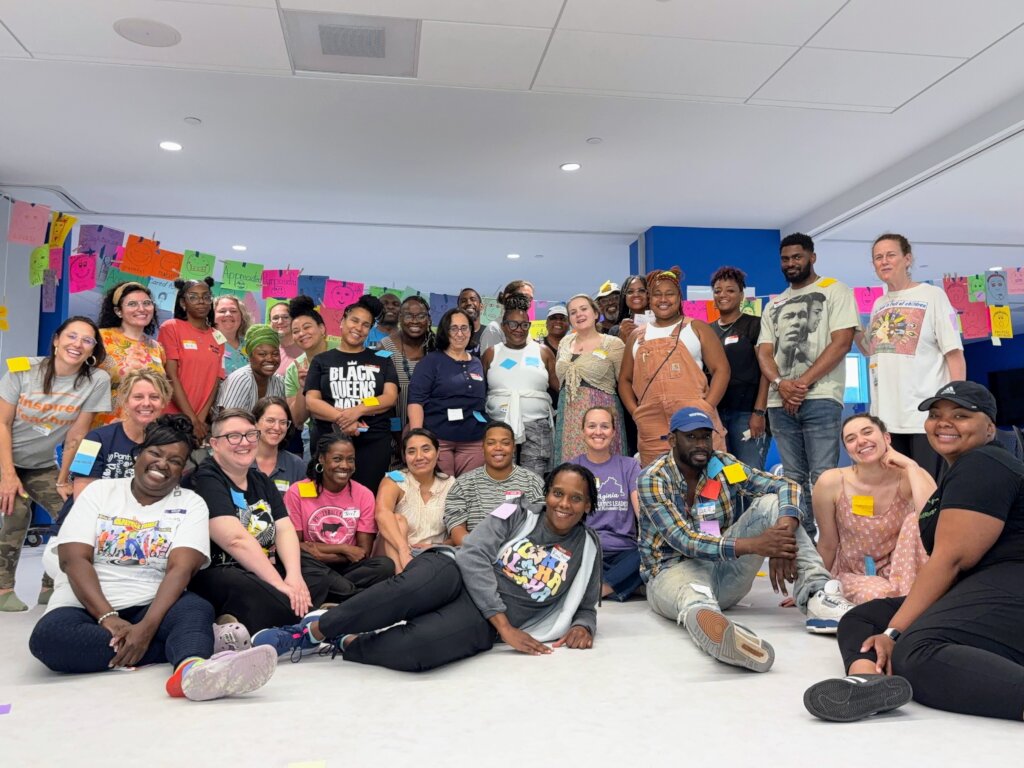
Center for Inspired Teaching welcomed 22 new individuals this summer into our Inspired Teacher Certification Program, a two-year program that prepares, supports, and certifies highly qualified individuals to become teachers in DC. These Inspired Teaching Fellows begin their teaching career with a 12-month residency, working under the guidance of a Lead Teacher (at the Inspired Teaching Demonstration School or Capital City Public Charter School) to gain the knowledge and experience necessary to transition in their second year to becoming teachers of record in their own DC public school classrooms. This piece was written by a 2012 Inspired Teaching Fellow teaching 5th grade. 

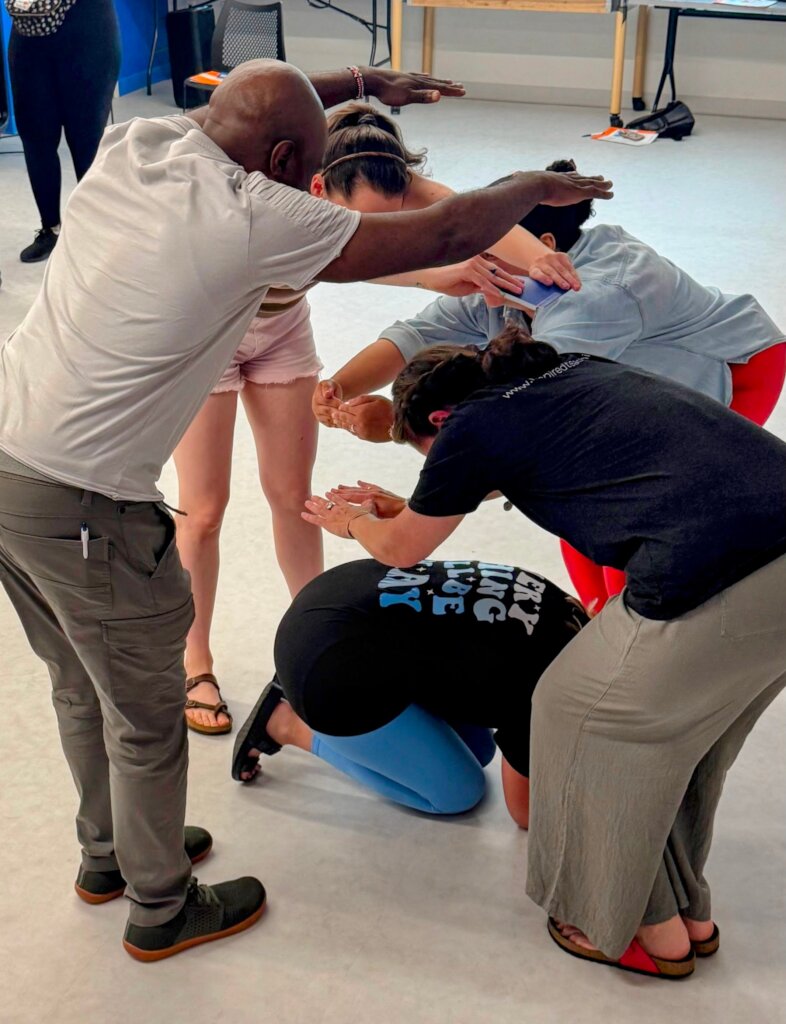
At a recent Inspired Teaching math training, our instructor asked us to create a personal “weather report”.  We had to fold a piece of construction paper into four sections and write or illustrate how the past four days had gone. I had no trouble remembering what happened that day; likewise with the previous one. But I couldn’t remember much of anything from the first two days of that week. The same was true for most everyone in the class.

This got me thinking about my own reflective process, which has not been what I’d like it to be. This is not to say that I’m not a reflective person. I spend a good deal of time thinking about and reflecting on things as they happen throughout the day. I take observation notes in the various classrooms where I spend time each day. But I don’t have a real system.

This reminded me of something I’d read in the Introduction of Teaching with Intention. I pulled my copy off the shelf to see exactly what author Debbie Miller had written:

“I think it’s challenging to find time in the day for reflection–it may feel like just one more thing to add to the list that never seems to end. And yet if we don’t, where does that leave us?”

Miller’s musings, plus my Inspired Teaching instructor’s assignment, have really got me moving toward establishing a more formal system of reflecting.  It’s weird, because from the time I was about 15 until 35, I was an avid and dedicated journal keeper. I’d write pages and pages, mostly about my teen, then young adult, then more adult, angst and problems.

The past few years, I’ve still been pretty faithful about writing every night, but it has been reduced to a few sentence summary of my day. The method I use now is a five-year journal, where you write about four lines for each day, and the entries are sequential by year.  I’m on year three now, so I’m able to look back and see what I was doing and feeling this time two and three years ago.

I decided to use a similar method as a Teaching Fellow and teacher. I think it will be really cool to look back in a few years as a more experienced teacher and see what’s changed since I was an Inspired Teaching Fellow.

I remembered something else from Miller’s thoughts on reflections: If we expect our students to be “thoughtful, reflective, and strategic readers, writers, and thinkers,” we need to follow the same practice as teachers.

Links:

Sep 4, 2012

The Skills to Be a Great Teacher

students deep in thought

In partnership with the District of Columbia Public Schools system, Center for Inspired Teaching is building teacher capacity and supporting strategic application of the Common Core State Standards for content area literacy in the social studies at the middle school level. Below, a teacher participant describes a lesson taught through the Literacy Design Collaborative's module structure, and its importance in her classroom:

"The students were given a compelling problem to solve, and tasked with creating a product that served a purpose. A few of their letters were sent to an Egyptian Art Administrator, who sent me feedback on their arguments, then distributed their work amongst his colleagues in Cairo, in an effort to show that American students are advocating for the return of their precious artifacts. It blended social studies content with literacy skills. Students were focused on the evidence-finding and argument-building, which are really research and writing skills. But to be able to make sense of the documents, students had to have a basic understanding of Ancient Egyptian civilization. With this basic understanding, they were able to soak in the documents and gather new information about Ancient Egypt."

Jun 8, 2012

An Inspired Teacher Leader

Jessica in our Summer Institute

In June 2011, Center for Inspired Teaching launched the Inspired Teaching Institute for Mathematics Teachers, a partnership with Baltimore City Public Schools to prepare the district's middle school math teachers for implementation of the Common Core State Standards for Mathematics through an inquiry-based instructional approach. That summer, Jessica Hiltabidel, a middle school math teacher in Baltimore, began her journey toward becoming an Inspired Teacher. 

While participating in the week-long training and monthly practicum sessions of the Inspired Teaching Institute, Jessica transformed her teaching practice to one centered on inquiry-based teaching and learning strategies.  She believes the most important thing she learned was that her role as a teacher had to change from "an information provider" to "an instigator of thought". "I had to stop showing students how and start showing them what they already could," Jessica said. "I had to stop giving examples and start asking questions." 
Using completely student-driven instruction, Jessica helped every single one of her students move forward no matter how far behind they may have been. Her test scores are now higher than ever before, and her students are retaining information longer while taking responsibility of their own learning.  

Because of Center for Inspired Teaching, Jessica has taken a leadership role in the school, represented Inspired Teaching in meetings and at conferences, and wrote an article on student achievement in her class as the result of teaching through inquiry. Moving forward, Jessica will stay involved with the Inspired Teaching Institute for Mathematics Teachers by coordinating the work of teacher leaders who will support the incoming cohort of teachers.

About Project Reports

Project Reports on GlobalGiving are posted directly to globalgiving.org by Project Leaders as they are completed, generally every 3-4 months. To protect the integrity of these documents, GlobalGiving does not alter them; therefore you may find some language or formatting issues.

If you donate to this project or have donated to this project, you will get an e-mail when this project posts a report. You can also subscribe for reports via e-mail without donating or by subscribing to this project's RSS feed.

An anonymous donor will match all new monthly recurring donations, but only if 75% of donors upgrade to a recurring donation today.
Terms and conditions apply.
Make a monthly recurring donation on your credit card. You can cancel at any time.
Make a donation in honor or memory of:
What kind of card would you like to send?
How much would you like to donate?
gift Make this donation a gift, in honor of, or in memory of someone?

Organization

Project Leader

Aleta Margolis

Executive Director
Washington, DC United States

Where is this project located?

Map of Engaging students through innovative teaching