By Yael Falicov | Director of Programs, IDEX
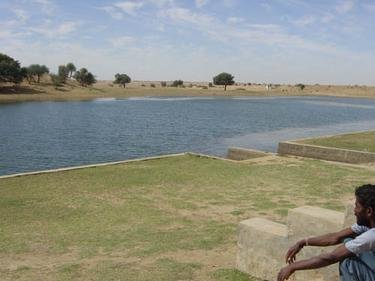
Although rainfall was scant during the season, as a result of training provided on water harvesting techniques and drought preparedness, dozens of participating villagers were able to store water for a minimum of three months. This has had a direct impact on savings, so that each family has saved at least $35.
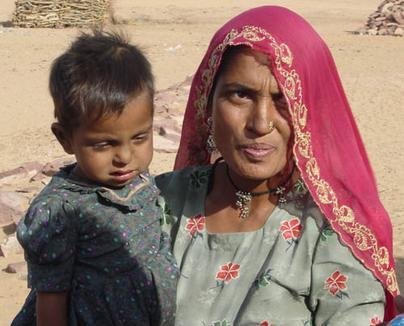
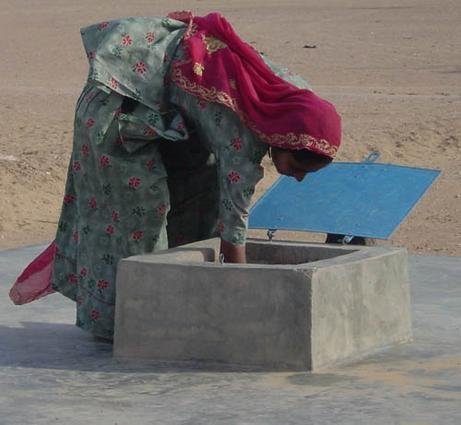
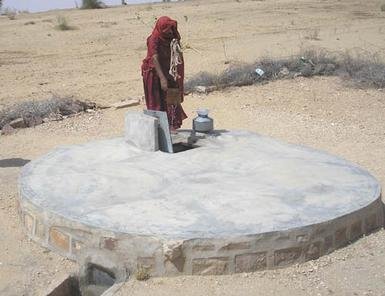
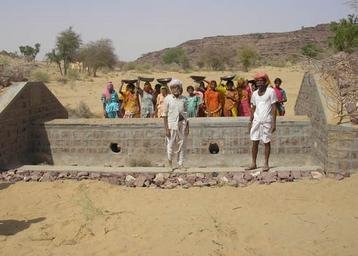
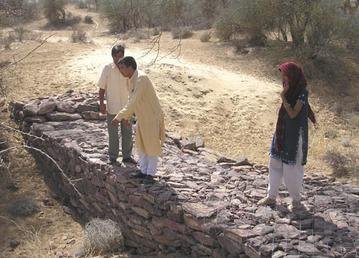
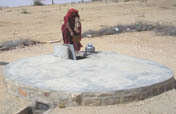
In addition, ten rainwater harvesting structures (taankas) were constructed, directly benefiting ten to fifteen families and around 100 to 150 people. Each taanka when completely filled is able to store 20,000 liters (approximately 5,000 gallons) of water, which can suffice the needs of an average family of eight to ten members for six to eight months. Most families must purchase water to survive and also send the household women and girls to walk for long hours to fetch water. Many girls are not allowed to go to school because of their water-carrying responsibilities. Each taanka saved a family approximately $115 annually, on average over 60% of the family’s income. All the ten taankas together save around $1,150 per year and 16,425 hours of arduous work.
Altogether, the construction of the taankas and the drought preparedness training has reduced the workload of the female population, hence 40% of the targeted beneficiaries have started sending their girl children to school.
Thank you for all your support for this project. To continue to support GRAVIS’ work please visit Project 2171 – Help women secure food and water in India.
By Katherine Zavala | Coordinator of Programs
By Katherine Zavala | Coordinator of Programs
Project reports on GlobalGiving are posted directly to globalgiving.org by Project Leaders as they are completed, generally every 3-4 months. To protect the integrity of these documents, GlobalGiving does not alter them; therefore you may find some language or formatting issues.
If you donate to this project or have donated to this project, you can receive an email when this project posts a report. You can also subscribe for reports without donating.