By Victor Ombonya |
Changing Lives of 100 women in rural Kenya
The past 3 months have been exciting for Abila and for some of our projects, in many ways. I think this has been a testament to the versatility of the African woman, who despite a lot of setbacks and unbelievable odds, still somehow has a smile on their face and a warm plate of food for her children, grandchildren and the odd visitor!
It may be a bit too early to conclusively say that certain parts of the project have been completed, but progress has been made. The craft training envisaged in the original plan posted has had to be changed, at the request of the women, who cited a lot of difficulty in accessing raw materials, in terms of cost and availability, the complexity and length of the trainings, the amount of time to be spent working on projects vis a vis responsibilities – in short cultural inappropriateness. They jokingly say that had they been younger, and prettier, it would be the thing to do. So after much consultation, the trainings have shifted from craft to appropriate technology, though we haven’t yet given up on the craft training. We have started to reach out to the ‘younger and prettier’ women in the community, and this includes some of the womens’ older daughters!
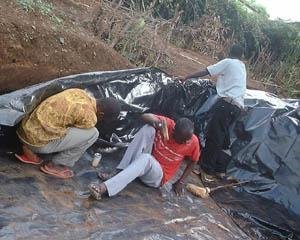
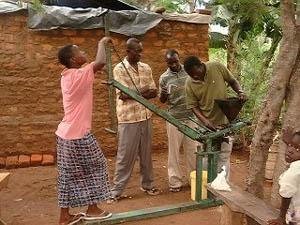
The appropriate technology currently being embraced are those that are considered to cater for the nutritional as well as income generating needs of the women and their families, and are complemented by the business skills trainings. The technology being considered now includes making fireless cookers, baking buns, making sweets, fish farming, tissue culture banana farming, poultry keeping, tree and sack/garden farming.
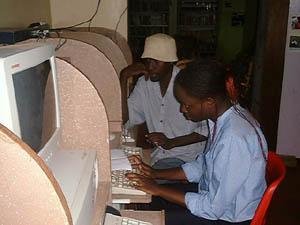
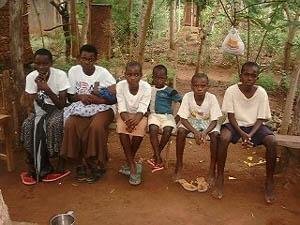
One elderly woman, Truphosa Achieng’ who lives with 5 grandchildren, has been taught how to make doughnuts to sell at the local market and how to maintain her business books, and can now assure her grandchildren of constant meals and medicine, and education from her earnings. Efforts are now being made to enable her to access more training in poultry keeping and start up capital to help her start her own poultry project! Mama Rose, on the other hand has planted a couple of tissue culture bananas, and hopes that in the future, this will assure her family of 8 a constant supply of both bananas and income. Meanwhile, her eldest daughter, Sylvia continues to receive training on computers and the internet at the center, and now more recently, craft training, as she is considered ‘younger and prettier’!
A group of 16 women also graduated from the business management training at a colorful ceremony, and are now on course to benefit from further training from a Micro Finance Institution who we are currently negotiating with, in collaboration with Kenchic (K) Ltd, who are the leading poultry distributorship agency in Kenya, to provide training in business management, poultry keeping, and then provide start up capital. Through this initiative, we hope to reach and touch almost 50 lives with hope for a better future and dignified lives.
Challenges are bound to be met in such endeavors and we have our fair share. The major one has been inadequate resources, both material and financial, to cater for costs of materials, trainings and especially start up capital, because most of the women are skeptical about being trained when start up capital is not guaranteed. This sometimes causes them to drop out from the trainings, and a lot of effort has to be put in to reverse this trend. Of course with players like Kenchic (K) Ltd. coming in to partner with credit providers, this may change, but only a few women can benefit at any given time, and this is also not guaranteed to be available whenever a majority of the women need it.
What needs to happen is a consolidation of a resource base to guarantee both access to quality trainings, and the crucial start up capital, as well as access to the internet to explore new markets and ideas and linkages. We need to have more women getting the knowledge, the know-how and the money to actualize their dreams and desires for a better future for their families and their community.
Project reports on GlobalGiving are posted directly to globalgiving.org by Project Leaders as they are completed, generally every 3-4 months. To protect the integrity of these documents, GlobalGiving does not alter them; therefore you may find some language or formatting issues.
If you donate to this project or have donated to this project, you can receive an email when this project posts a report. You can also subscribe for reports without donating.