By Karen Costello | member, board of directors, Santi School Project
"Now I understand why visitors to Nepal get emotionally involved and want to help after their visits. My husband and I certainly feel that way. In fact, I feel different as a person and changed by this trip."
One of our board members, Karen Costello, recently visited Nepal for the first time, with her husband, Malcolm. This is her account of their visit to one of our partner schools in the Kathmandu Valley:
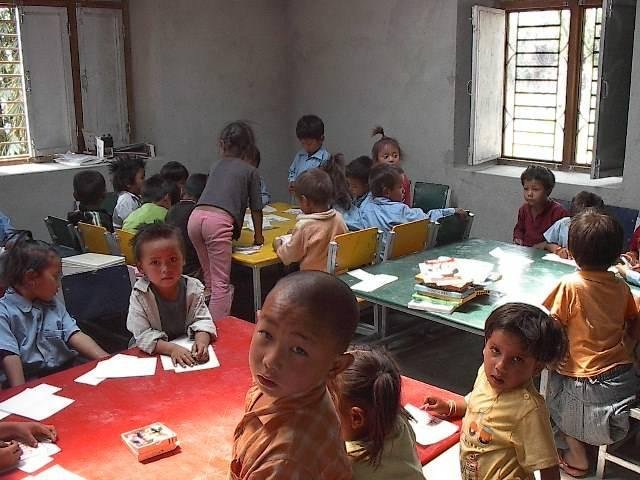
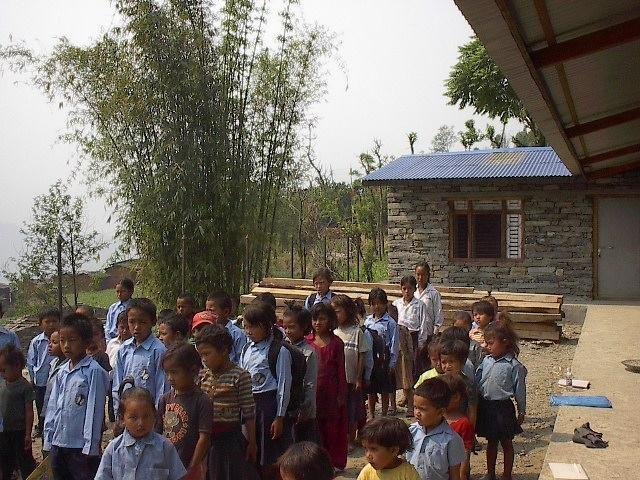
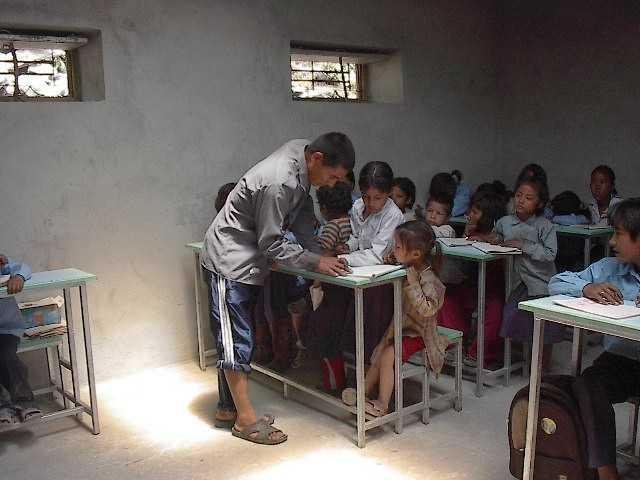
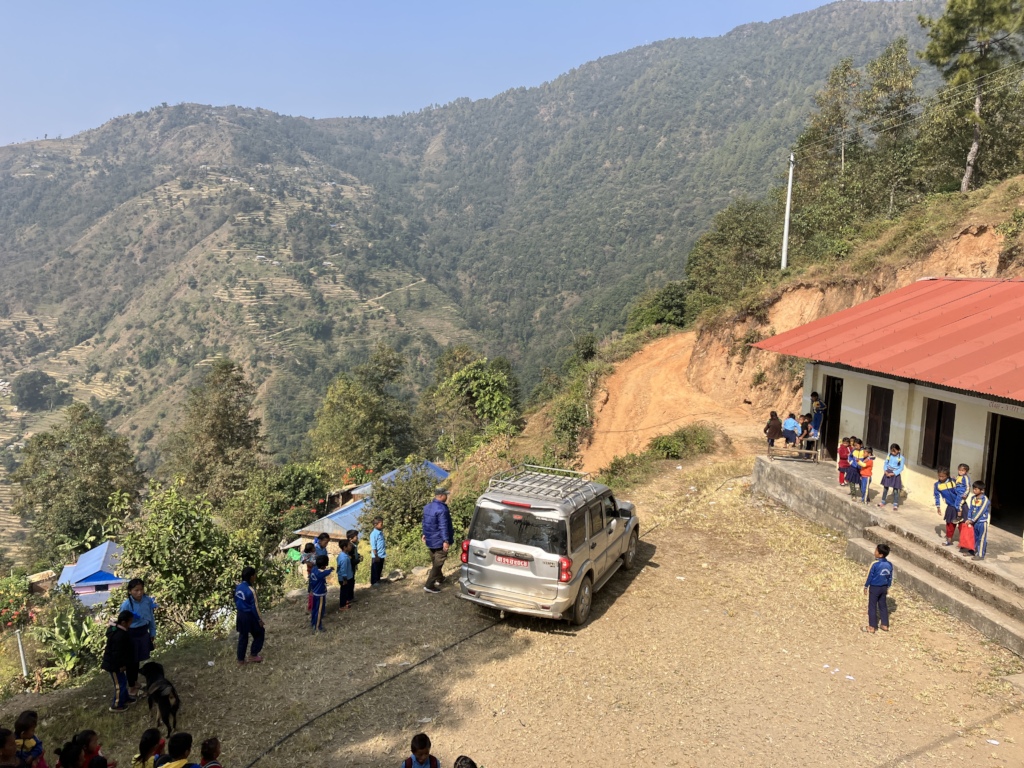
To visit Shree Jebrang Basic School in Nuwakot, we started out at around 7:30am from Kathmandu. After a three-hour, bumpy, crazy drive that seems to define almost every drive in Nepal, we arrived at the principal’s home. He and his wife graciously prepared dal bhat for all of us. It is truly extra special to be welcomed by Nepali folks in their homes.
After lunch, we headed up to the school, about a 10-minute walk up the road; some of the children who were at the principal’s home loved hopping in the 4x4 for the short drive.
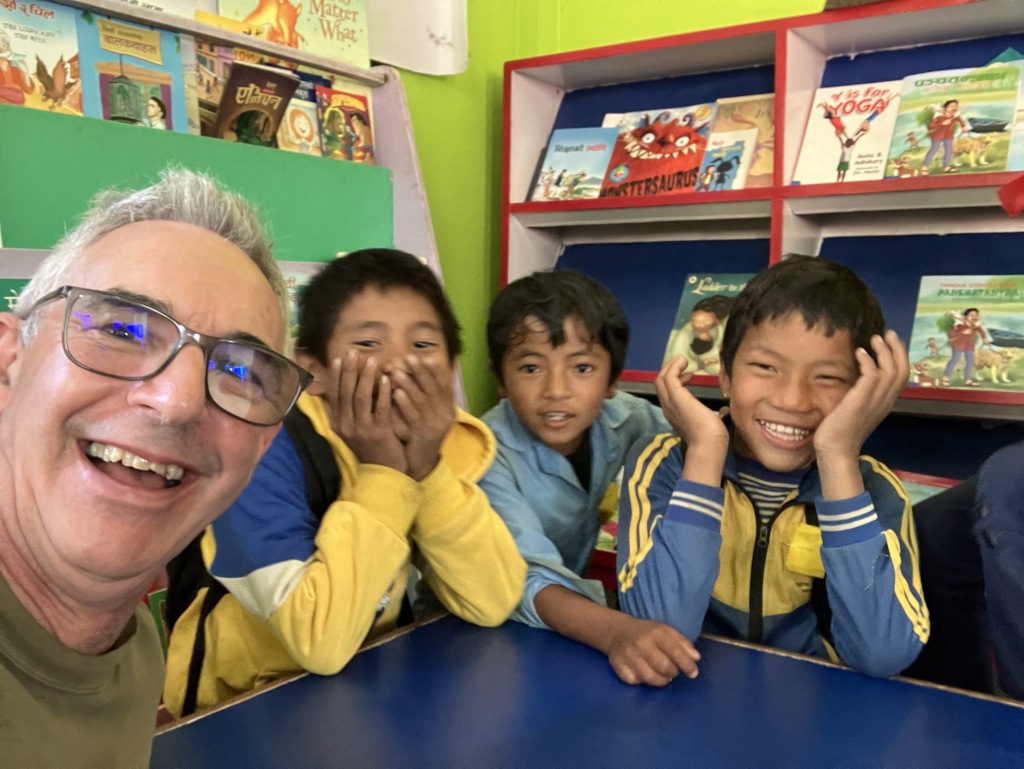
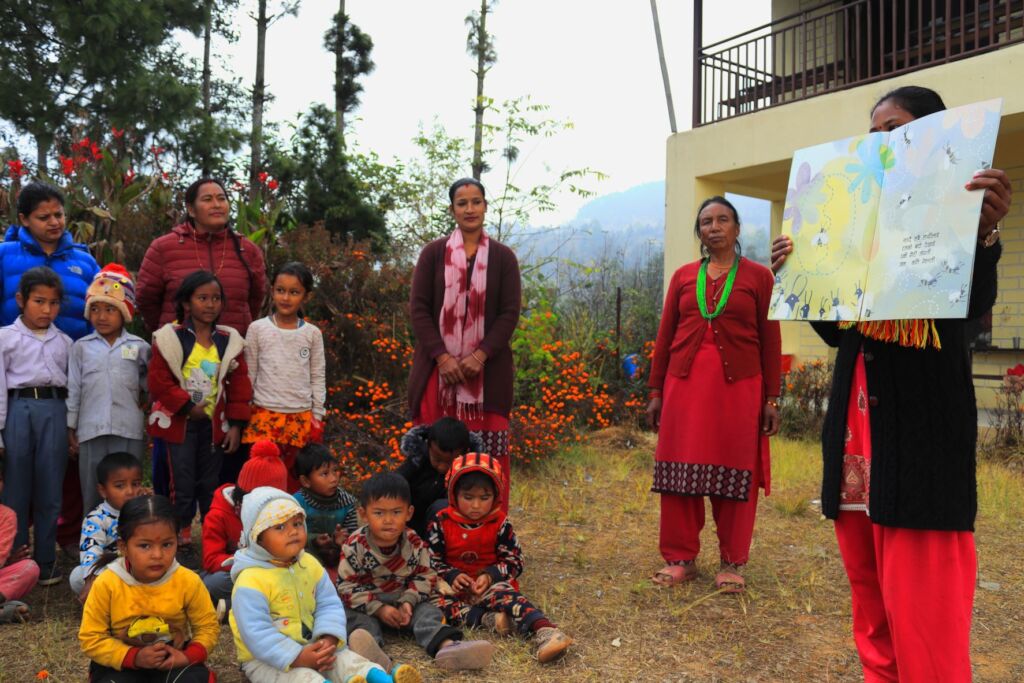
We visited the school library and saw the bookshelf with our new books. The library was large and other charities had also donated books, shelving, tables, and painted a lovely mural on the wall. One student read the “Busy Bees” book aloud which was wonderful.
Malcolm and I stepped through the “Look at Me” book with a couple of students using the pictures rather than the words to communicate. I think the children were fascinated with my blond hair and Malcolm’s gray hair—very apropos for that book!
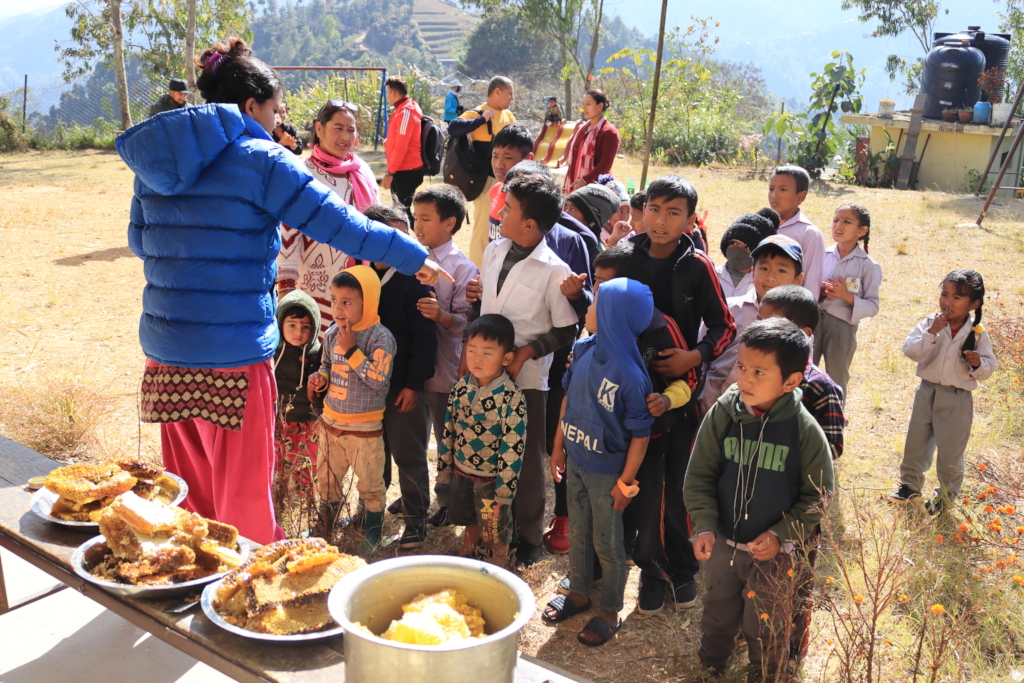
We shared some school supplies (notebooks, pencils, crayons, soccer balls, etc.) with the children that we had brought. Earlier, we had learned from conversations with our trekking guides that rural schools desperately need just about everything. Some school dignitaries were there and we all had shawls placed around our necks.
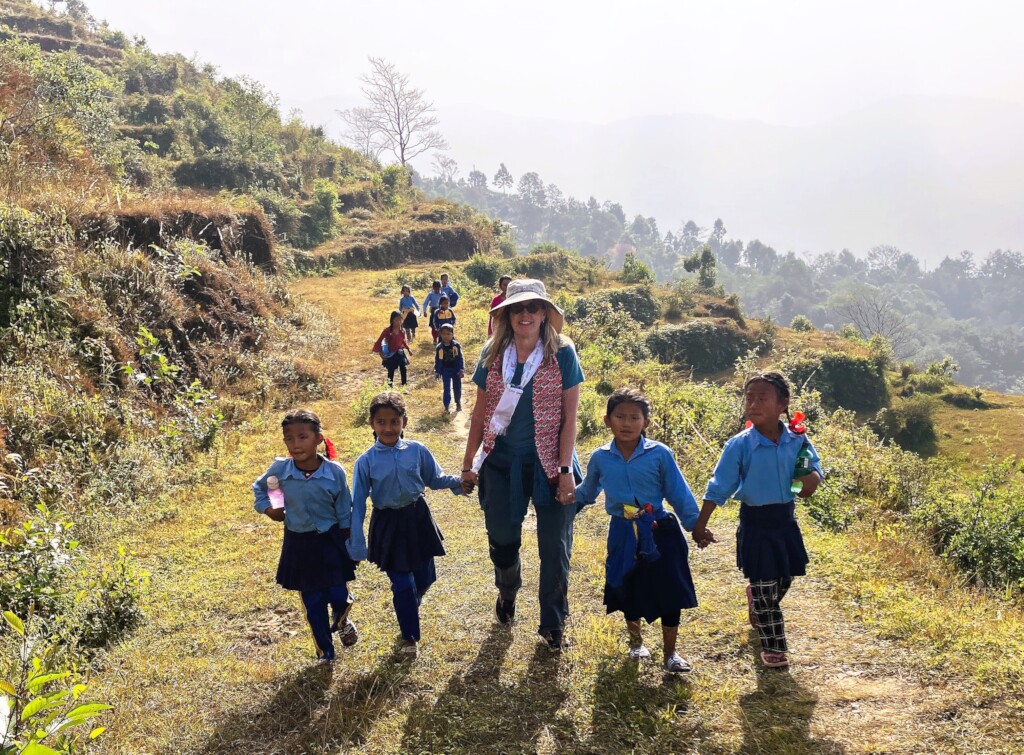
Then it was time for the field trip. Before we left, the children participated in a lesson designed to get them thinking about what we might see. I remember one child mentioned a swimming pool! The field trip itself was described as a “one-hour” walk. The youngest children and some teachers crammed into the 4x4 while the rest of us took off up the road. About 3 hours later we arrived at our destination! A large playground at the top of the hill -- really a mountain. All of the adults (except Malcolm) were completely pooped but the kids took off for the swings.
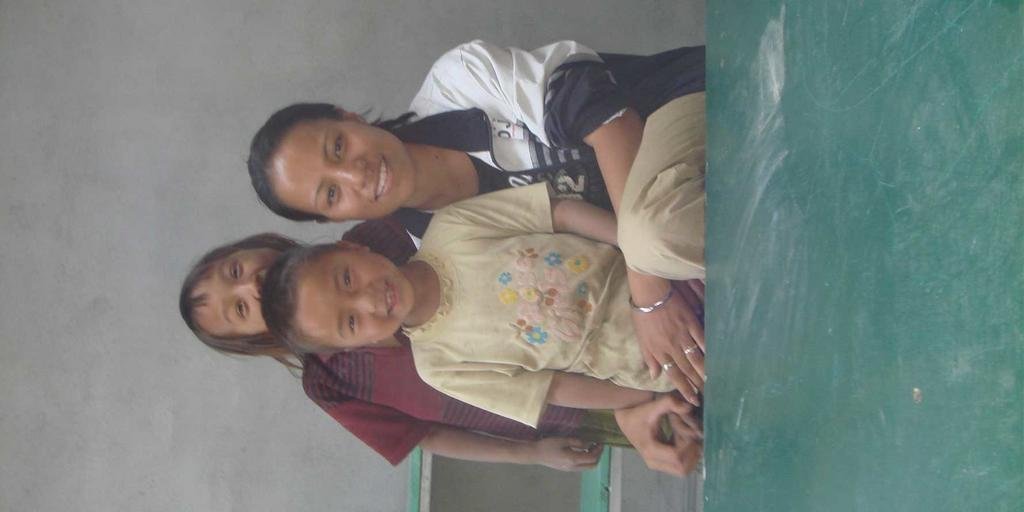
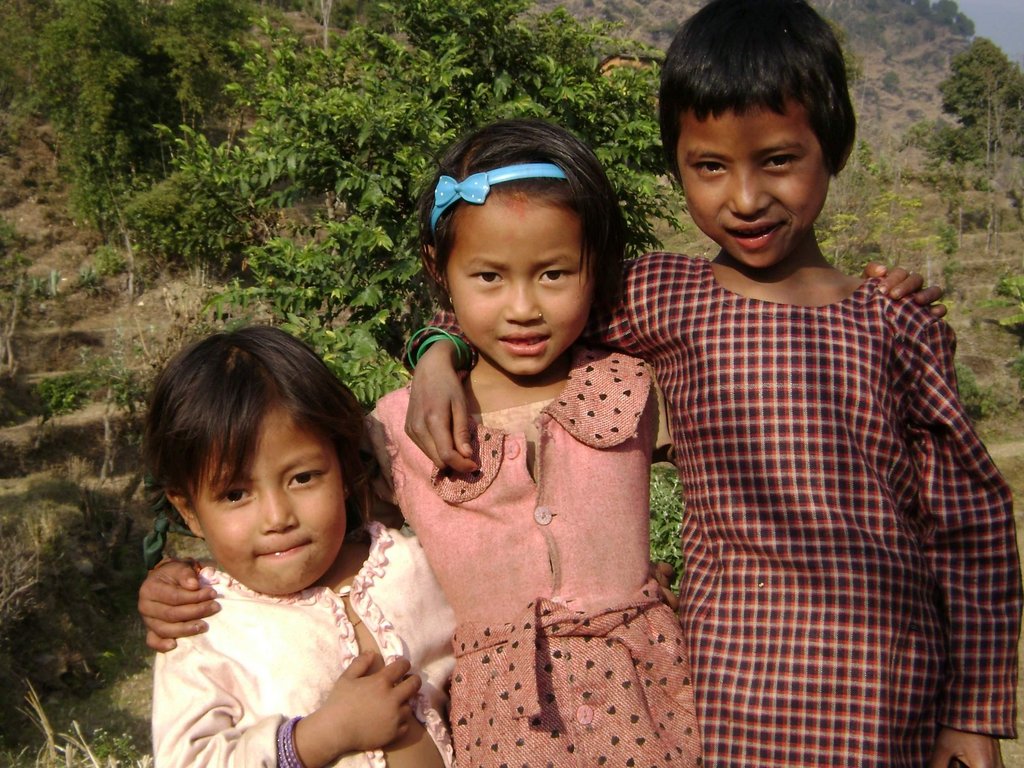
For me, the best part of the walk was that a couple of the girls were willing to hold my hands. We all had some dal bhat that had been prepared in advance and brought up in the 4x4. By this time it was getting late, our driver did not want to take the same route back to the school because the road was so bad. The principal promised there was a shorter way back to the school and some children would pass their homes on the way. The principal did call us later to let us know they all arrived back safely.
Now I understand why visitors to Nepal get emotionally involved and want to help after their visits. Malcolm and I certainly feel that way. In fact, I feel different as a person and changed by this trip. We would like to go back and take our friend and our adult sons.
-- Karen
Thank you for supporting children and their teachers in rural Nepal
Your support is crucial to help us strengthen our relationships with children, teachers and parents in the rural communities of the Kathmandu Valley. Thank you for helping us spread the joy of reading!
By Niranjan Narsingh Khatri | executive director
By Niranjan Narsingh Khatri | Executive Director
Project reports on GlobalGiving are posted directly to globalgiving.org by Project Leaders as they are completed, generally every 3-4 months. To protect the integrity of these documents, GlobalGiving does not alter them; therefore you may find some language or formatting issues.
If you donate to this project or have donated to this project, you can receive an email when this project posts a report. You can also subscribe for reports without donating.