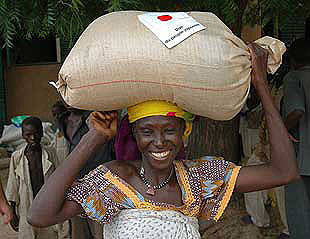
Aissa Issaka, a 50-year old woman living in the rural village of Todigameye, Niger, used to have to travel 40 kilometers to obtain provisions for her seven children in the season leading up to harvest. Thanks to the work of WFP and its partners, though, Aissa is now able to ‘borrow’ cereal grains from a local cereal bank developed for and managed by women in the village. Aissa will eventually pay the bank back, but at a low interest rate, and after the harvest.
By travelling no farther than the village center to procure rations, Aissa requires less help from her children in conducting and completing domestic duties. This gives her children, particularly the girls (who likely would have stayed home to help while their brothers attended class), the opportunity to enroll in and go to school.
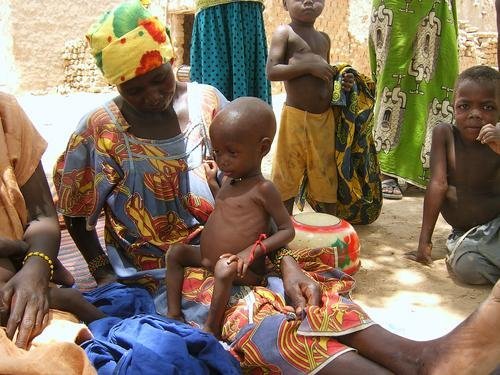
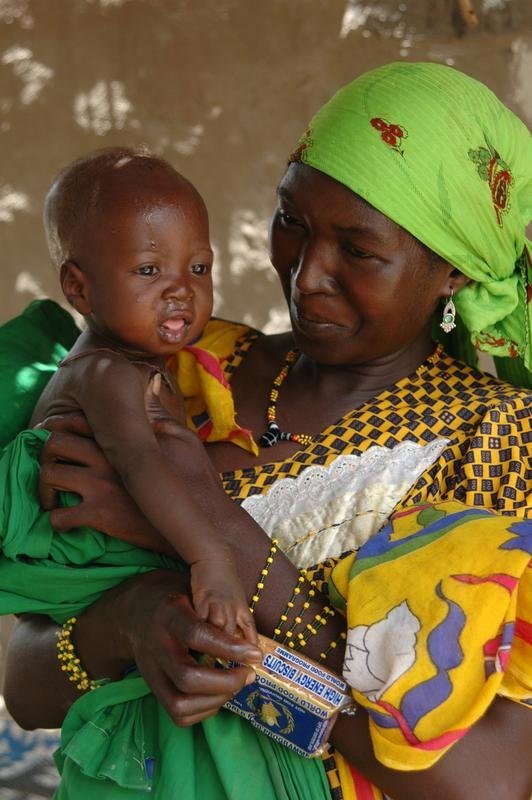
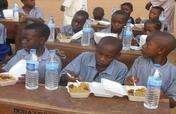
In Niger, 49.6 percent of the population is under the age of 14 (compared to 20.2 percent in the United States), and 44 percent of these children are chronically undernourished. To combat this devastating crisis, WFP is targeting 702 particularly vulnerable schools in rural Niger, providing two hot meals every day and distributing 100 kilograms of dry rations to girls in their last two years of primary school. With this encouragement, not only did enrollment improve, but specifically the number of girls attending school increased tremendously.
Education is one of the most important steps to development – it promotes and increases literacy, improves general health, and postpones marriage and child-bearing. And, providing food to students is a proven method to boost attendance, especially among girls.
With the help of generous donors like you, WFP is able to extend its programs to a greater number of schools, thus boosting attendance throughout Niger and continuing the battle against undernutrition. Families like Aissa’s are still in urgent need of your assistance. WFP’s current mission reaches 3.3 million beneficiaries, 70 percent of whom are families with undernourished children. The World Food Program seeks to maintain this important level of aid, and with the continued help of caring individuals like you, WFP will be able to expand its reach. Thank you for your support!
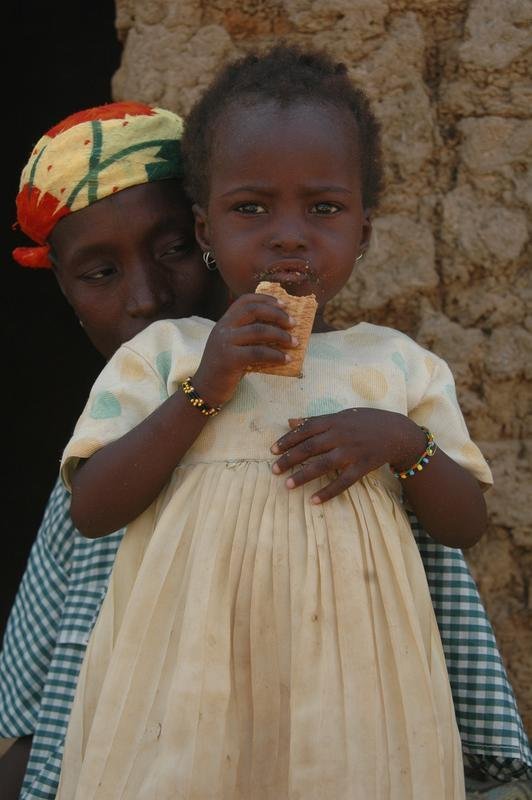
The eyes of the students at the Danga Zaouni School shine each day when they receive their meal in school. Since April 2007 the school, located in the Ouallam district 140 km away from Niger’s capital Niamey, has benefitted from the World Food Program’s school meals program.
The program is especially important in this region, as poor soil and degraded land have pushed families into a daily struggle for food security. Some 59.5 percent of the population lives below the poverty line, forcing men to look for work in other regions while their wives stay home to care for the family. Children are often obliged to work or care for siblings instead of going to school.
This constant struggle for food security pushes families deeper into the vicious cycle of poverty by keeping children from obtaining an education and, thus leaving them with little opportunity for the future. Ten percent of children under five suffer from acute malnutrition and 44 percent of children suffer from chronic malnutrition.
Poor school attendance, especially among girls, contributes to Niger’s 71 percent illiteracy rate. Before the introduction of the school meals program, only a few students came to school during the harvest, and in the afternoons the school was almost empty. The children did not have the energy to come back with an empty stomach after having little or no lunch, particularly those walking long distances from neighboring villages.
Yet, important changes have occurred since WFP’s school meals program began in the region: school enrollment has gone up from 172 to 211 students, and attendance rates of students already enrolled have improved.
The benefits of the program are also reflected in the students’ marks; the year before the introduction of the school meals program, none of the students passed the final exam necessary to be admitted to middle school. Mahamadou Saidou, the director of the school, says that tests given to the students since the inception of the program already show improvements in performance.
Nationwide, the school meals program supported by WFP in Niger has proven to have a very positive influence on increasing education rates for girls, particularly in rural areas. The proportion of girls enrolled in school rose from 36 percent in 2000 to 43 percent in 2006. In schools assisted by WFP, the percentage of girls is 5 percent higher than in schools without a school meals program.
Education also has positive long-term effects: students’ health is improved; educated girls get married later and have fewer children; and educated parents are more likely to send their children to school.
Continuing this successful program that enables children to attend school and receive the nutrition they need to survive requires additional financial support. Generous individuals like you enable children to attend school and break the cycle of poverty with WFP’s assistance. Thank you for your support!
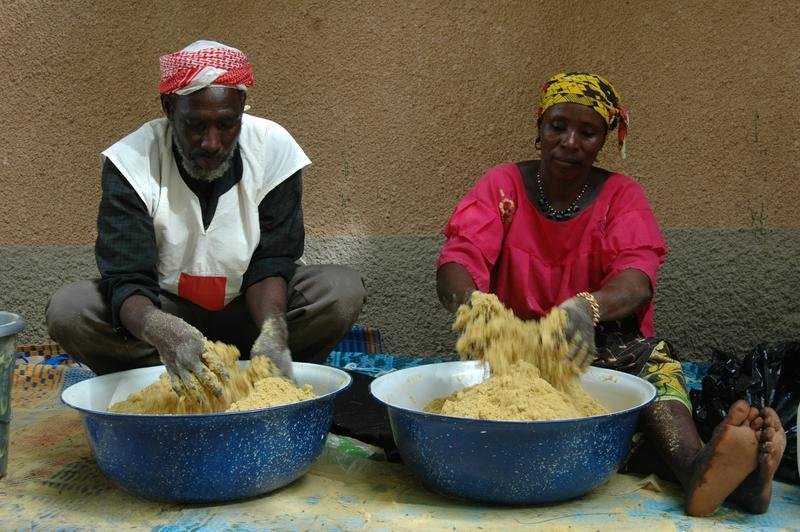
Fatouma is a widow and mother of two who receives assistance from World Food Program (WFP) cereal (grain) banks. “When my family’s cereal stocks ran out, I was able to purchase cereals from the bank at moderate prices,” says Fatouma. Towards the end of the lean season when all of her financial resources were exhausted, she was then also able to purchase cereal on credit which she hopes to pay back with her next harvest. “I am glad the cereal bank was there for me and my family when we needed it the most.”
Over 70 percent of Niger’s 13 million inhabitants live below the poverty line and are suffering greatly under the impact of the current global food crisis, just as Fatouma has. The country’s weak economy is almost entirely fueled by agriculture, which is constantly hindered by drought and locust invasion. Nearly 44 percent of children experience chronic malnutrition and one in five children in Niger does not live to see their fifth birthday.
World Food Program assistance in Niger is designed to address the root causes of poverty by promoting rural development and increasing education rates, while also responding to immediate relief needs, such as the treatment of children suffering from malnutrition. WFP supports several programs in Niger including food-for-training and food-for-work (FFW) projects to increase independent food production.
But, recently, WFP has given special attention to the impact of the global food crisis in Niger. The price of rice in Niger has risen 51 percent compared to the price average over the past five years. The increase in cost of other similar items is of particular concern to the people of Niger as grain serves as a staple of the local diet. WFP is working to combat this growing issue by setting up village-level cereal banks to ensure the availability of grain at reasonable prices. This program allows families to afford the food they need when they need it and has significantly softened the blow of the global food crisis on Nigeriens.
WFP Niger is assisting about 1.3 million people this year and plans to maintain this level of service, if not increase it, but has further financial needs to continue improving the quality of nutrition for Niger’s vulnerable populations throughout 2008. Your contribution has had an important impact on allowing Friends of the World Food Program assist WFP in initiating vital projects like village-level cereal banks, which have saved countless lives. Thank you for your continued support.
Project Reports on GlobalGiving are posted directly to globalgiving.org by Project Leaders as they are completed, generally every 3-4 months. To protect the integrity of these documents, GlobalGiving does not alter them; therefore you may find some language or formatting issues.
If you donate to this project or have donated to this project, you will get an e-mail when this project posts a report. You can also subscribe for reports via e-mail without donating or by subscribing to this project's RSS feed.
This project is no longer accepting donations.
Still want to help?
Support another project run by World Food Program USA that needs your help, such as:
Washington,
DC,
United States
http://www.wfpusa.org
Development Associate, Friends of the WFP
Washington,
DC
United States
Projects on globalgiving.org undergo compliance checks to ensure they have a bona fide charitable purpose and meet applicable laws relating to international philanthropy. Organizations listed as partners do not necessarily endorse or support any particular project listed on globalgiving.org. The GlobalGiving Foundation is a 501(c)3 organization (EIN: 30-0108263).
GlobalGiving
1023 15th Street, NW, 12th Floor, Washington, DC 20005
Phone: (202) 232-5784 Fax: (202) 315-2558
Contact us