Help Women in Nigeria Become Poultry Farmers

 
$1,110
$3,890
Raised
Remaining
Mar 27, 2013

Meet Roseline - A Success Story

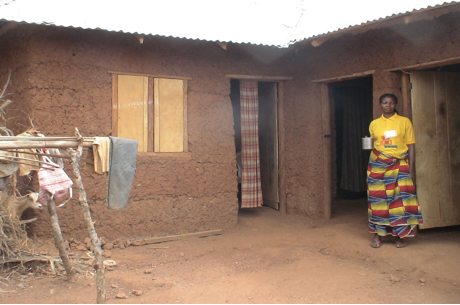
Meet WfWI - Nigeria praticipant Roseline. Roseline lives in Mgbidi. A 45 year old mother of seven, Roseline is subject to an unfair tradition in Nigeria by which she is forced to remain an unwed mother and have children in her parent’s name and remain in their home. She lived her whole life believing that as a woman, she was worth less than a man, and that the ideas, opinions, and voices of women were of less value than those of men. In WfWI-Nigeria's year-long training program, in addition to learning a marketable, income generating skill like poultry farming, Roseline also learned about her rights. WfWI-Nigeria’s program instilled in her a renewed sense of confidence and the understanding that women are equal to men. Now she is focused on ensuring that all her children – her sons and daughters alike – are given an education and opportunities she was never afforded.

In Nigeria, religious codes and family traditions that subject women to unequal treatment tend to outweigh national laws asserting gender equality. Despite the 1999 Constitution which gives equal rights to all regardless of gender, Nigeria’s decentralized legal system has resulted in inequitable treatment of women on a state-by-state basis. In Enugu State, where Women for Women International-Nigeria’s offices are located, women are learning for the first time that they are in fact equal to men, that their ideas and beliefs are of equal value, and that the education of their daughters is as important to that of their sons.

For Roseline Nwamaka Anukwa, a 45-year old mother of seven and participant in the Women for Women International-Nigeria program (WfWI-Nigeria), these lessons have been eye-opening and exciting. The environment in which she was raised taught her from a young age that her opinions and contributions to society were of lesser importance than those of the men in her village. Roseline is subject to an age-old tradition in Nigeria that limits her freedom as a woman and a mother. As the sole living child of her parents, she has been forced by her family to remain at home unmarried, a common custom for the eldest daughter in a family or, in Roseline’s case, as the only survivor of her many siblings. She is not allowed to marry and she has never had the joy of falling in love.

“I never got married,” she says. “All my siblings died and my parents compelled me to stay home and have children in their name. Impliedly, I am never to get married to any man but I can have affairs, get pregnant, but the child will bear my father’s name.”

As a result, Roseline’s body was no longer treated as her own. She belonged to her parents, and to the men who impregnated her without worry of commitment or marriage. “I have had many male bedmates who took advantage of me and my situation. Once I get pregnant, the men disappear. I go through the pregnancy period and delivery…all alone.” 


After three months in the WfWI program, Roseline said: “What I have learnt from Women for Women can neither be quantified nor measured. I learnt how to write my name and this is what I never dreamt of in my whole life. I learnt that a man and a woman have equal right in the family.”

The unfair treatment Roseline has undergone throughout her life is difficult to undo; despite what she has learned, she is still not treated as an equal within her own family. But what she has learned this year will ensure that her own fate is not repeated among her children. Her three daughters have all been educated – two have finished primary school and one is still enrolled. She speaks of her childhood and of the barriers to education she faced. “When I was young, girls do not go to school. Parents believed that…when girls have good education, they do not respect their husbands and so many men will be afraid of seeking their hands in marriage.”

Her favorite lessons have been on equality of men and women, and in raising her boys and girls. “This lesson opened my eyes to start correcting the mistakes I have made in the way I have trained my children. I assign more [chores] to my daughters thinking that I am preparing them well to serve their husbands and to be good housewives, not knowing that I am limiting them in life. … I can’t stop telling people around me, both men and women, about equality in raising boys and girls!” 

Roseline’s life has undergone many changes in the three months since she began as a participant in WfWI-Nigeria’s program. She can now write her name, something she has longed for all her life. “I can identify the letters that make up my name and whenever I see them even if it is in a crowd; I will make people around to realize that this letter is the beginning of Roseline, Nwamaka or Anukwa.” She has also learned more about the importance and influence of her own opinions that her voice can and should be as loud as any of her fellow citizens of Nigeria. Roseline has only ever voted once. “Actually, I have never bothered going to vote again for years because I felt it is for politicians alone,” she said. “Obviously in the upcoming election, I will be at the forefront because I learnt from Women for Women that I have the right to chose who leads me.” There is a renewed confidence within Roseline. She now speaks up in large crowds, whether it is among men or women. “I feel younger as a pupil every Thursday when I dress up to go for our manual classes.”

Roseline is not alone in these feelings. Upon graduating from WfWI-Nigeria’s program, 96% of participants have reported that they have a greater understanding of their rights. There is a great sense of unity among all the participants through their shared experiences as survivors of conflict and their collective gain in confidence. “Women for Women made me realize that I am not alone in the race, ”Roseline said.

There is great hope for the future of gender equality in Nigeria when women like Roseline have the strength and the courage to empower and educate the next generation of Nigerian women like her three daughters. When she was asked if she believed girls should go to school, she said “Capital Yes! … I said this because families that sent their female children to school when we were young stand out in my community now. They live comfortable lives and their daughters work in big offices in the city.” Roseline has such pride for women who are able to achieve these accomplishments. She finds great joy in the prospect that her own daughters might too have “big offices in the city.” But for Roseline, it is not as much about the big office as it is the respect that comes with it. “Indeed,” Roseline wisely adds, “Knowledge is Power!”

Dec 11, 2012

Update from WfWI - Nigeria Country Director

WfWI's Poultry Marketing Initative is part of a comprehensive training program WfWI offers to participants. Read on for an update on the entire program from WfWI-Nigeria Country Director Ngozi Eze. 

 It is heart warming to write to you once again. I hope all is well with your families and friends and life is treating you beautifully. Over the last several months, we have taken part in a major expansion and have enrolled more. Thanks to a fantastic increase in sponsors over the last several months, we are able to provide our services to so many more women who truly need it. 


While enrolling participants in the Edem community in Enugu State, we discovered the community suffered an outbreak of tuberculosis. When some of the participants were asked how a family member passed away, they would usually attribute it to “being poisoned,” even though their family members had died from the disease. In order to address this misconception, we have now added more information to our rights awareness training about the prevention and care of tuberculosis, using a curriculum developed by the Ministry of Health. The information includes eating a balanced diet, keeping a healthy immune system and sleeping in well-ventilated rooms. 

In Jos, where our satellite office is located in the northern part of the country, we have been able to combine both the Muslim and Christian women into one classroom for workshops. Because of the religious conflict that has plagued the northern region of Nigeria, we previously had to have the women meet at two different locations. Initially, there was fear and suspicion on the minds of the participants, due to the violence that broke out in 2001. To their surprise, they were greeted by the people of the community. For some, it was like a reunion with their long lost friends whom they had not seen since the conflict. We are of the belief that with this new arrangement, we will be part of the peace-building process and we will continue to advocate for the peaceful coexistence of the two groups through our non-discriminatory stance, as well as through our rights awareness, leadership and skills training programs. 

Currently, 360 participants are participating in skills training, including soap-making, batik or “tie-dye” production, business skills training and knitting. We are also encouraging our participants to form groups and register as business cooperatives to use their new skills, as well as open bank accounts. Once a group registers as a cooperative, they are an “official organization” and therefore are entitled to benefits by the government in regards to taxation and interest rates. Although the registration and banking is a cumbersome process, as many villages do not have local banks, we believe that this will promote sound income-generation activities once they graduate from the program. 

One participant, Antonia, was a peasant farmer and sometimes sold tobacco on a small scale before joining our program. Her husband left her in the village and went to live in Enugu and married another woman. She was very sad and upset at having to care for her children alone. She lives in one room in her father-in-law’s house with a zinc roof and pit toilet. Apart from benefiting from the rights awareness training classes which enabled her to interact with other women, during the program she learned how to make shoes and repair them and she now specializes in slippers – a business she now runs from her home. She also sells basic provisions, such as drinks and condiments, from her home. Emotionally, she says she is much happier as she can now meet her children’s needs. She and her children still live in her father-in-law’s house. Her future goal is to improve on her shoemaking skills and become renowned in her village. She told us, “This organization has not only given me more money by teaching me to become a shoemaker, it has also helped to make me happy and reduce my constant thinking and worries.”

Till I write again, the participants and staff of the Nigeria office send you many thanks for all that you do.

We wish you peace, love and lots of blessings.

Sincerely,

Ngozi Eze
Country Director
Women for Women International -- Nigeria.


Sep 28, 2012

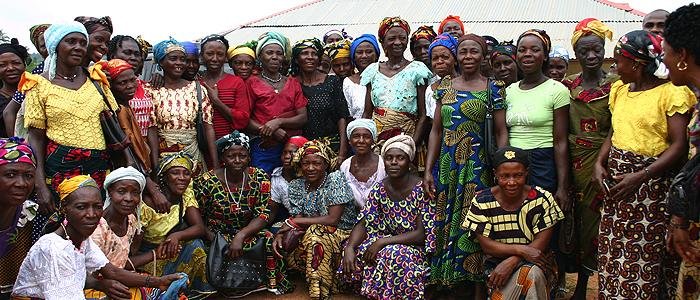
Miango 17 Women's Group

Only 13 women were available for this group photo.

The Miango 17 women's group was composed of 20 participants. They joined the program in order to develop friendship, awareness, support network and to gain self reliance in order to improve their lives and the lives of their families. 

These women live in two communities (Kitago and Jebu) of Miango district. Nineteen of them are married while one is widowed. Nine of them did not go to school at all, 6 did not complete primary school, two completed primary school, and one did not complete secondary school while one completed secondary school.  Before they joined the program, so many of the women are subsistent farmers, with only few of them who do petty trading with very little capital. Some of them hawk yams from their communities to Jos town which is about a three-hour trek.  Each woman lives in a family house with extended family members. They get water from the well within their dwellings, share a common toilet and bathroom where it is available. Few of them have electric lights while so many use kerosene lamps as source of lighting. 

The Miango 17 women's group started poultry skill training half way through the year-long course. They are planning to start a group poultry project as soon as they complete the training. They are saving part of their sponsorship funds to enable them construct a poultry farm. 

They have also learned more about business skills and marketing strategies and understood more about the importance of education in self reliance. They said, “We have gained enlightenment to improve our lives and empowered to better our standard of living." Despite the hardship and crisis in their community, these women are facing in their lives, hoping that things will get better someday. With this, they are able to make some progress. 

Here are what one member of the group had to say about her experiences —

Grace Alheri Bello, 28 years old, is married. She gave birth to five children but two died, while three are alive: two boys and one girl.  Grace helps her husband on the farm. She sometimes buys and sells tomatoes in the market in a small quantity. She makes very little profit and she uses it for family needs especially feeding. She felt so bad that both her profit and her husband’s farm produce cannot sustain her family. While in the program, she learned business and marketing strategies. With this new knowledge, she had improved her business. With the sponsorship funds she received so far, she was able to increase her business capital, now she is realizing more profit. Not only had she improved feeding in her family, she was able to pay her children’s school fees. She said: “I feel so good about myself."

Thank you for your donations through GlobalGiving!

Jul 11, 2012

The Nigerian Poultry Marketing Initiative: A Model of Success for Socially Excluded Women

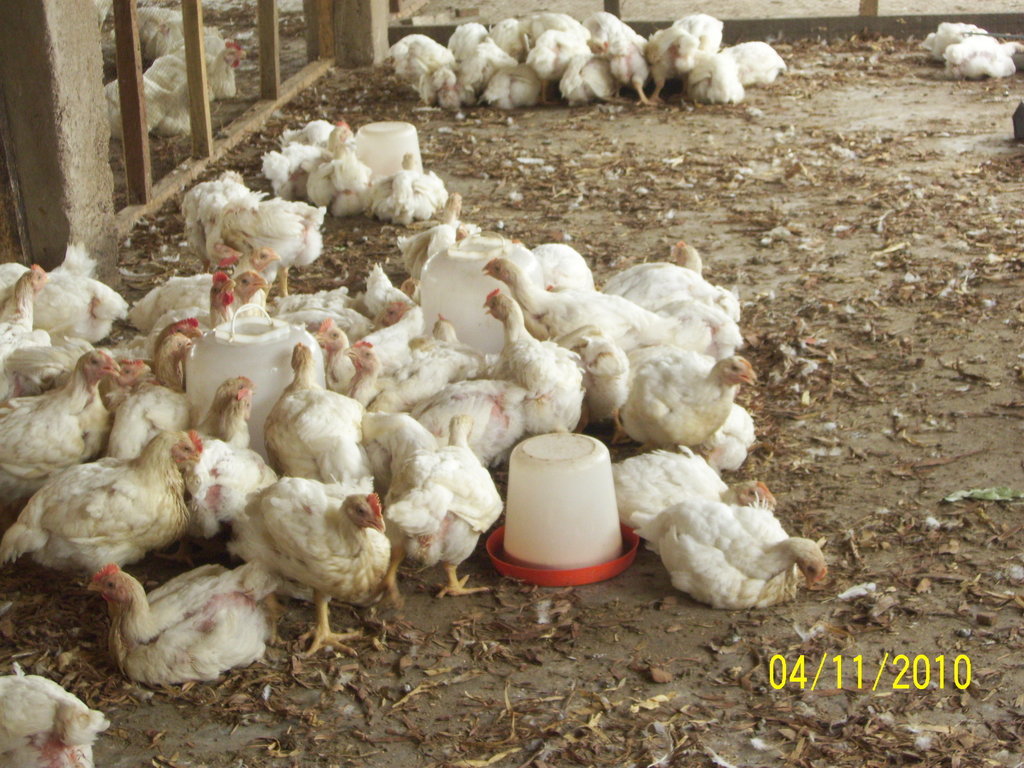
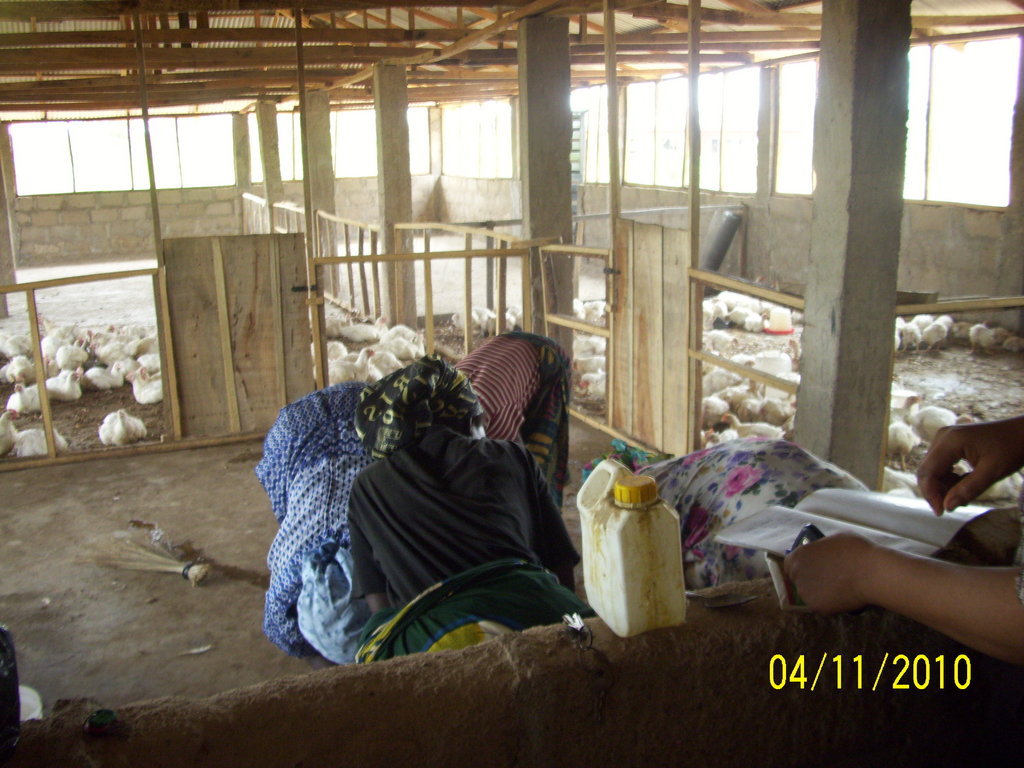
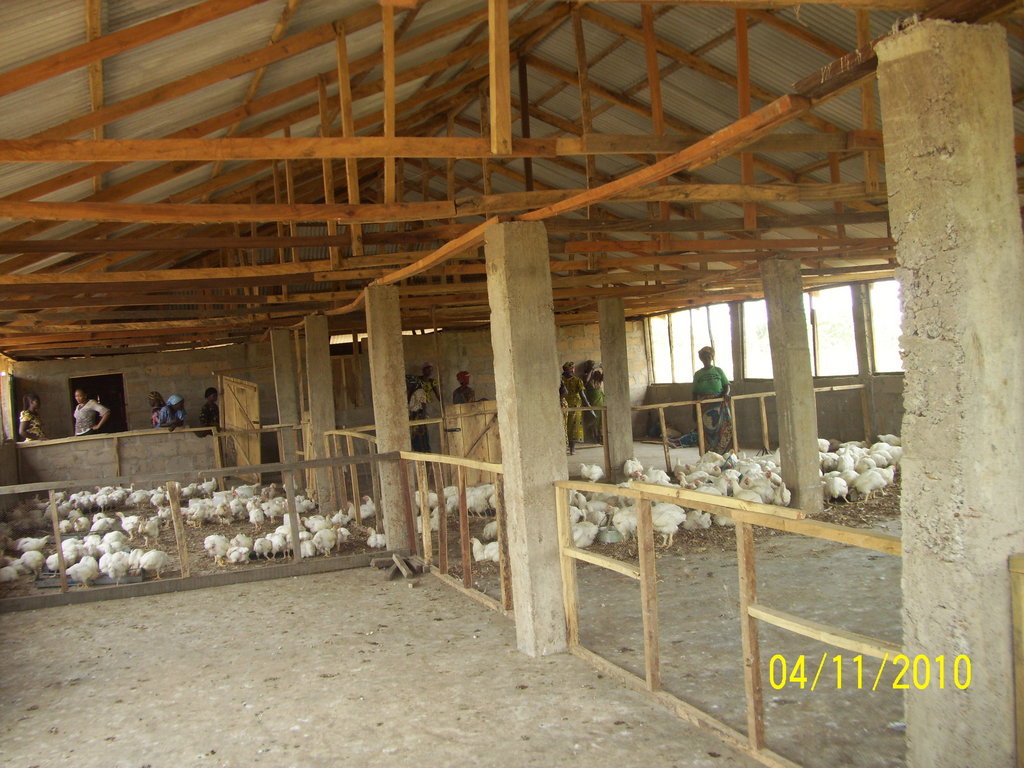
A participant in a poultry house.

The poultry marketing initiative (PMI) model was born out of the belief that socially excluded women can successfully compete in commerce. In Nigeria, a significant number of women produce poultry, and PMI is the logical next step for them to put their knowledge and skills to work. The PMI model builds on women's production successes and provides fresh, locally produced poultry at lower prices.

The primary goal of PMI is to bring about increased self-employment and income for participants involved in poultry production. Women for Women International envisions PMI as a phased program, in which women move from producers to processors, managers and ultimately, to owners who actively compete in the Nigerian poultry value chain. The initiative focuses on using a strategic agribusiness model that will be applied to support the efforts of Women for Women International-Nigeria in Enugu and help train women who are primarily family farmers (subsistence farmers) gain the skills that will further their ability to engage, function independently and profit from the agricultural market by becoming small- to medium-scale poultry producers.

How has PMI succeeded?

More than 70 groups, made up of 875 women, are engaged in small-scale poultry production and are attempting to enter Nigeria's commercial poultry market. Two poultry/processing houses are almost complete in two separate communities: Mmaku and Umualor. A cooperative in Oruku has formed and is selling approximately 50 birds a week to GTBank. Bank employees place a group order with the cooperative and women manage all negotiations, packaging and deliveries. This cooperative will become part of a marketing association that will include Umualor and Mmaku and additional Women for Women International-Nigeria groups.

Consumers have responded to the production of fresh and local poultry and frequently travel two hours down dirt roads to purchase Women for Women International-Nigeria's products. Demand in and around Enugu is high: A recent survey of potential market partners demonstrated that large-scale commercial poultry vendors could not supply enough fresh poultry to meet demand.

This will be Women for Women International-Nigeria cooperatives' market nichesÑPMI participants have an advantage over frozen, expensive and chemically treated poultry products because they use less advanced technology and take advantage of the low cost of production.

In addition to processing fresh poultry meat, PMI cooperatives have also begun selling poultry manure to use as organic fertilizers in and around their communities. This next step has the potential to lead into a commercial farming activity similar to Women for Women International's Commercial Integrated Farming Initiative that combine animal husbandry and crop production.

Mar 26, 2012

Chiemeucheya Oruku

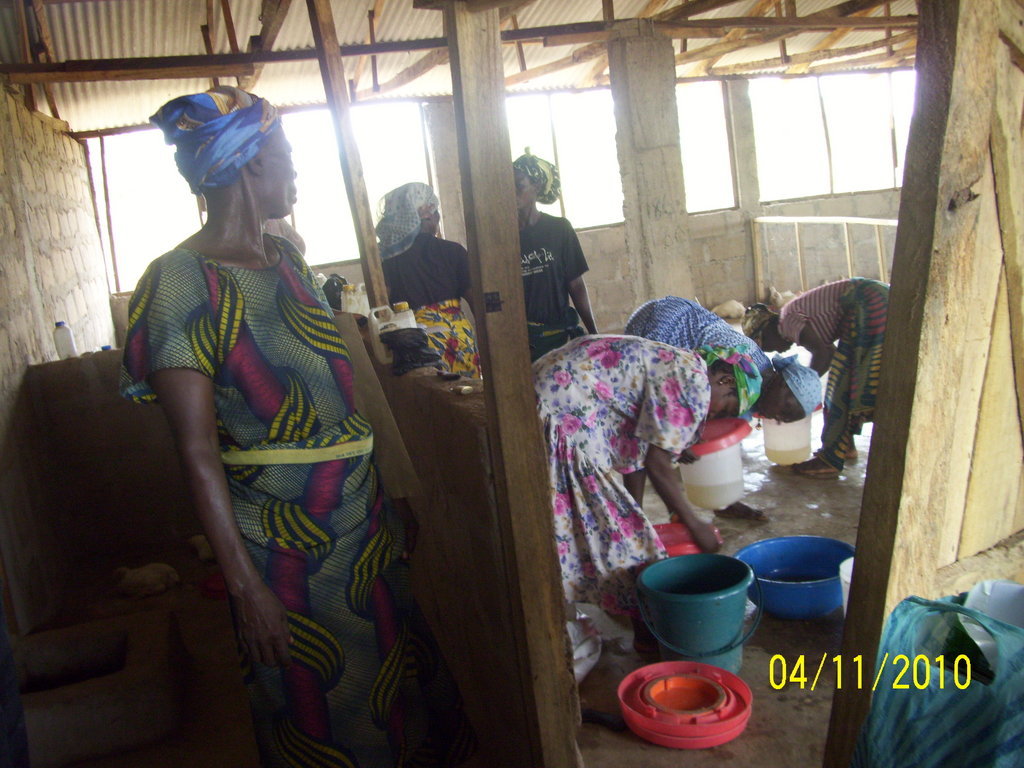
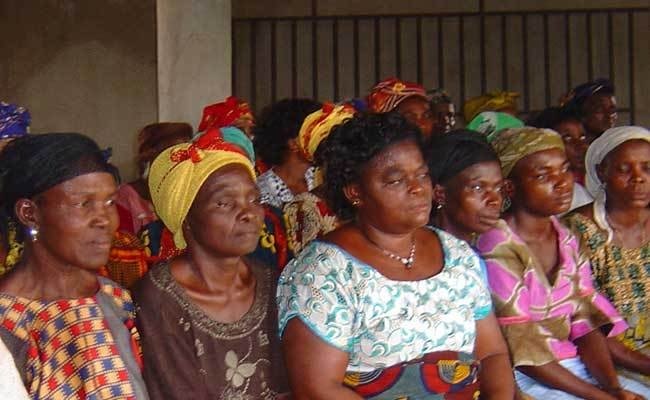
Women working in a co-operative.

The Chiemeucheya women group is from Nkanu East local government area of Enugu state. This group is made up of low income women and was selected after community assessments, home visits and meetings with stake holders in the community. This community lacks basic amenities like water, electricity, good roads, health centers etc. The majority of the women had little or no education and were struggling to recover from the ills of former communal clashes in their community and as well deal with the economic hardships they were facing. Security issues in this community also created disruptions to education, as children had to be kept at home.

The original number of women enrolled was 160. Out of the 160, 156 are active. The active participants formed and registered as a cooperative group under the name chiemeucheya; which when   translated means that God has done his wish by uniting them to work together and strengthen each other as a group.

They received all the topics scheduled by the program under the major broad headings below

  • Program introduction and overview
  • Women in politics
  • Women in economy
  • Women in the family
  • Women and health
  • Women and nutrition

They also received skill training on poultry and did an initial pilot test with a total of 150 birds which they sold off after they reached maturity at 10 weeks. Due to the success of their first attempt at poultry farming and still using their temporary poultry site, they ordered for a second batch of 200 birds to be reared. Through the trainings they received, they learnt about the importance of savings and thus opened an account where they lodge in their savings (money).

Their traditional ruler, stakeholders, as well as members of land committee in their community gave them a piece of land where they could erect their permanent poultry house. They have started clearing the land and would start construction once they finalize signing of an agreement with the stakeholders with the help of a lawyer.

These women declared that the formation of their co-operative is a long term investment which would help them to improve their lives emotionally, socially and economically as they have learnt to trust each other.

Some of the women had this to say about the progress they have made so far.

“My name is Theresa Ogbu. I am a single mother of three girls all below 9 years. I separated from my husband after he abandoned me for another woman because I was unable to have a surviving male child. My only son died when he was still a toddler. I used part of the funds I got from the program to start up my sewing business in my father’s house. I was sewing before I got married but my husband made me to stop it after we had married. I make between N600 – N 800 per month because not everybody makes new clothes. Part of the funds I received also helped me to cultivate more crops in my farm than I never did before. Having learnt about poultry farming during their skill training, I am now saving towards starting a poultry farm of my own.”

“My Name is Agatha Nwatu. I am mother of seven (5 boys and 2 girls). Some of my children were sent at a tender age to work as house helps for other people. Though sending them out was not my intention, I had to comply with my husband because of our financial constraints. Participating in the program and joining the cooperative group helped me to interact with other participants, with whom I share my challenges with. I am happier than before I joined the program. This is because before I joined the program, I  get foodstuffs (which I sell) on credit and pays back after selling. But because I have a target on when to pay back, I had to sell them off with little or no profit so that I will not loose the trust of the wholesaler. When I started receiving monthly sponsorship funds, I used part of it to solve my immediate family problems, saved part of it, and reduced buying on credit. Instead of buying all the food items on credit, I pay for some and take my time to sell and with this I make more profit.” 

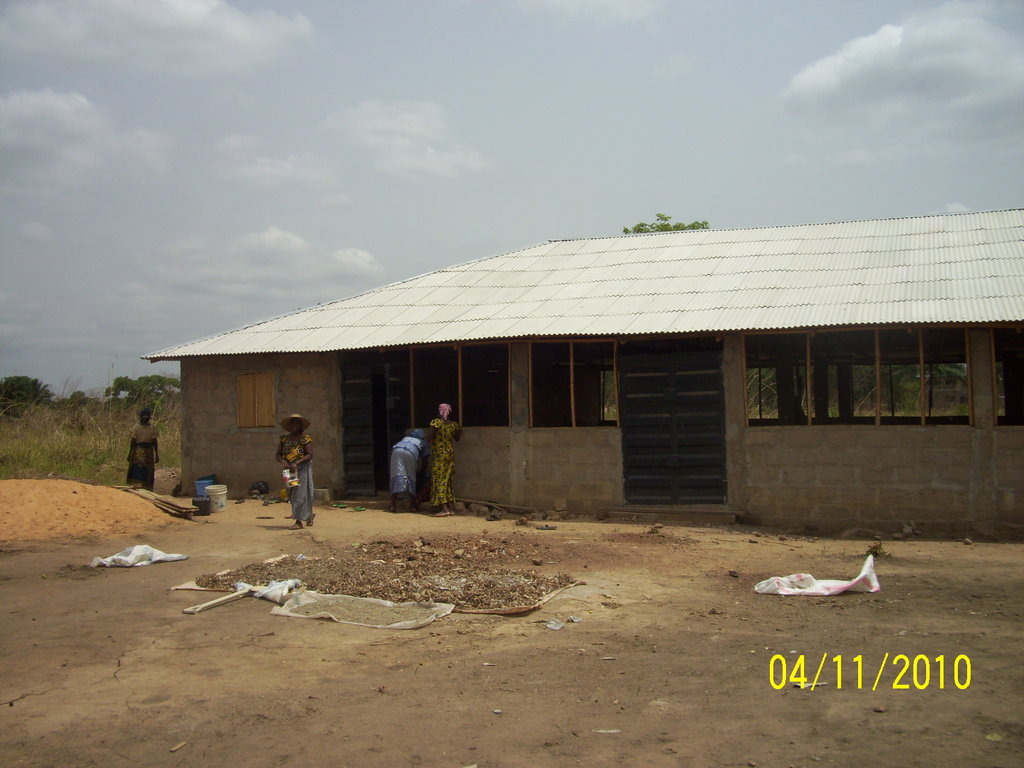
Women work to clear ground.

About Project Reports

Project Reports on GlobalGiving are posted directly to globalgiving.org by Project Leaders as they are completed, generally every 3-4 months. To protect the integrity of these documents, GlobalGiving does not alter them; therefore you may find some language or formatting issues.

If you donate to this project or have donated to this project, you will get an e-mail when this project posts a report. You can also subscribe for reports via e-mail without donating or by subscribing to this project's RSS feed.

An anonymous donor will match all new monthly recurring donations, but only if 75% of donors upgrade to a recurring donation today.
Terms and conditions apply.
Make a monthly recurring donation on your credit card. You can cancel at any time.
Make a donation in honor or memory of:
What kind of card would you like to send?
How much would you like to donate?
gift Make this donation a gift, in honor of, or in memory of someone?

Organization

Women for Women International

Project Leader

Lyndsay Booth

Online Marketing Coordinator
Washington, DC United States

Where is this project located?

Map of Help Women in Nigeria Become Poultry Farmers