Indonesian Ecological Restoration & Education

 
$4,512
$45,488
Raised
Remaining
Jul 7, 2011

Thriving in Kunir

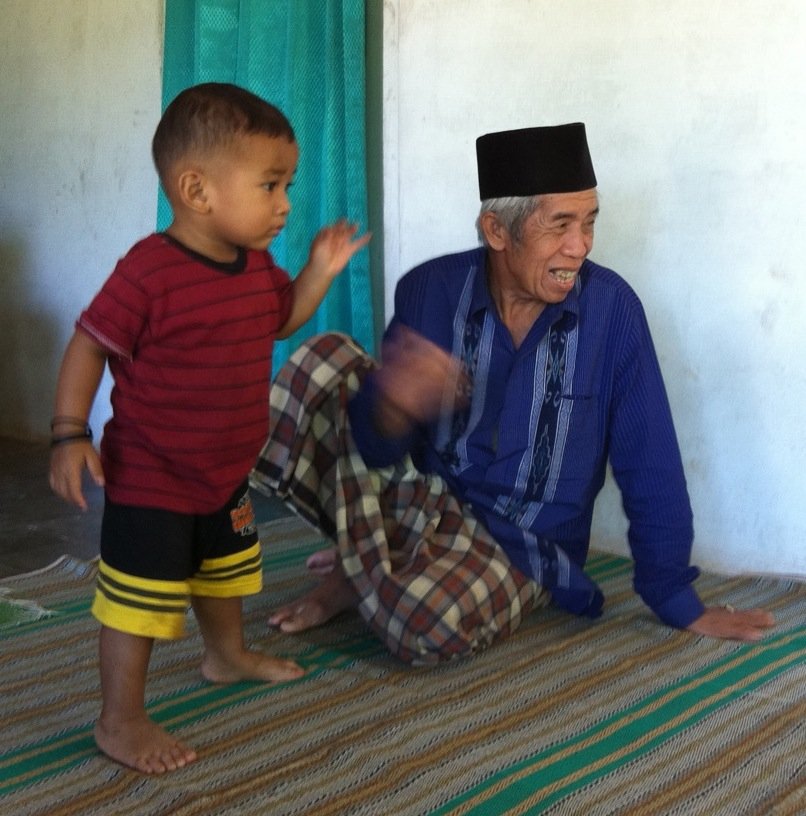
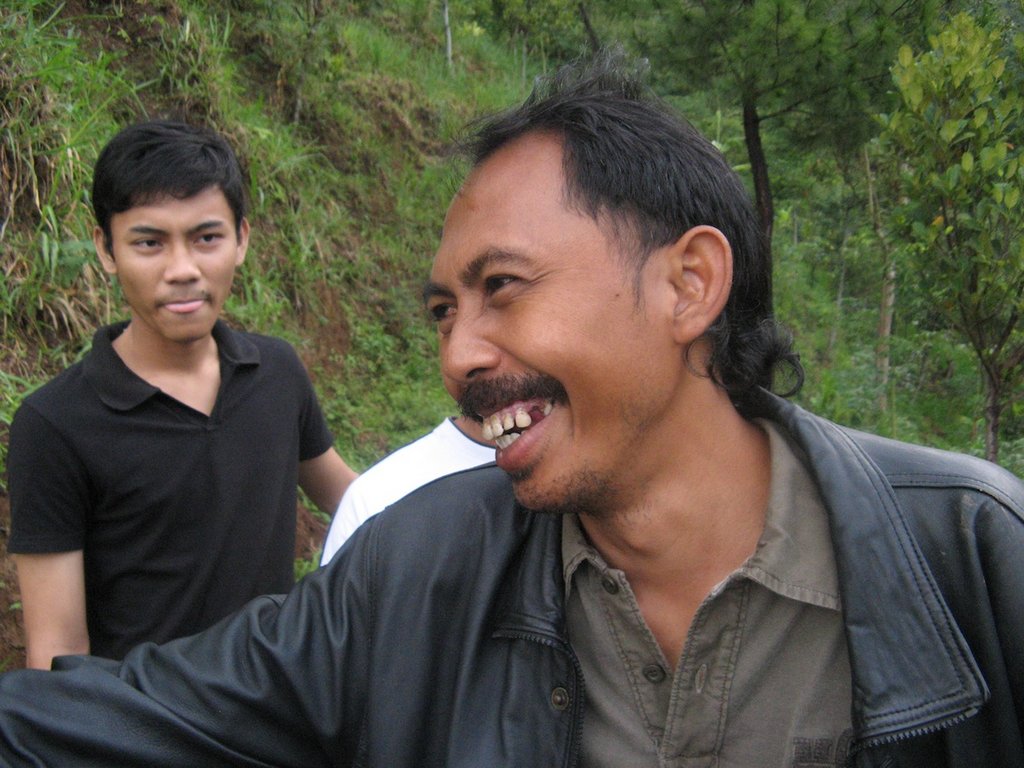
Pak Sumani is doing well

Hello Everyone,

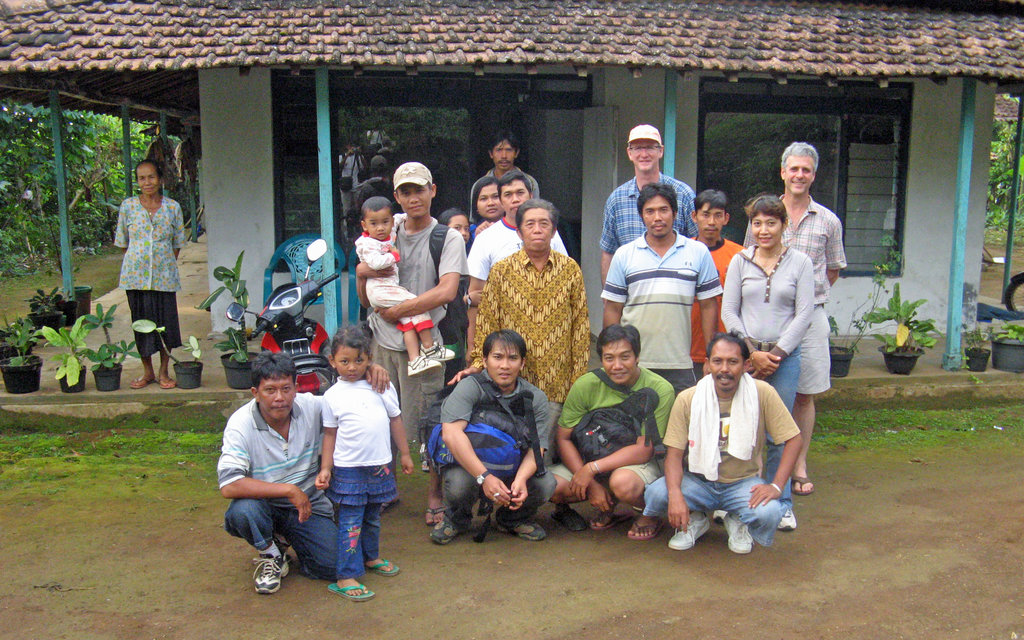
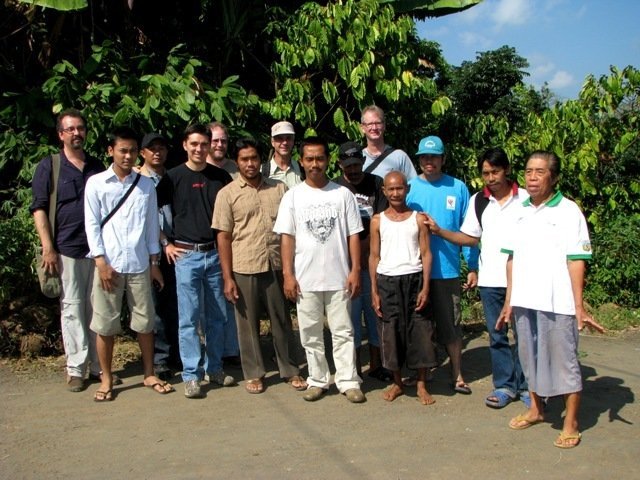
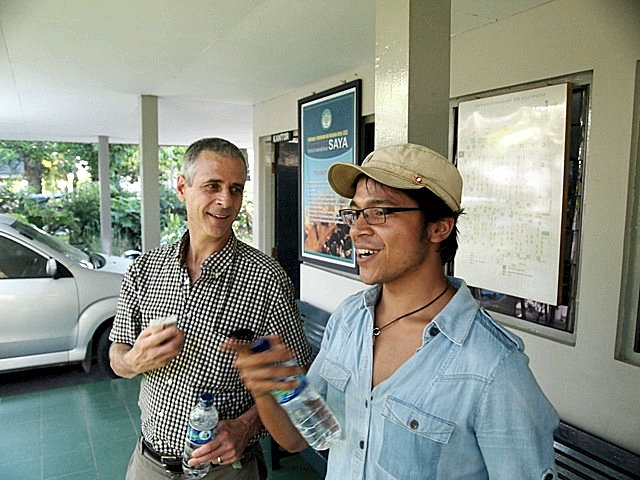
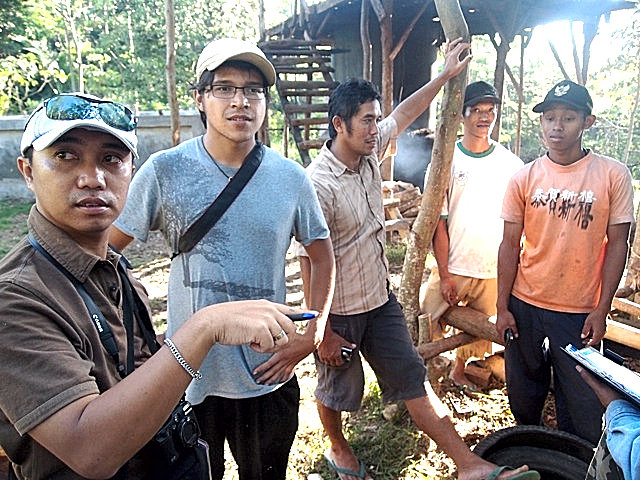
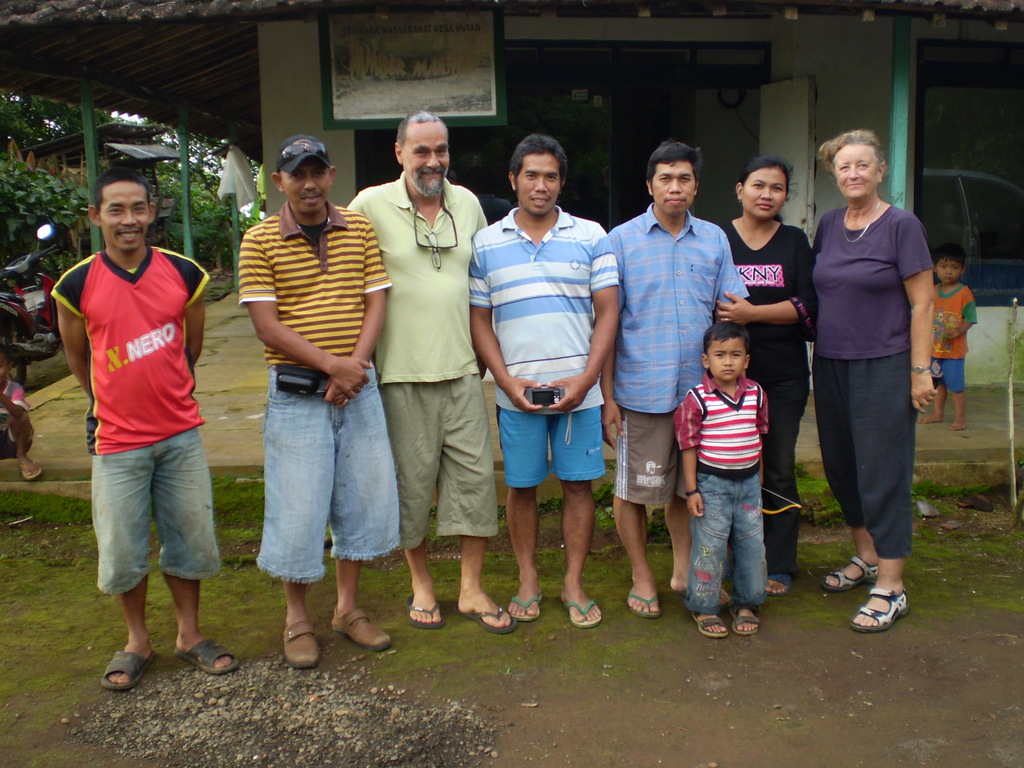
We've just returned to Portland from a two-week visit to our project site in Jepara and Kunir. I was very gratifyint to see the progress the residents of Kunir have made over the past 4 years!  Along on the visit were Tim O'Brien, project co-lead with me, Agni Pratama, an economic development expert from Mercy Corps (a global relief and development NGO) and Gabe Wynn from Green Empowerment ( a Portland-based NGO that develops renewable energy systems for villages), along with two members of the Jepara Forest Conservancy board of directors,  Adi Sunaryo and Agus Rofiqkoh. We were welcomed, as always, by Pak Sumani the now retired village head.  It was great to see him doing well after a period of illness.  Here are some highlights of our trip (see the corresponding photos below):

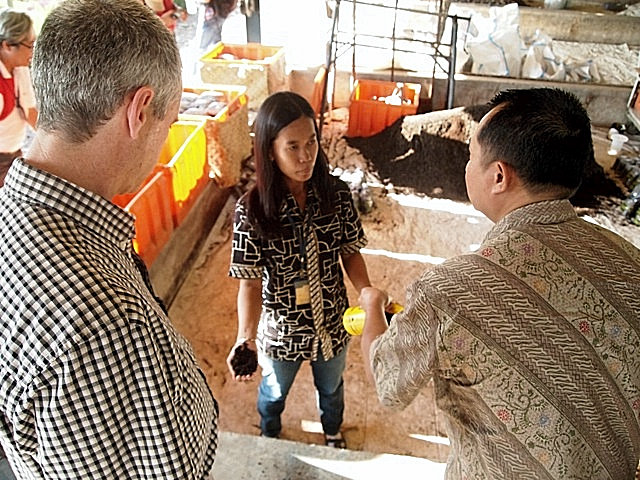
  • We visited the local Djarum Foundation botanical park and met with the director and several of the staff.  They have been planting trees along local roadways and are interested in working farther up on Mt. Muria as well.  They made a generous offer of seedlings from their nursury and of high-quality compost.
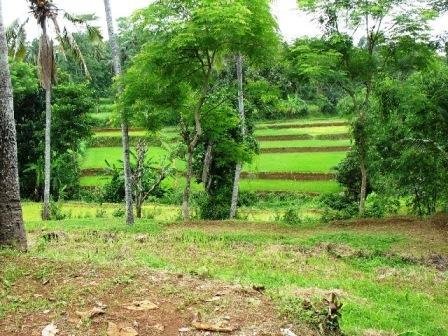
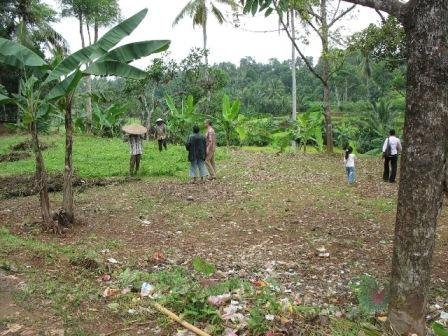
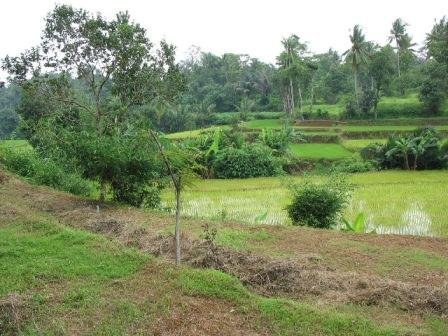
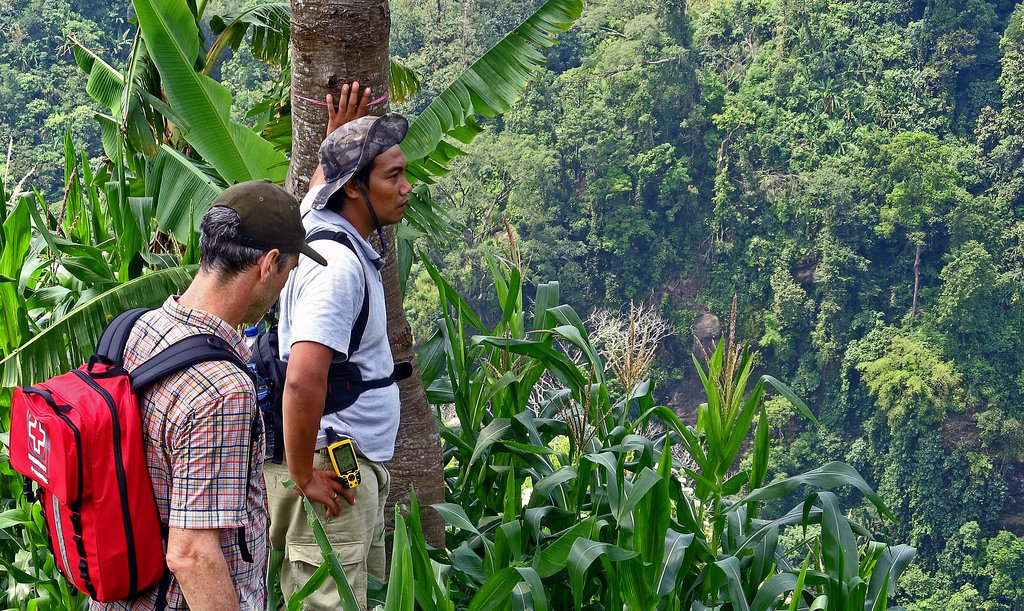
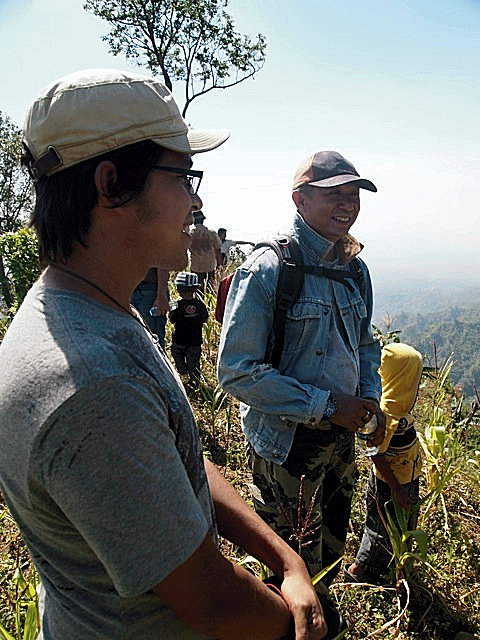
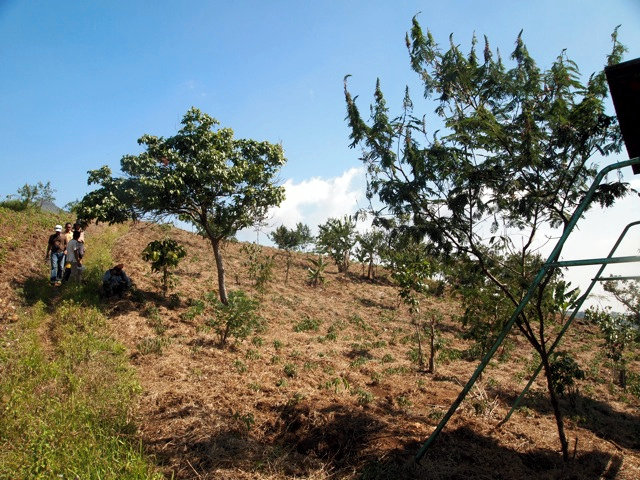
  • Along with a number of Kunir village residents, we all visited the reforestation area on Mt. Muria.  It was great to see the progress made on the native species ecological restoration.  Several residents have identified water supply as an increasingly critical issue.  Most likely due to the deforestation of a decade ago, the stream flows coming from Mt. Muria are much diminished.  We identified a spring that could be enhanced to bring additional water to the village and surrounding rice fields, but getting the water to Kunir will be a challenge.  Gabe Wynn described to us a range of options including the use of "ram pumps", as well as the exciting possibility of integrating micro-hydro electric production.  These goals are high on our list for the next year.
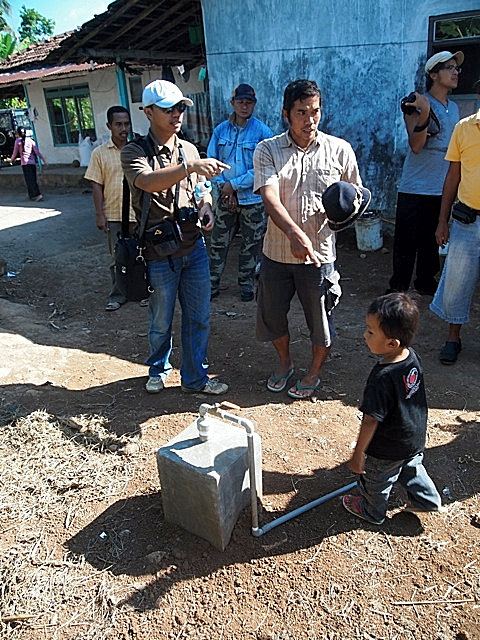
  • Using a grant from UN-GEF (facilitated by our collaborator Iwan Tjitradjaja) a pilot bio-gas project has been completed and is supplying cooking gas to one household in Kunir.  The bio-gas digester takes manure from household goats and produces about 3 to 4 hours / day supply of gas.  The community is very excited about this development and we are looking into ways to expand it to many more households.
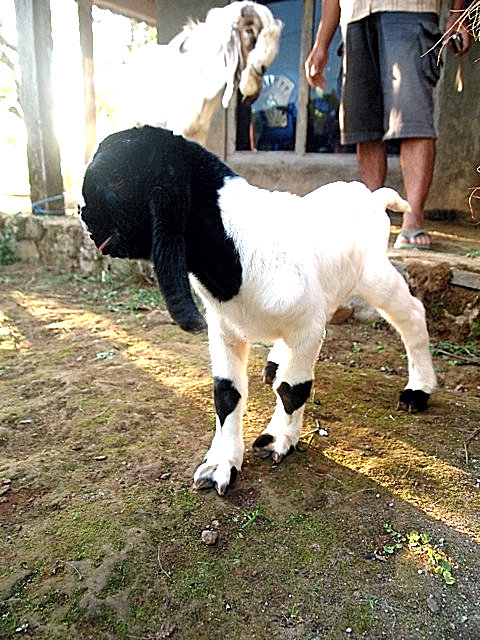
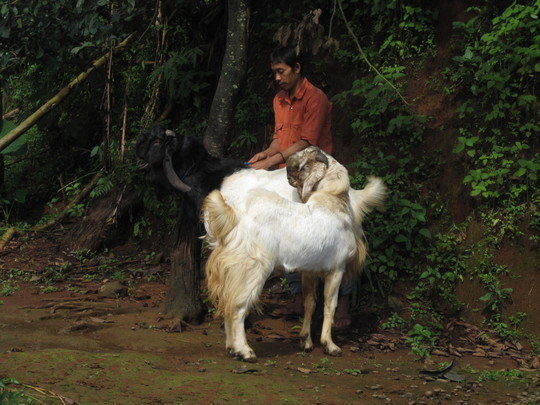
  • You may recall that we purchased a small number of highly valued Etawa Goats two years ago.  Well, that small number grew to approximately 100 goats of which 30 were sold, bringing an additional 10,000 USD into the community!  The milk from the goats is also an important benefit - the milk of the Etawa is regarded locally as particularly health promoting.
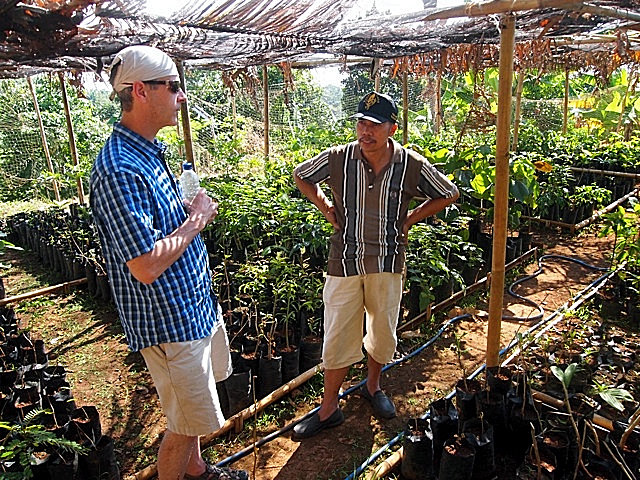
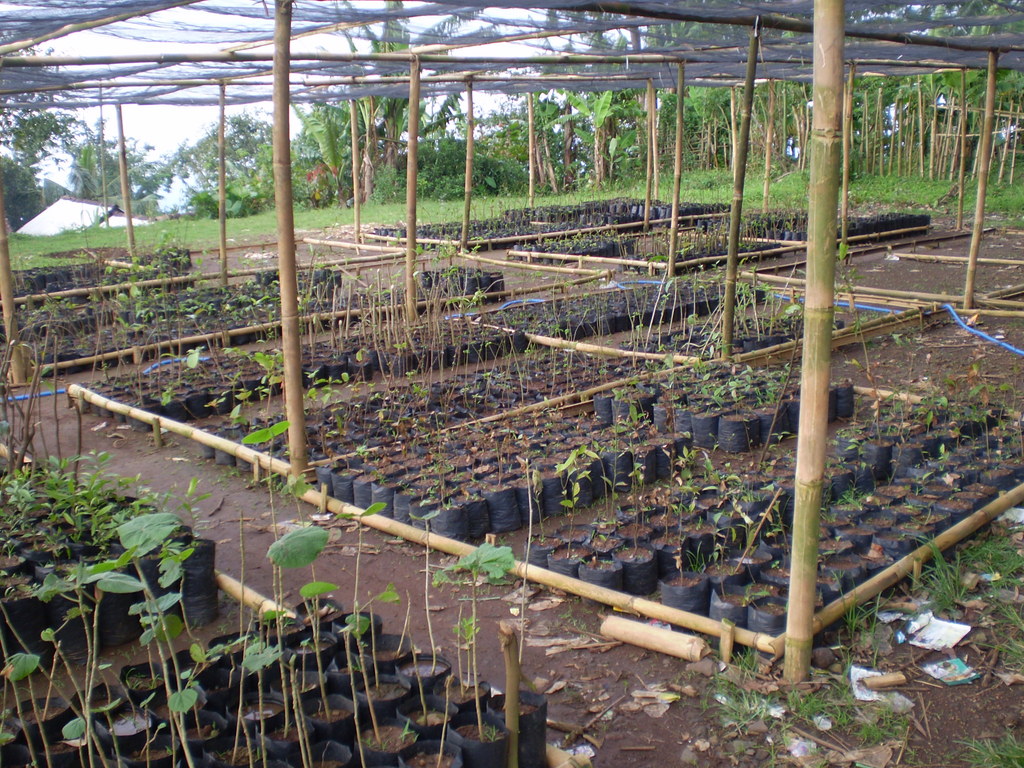
  • The native species nursery is really thriving!  There are now over 70 different native species seedlings being grown and planting on the degraded slopes above the village.  We are seeing some dramatic changes as a result of these plantings and everyone is very motivated to expand both the growing and planting.  Our new connection to the Djarum Foundation will be helpful in this regard. 
  • Agni Pratama of Mercy Corps was very excited to see a small nilam oil distiller, developed by a local entreprenuer, in operation at the village site.  Nilam oil has a number of applications in the cosmetics industry and fetches a good price in the market.  The oil is distilled from a local non-timber forest product gathered in the remaining forests near Kunir.  Agni informed us of a novel program that trains local entreprenuers to develop business plans and enter a business plan competition.  We plan to spend part of the money donated to our project to fund Kunir residents to develop such a plan for developing a nilam oil village business and submit it to the competition.  Stay posted for the results. 

All of these remarkable innovations and development have been crucially supported and encouraged by your donations to our project through Global Giving.  Thank you so much!

Cheers,

Greg

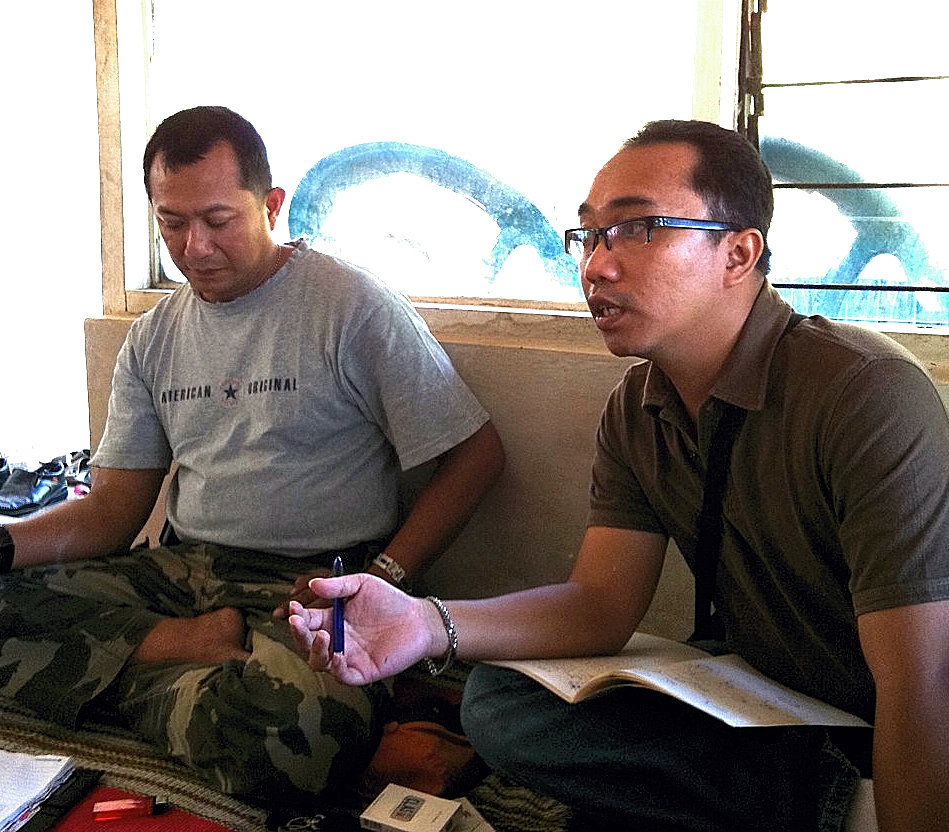
Adi and Agni discuss future plans with community
Tim and Gabe at Djarum nursery
Tim and Adi investigate compost at Djarum
Gabe and Adi at the JFC reforestation area
Not everyone found the site visit thrilling....
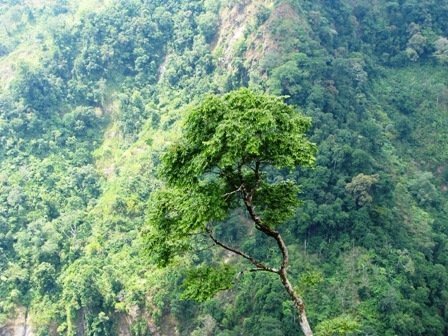
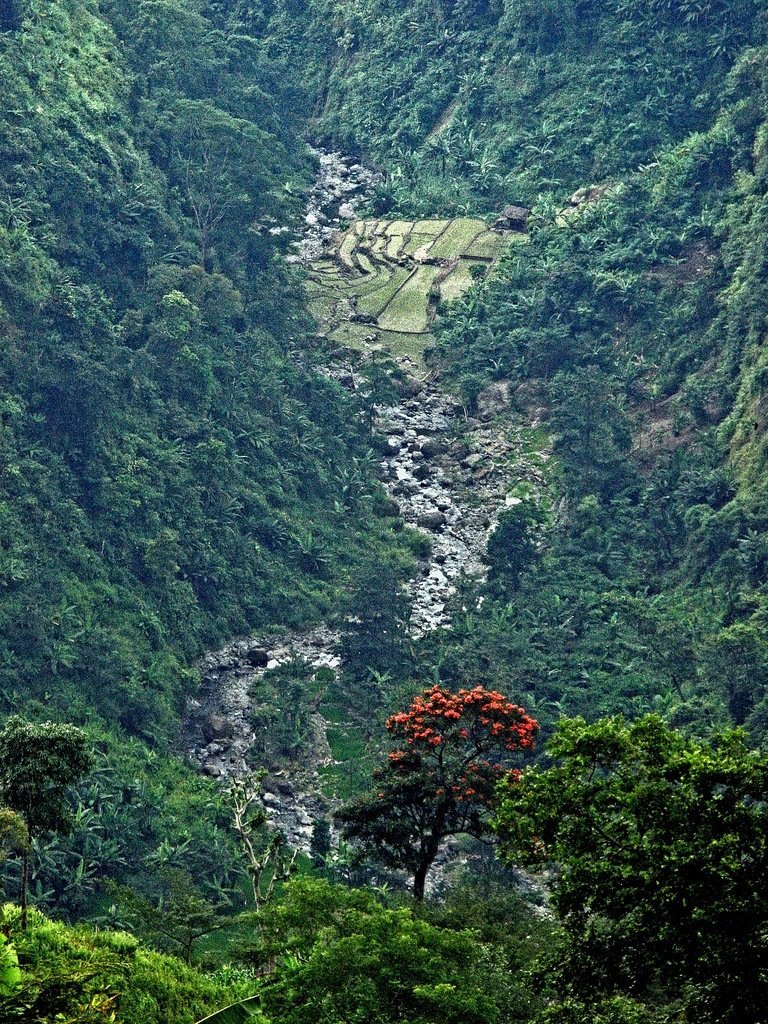
Progress on native species forest restoration
Tim and Saptono at the native species nursery
Agni and Paisan discuss the biogas project
At the nilam oil distillery
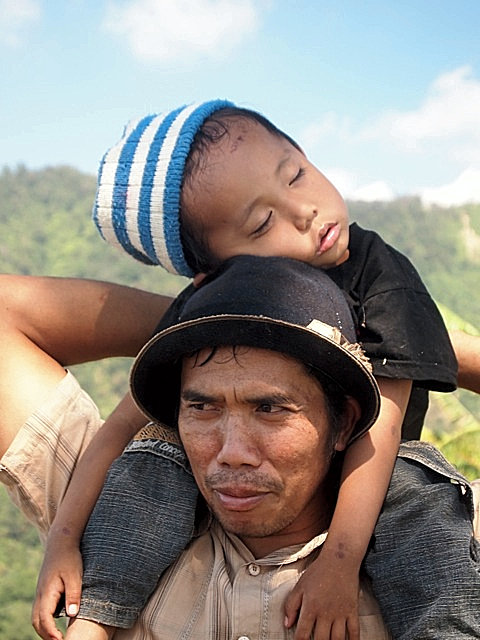
The next generation!
Mar 24, 2011

Native Plant Nursery Established

Etawa Goats Are Thriving in Kunir

In March, Tim O’Brien, the founder of Tropical Salvage and a facilitator for the Jepara Forest Conservancy, visited Jepara and the JFC forest restoration site on Mount Muria. JFC leaders, Sabtono and Paisan, are currently focused on coordinating two projects. One is creating a native plant and tree nursery in their village, Kunir, which is located near the JFC restoration site. Previously, they acquired tree seedlings to reforest the restoration site from a nursery controlled by Perum Perhutani, the government forestry company that administrates most of the forest land in Java. The majority of seedlings at the government nursery are not native species. They are mainly “productive species” such as sengon and acacia, which are favored for their applications in the pulp and paper industries, or rubber and durian seedlings. In other words, the government nursery provides capacity to create mono-crop plantations that depend on and assist in fueling commodity agricultural markets. Using land to preserve or restore a traditional ecological profile is not a common practice in Java, the world’s most populous island. The Jepara Forest Conservancy believes an adjustment to this perspective on land use is vital to enable a future for the local community that offers food security, cultural integrity and routine access to clean water. JFC seeks to establish a forest garden, or “analog forest” whose biodiversity will provide traditional foods and medicines to local communities, as well as provide micro-habitats for various native fauna. The forest will also protect the watershed, stabilize soil on Mount Muria’s steep slopes and store carbon. The forest’s understory can include a range of productive species to sell in local and export markets such as spices, coffee, bamboo and fruits.

The JFC’s other current focus is choosing from its herd of etawa goats individuals to sell at a goat market that will occur in April. Over two and a half years the herd has grown from thirty-one to sixty-four. Kunir residents who undertook to participate in raising goats will begin in April to realize a return on their investment of time and labor.

Native Plant Nursery at Jepara Forest Conservancy
Michael and Leslie from Paradise Plant visit Kunir
Dec 17, 2010

Profile of JFC Board Director Agus Rofiqkoh

Agus with son Luki at the JFC

The Jepara Forest Conservancy’s founding work – its original inspiration and efforts at organizing participants and forming goals – was provided by a handful of community members in Jepara who identified a strong need to improve environmental conditions on the Mount Muria peninsula. None of them had previous experience engaging communities to create forest conservation and restoration plans. They applied the initiative to learn from trial and error and to engage organizations and people who might offer appropriate expertise in a collaborative way toward realizing JFC’s vision.

Agus Rofiqkoh is both a principal member of Jepara Forest Conservancy’s founding team and a current member of its Board of Directors. At nearly every turn during JFC’s history and growth, Agus has been a critically important contributor, both initiating some ideas and facilitating implementation of nearly all of them. Agus Rofiqkoh is an example of what can happen when people grow and envision beyond models of “business as usual” that too often fail to protect natural environments and social contracts. Agus understands that success in implementing environmental restoration strategies and raising social empowerment is integrally dependent on creating strong sustainable businesses. Agus has become an environmental and social activist and spokesperson in Central Java Province. The core theme of his vision to improve social and environmental integrity is: market-oriented solutions.

Agus was born in Semarang, Central Java in 1968. He is the second eldest in a family of eight children. At age thirteen he was forced to drop out of school, both because his family could not afford tuition and because he had to find work to contribute to his family’s aggregate income. At age fourteen, Agus began to work on a passenger bus that traveled between Semarang, Java and Medan, Sumatra. During the eight years he worked for the bus company, he observed Sumatra’s vast primary forests become exploited by international lumber and mining concerns who regard Indonesia’s natural capital as a narrow set of commodity streams rather than a tapestry of intricately interconnected ecosystems and cultures. The business models brought little benefit to local populations: they displaced many people to urban slums and marginalized their native cultures. Ecosystems that had existed since time immemorial, providing bounty for many communities and for countless generations, were destroyed over a few decades. From the early years of Agus’ experience working on busses, he recalls encountering quite a lot of wild life along forest-lined Sumatran roads. He remembers meeting wild boars, elephants, various apes and monkeys and, once, a leopard. Toward the end of his time working with the bus company, some of the forested stretches had been transformed to wastelands dotted with stumps, as far as his eyes could see.

                  Beginning in 1992, Agus determined to learn wood furniture production. In 1998 he partnered with a Singaporean concern that operated furniture showrooms in Malaysia, Singapore and Hong Kong. Agus believes the significant wealth that was available to many in the teak furniture industry between 1997 and 2002 was precisely related to the devaluation of the resource that occurred when Suharto lost power in 1997. Indonesia grew chaotic during the years immediately following Suharto’s rule. The nation-wide theft of Indonesia’s state-owned teak plantations was one expression of the chaos. Wood deriving from one-hundred and fifty year old teak trees – a historically high-value material – was commonly sold for a fraction of its value. Teak furniture from Indonesia, priced ridiculously cheap, flooded the developed world’s markets.

                  Agus grew wealthy during the boom, paying college tuition for two of his younger siblings, and lost nearly everything during the bust, when theft and gross mismanagement finally exhausted Indonesia’s mature teak stocks. Agus learned from the experience that, in the future, he would only do business that fairly served its employees and circumspectly respected natural environments. Today, Agus is the Director of Indonesian Operations for Tropical Salvage. Tropical Salvage’s mission is to work in Indonesia’s rural communities to create good, steady, eco-positive jobs building well-crafted, aesthetically distinctive, value-competitive, salvage-wood products; to assist in implementing conservation, forest restoration and environmental education projects to protect the world's remaining primary tropical forests; and to advocate for best responsible social and environmental practices throughout the business world. Agus’ work with the Jepara Forest Conservancy is not compensated with money but it is rewarded enormously with inspiration and satisfaction.

                  Today, Agus lives in Jepara with his wife, Heni, and his two daughters Meri, aged ten, and Feni, aged one. Agus’ son, Luki, aged twenty, attends law school at the University of Semarang.

Agus at the Conservancy

About Project Reports

Project Reports on GlobalGiving are posted directly to globalgiving.org by Project Leaders as they are completed, generally every 3-4 months. To protect the integrity of these documents, GlobalGiving does not alter them; therefore you may find some language or formatting issues.

If you donate to this project or have donated to this project, you will get an e-mail when this project posts a report. You can also subscribe for reports via e-mail without donating or by subscribing to this project's RSS feed.

Retired Project

This project is no longer accepting donations.

Still want to help?
Find another project in Indonesia or in Environment that needs your help.

Organization

Institute for Culture and Ecology

Project Leader

Eric Jones

Portland, Oregon United States

Where is this project located?

Map of Indonesian Ecological Restoration & Education