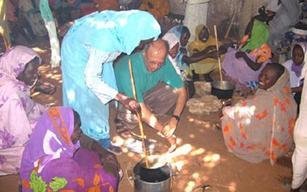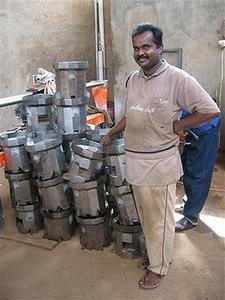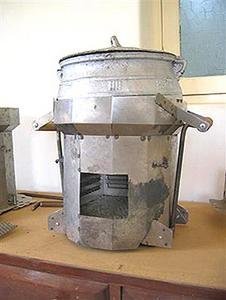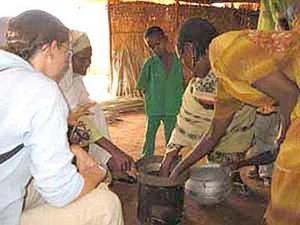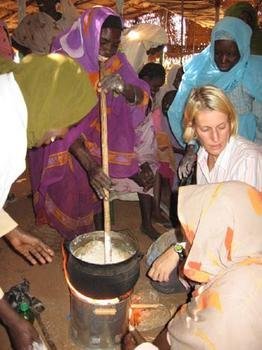
The project will manufacture and distribute low-cost fuel-efficient metal stoves in Darfur. Our stove design is field tested, fuel-efficient in breezy conditions, and can be manufactured in-country.
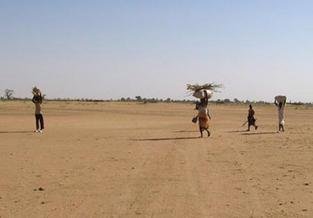
Women and the families of internally displaced persons in Darfur risk rape and mutilation as they make long trips to collect fuel. Women buying fuelwood face hunger and malnutrition from skipped meals because: they have insufficient funds to purchase wood or they have sold part of their food rations to get money for wood. A more fuel-efficient stove reduces the number of wood-collecting ventures made by IDP women and increases the number of cooked meals possible from purchased wood.
Designed through a collaboration between the Lawrence Berkeley National Lab, Engineers Without Borders, and CHF International, the new model is being produced in Darfur and being distributed to displaced families in the camps.
The stoves need 75% less fuel than current stoves. They pay for themselves in about two months. They reduce exposure to rape, hunger, physical hardship, and humiliation. Also, they help in the recovery of the nearby vegetation and local environment.
This project has provided additional documentation in a Microsoft Word file (projdoc.doc).